


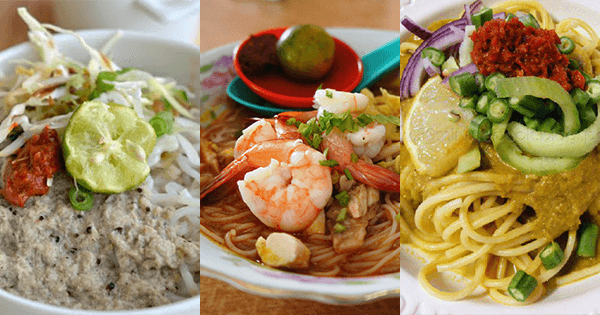
 Cover image via SAYS.com
Growing up in Penang, I'd only known of one type of laksa for most of my life – the Penang asam laksa. Only when Laksa Shack opened its doors in Queensbay Mall circa 2006 did I realise there were at least three other types of laksa out there.
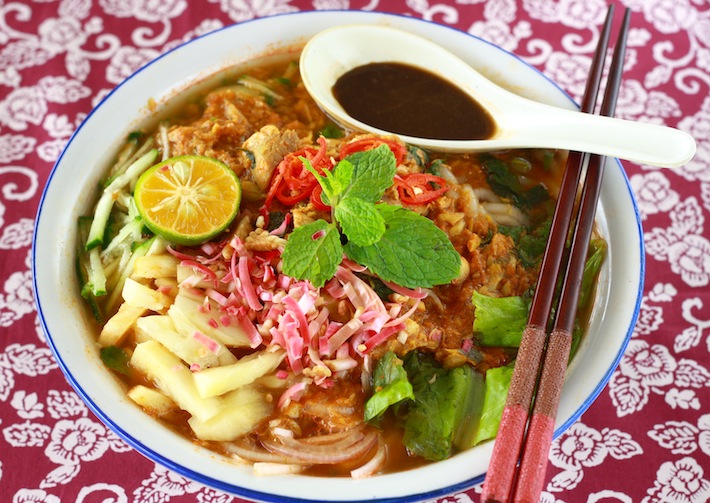
Image via MAAQOUL / Mass Pictures
Ranked 7th in CNN Travel's '[50 Best Foods In The World](http://travel.cnn.com/explorations/eat/worlds-50-most-delicious-foods-067535)' list in 2011, the **Penang assam laksa**'s main distinguishing feature is its spicy-sour soup base made from shredded *ikan kembung* or mackerel fish and asam (tamarind). It is usually served with thick rice noodles and garnished with finely-sliced vegetables including cucumber, onions, red chillies, pineapple, lettuce, common mint, "daun kesum" (Vietnamese mint or laksa mint), pink bunga kantan (torch ginger), and optionally, "hae ko" (a thick, sweet prawn/shrimp paste).
A popular dish in Peranakan cuisine, which is a combination of Chinese and Malay cooking, the origin of the name 'laksa' is unclear save for the following theories:
1. Derived from the Urdu/Persian *lakshah* (referring to a type of vermicelli), which in turn could have originated from the Sanskrit *lakshas*, meaning "one hundred thousand".
2. Derived from the Chinese phrase *la sha* (辣沙), which directly translates to "spicy sand" due to the sandy or gritty texture of the soup from ground dried prawns.
3. Derived from a similar-sounding Hokkien phrase "la sam", meaning dirty due to the dish's appearance.
While the Penang variant seems to be the most well-known to foodies, check out some of its equally (if not more) delicious Malaysian siblings:
1. Curry laksa
**Curry laksa** has a coconut-based curry soup with ingredients such as bean curd puffs (*tau pok*), sliced fish sticks, prawns, and cockles thrown in. It is typically garnished with Vietnamese coriander (*daun kesum* in Malay) and topped off with a spoonful of sambal chilli paste.
The curry laksa is called "curry mee" in Penang, as it is served with yellow mee and/or beehoon as opposed to white laksa noodles. Congealed pork blood may also be added to the dish.
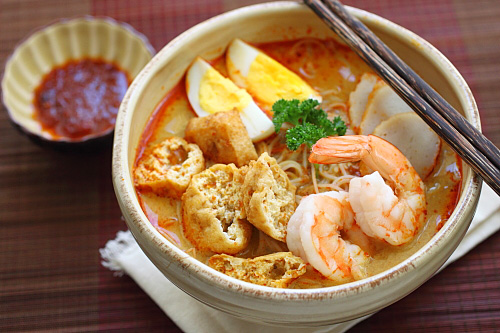
Image via i am fat / sourceofrecipes
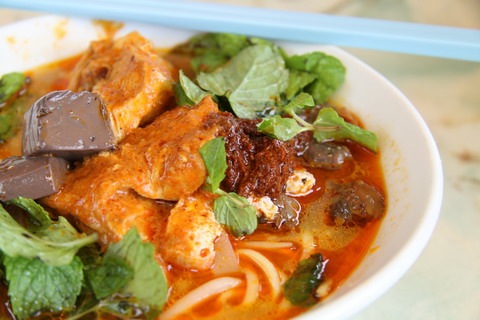
Image via CK Lam
2. Laksa lemak a.k.a Nyonya laksa
Heavily influenced by Thai laksa, the **laksa lemak** is made with strongly-spiced coconut gravy, giving it a distinctively rich and slightly-sweet taste. The dish is usually served with rice vermicelli, prawns, onions, mango slices, chicken strips, and chilli.
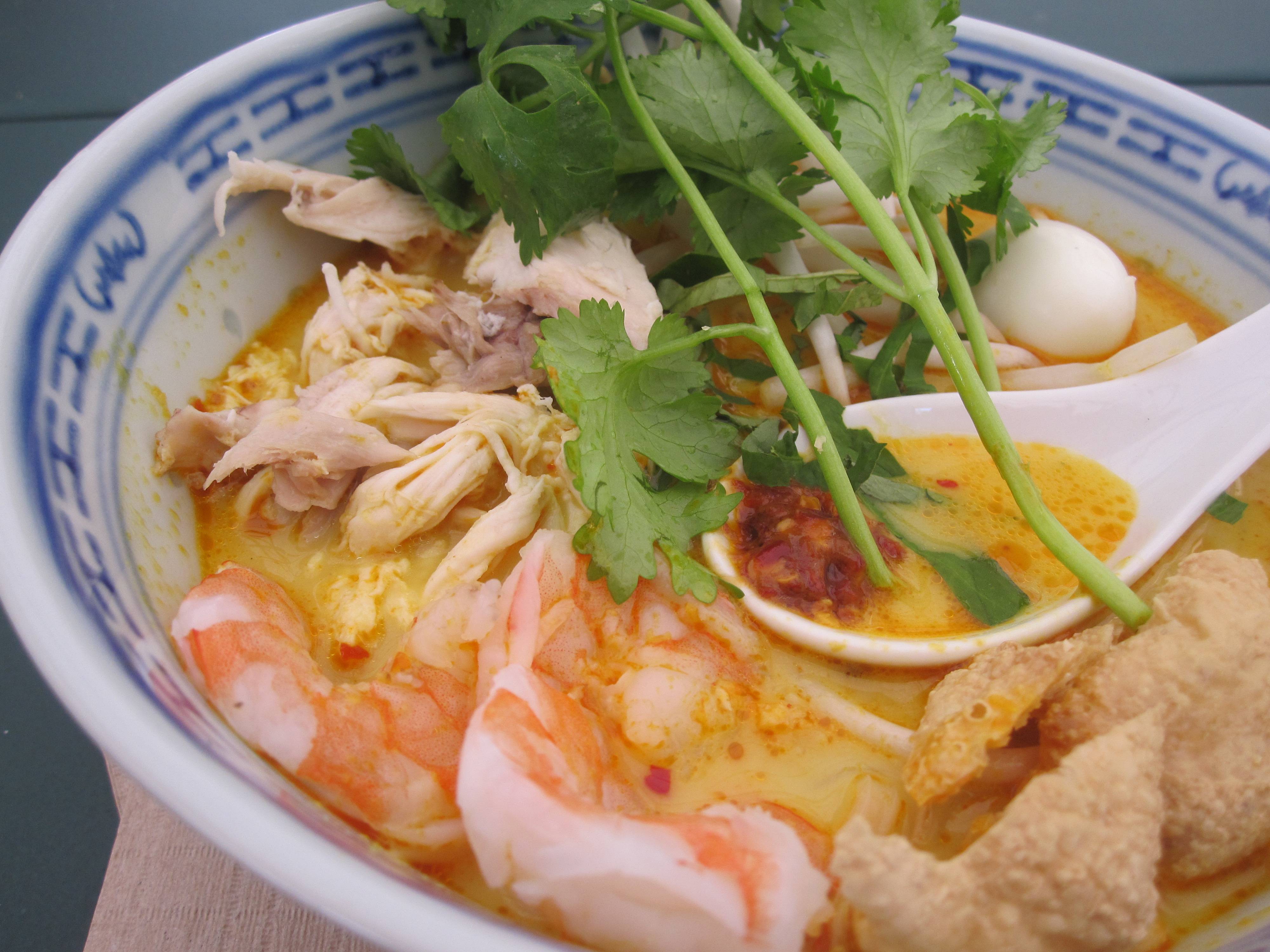
Image via This Is Why We're Fat
3. Sarawak laksa
**Sarawak laksa** is actually very different from the curry laksa as the soup does not contain curry at all. The base is usually made from sambal belacan, sour tamarind (asam), garlic, galangal, lemongrass, and lightly thickened with coconut milk. It is usually served with rice vermicelli topped with omelette strips, chicken strips, prawns, bean sprouts, fresh coriander, and lime.
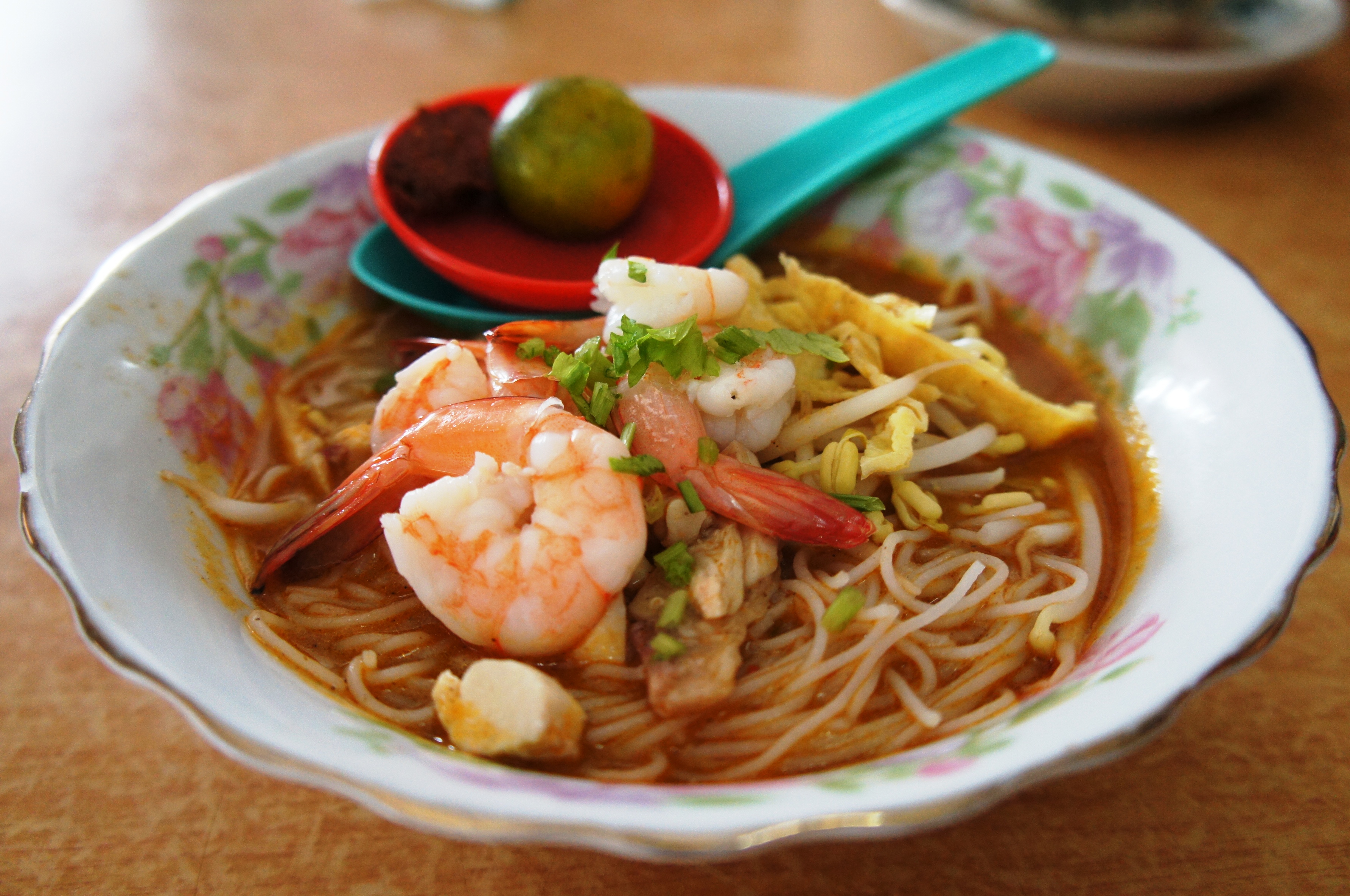
Image via TheFoodPolice
4. Johor laksa
**Johor laksa** is a little bit more Western compared to the other variants; it is served with spaghetti instead of the normal rice noodles or vermicelli. The curry-like gravy contains coconut milk, kerisik, dried prawns, lemongrass, galangal and other spices, while garnishing comprises of onion slices, beansprouts, mint leaves, Vietnamese coriander, cucumber, and pickled white radish. Sambal belacan is also placed at the side along with a slice of lime.
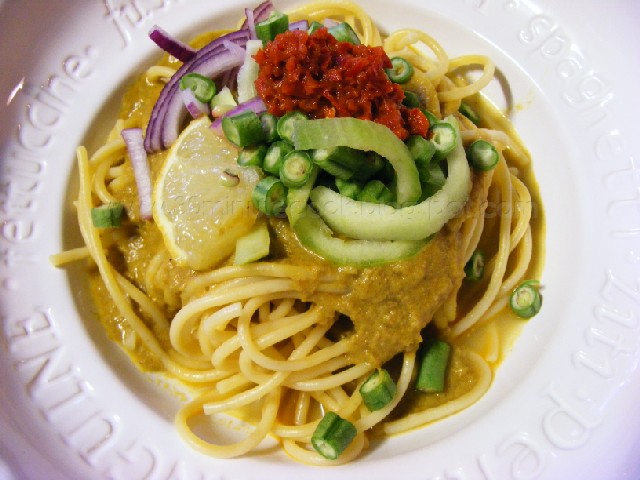
Image via Norzaini's blog
5. Laksam
A specialty dish in Kelantan, Terengganu, and Kedah, no curry paste is involved in making **laksam**. Thick, flat white rice flour noodles are served in a rich and full-bodied white gravy made from boiled fish or eel and coconut milk. The dish is traditionally eaten with hands rather than with eating utensils due to the gravy's consistency.
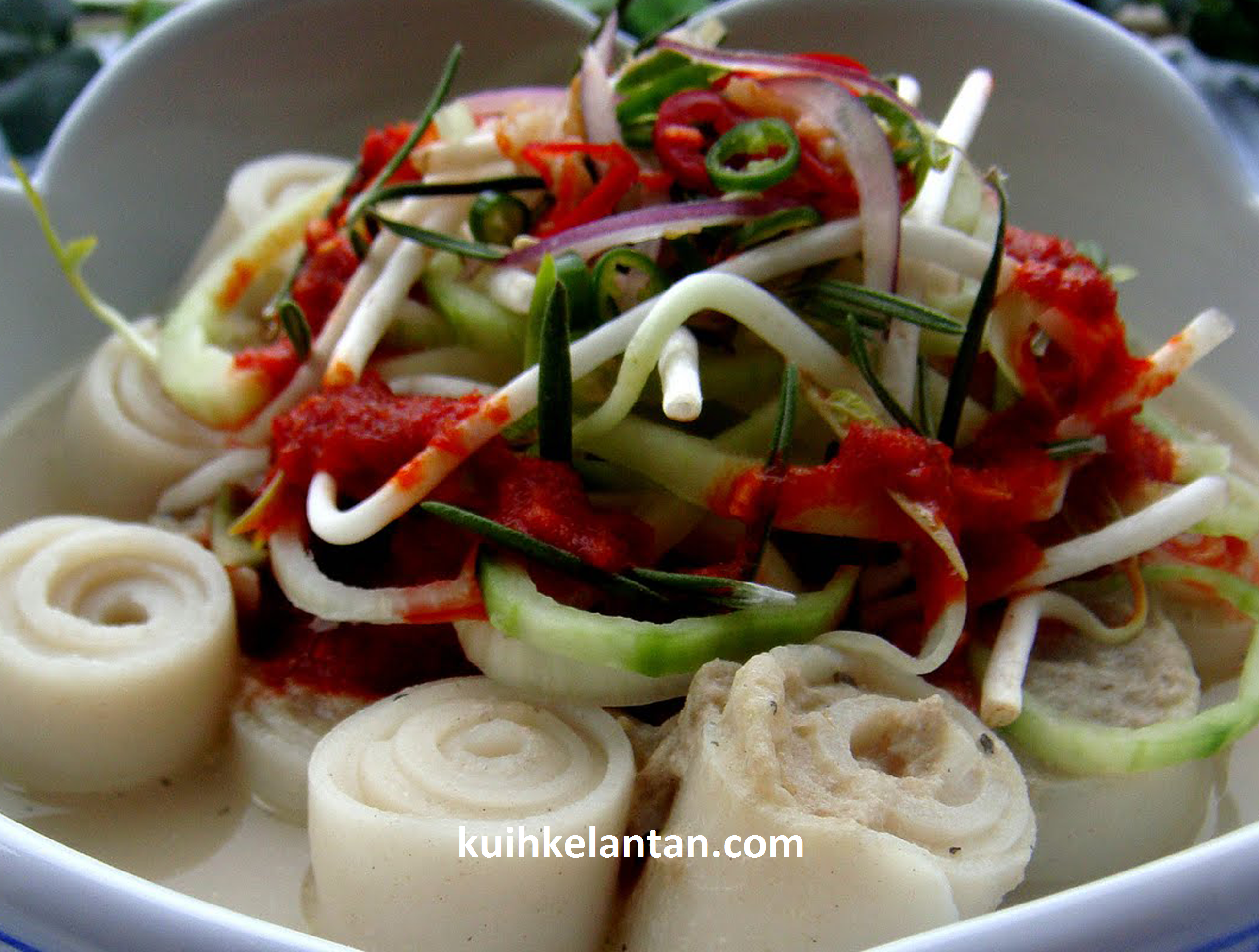
Image via Kuih Kelantan
6. Terengganu laksa
The main ingredient of **Terengganu laksa** is *ikan kembung* (round scad mackerel) which is boiled and then minced before it is fried with onions, garlic, ginger, datil pepper, belacan, 'kantan' flower, Vietnamese coriander or 'daun kesum', lemon grass and dried tamarind slices. Coconut milk is then added in until the mixture becomes thick. The gravy is poured over white laksa noodles and served with 'ulam' (raw vegetables) and blended chilli o the side.
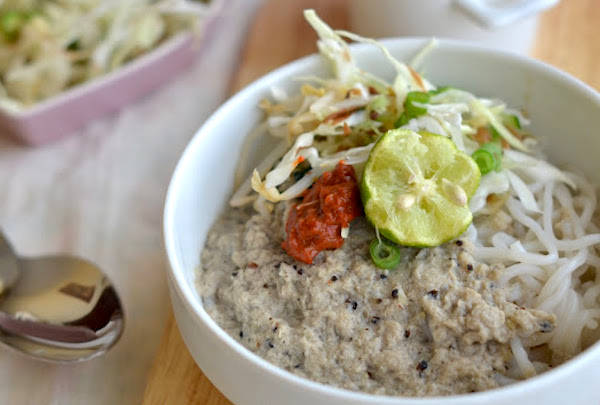
Image via Virtual Malaysia
7. Kelantan laksa
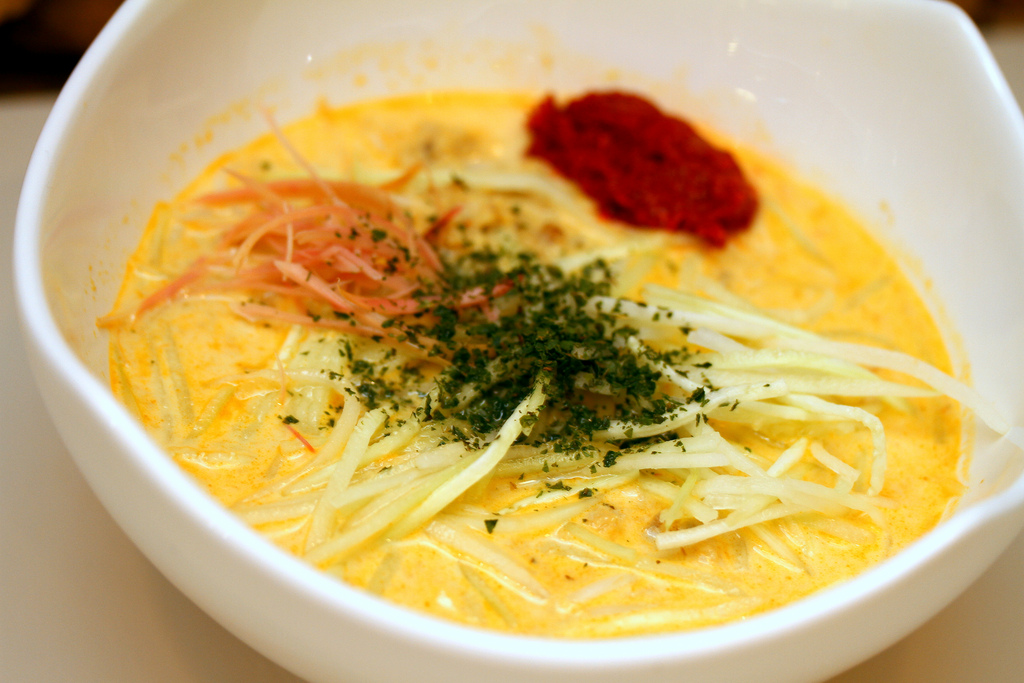
Image via Miss Tam Chiak

