
Tonight You’ll Have An EXTRA Second And It Could Wreak Havoc Across The Internet
In our 30th Tech Tuesday column, we look at why on 30th June 2015, an extra second will be added to it. Blink and you could miss it. It has created a lot of controversy for such a small moment and may cause other inevitable and unpredictable chaos.


 Cover image via Think Marketing
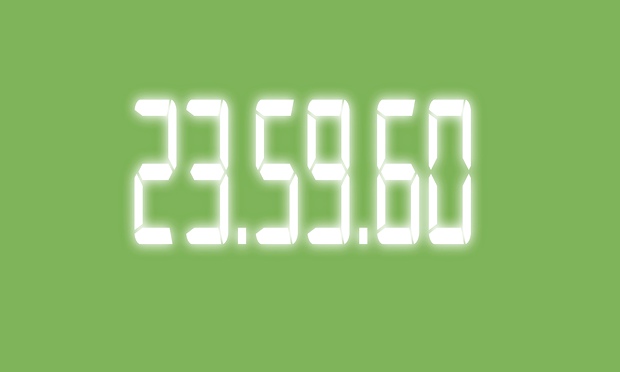
On 30 June at precisely 23:59:59, the world's atomic clocks will pause for a single second. In other words, the atomic clocks will change to the uncharted time of 23:59:60 — before ticking over to the more worldly hour of 00:00:00 on the morning of 1 July 2015.
But why do we need an extra second to begin with?
In the words of Markus Kuhn, Senior Lecturer in Computer Science at University of Cambridge: "*to reconcile the differences between two definitions of time: one astronomical, the other provided by atomic clocks.*"
Wait, could you explain that a bit clearly?
Sure!
The decision – to add an extra second – was made by the International Earth Rotation Service (IERS) earlier in January 2015. It's called **leap second** and it is to be inserted at the very end of 30 June.
As The Guardian [notes](http://www.theguardian.com/science/shortcuts/2015/jan/07/why-this-year-longer-than-last-leap-second), leap seconds are surprisingly common. Since their introduction in 1972, we have gained 25 seconds and lost none. **So why are leap seconds necessary?**
"Over centuries, the Earth has been slowing down. Atomic clocks keep much better time than the Earth itself. They are more than a million times more stable," says UK's leap-second expert Peter Whibberley, of the National Physical Laboratory in Teddington.
Coordinated Universal Time, which the world abides by, comprises the average time of 400 caesium atomic clocks globally, all ticking away at the highest level of accuracy.
"Previously the Earth was the ultimate reference and man-made clocks were adjusted to match. From the beginning of the 1960s, atomic clocks became the ultimate reference. They were adjusted to keep in step with the Earth. Then, in 1972, it was decided that, instead of adjusting how fast the clocks ticked, they would be left to tick away at the atomic rate and the leap second would be introduced," says the leap-second expert.
But why keep adding these leap seconds every now and then? Why not save all the leap seconds and have a leap minute in 2115?
Because if we don't keep adding these leap seconds, the primordial link between our notion of a day and the rotation of the Earth could be forever disrupted.
As per a Gizmodo [article](http://gizmodo.com/june-30-will-be-one-second-longer-this-year-and-that-c-1677835016), experts also fear that once this link is broken it could never be restored because although the Earth's timekeeping systems are built to accommodate the occasional leap second, adding a leap minute or hour to global time would be virtually impossible.
In other words, you could go really crazy! You see, leap seconds mess with technical systems. How?
Back in 2012, the last time a leap second was added, it wreaked havoc across the Internet, disrupting websites from around the world including Mozilla, Reddit, Foursquare, Yelp, LinkedIn, and StumbleUpon. It also delayed 400 Qantas flights.
"**If you move to minute adjustments, you simply make the problems bigger**," UK's leap-second expert Peter Whibberley.


Think of leap seconds as the Y2K bug
What's the workaround?
A second may seem trivial, but it is a matter of great controversy

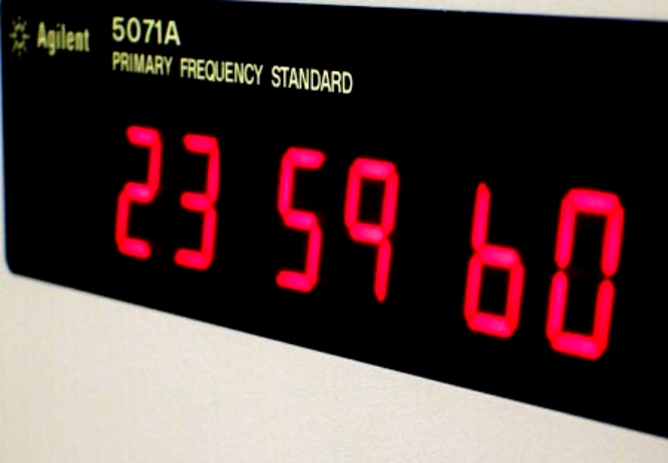
Image via null
While, in June, it's unlikely that we'll see leap seconds causing planes to crash, it is impossible to predict what will happen when the leap second is added this year, says Demetrios Matsakis, the Chief Scientist for Time Services at the US Naval Observatory

Arguing for the elimination of leap seconds, the Chief Scientist for Time Services at the US Naval Observatory, which sets the precise time for all forms of digital communication, including the Internet, banking systems, GPS, and cell phone networks, said this:
Comment to let us know what do you think about it. Meanwhile, here's how you could, possibly, spend this extra second:
Watch the atomic clock change to 00:59:60 (British Summer Time).
Instagram the second (IF you can).
Make a Vine of you Instagramming the second (Double dare).
Or simply wink at someone! 😉

Image via null
