
Malaysia’s Emergency Alerts Started An Unexpected Conversation That Became An Opportunity
Sometimes, the most important conversations do not begin as planned.


 Cover image via Canva Teams
Follow us on Instagram, TikTok, and WhatsApp for the latest stories and breaking news.
This Spotlight is sponsored by The Malaysian Communications and Multimedia Commission (MCMC).
In the days surrounding the anticipated testing of Malaysia's Early Warning System (EWS), public discourse took an unexpected turn

Earlier reporting had created an expectation of public alerts on 19 November, before the Malaysian Communications and Multimedia Commission (MCMC) clarified that the exercise was an internal technical test.
The resulting discussion brought a usually technical subject much closer to everyday life.
Whether a warning would arrive on your phone was suddenly relevant in a way that an announcement about national infrastructure might not be.
While the circumstances that sparked the conversation may not have unfolded as initially anticipated, one thing became evident: Emergency preparedness is a subject that resonates with the public when it is brought into everyday conversation. And perhaps, in hindsight, that is an opportunity worth recognising.
The immediate uncertainty concerned the test: Who was involved, and should people expect their phones to sound an alert?

Clarifying that point also created room to explain the stages leading up to the nationwide public exercise. Other explanations addressed how the system would fit into people's lives. Would they need an app? Were flood warnings forwarded through WhatsApp part of EWS? How would an official notification reach them?
Communications Minister Datuk Seri Fahmi Fadzil clarified that no app was required and that the circulating WhatsApp flood warnings were unrelated to EWS.
These answers do more than settle individual points. They help people form a clearer picture of a system they may eventually depend on. In that sense, the recent public attention may have inadvertently opened the door to a conversation that is central to the system's long-term success, which is public awareness.
What this whole scenario shows us is that unexpected public conversations themselves can become an avenue for education
Questions, discussions and even misconceptions can create opportunities to clarify, explain and build understanding, provided they are met with accurate information and clear communication.
That is where the positive communications opportunity lies: Using the conversation already taking place to build understanding, one relevant answer at a time.
Emergency preparedness can be difficult to keep on people's radar until something happens nearby. The attention surrounding EWS created an opportunity to discuss it ahead of an actual emergency. To further the conversation, Fahmi outlined plans to familiarise people with the notifications through cinemas, television, radio, social media, and influencers.
EWS, now known as MySiren, is designed to send location-based emergency warnings directly to compatible mobile phones, complementing existing warning channels
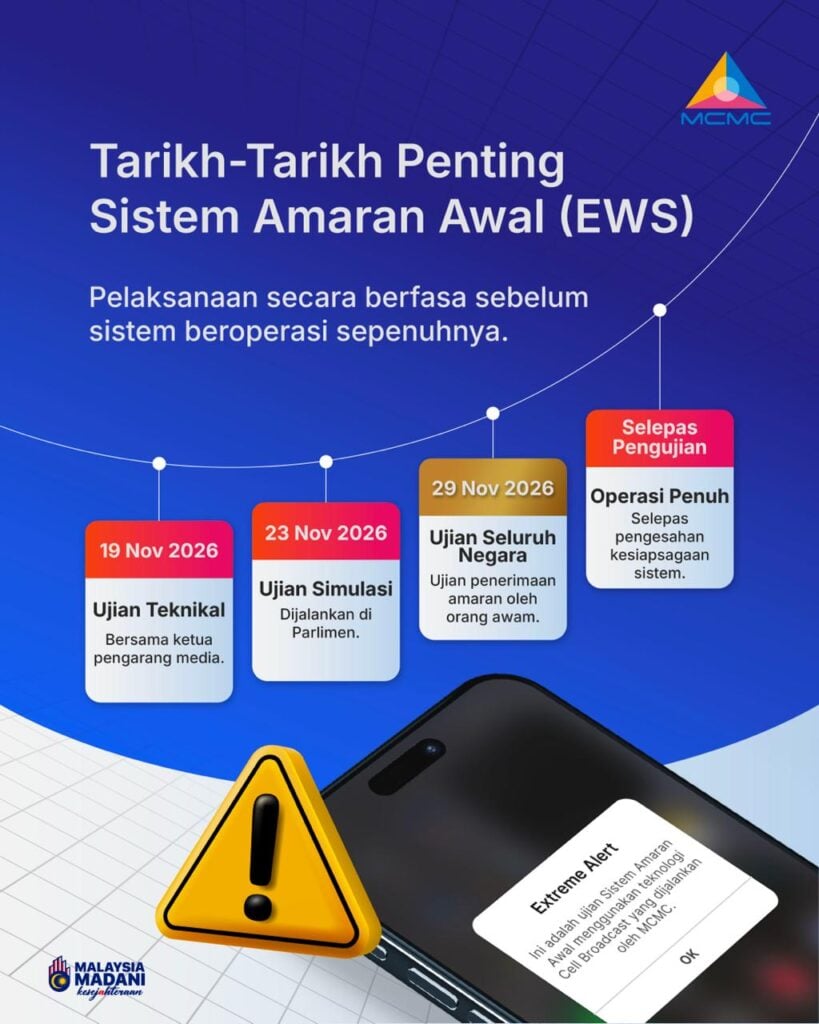
The nationwide public test scheduled for 29 November gives people an opportunity to connect the explanations with the experience of receiving a notification. Communication ahead of the exercise can help them recognise it as a test and understand why the system is being introduced.
The discussion may have begun unexpectedly, but it has opened a door to a subject that deserves attention before an emergency happens. Clear answers and continued engagement can help carry that interest beyond the testing date.
For the latest information, visit MCMC's MySiren FAQ, and give family members a heads-up about the nationwide test.
