
Did You Know Glico’s Founder Started His Company Because Of Oyster Broth?
Here's what you need to know about Glico and the man behind the beloved chocolate-coated biscuit stick!


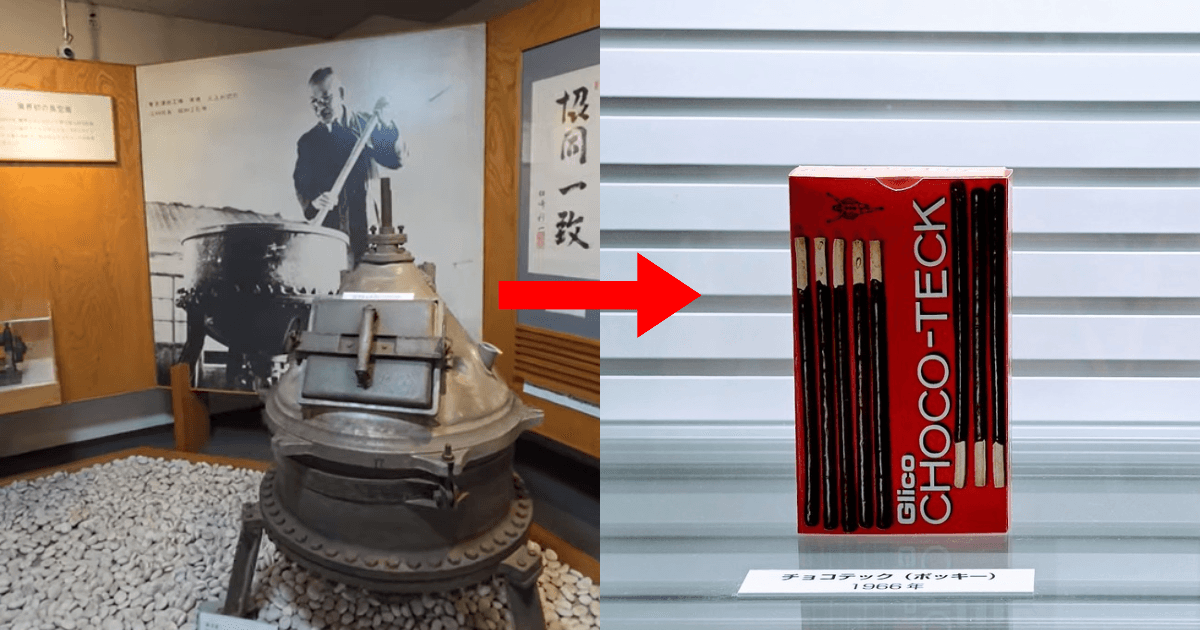 Cover image via SAYS
Follow us on Instagram, TikTok, and WhatsApp for the latest stories and breaking news.
From everyday snacks and road trip treats to something to share with friends and family during festive gatherings, Pocky has become a household staple in Malaysia
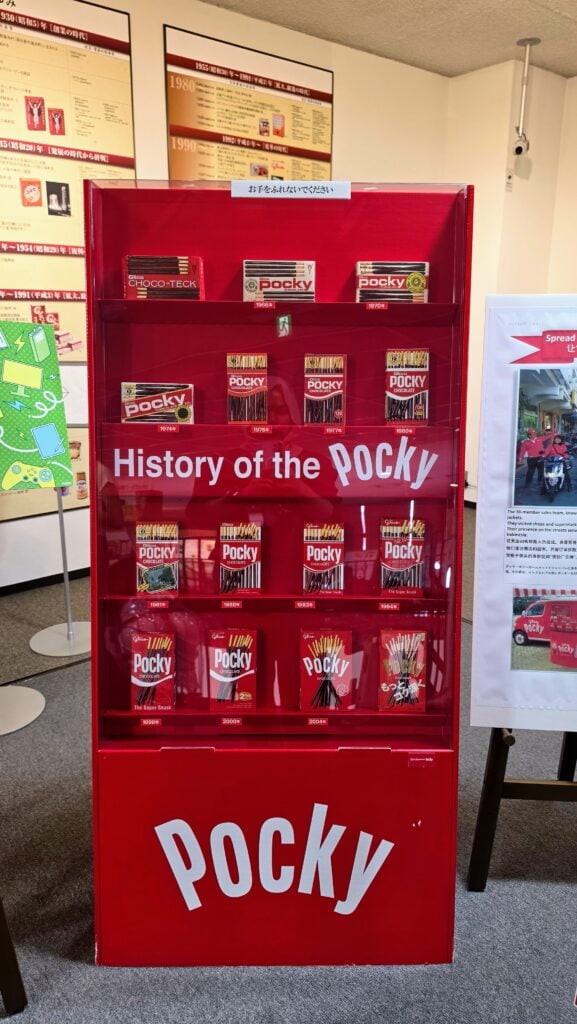
The history of Pocky is displayed in the Glico Museum in Osaka, Japan.
Image via SAYSBut have you ever wondered how Pocky came to be? Its origin story starts with oysters, and it goes back to a Japanese food company called Glico, long before Pocky became the snack we know today.
It all started with a man who wanted to provide nourishment to his countryfolk grappling with undernourishment. And the idea that sparked Glico's journey more than a century ago would eventually lead to one of its most recognisable products.
Glico's story began with its founder, Ezaki Riichi, and an unexpected discovery involving oyster broth
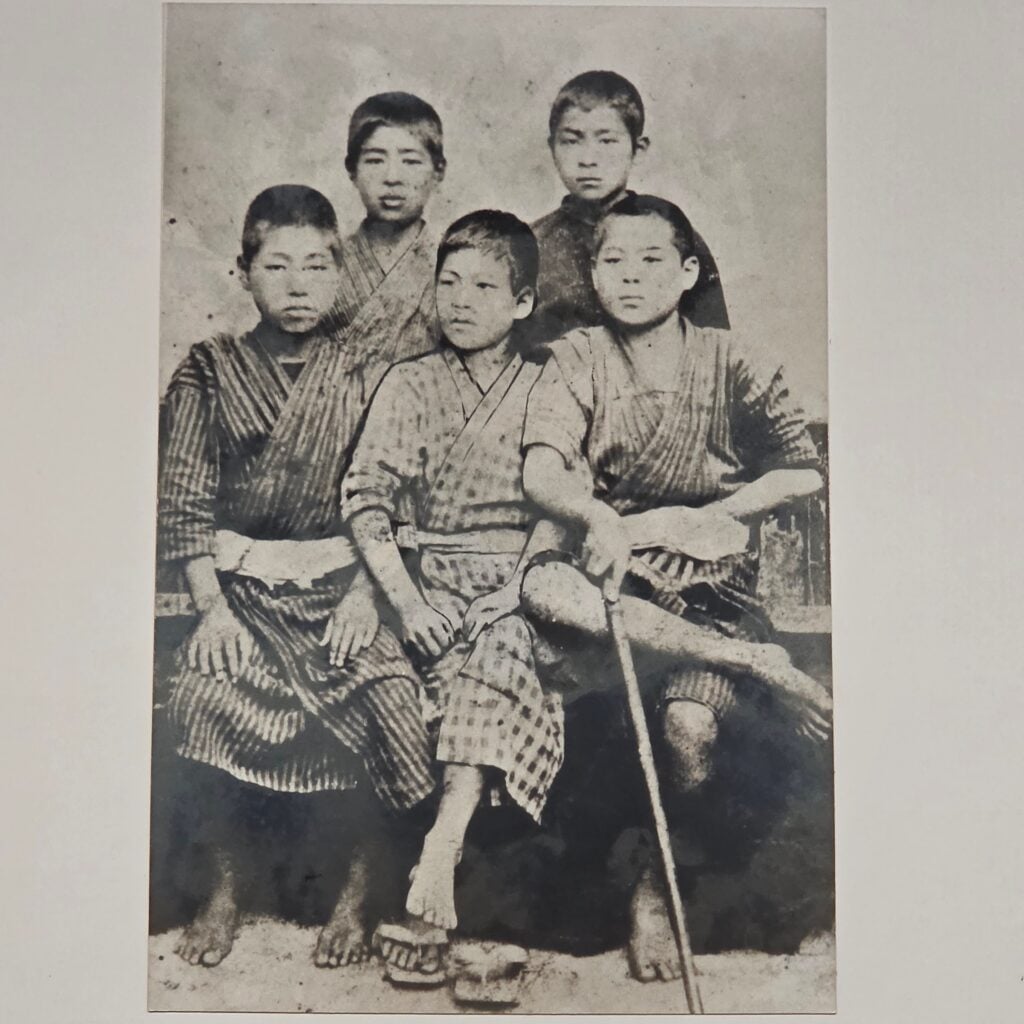
Glico founder, Ezaki Riichi (centre), only completed four years of elementary school but continued to self-study.
Image via SAYSIn 1919, Riichi saw a fisherman boiling oysters and throwing away the broth. He remembered reading that oysters contained glycogen, a substance the body uses as an energy reserve. So, he collected a sample and had it analysed, confirming that the broth contained glycogen.
When his young son fell seriously ill with typhoid fever, Riichi was given permission to try feeding him a glycogen extract that was still being researched and his son gradually regained his strength.
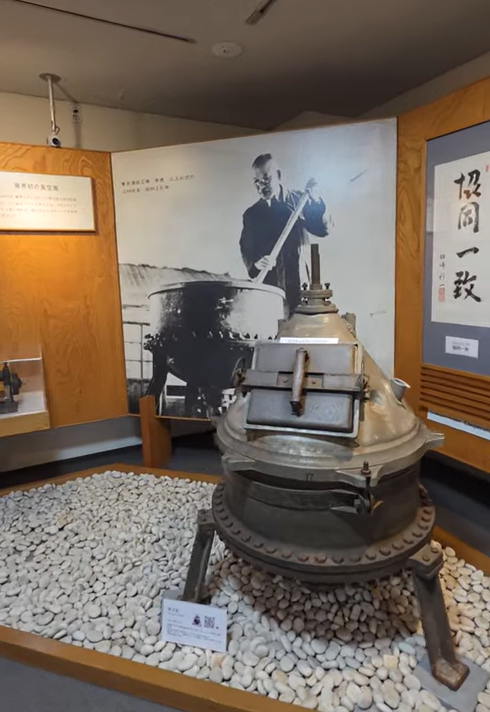
Riichi photographed stirring a pot of oyster broth to extract glycogen.
Image via SAYSBack then, the Japanese people were suffering from undernourishment, so Riichi began exploring ways to make glycogen available to more people. He decided to turn it into a nutritious caramel that children would enjoy eating.
Hence glycogen caramel was created, then shortened to "Glico", becoming the company's name.
Glico's nutritious caramel officially went on sale on 11 February 1922 at the Mitsukoshi department store in Osaka, a date now recognised as the founding day of Ezaki Glico
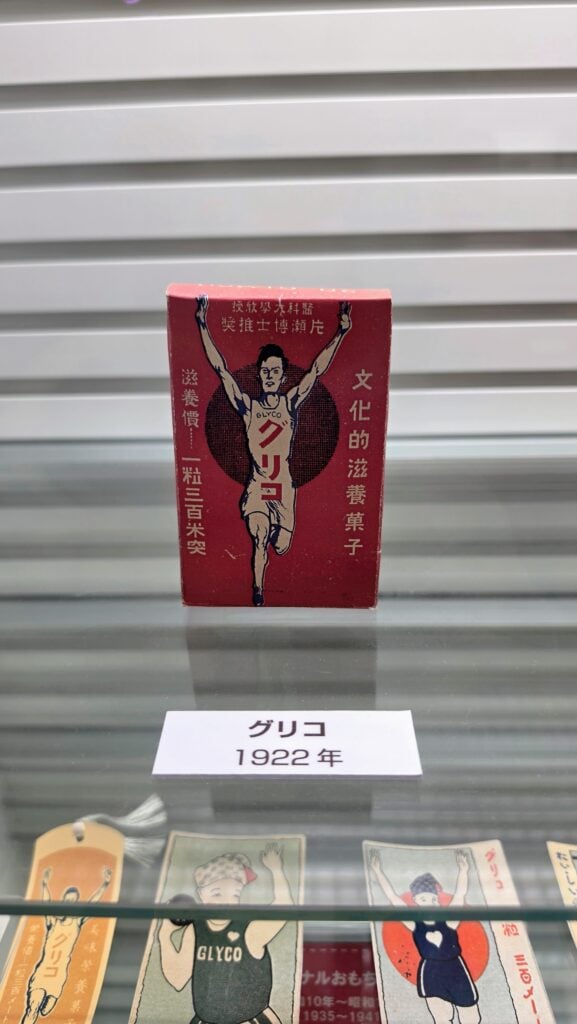
The first product Glico launched in 1922.
Image via SAYSRather than relying solely on conventional distribution, Riichi worked to secure a place at a prominent retailer, believing that acceptance by a major department store would help convince other sellers to stock the product.
He also gave the caramel a distinctive identity.
The caramels were heart-shaped, the first of its kind, with Glico pioneering the technology needed to create it. Sold in bright red boxes featuring a running man crossing a finish line, the iconic image is now synonymous with Osaka.

The famous "Glico Running Man" is set for a facelift and will be replaced with a new design in 2027.
Image via Glico (Provided to SAYS)The design was accompanied by the slogan, "300 metres on just one caramel", which referred to the energy value attributed to the sweet.
The company also began including picture cards and, later, small toys in its caramel boxes, as Riichi believed children needed both nutrition and play in order to grow up healthy.
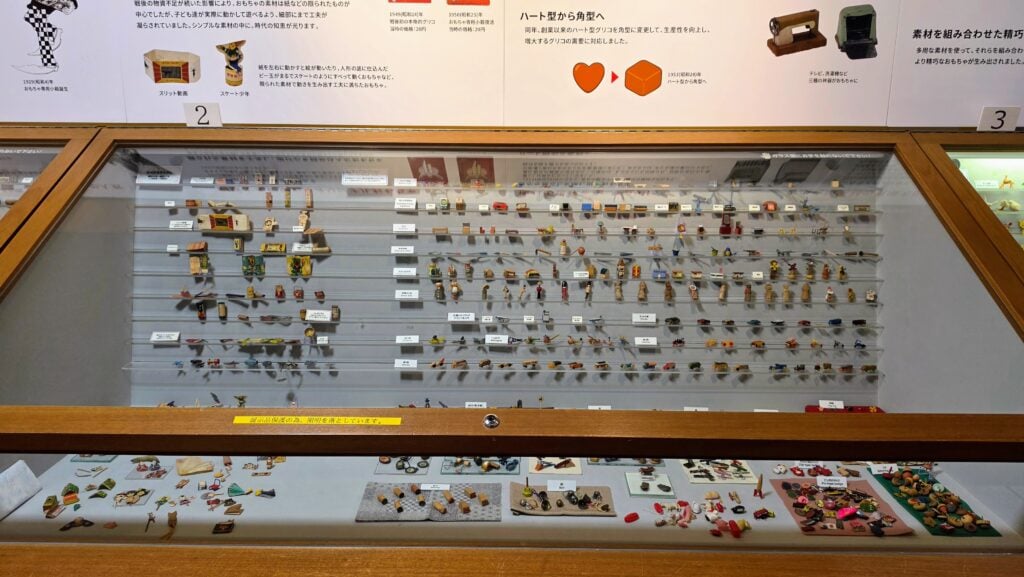
Toys that were packaged with Glico caramels over the years.
Image via SAYSAfter World War II, Glico lost much of its infrastructure and had to rebuild operations from the ground up
One of the products brought back was Bisco, a cream-filled biscuit launched in 1933. Other products followed as the company broadened its offerings beyond caramel, including Almond Chocolate and Pretz.
Pretz, introduced in 1962, offered a savoury alternative to the company's sweeter confectionery and was inspired by German pretzels.
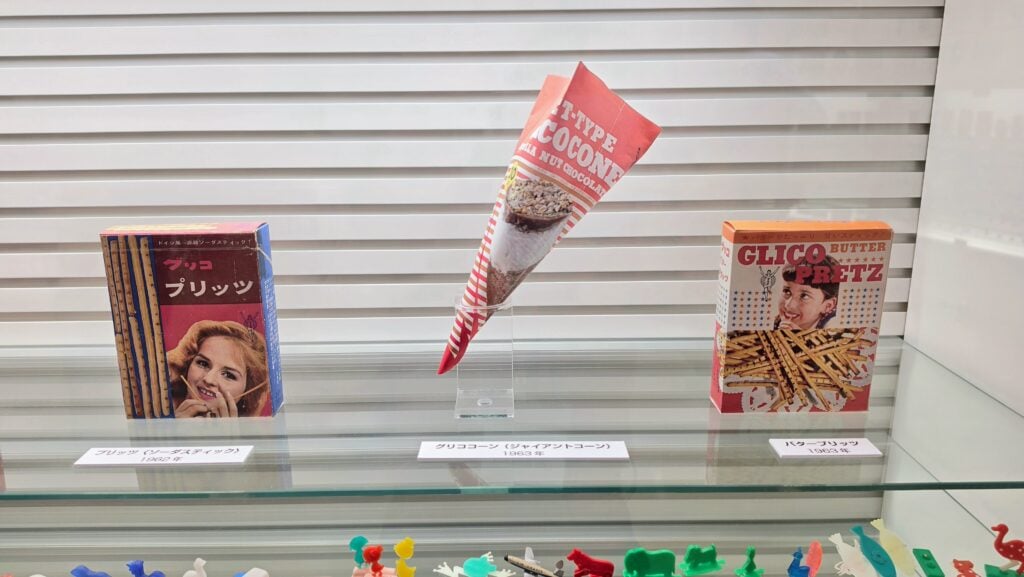
Based on German pretzels, the early packaging for Pretz reflected the product's inspiration.
Image via SAYSThree years later, Glico coated the biscuit with chocolate, leaving one end bare so it would be easy to hold. And Pocky was born.
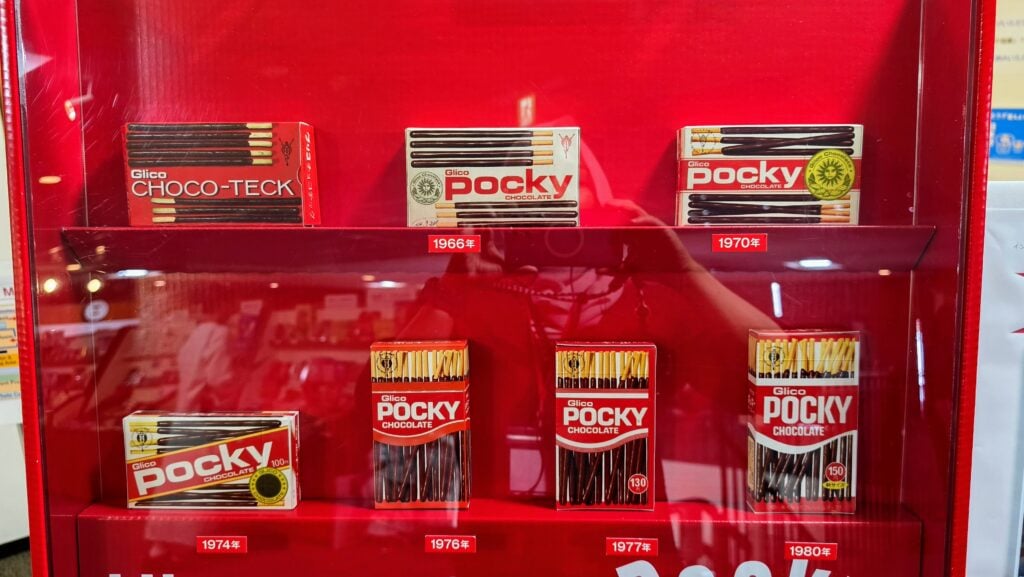
This beloved snack was first called Choco-teck before later becoming Pocky.
Image via SAYSArriving at the final product took experimentation. The team at Glico developed the manufacturing technology needed to make the idea work.
Initially called Choco-teck, this now-trademarked coated biscuit was eventually renamed Pocky, inspired by the Japanese onomatopoeic pokkin, which is the snapping sound made when biting into it.
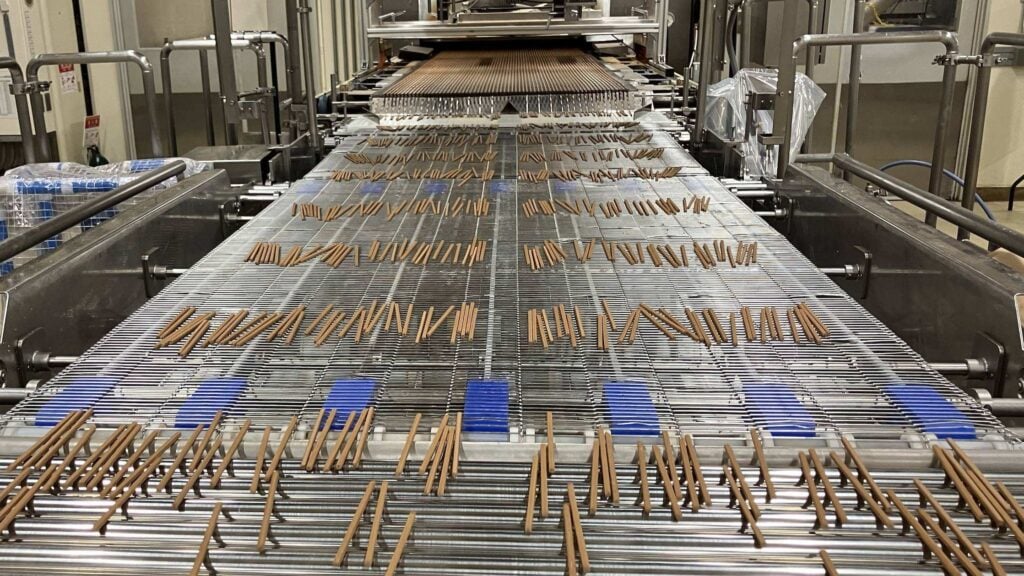
Pretz and Pocky sticks getting baked in Glico's Kobe factory.
Image via Glico (Provided to SAYS)Pocky's launch was only the beginning. As the product gained popularity, Glico continued developing new flavours and formats rather than relying exclusively on the original chocolate version.
In 1971, the company introduced Pocky Almond. Strawberry-flavoured Pocky followed in 1976, responding to demand for more variety. Later innovations included Giant Pocky and Pocky Almond Crush.
To date, there are over 50 flavours of Pocky, as well as seasonal specials, limited editions, and country-exclusive releases.
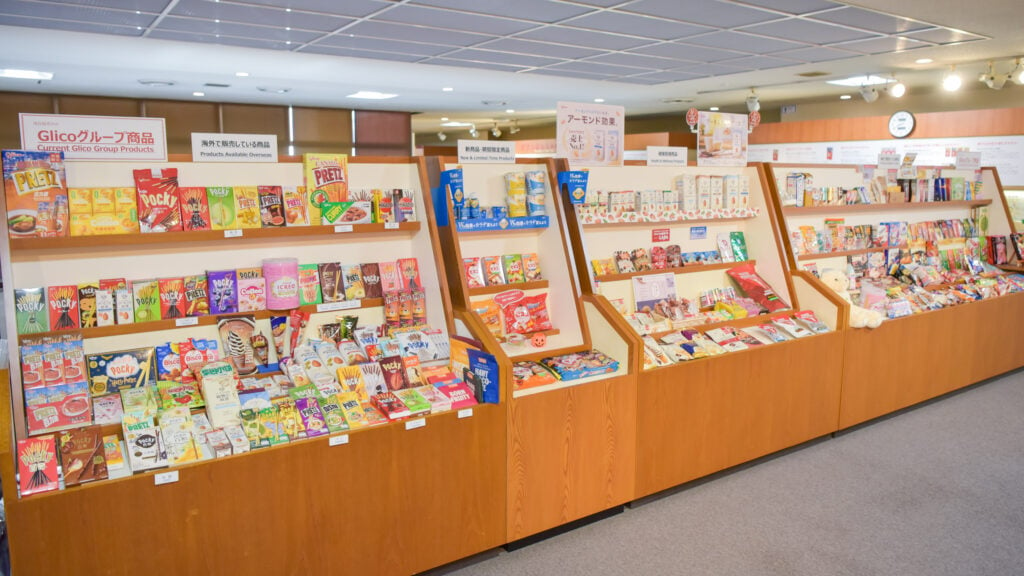
The many varieties and flavours of Glico's product offerings on display at the Glico Museum.
Image via Glico (Provided to SAYS)In Malaysia, Pocky was sold under the name "Rocky" for around four decades. It was rebranded to "Pocky" in 2014.
Today, Pocky is one of the products most closely associated with Glico internationally. Its basic format remains recognisable, even as the company continues to introduce new varieties and adapt its products for different markets.
And Glico continues to innovate. The classic Pocky Chocolate flavour has been given a makeover after more than two and a half years of development, over 100 prototypes, and an evaluation of more than 30 varieties of cacao from around the world.
The renewed chocolate recipe uses Peruvian cacao, known for its bright aroma, light citrusy fruitiness, and layered flavour.
Glico's development team from Japan even travelled to Peru to understand what gives the cacao its distinctive character, from cultivation to fermentation and drying.
The team then refined everything from ingredient selection and processing to the formulation and balance with the biscuit, creating a more chocolate-forward experience unique to Pocky.
The renewed Pocky Chocolate is now available at Jaya Grocer, with plans to roll it out to other major retailers soon.
Previously, the company wowed Malaysians with the limited-edition Pocky Ondeh-Ondeh and Pocky Durian, which were launched in celebration of Malaysia's 68th National Day
When asked about upcoming flavours, the team at Glico replied, "We are always looking for new ways to delight Pocky fans around the world by creating authentic tastes that truly resonate. Moving forward, we are excited to keep sharing happiness and inspiring the Pocky community in Malaysia when the perfect occasion unfolds."
Well, we can't wait to taste what's in store 😉
This year also marks 60 years since Pocky was first introduced. To celebrate the milestone, the brand launched a year-long regional campaign called 'Connect with a Smile'.
Speaking to SAYS, Glico explained that Pocky is about creating warm and meaningful connections during everyday moments between friends, family, and even strangers. Its biscuit stick is designed to be extended, offered, and passed across a table – a small gesture that sparks a smile.
This included the roll-out of a brand-new packaging designs across the full Pocky range, alongside an improved Pocky Chocolate recipe that delivers a more chocolatey taste and a crispier snap.
In Malaysia, the Glico team brought 'Connect with a Smile' to families and young consumers where they spend their time:
- International Friendship Day: Pocky teams visited campuses including Taylor's University, Universiti Malaya, and Sunway University, with samplings and photo zones built around sharing a smile.
- Online: Fans could use the Pocky Smile Mirror Filter to capture smiles with friends and share them on social media for a chance to win prizes.
- For families and everyday shoppers: Pocky Smile Vending Booths were introduced across the Klang Valley and sticker sheet redemptions at retailers nationwide.
In 2022, marking its centenary, Glico introduced its purpose statement, "Healthier days, Wellbeing for Life"
The company says this modern vision builds directly on its original 1919 commitment to enhancing public health through food.
From a nourishing energy caramel to a beloved chocolate-coated biscuit sticks meant for sharing, Glico's treats are designed for joy.
Looking ahead, Glico is continuing that exact mission into the future with functional wellness innovations like Almond Koka, bringing nutrient-rich, plant-based milk to consumers across the globe.
"We made Almond Koka differently by roasting the whole almond and grinding it into a very fine paste, so most of the almond's nutrients go into the drink, such as Vitamin E, fibre, and antioxidants. This provides consumers with a rich roasted aroma and a smooth texture that is easy to enjoy every day," the team at Glico explained.
"Since we introduced Almond Koka to Malaysia in June 2024, we have seen growing demand, with consumers enjoying it in many ways, from drinking it on its own to using it in place of dairy milk in their coffee, cereal or smoothies."
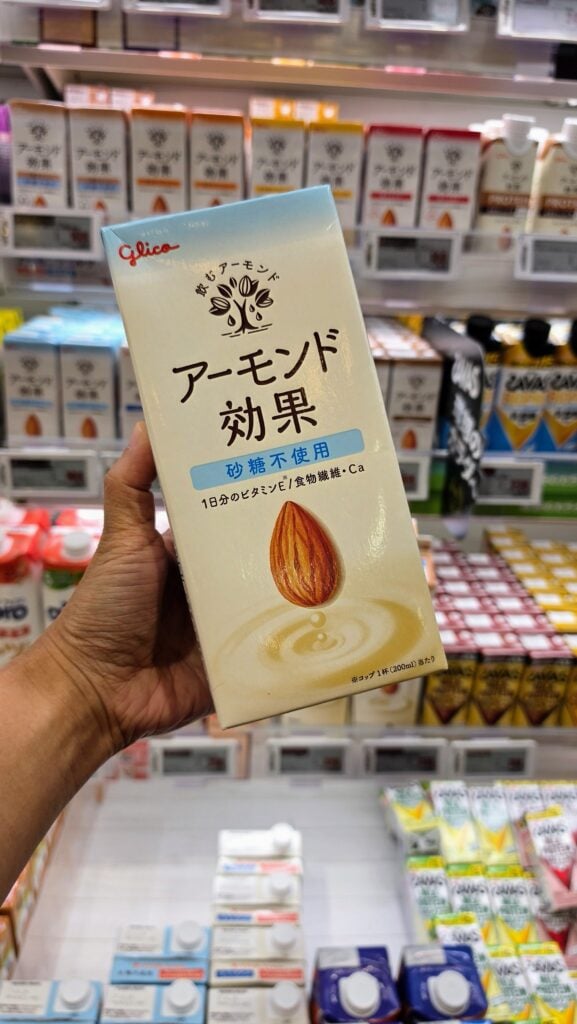
Almond Koka is one of Glico's latest product offerings, providing consumers with nutritious plant-based milk.
Image via SAYSInterestingly, the popularity of almond milk differs between Japan and Southeast Asia
Sharing insights with SAYS, Glico explained that both markets have seen growing demand, although Japan's almond milk category is considerably more established.
In Japan, almond milk has become an everyday option alongside dairy and soy milk. The market has grown around 20 times since 2013, with consumers using it in everything from coffee to cooking.
Almond Koka's Japanese range has also expanded beyond its original offering to include unsweetened, protein, and barista editions.
Meanwhile, Southeast Asia's plant-based milk category is still developing, but Glico believes there is significant potential due to the association between almonds and wellness.
The company cited its 2023 consumer research across Japan, Thailand, and other markets, which found that close to 60% of Thai consumers associated almonds with beauty and health, compared with around 43% in Japan.
Only around 4% of Thai respondents did not associate any nuts with beauty and health, compared with more than 40% of Japanese respondents.
Glico sees Japan's experience as an example of how almond milk can become part of consumers' everyday routines as the category matures in Southeast Asia.
From a nourishing energy caramel developed more than a century ago to Pocky's chocolate-coated biscuit sticks and plant-based Almond Koka, Glico's product range has come a long way since its beginnings
While the company continues to explore new flavours, product innovations, and wellness offerings, its original purpose of improving people's wellbeing through food remains central to its direction.
And with Pocky entering its seventh decade, Malaysian fans can look forward to more ways to enjoy the familiar biscuit stick, whether through new chocolate recipes, locally inspired flavours, or campaigns that bring people together.
After all, six decades later, there's still plenty to smile about.
