
Malaysia’s Tourism Industry Has Fully Recovered, But Tourists Are Spending Differently Now
Tourism contributed a record RM138.7 billion to Malaysia's economy in 2025, but retail spending is now doing far more of the heavy lifting than hotels and accommodation.


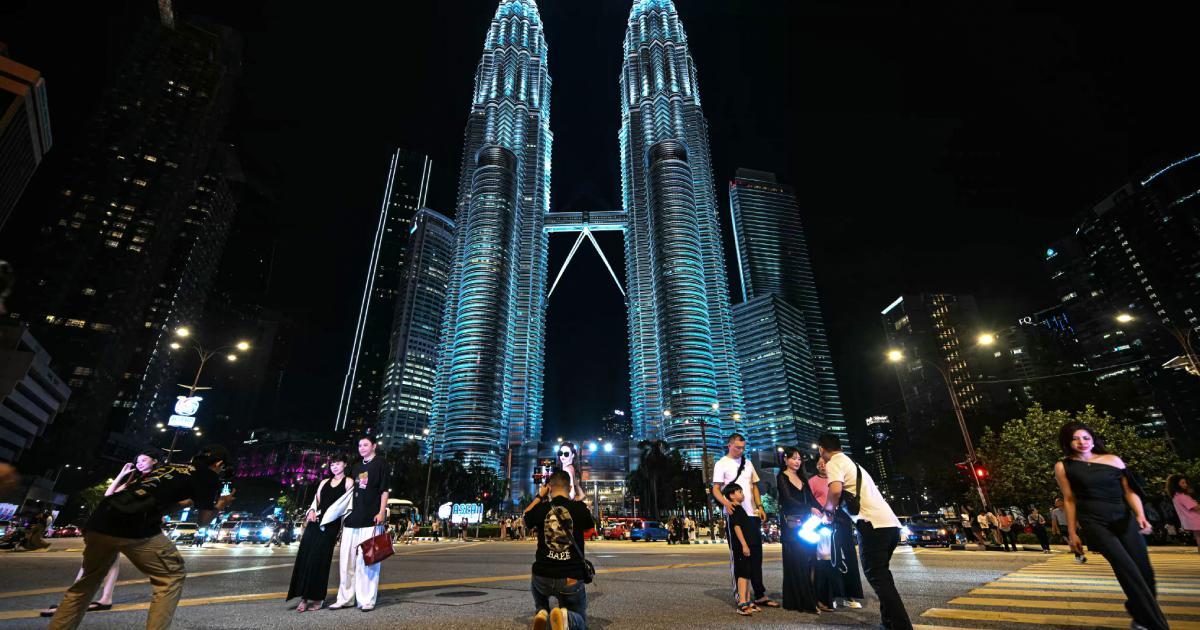 Cover image via Mohd Rasfan/AFP
Follow us on Instagram, TikTok, and WhatsApp for the latest stories and breaking news.
Malaysia's tourism industry has not only recovered from the pandemic, but it is also now generating more economic value than it did before COVID-19
According to the Department of Statistics Malaysia (DOSM)'s Tourism Satellite Account 2025, released today, 15 September, tourism contributed RM138.7 billion directly to Malaysia's economy in 2025, up 35.6% from RM102.3 billion in 2019.
Tourism's direct contribution also returned to 6.8% of Malaysia's GDP, matching its pre-pandemic share.
But the numbers also reveal something less obvious: Malaysia's tourism recovery is increasingly being driven by what visitors buy rather than where they stay.
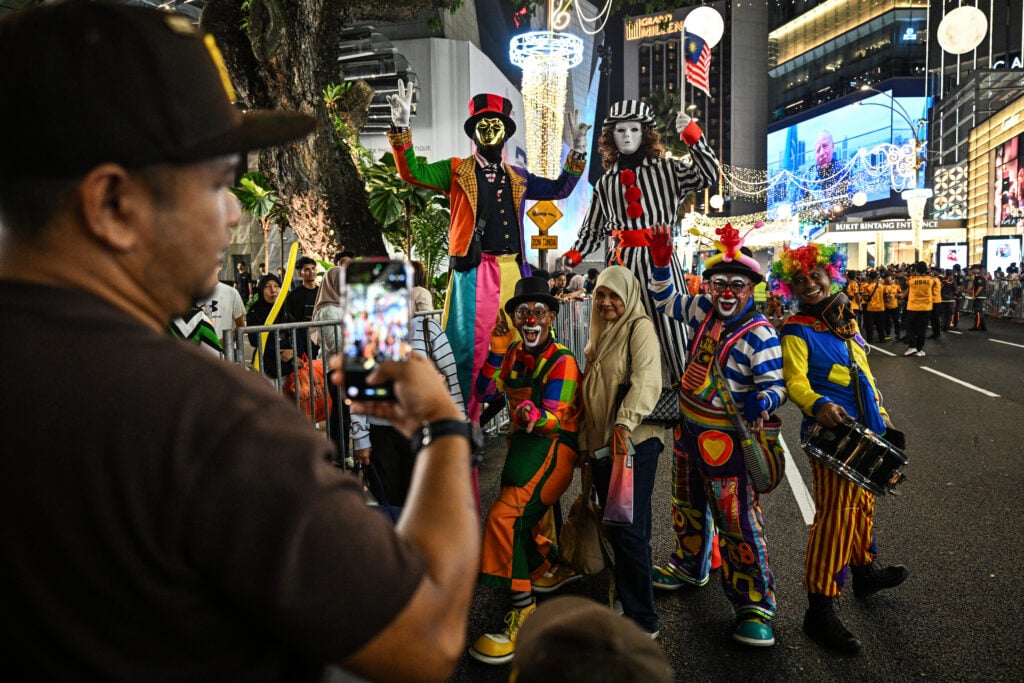
Visitors take pictures with clowns during an event marking the national launch of Visit Malaysia 2026 in Kuala Lumpur.
Image via Mohd Rasfan/AFPThe scale of Malaysia's tourism recovery is stark
According to the report, Tourism Direct Gross Domestic Product (TDGDP) collapsed from RM102.3 billion in 2019 to just RM11.7 billion in 2021, when international travel was severely restricted.
By 2023, it had climbed back to RM102 billion before rising to RM126.5 billion in 2024. It reached a record RM138.7 billion in 2025, with tourism growing 9.6% compared with 4.8% growth for Malaysia's overall GDP.
The wider tourism economy is even larger.
Gross Value Added of Tourism Industries (GVATI) reached RM323 billion, equivalent to 15.9% of Malaysia's GDP. That is 34.6% higher than the RM240 billion recorded in 2019.
In other words, the recovery is not merely a return to the pre-pandemic tourism economy. By several measures, Malaysia's tourism sector is now larger than it was before COVID-19.

The tourism industry contributed 15.9% to Malaysia's GDP in 2025, up from 15.4% in 2024.
Image via DOSMMalaysia recovered faster than much of Asia-Pacific
Visitor numbers tell a similar story.
Malaysia recorded 42.2 million visitor arrivals in 2025, comprising 26.6 million tourists who stayed overnight and 15.6 million same-day visitors. That is 20.6% higher than the 35 million visitors recorded in 2019.
The increase also stands out against the wider Asia-Pacific region, which recorded 336.5 million international arrivals in 2025 but remained 7.2% below its 2019 level, according to the UN Tourism figures cited by DOSM.
Malaysia's biggest visitor markets included Singapore with 21.1 million arrivals, followed by China at 4.7 million, Indonesia at 4.3 million, Thailand at 2.5 million, and Brunei at 1.6 million.
Visa facilitation and improved regional air connectivity helped drive the rebound, while inbound tourism spending increased 16.5% year-on-year to RM124.8 billion.

Number of visitor arrivals to Malaysia from the top five countries in 2025.
Image via DOSMBut the tourism economy is increasingly about shopping
This is perhaps the most revealing part of DOSM's data.
Of the RM236.9 billion spent through internal tourism consumption in 2025, shopping accounted for RM88.9 billion, or 37.5%. Food and beverage services came next at RM38.1 billion, followed by accommodation at RM33.5 billion, and passenger transport at RM31.9 billion. Retail trade also accounted for RM163.5 billion, or more than half (50.6%), of the RM323 billion generated in tourism-related gross value added.
That means the economic footprint of tourism extends far beyond hotels, airlines, and tourist attractions. A substantial amount of tourism spending is flowing into shops, restaurants, and other businesses that tourists interact with during their trips.
Hotel spending has not recovered at the same pace
There is one notable wrinkle in the otherwise strong recovery.
Although overall inbound tourism spending has now exceeded pre-pandemic levels for two consecutive years, spending on accommodation by international visitors remained 6.8% below its 2019 level. DOSM's data points towards shorter stays and changes in spending patterns as part of the explanation.
So Malaysia is attracting more visitors and generating more tourism revenue than before the pandemic, but that does not necessarily mean visitors are staying longer or spending more of their money on hotels.
The recovery is therefore not a simple return to the pre-2020 tourism model.

Percentage share by tourism industries, 2025.
Image via DOSMThe bigger picture
Malaysia's tourism industry emerged from the pandemic with a larger economic footprint, stronger visitor numbers, and record direct GDP contribution. But the composition of that growth matters.
Inbound tourism expenditure has overtaken domestic tourism expenditure, accounting for 52.7% of internal tourism consumption in 2025. At the same time, shopping has become the single largest tourism expenditure category, while accommodation remains below its pre-pandemic inbound spending level.
The numbers from DOSM therefore paint a more complicated picture than simply declaring tourism "back".
Malaysia has recovered the size of its tourism economy, and then some. But increasingly, the sector's economic success is being measured not by how long visitors stay in the country, but by how much they spend while they are here.
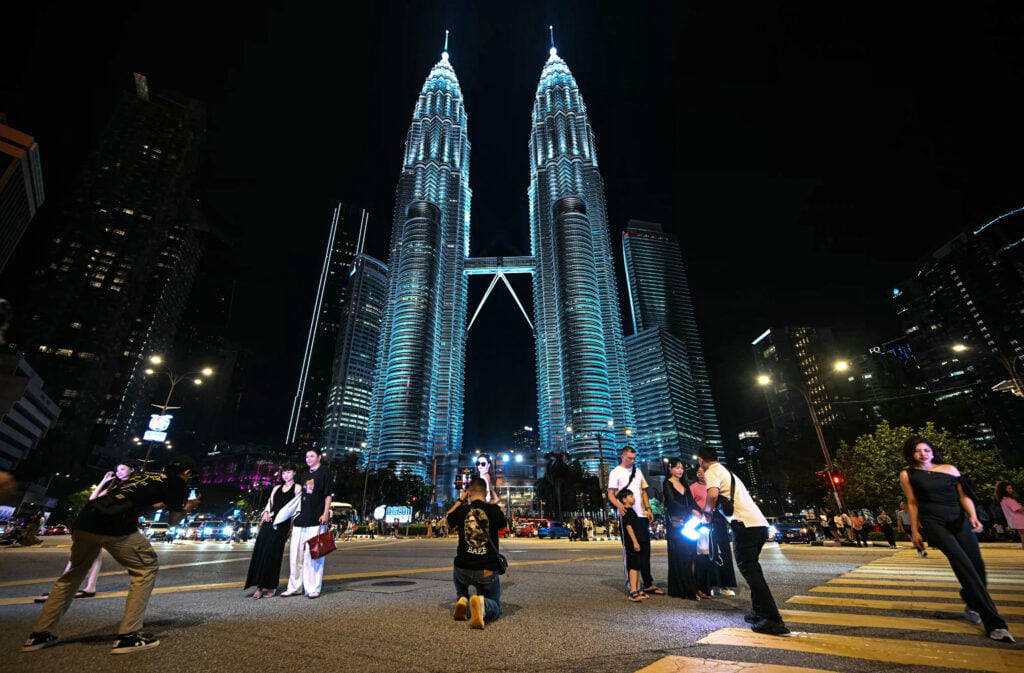
Photographers taking photos of tourists in front of the PETRONAS Twin Towers in Kuala Lumpur.
Image via Mohd Rasfan/AFP