
What Does PCB On Your Pay Slip Mean? Here’s A Simple Explainer If You’re Still Confused
Or if you just noticed it for the first time.


 Cover image via
 Follow us on Instagram, TikTok, and WhatsApp for the latest stories and breaking news.
PCB stands for Potongan Cukai Bulanan, or Monthly Tax Deduction
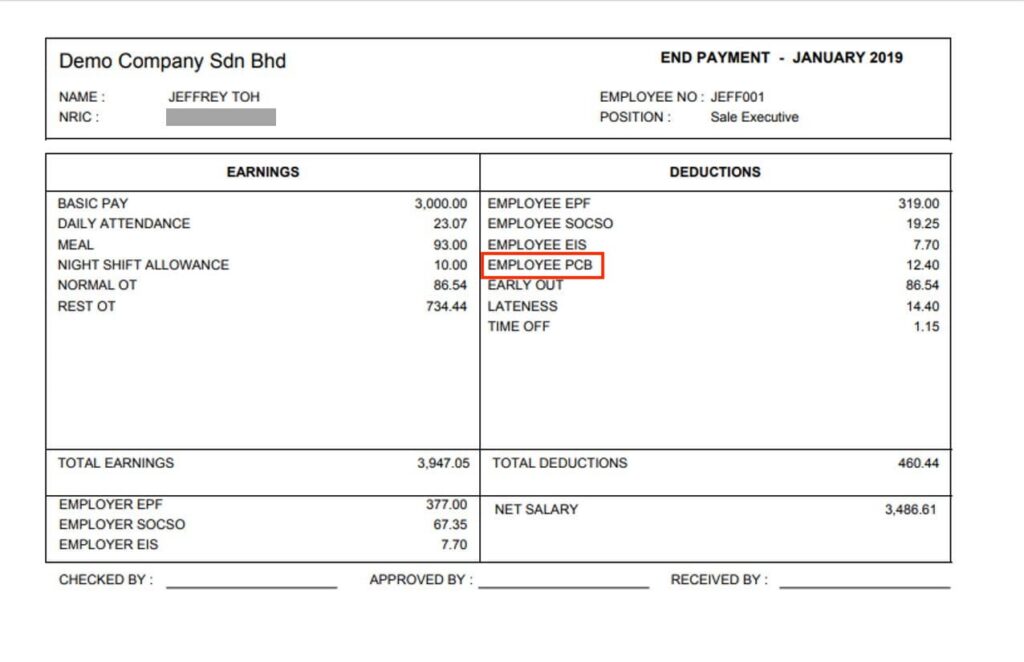
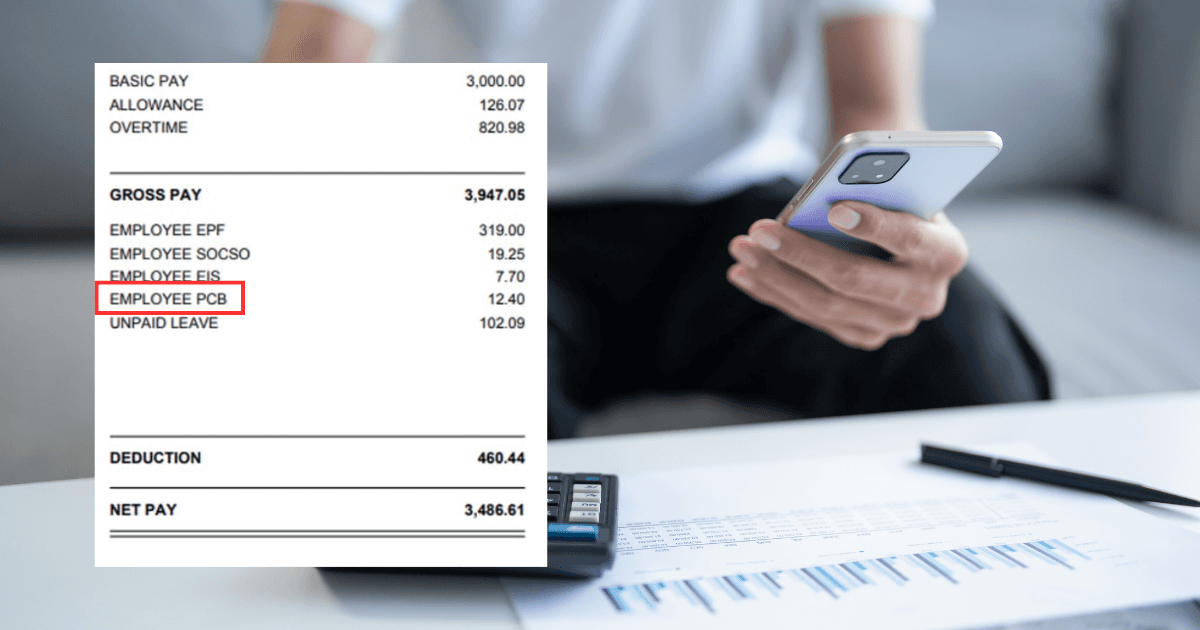
PCB is one of those deductions you'll probably see on your payslip, along with EPF, SOCSO, and EIS.
But let's be honest. Many employees in Malaysia have no idea what PCB actually means, even after years of working.
One reason is that not everyone sees PCB on their payslip right away. You'll usually only notice it once your salary reaches a certain level.
So, what exactly is PCB, and why is it being deducted from your salary?

PCB is basically your income tax, paid monthly by your employer before your pay reaches your bank account.
Instead of waiting until tax season and paying your income tax in one lump sum, the government collects it bit by bit throughout the year. If your income is high enough to be taxable, your employer has to calculate your PCB and pay it directly to the Inland Revenue Board, or LHDN, on your behalf.
This makes things easier because you don't have to set aside a large amount of money to pay tax later. For many employees, most or all of their yearly tax is already paid by the time tax season comes around.
When will PCB start appearing on your payslip?

According to LHDN, the non-taxable income threshold for an individual employee under the 'self' category is RM37,333 a year, or about RM3,111 a month, after EPF deductions.
For example, a single employee may not see PCB deductions until their salary reaches roughly RM3,500 to RM3,800.
But this is not a hard, universal cut-off point. Your actual PCB depends on things like your EPF contributions, tax reliefs, marital status, whether you have children, and your assessment type.
So, why do some people only see PCB deductions when they start earning more?
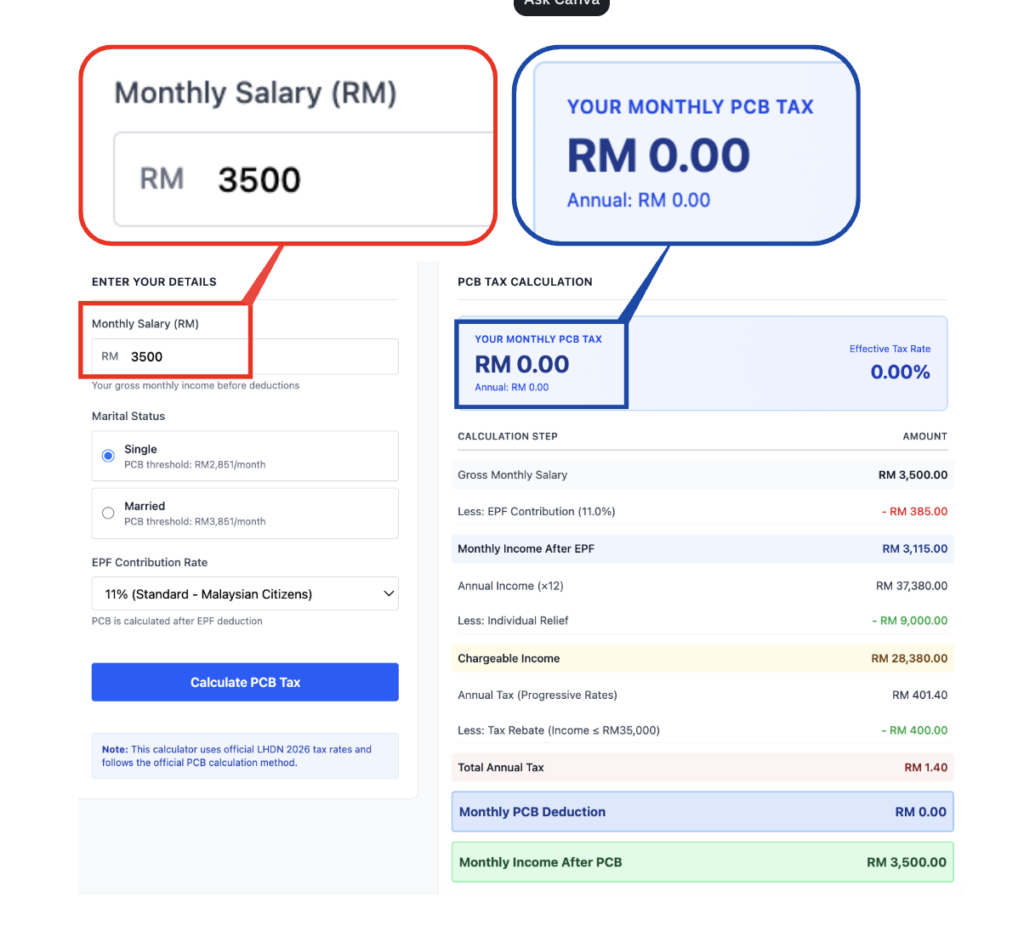
Even if your income is technically taxable, you might not see PCB deducted immediately.
That's because if the monthly PCB amount calculated is less than RM10, your employer is generally not required to deduct it from your salary.
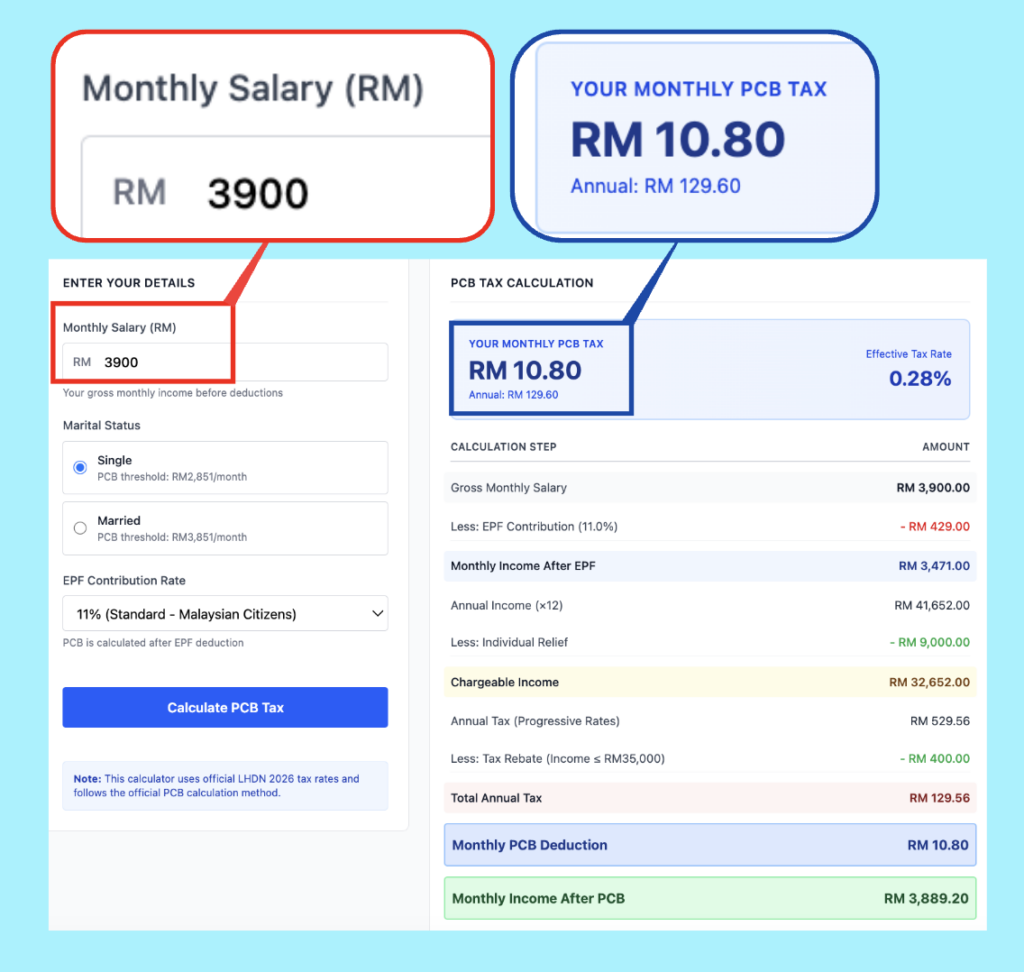
In some payroll calculator examples, a single employee may only start seeing visible PCB deductions at around the RM3,800-RM3,900* gross salary range, where the deduction reaches roughly RM10 a month*.
*Treat this as an estimate, not an official salary threshold and accurate PCB deduction amount.
Why is my PCB higher this month?
Don't panic if your PCB changes from month to month.
This can happen when your income for the month changes, such as when you receive a bonus, commission, overtime pay, salary increment, new fixed allowance, or a higher final salary after changing jobs.
In general, the higher your taxable income, the more PCB you'll pay. That's because Malaysia uses a progressive tax system, where people with higher chargeable income are taxed at higher rates.
Even with PCB, you still need to file your annual income tax return
After you file your taxes, LHDN will compare what you owe with what has already been deducted. If you paid too much PCB, you may get a refund. If you paid too little, you'll need to pay the balance.
Many salaried employees receive tax refunds after claiming eligible tax reliefs, such as medical expenses, lifestyle purchases, insurance, education fees, or other approved reliefs.
Can you ask HR to reduce your PCB?
Not just because you feel like it. Your employer has to follow LHDN's PCB calculation method, so HR can't simply lower your deduction on request.
But if your personal details have changed, or you qualify for additional tax reliefs, you should let HR know.
