
Why Does Hair Always Gather In That One Corner Of Your House? Here’s The Science Behind It
It's not because you aren't vacuuming enough.


 Cover image via Canva Teams
Follow us on Instagram, TikTok, and WhatsApp for the latest stories and breaking news.
Have you ever noticed a tiny pile of hair gathering in the exact same corner of your room, kitchen, or bathroom?
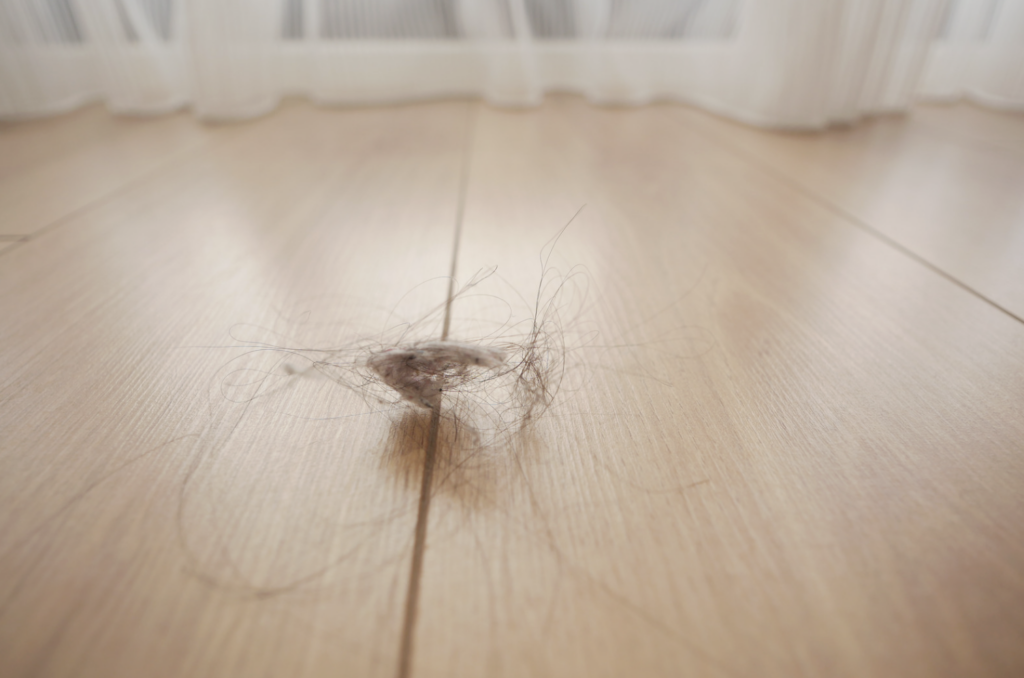
For some reason, loose hair never scatters evenly around the house. Instead, it forms these strange little "hair nests" behind doors, under beds, beside walls, or near the bathroom mat like it has chosen a meeting point.
Turns out, there's actually a scientific reason why this happens.
Your home actually has "collection zones" where hair naturally settles
Fallen hair is incredibly light, which means it behaves more like dust than a heavy object.
Tiny air currents created by ceiling fans, air-conditioners, open windows, robot vacuums, and even people walking around can slowly push loose strands across the floor without you noticing.
As the hair moves around, it eventually reaches areas where airflow weakens. Once that happens, the air no longer has enough force to carry the strands, causing them to settle in the same spots over and over again.
Corners, walls, and hallways are some of the biggest hair magnets
Ever wonder why hair seems to love gathering along walls and in room corners?
That's because moving air naturally slows down near these areas. When the airflow loses energy, it drops whatever it's carrying, including loose hair.
Hallways and doorways can also act like mini wind tunnels, directing airflow through your home before depositing hair at corners, pinch points, or other low-airflow areas.
This is why many homes seem to have one particular "hair corner" that keeps coming back no matter how often you sweep it away.
Furniture creates hidden "dead zones" for hair
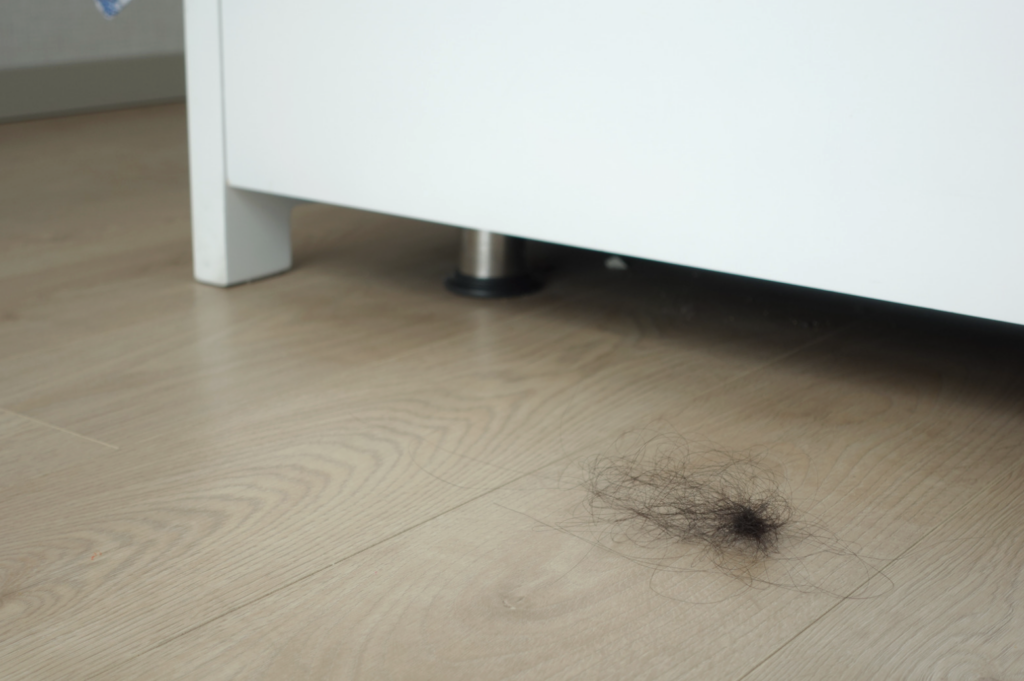
Beds, sofas, cabinets, and other large furniture can also affect where hair ends up.
These pieces block airflow, creating sheltered pockets underneath where air barely moves. Once hair drifts into these spaces, there's little to push it back out.
That's why cleaning under furniture often reveals far more hair and dust than expected.
Airflow may determine where hair goes, but static electricity helps explain why it stays there
Hair easily builds up static charge, especially in air-conditioned rooms or on certain floor surfaces. This makes strands cling to walls, fabrics, furniture, and even other strands of hair.
Once a few hairs gather in one spot, they can attract even more, helping those tiny piles grow over time.
Hair is also surprisingly good at tangling and naturally clumps together.
A few loose strands can easily catch onto one another, trapping dust, lint, and other fibres along the way. Over time, this creates those familiar little "hair tumbleweeds" that seem to appear out of nowhere.
