
Why Are Kampung Egg Yolks More Orange Than Normal Ones?
It's not because one is healthier than the other.


 Cover image via
 Follow us on Instagram, TikTok, and WhatsApp for the latest stories and breaking news.
If you've ever cracked open a kampung egg, you've probably noticed one thing almost immediately.
The yolk is a deep orange, while normal ones are usually pale yellow.
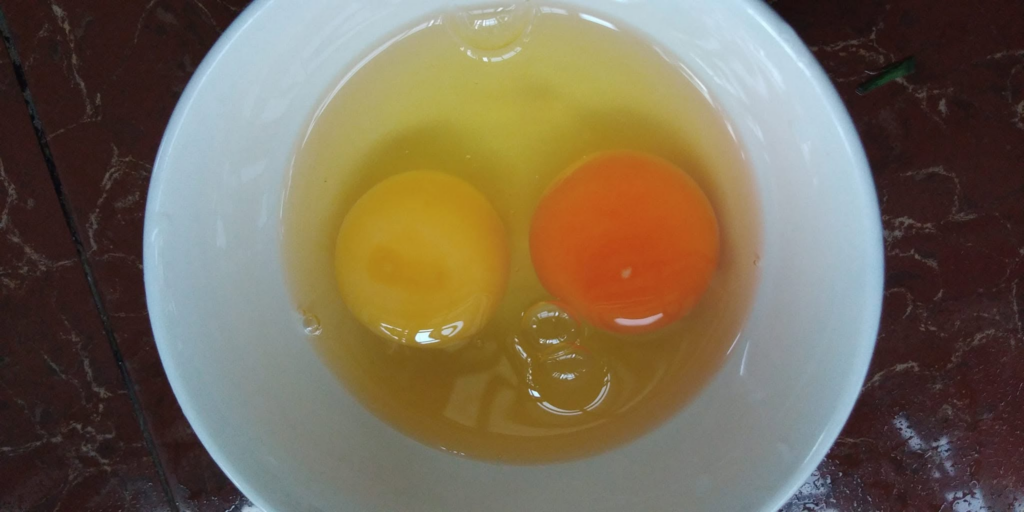
For many Malaysians, darker yolks from kampung eggs have become a sign of a "better" egg. Some swear they taste richer, others believe they're healthier, and many are willing to pay an extra 10 to 20 sen for a kampung egg.
But is an orange yolk really proof of a superior egg? The answer is a little more complicated.
One of the biggest factors behind an egg yolk's colour is what the hen eats

Egg yolks get their colour from natural plant pigments called carotenoids. These are the same compounds that give carrots, pumpkins, corn, chillies, and leafy greens their yellow, orange, and red colours.
When hens eat foods rich in carotenoids, these pigments are absorbed into their bodies and deposited into the yolk.
What egg yolk colour usually means
In general, yolk colour reflects how many carotenoid-rich foods the hen has eaten.
Pale yellow
Usually linked to diets lower in carotenoids.
Golden yellow
Usually means a moderate amount of carotenoid-rich feed.
Deep orange
Usually comes from hens eating more carotenoid-rich foods.
So, why do kampung eggs usually have darker yolks?
Traditionally, kampung chickens are typically raised in more free-range environments than commercial laying hens.
Instead of relying solely on formulated feed, they often forage for a wider variety of foods, including leafy plants, seeds, grains, insects, worms, and fallen fruits. Many of these foods naturally contain carotenoids, resulting in richer orange yolks.
Some farmers may also include ingredients like corn, alfalfa, marigold petals, or paprika in the chickens' feed, all of which naturally deepen yolk colour.
However, there's a catch: Not every kampung egg comes from a chicken roaming freely around a village
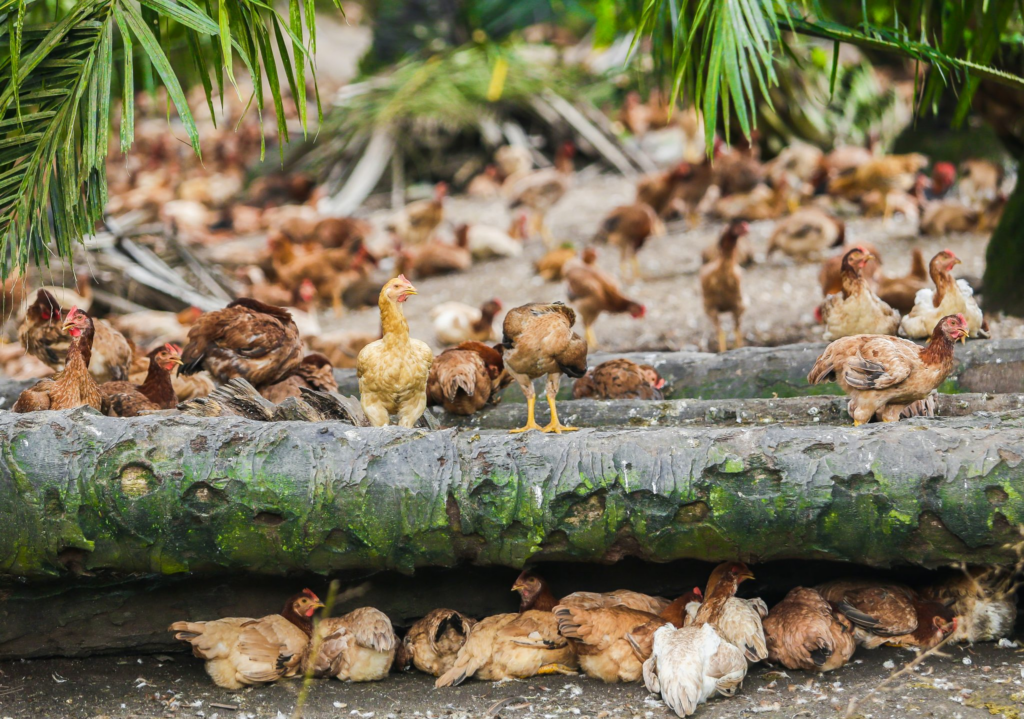
While the term "kampung egg" often brings to mind chickens roaming freely around villages, many kampung eggs sold today are produced through commercial farming systems.
In many cases, "kampung" refers to the breed or type of chicken rather than exactly how it was raised. Some farms now raise kampung chickens on a larger scale with controlled environments and formulated feed to meet consumer demand.
This means a kampung egg may come from a kampung chicken, but it does not always mean the chicken spent its life freely foraging in a village.
As for normal supermarket eggs, the yolks are lighter also because of the hens' diet

Commercial laying hens are generally fed carefully formulated diets designed to provide balanced nutrition and consistent egg production. Depending on the feed, the yolks may appear lighter simply because there are fewer carotenoid-rich ingredients.
But this doesn't necessarily mean the eggs are lower quality.
While hens raised outdoors on a more varied diet may sometimes produce eggs with slightly higher amounts of certain nutrients, the colour of the yolk alone isn't a reliable indicator of nutritional value. A darker yolk doesn't automatically mean the egg contains more protein, is fresher, or is safer to eat.
The overall nutritional profile depends on factors such as the hen's diet, breed, age, and farming practices, not simply how orange the yolk looks.
What about taste? Are kampung eggs' orange yolks objectively tastier, or is it just psychological?
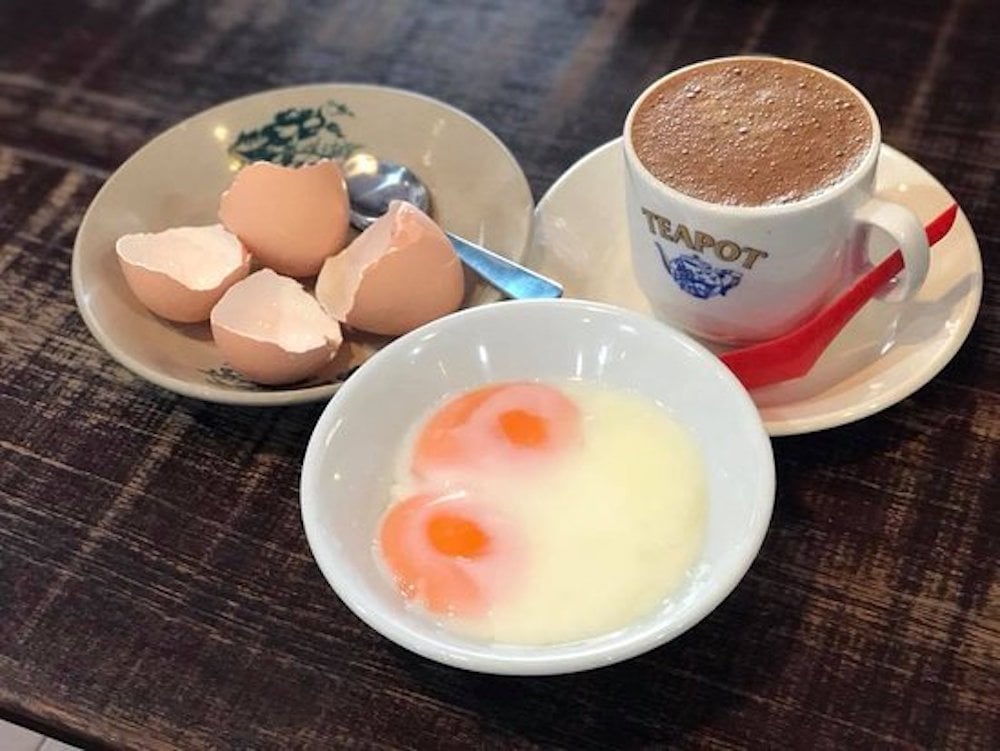
Many people describe kampung eggs as tasting richer, creamier, or more buttery than regular eggs. There's some truth to that, but the colour of the yolk itself isn't what's creating the flavour.
Instead, the difference is more likely due to the hen's diet, breed, and lifestyle. Chickens that forage outdoors and eat a wider variety of foods can produce eggs with subtle flavour differences.
If you're trying to spot a kampung egg at the supermarket, you can usually identify them by colour and size

Many kampung eggs happen to have cream or light brown shells because the local chicken breeds commonly raised in Malaysia naturally lay eggs in those colours. Kampung eggs are also often smaller than commercial eggs because local breeds are naturally smaller birds.
In contrast, normal eggs have a darker brown shell. Nevertheless, shell colour and egg size alone cannot confirm whether an egg is a kampung egg, as this is determined mainly by the breed of the hen.
Read more trending stories on SAYS

“Red Means Go” — This Short Film Reminds M’sians To Keep Moving Forward Amid Life’s Challenges
It doesn't matter if you're expanding your business, starting your family, or saving up for the future.