
Doctor Suspended 13 Months After Patient Lost Leg Following Delayed Gangrene Referral
Dr Lim Geok Leong was found guilty of professional misconduct after repeatedly failing to refer a diabetic patient with severe cellulitis and worsening gangrene for hospital care, despite five visits over 29 days.


 Cover image via Medical Technology
Follow us on Instagram, TikTok, and WhatsApp for the latest stories and breaking news.
A doctor has been suspended for 13 months after a disciplinary tribunal found that his repeated failure to refer a diabetic patient with a worsening foot infection to specialist care significantly contributed to the patient losing his leg
In a recently published decision, the Singapore Medical Council Disciplinary Tribunal found general practitioner Dr Lim Geok Leong guilty of professional misconduct under Singapore's Medical Registration Act.
The tribunal ruled that Dr Lim had seriously breached the expected standard of care after continuing to treat the patient on an outpatient basis across five separate visits, despite clear signs of severe infection, peripheral arterial disease, tissue necrosis, and eventually wet gangrene.
The patient was later hospitalised and underwent what the tribunal described as a "series of high-risk ascending amputations" to his right leg, resulting in the irreversible loss of his ability to walk.
According to the tribunal's Grounds of Decision dated 17 March 2026, the patient first visited Dr Lim's clinic on 11 April 2022 seeking treatment for an infection on his right foot.
Dr Lim diagnosed the patient with severe and extensive cellulitis, alongside severe diabetes, after blood tests showed a critically high random blood sugar level of 22.2 mmol/L.
Despite this, the tribunal noted that Dr Lim prescribed oral antibiotics and asked the patient to return in four days, without referring him to a hospital emergency department or specialist.
Over the next 29 days, the patient returned four more times.
During those visits, Dr Lim reportedly assessed that the infection had either remained stable or improved and continued outpatient treatment using oral antibiotics.
The tribunal found that Dr Lim failed to refer the patient for specialist treatment during every stage of deterioration, including when the patient eventually developed extensive wet gangrene affecting multiple toes and the dorsum of the foot
On 10 May 2022, one day after the final consultation with Dr Lim, the patient independently sought a second opinion at another clinic, where a doctor immediately identified severe infection and extensive wet gangrene before arranging urgent hospital admission.
The tribunal noted that the patient's condition observed at the second clinic "would have closely reflected the condition that was presented to the Respondent on 9 May 2022".
In its judgment, the tribunal stressed the importance of general practitioners acting as frontline gatekeepers in Singapore's healthcare system.
"General Practitioner clinics are an important part of Singapore's primary healthcare network. Together with polyclinics, they are often the first point of contact for patients who have healthcare needs. Patients rely on doctors to assess the seriousness of their conditions, and to refer appropriate cases to either a specialist or a hospital," the tribunal said.
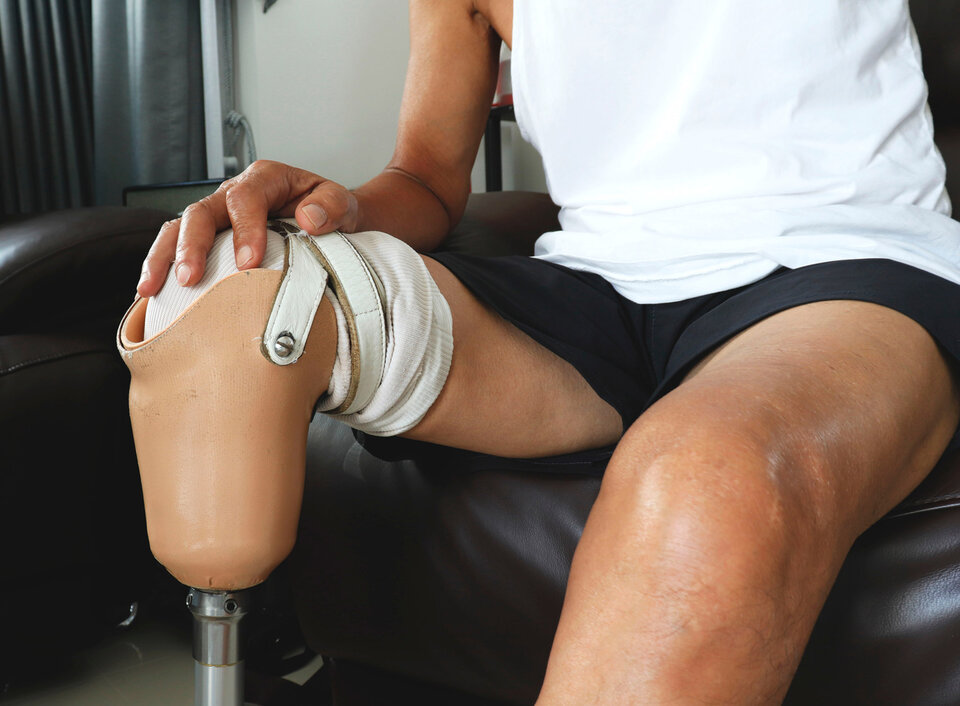
Image for illustration purposes only.
Image via Medical TechnologyThe tribunal also criticised Dr Lim for failing to carry out basic clinical examinations that could have better assessed blood circulation in the patient's foot
"The Respondent departed from the required standard of care as he… embarked on a plan not to refer the Patient to a hospital or specialist without conducting a capillary refill test or palpation of pedal pulses," it said.
"In so doing, the Respondent deprived himself and the Patient of important decisional tools on whether to forego or continue with the plan."
The defence had argued that the patient never informed Dr Lim that he was diabetic and that there was no evidence that the patient's condition worsened while under his care.
However, the tribunal rejected both arguments.
"The Defence's submission that the Patient did not inform the Respondent that he was diabetic did not reduce his culpability and did not alter the standard of care reasonably expected of him," the tribunal said.
It also stated that the claim there was no evidence of worsening condition "was not a mitigating factor" and was "at best the lack of an aggravating factor".
The tribunal further rebuked Dr Lim by stating that diabetic foot disorders are common medical conditions with well-established treatment standards known to doctors.
"Diabetic foot disorder is a common condition in Singapore. The steps a doctor should take when a diabetic patient presents with foot conditions are widely taught in medical schools," the tribunal wrote.
"In the DT's view, any responsible and competent doctor would refer a patient in that condition to the emergency department of a hospital."
Expert witnesses during the proceedings disagreed over whether the delayed referrals directly caused the amputation
However, the tribunal ultimately concluded that while the patient's severe diabetes and peripheral arterial disease were the primary causes, Dr Lim's prolonged failure to refer him "significantly contributed to the risk" of major amputation.
The tribunal classified the level of harm at the lower end of "moderate" and described Dr Lim's conduct as "serious negligence" with culpability at the midpoint of the medium range.
Under Singapore's sentencing framework for medical misconduct cases involving moderate harm and medium culpability, the tribunal initially determined that a 15-month suspension was appropriate.
Dr Lim's lawyers highlighted his previously clean 40-year career, positive patient reviews, and past commendation as a National Serviceman, but the tribunal ruled these factors were "not so exceptional" as to justify reducing the sentence.
However, the tribunal eventually reduced the suspension by two months after finding there had been "inordinate delay" by the Singapore Medical Council in prosecuting the case.
The initial complaint was filed in August 2022, but the formal Notice of Inquiry was only issued in June 2025, nearly three years later.
"After considering the case history and the complexity of the medical issues, the DT was of the view that there was an inordinate delay," the tribunal said.
"As the SMC stated in their submissions, diabetic foot disorder is a common condition in Singapore. The treatment guidelines and standards are widely known and well-established. It was therefore reasonable to have expected the SMC to have completed their investigations and issued the NOI earlier."
Besides the 13-month suspension, Dr Lim was also formally censured, ordered to provide a written undertaking not to repeat the misconduct, and directed to pay the legal costs of the disciplinary proceedings.
