
What The Declassified Pardons Board Minutes Reveal About Najib’s House Arrest
The 18 September meeting minutes detail discussions surrounding Najib Razak's conditional pardon, including differing views among board members, revisions to his house arrest conditions, and the RM1.7 billion in tax arrears.


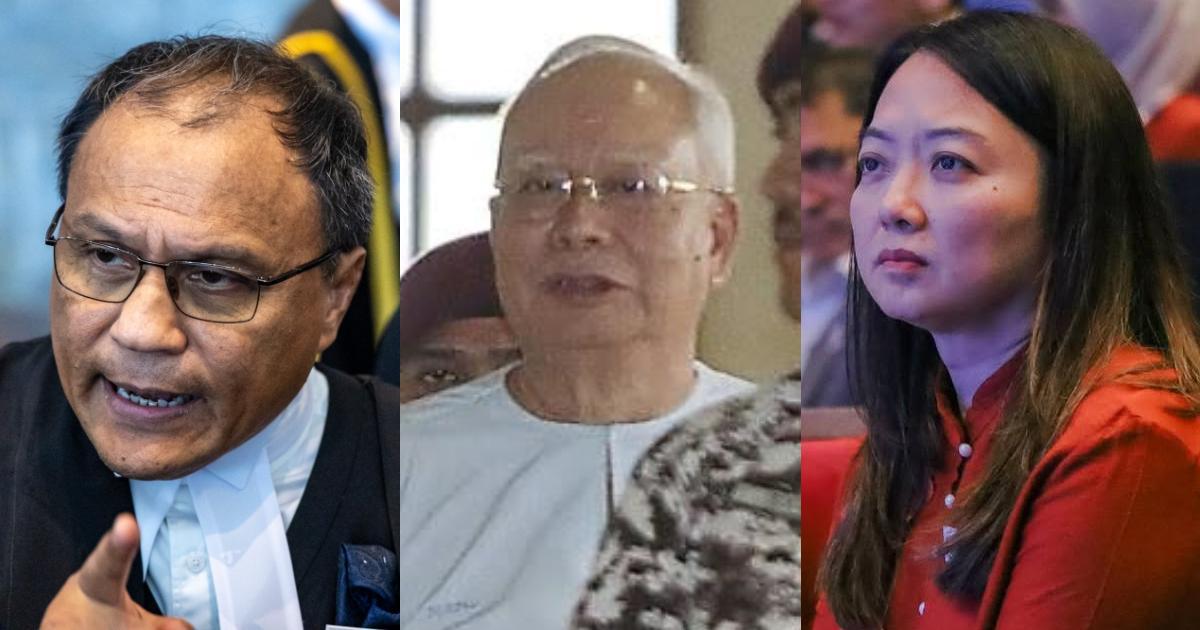 Cover image via Firdaus Latif/Malay Mail & Najib Razak (Facebook) & Hannah Yeoh (Facebook)
Follow us on Instagram, TikTok, and WhatsApp for the latest stories and breaking news.
Declassified minutes from the Federal Territories Pardons Board meeting that considered Datuk Seri Najib Razak's appeal to serve the remainder of his prison sentence under house arrest have revealed what was discussed before the conditional pardon was granted
The 64th meeting of the Pardons Board for Kuala Lumpur, Labuan, and Putrajaya took place at Istana Negara on 18 September 2026, beginning at 8.30am and ending at 9.15am.
The minutes, which have been declassified for court purposes and seen by SAYS, record the views expressed by Attorney General Tan Sri Mohd Dusuki Mokhtar, Federal Territories Minister Hannah Yeoh, and other board members, as well as the amendments made to the proposed conditions of Najib's house arrest.
Among the details revealed are discussions over whether house arrest could be granted under the Federal Constitution, the King's position on Najib's outstanding tax arrears, and two specific changes to the conditions governing who could live with the former prime minister and whether he could hold gatherings at home.
The Attorney General and Federal Territories Minister shared the same position, opposing Najib's house arrest
According to the minutes, Mohd Dusuki said Najib should continue serving his prison sentence until 2028, consistent with the position he had taken at the previous meeting.
For context, 23 August 2028 is the early release date previously set by the Pardons Board when it halved Najib's original 12-year prison sentence to six years in 2024.
Mohd Dusuki argued that house arrest was not recognised under Malaysian law and was foreign to the country's legal system. He referred to a decision by Justice Alice Loke and said allowing Najib to serve his sentence under house arrest could affect the government in terms of political stability, the economy, investment, and Malaysia's international image.
He stressed that Najib should continue serving his sentence in prison.
Yeoh subsequently stated that her position was the same as the Attorney General's and consistent with the view she had expressed at the previous meeting.
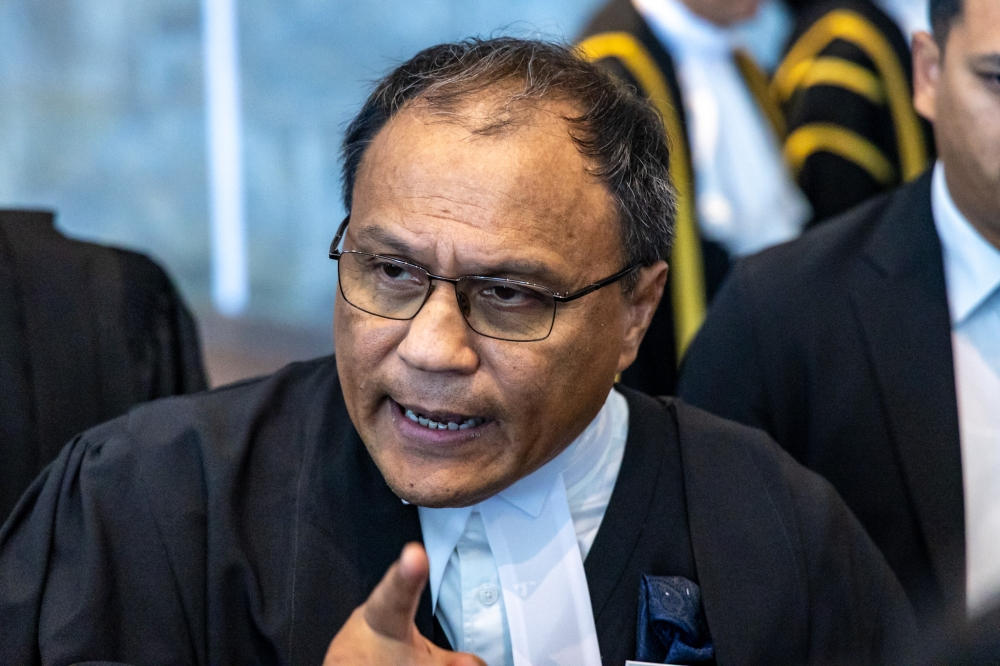
Attorney General Tan Sri Mohd Dusuki Mokhtar.
Image via Firdaus Latif/Malay MailAnother board member cited the King's constitutional power to grant a respite
The minutes also record a different interpretation of the King's constitutional powers.
Tan Sri Datuk Harmindar Singh Dhaliwal, a retired Malaysian Federal Court judge who serves as one of the appointed members of the Pardons Board, acknowledged that while there was no specific law governing house arrest, he argued that Article 42 of the Federal Constitution empowered the Yang di-Pertuan Agong to grant pardons, reprieves, and respites.
He said the power to grant a respite, or lega hukum, fell within the King's discretion.
Meanwhile, former Inspector-General of Police Tan Sri Razarudin Husin said the views of prison authorities should also be considered, particularly regarding Najib's health. He nevertheless acknowledged that the final decision rested with the King and said he would abide by it.
Another board member, Supri Hashim, a prison officer, pointed out that Najib still had several court appeals pending, the outcomes of which could affect the sentence he would ultimately have to serve.
During the deliberations, the Attorney General raised Najib's outstanding RM1.7 billion in tax arrears
Mohd Dusuki informed the board that the matter had reached the stage of bankruptcy proceedings. He described the amount as substantial and said it should be taken into consideration during the meeting.
However, the King emphasised that the tax arrears case was unrelated to the matter being considered. He also pointed out that Najib had the right to defend himself in court over the tax case.
The minutes state that the board's consideration concerned granting Najib a respite, subject to him paying the RM50 million fine.
After examining the proposed conditional pardon order and its accompanying conditions, the King directed two amendments
The first involved paragraph 2.3, which sets out the family members Najib is permitted to live with during house arrest.
The original draft referred to his "wife", children, children-in-law, and grandchildren. The King directed that the word "wife" be amended to "wives".
The amended version consequently refers to Najib's wives, children, children-in-law, and grandchildren as family members permitted to live with him without prior written permission from the Commissioner General of Prisons, as Home Minister Datuk Seri Saifuddin Nasution Ismail told Parliament on 12 November.
The second amendment concerned paragraph 5.4, which prohibits Najib from organising or participating in events or social gatherings.
The original draft allowed an exception if he obtained prior written permission from the Commissioner General of Prisons.
However, the King directed that this exception be deleted.
Under the amended condition, Najib is prohibited from organising or participating in any event or social gathering at any place, including his designated residence.
The minutes also record that Supri raised the possibility of Najib applying to hold social or celebratory gatherings at the house, such as tahlil prayers or weddings. He noted that these would not be permitted under the amended condition.
Yeoh and Mohd Dusuki did not offer comment on the proposed conditions because they did not agree with the conditional pardon. Dhaliwal and Razarudin agreed to the conditions without further comment.
The Pardons Board meeting also discussed who should sign the conditional pardon order
Another matter raised during the meeting concerned a fake pardon order circulating on social media.
Yeoh referred to Section 14 of the Delegation of Powers Act 1956 and suggested that another officer, such as the Chief Secretary to the Government, could sign the conditional pardon order instead, citing the significant political implications and potential impact on the government.
The Attorney General took note of the provision and requested time to review it before giving his opinion.
However, the King's Special Duties Officer, Datuk Wira Haji Nazim Mohd Alim, said it would be inappropriate for the Chief Secretary to sign the order because he had not been involved in the meeting.
The King also pointed out that the Chief Secretary was not a member of the Pardons Board.
Razarudin similarly argued that having another person sign the order could create a larger issue, as it might give the impression that Yeoh had not attended the meeting.
He suggested that Yeoh could instead lodge a police report over the fake pardon order circulating online.
After considering the views raised, the King decided that Yeoh should sign the conditional pardon order, as it was her responsibility as the Minister in the Prime Minister's Department in charge of the Federal Territories.
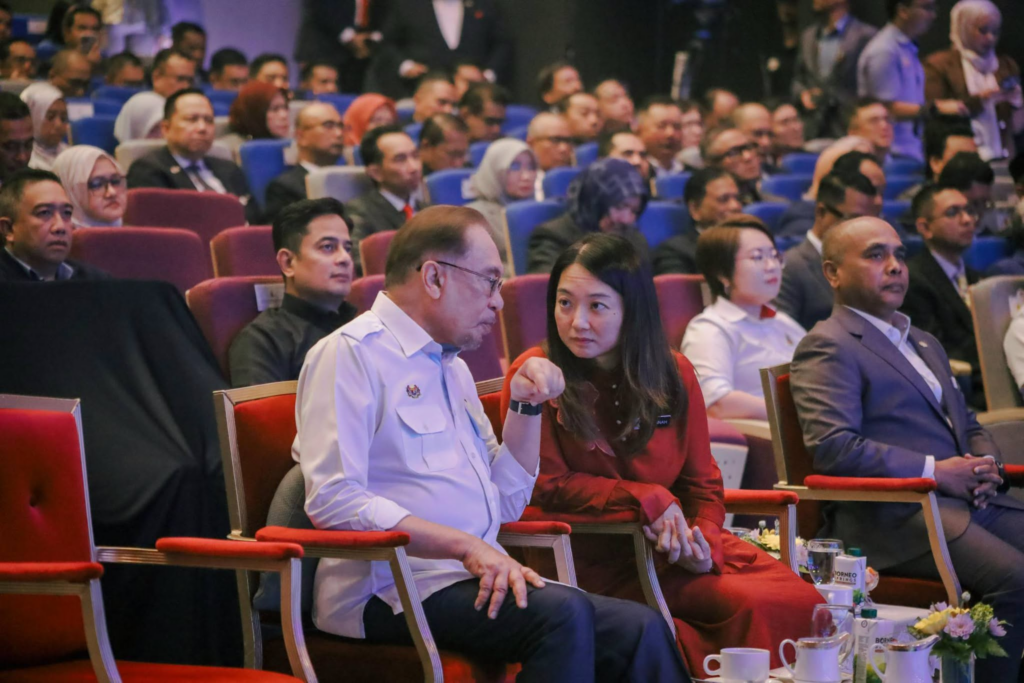
Hannah Yeoh with Prime Minister Datuk Seri Anwar Ibrahim.
Image via Hannah Yeoh (Facebook)In total, Najib's house arrest order sets out nine conditions
The conditional pardon order included in the minutes states that Najib would serve the remainder of his SRC International sentence under house arrest at his Jalan Langgak Duta residence in Kuala Lumpur until 23 August 2028.
The arrangement is subject to him paying the RM50 million fine imposed following the earlier reduction of his sentence in January 2024. UMNO paid the RM50 million fine on Najib's behalf.
The accompanying conditions place Najib under the control and supervision of the Commissioner General of Prisons and an appointed house arrest officer.
Among other things, he is required to:
- Remain at his designated residence and obtain permission before moving to another property
- Obtain permission before leaving the residence. An oral application is allowed in reasonable circumstances where a written application cannot be made
- Receive visitors only with prior written permission
- Use only telephones and communication devices registered with the Prisons Department, solely to communicate with and report to his house arrest officer
- Refrain from exposing himself to media coverage or social media platforms, or making statements, comments, or remarks through them
- Refrain from participating in political matters and activities
- Allow the Commissioner General of Prisons or house arrest officer to enter the residence whenever necessary for supervision, monitoring, inspection, or verification
He is also required to attend rehabilitation programmes determined by the Commissioner General of Prisons, maintain good behaviour, comply with the law, and avoid any criminal offence.
The order states that any breach of the conditions would render the conditional pardon null and void, requiring Najib to immediately continue serving the remainder of his sentence at Kajang Prison or another prison designated by the Commissioner General of Prisons.
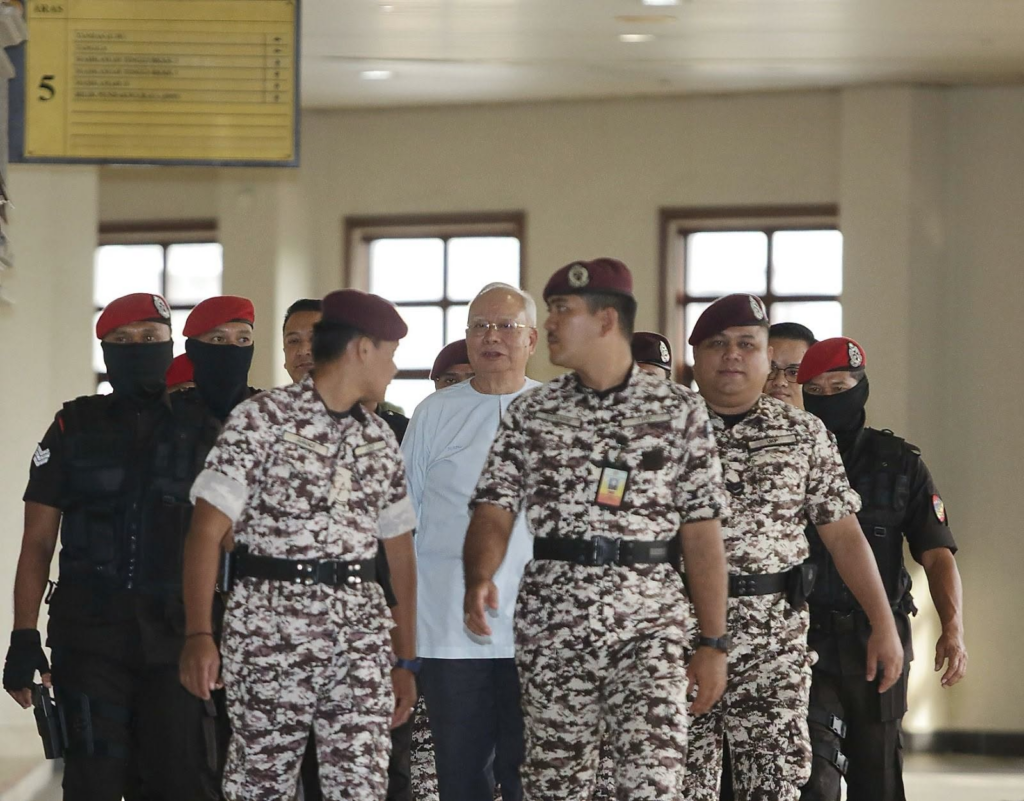
Najib walking out of the court on 10 November, before he was allowed to go home to serve the remainder of his prison sentence as house arrest.
Image via Najib Razak (Facebook)