
Elephant Biologist Says DAK Enclosure At Tennoji Zoo Lacks Naturally Occurring Minerals
Dr Siti SR Raw has been documenting the living conditions of the three Malaysian elephants at the zoo.


 Cover image via
 Follow us on Instagram, TikTok, and WhatsApp for the latest stories and breaking news.
The enclosure at Tennoji Zoo in Osaka, Japan, where three elephants from Malaysia are kept, lacks naturally occurring minerals and salts, said elephant biologist Dr William Keith Lindsay
In a statement to SAYS, Dr Siti SR Raw said she has been documenting the living conditions of Dara, Amoi, and Kelat (DAK) at the zoo, with the intention of sharing the footage with Lindsay to understand aspects of the elephants' wellbeing that may not be immediately apparent to the general public.
Siti described her visit to Lindsay at Oxford, England, as an important opportunity to seek his knowledge, wisdom, and professional input on the elephants.
"Almost every day, we can observe DAK looking closely at the ground, using their trunks to pick up small objects or particles and repeatedly attempting to place them into their mouths.
"Dr Lindsay explained that this behaviour is consistent with elephants searching for naturally occurring minerals and salts in their environment," she said.
In the wild, elephants obtain essential minerals from their natural surroundings, including soil, mineral-rich earth, salt licks, and other natural sources.
Citing Lindsay, Siti said these minerals support elephants' nutritional needs and physiological functions, and they may seek out mineral-rich areas when their regular diet does not provide sufficient amounts.
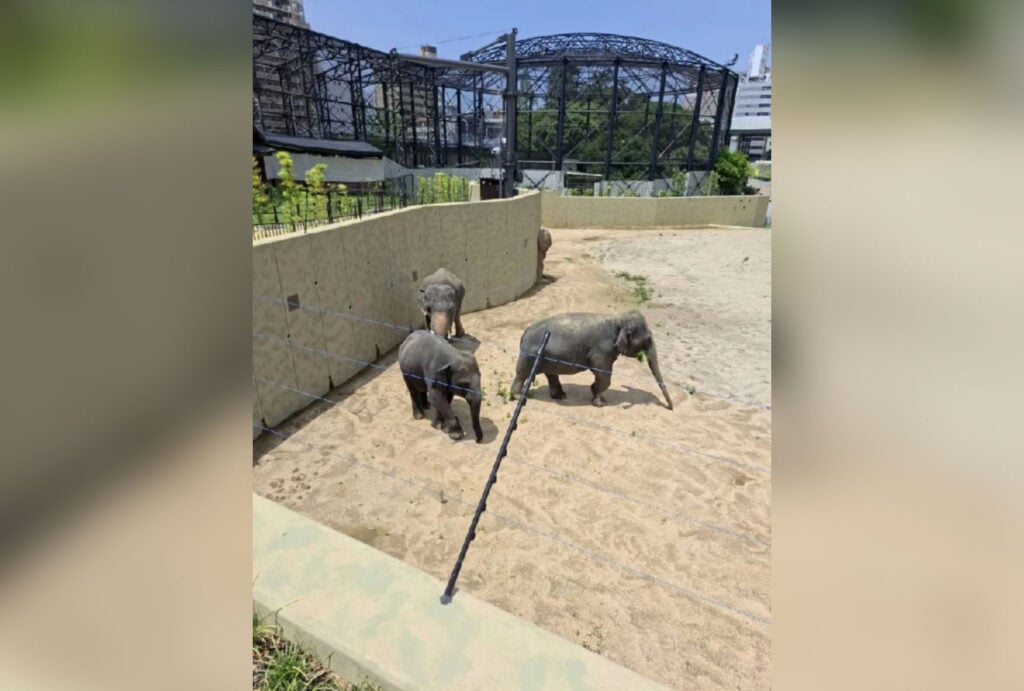
Siti said this understanding led her to reflect deeply on what she had observed about the elephants
"When elephants live in natural habitats or well-designed sanctuaries, they have the opportunity to explore a much larger and more varied environment such as digging, foraging, smelling, touching the soil, seeking mineral-rich earth, and discovering natural sources of salt and other nutrients.
"But when their environment is highly controlled, their opportunities to perform these natural foraging behaviours can become much more limited," she explained.
Siti said her frequent posting of DAK videos is important as they remind the public that elephant welfare is not only about providing food, water and shelter, but also about meeting their complex nutritional, behavioural, and environmental needs.
"They need opportunities to search, forage, explore, dig, wallow, dust, socialise and interact with their surroundings as elephants naturally do.
"For me, meeting Dr Lindsay was not simply a meeting with an expert. It was an opportunity to learn, to listen, to ask questions and to better understand what Dara, Amoi and Kelat may be communicating through their behaviour," Siti said.
A recent viral video depicting two of the elephants at the Japanese zoo has renewed concerns about the conditions DAK live in.
The elephants were sent to the zoo in March as part of a purported 25-year deal between Tennoji Zoo and Zoo Taiping & Night Safari, represented by the Taiping Municipal Council (MPT).
To see up-to-date footage of DAK's living conditions, you can follow Siti's dedicated TikTok account @time.travellerz here.
Meanwhile, below is a carousel featuring animal activists interviewed by SAYS, who explain DAK's needs and behaviours:
Read more trending stories on SAYS
People Are Paying RM18 For Egg Tarts Topped With Giant Water Beetles
A restaurant in Guangdong has gone viral for selling egg tarts topped with crispy diving beetles. Would you try it?
