
Malaysians Continue To Enjoy RM1.99 Petrol As Unsubsidised RON95 Rises To RM3.87
The government also said it will tighten enforcement to prevent subsidy misuse.


 Cover image via
 Follow us on Instagram, TikTok, and WhatsApp for the latest stories and breaking news.
Malaysia will maintain the price of subsidised RON95 petrol at RM1.99 per litre under the BUDI95 programme despite soaring global oil prices driven by geopolitical tensions
In a statement yesterday, 25 March, the Finance Ministry said the prolonged conflict in West Asia has pushed crude oil prices up by more than 40% to above USD100 (about RM398) per barrel, increasing the risk of global supply disruptions.
Despite the surge, the government said it remains committed to protecting consumers from rising costs.
It noted that although Malaysia is an oil-producing country, domestic fuel prices are still influenced by global markets as a significant portion of supply comes from international sources.
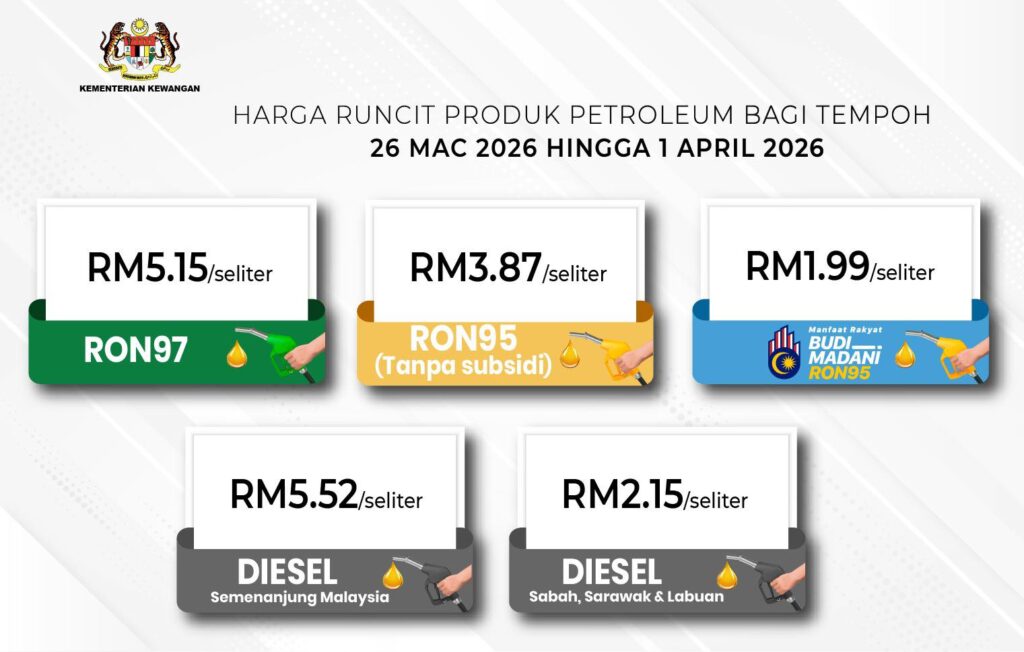
Here are the latest fuel prices from 26 March to 1 April announced by the ministry:
– RON97: RM5.15 per litre
– RON95 (unsubsidised): RM3.87 per litre
– RON95 (subsidised): RM1.99 per litre
– Diesel (Peninsular Malaysia): RM5.52 per litre
– Diesel (Sabah, Sarawak and Labuan): RM2.15 per litre
As part of its protective measures, the government said diesel for public transport and land logistics will also remain at RM2.15 per litre
Meanwhile, diesel aid under the BUDI Individu and BUDI Agri-Komoditi programmes will be increased from RM200 to RM300 per month starting March 2026.
The government added that it will tighten monitoring and enforcement to prevent subsidy misuse, especially in border areas, as well as prohibit fuel purchases exceeding 20 litres outside vehicle tanks without special permits.
Moving forward, it also plans to introduce further controls on diesel purchases, particularly in Sabah, Sarawak, and Labuan, to curb leakages and ensure stable fuel supply.
The ministry said fuel subsidies now exceed RM3 billion a month, and the government will continue balancing fiscal needs with consumer protection to safeguard economic wellbeing.
