
The Little-Known Story Of How Malaysia Played A Key Role In Helping SpaceX Survive
Today, SpaceX is a USD2.43 trillion company.


 Cover image via Samuel Boivin/NurPhoto/AFP & Ahmad Sabirin Arshad
Follow us on Instagram, TikTok, and WhatsApp for the latest stories and breaking news.
When people think about SpaceX's rise from a struggling startup to one of the world's most influential aerospace companies, Malaysia rarely enters the conversation
Yet more than 20 years ago, a Malaysian executive made a phone call that would eventually place the country in a unique chapter of SpaceX history.
That executive was Dr Ahmad Sabirin Arshad, the current Group Chief Executive Officer of Boustead Holdings Berhad.
According to Ahmad Sabirin, who was then leading Astronautic Technology Sdn Bhd (ATSB), he first contacted Elon Musk on Christmas Day in 2003 to discuss an ambitious idea: launching a Malaysian satellite into low equatorial orbit.
At the time, SpaceX was barely a year old.
Most commercial Earth observation satellites were launched into polar orbits, but Ahmad Sabirin was looking for a launch solution that could place a satellite into low equatorial orbit instead.
"I first [gave] him a call on Christmas 2003 to explore the possibilities of launching [a] satellite to the low equatorial orbit," he recalled in a Facebook post.
"[Elon] said yes, he can do it."
The conversation eventually led Ahmad Sabirin to SpaceX's modest office in El Segundo, California, where discussions continued over the possibility of launching Malaysia's RazakSAT satellite aboard the company's Falcon 1 rocket.
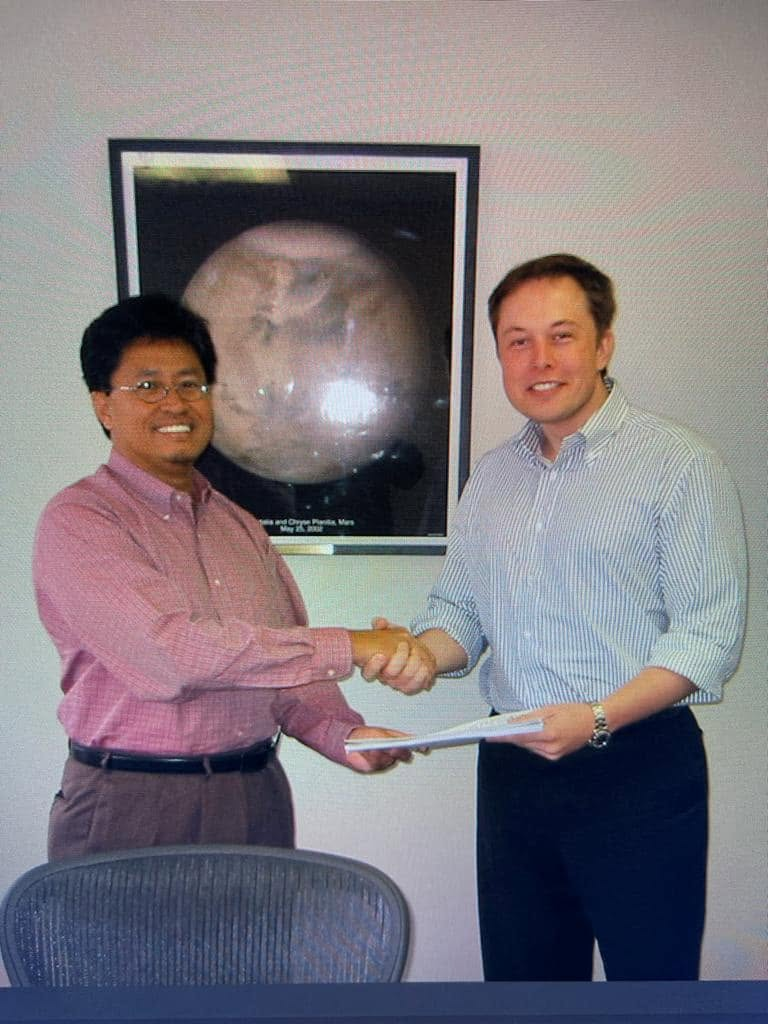
While Ahmad Sabirin was intrigued by SpaceX's plans, he said he was unwilling to place a valuable Malaysian satellite on an unproven rocket
As a result, ATSB decided to wait until Falcon 1 had demonstrated its ability to successfully reach orbit.
That caution appeared justified as Falcon 1's first launch in 2006 failed. Its second attempt in 2007 also failed, followed by a third failure in August 2008.
By then, SpaceX was running dangerously low on cash. The company had spent years developing Falcon 1 without successfully reaching orbit, and doubts were growing over whether the venture would survive.
Ahmad Sabirin later recalled that SpaceX had exhausted much of its available funding during that period.
At the same time, the company needed to prove it could successfully deliver a commercial payload before larger opportunities could materialise.
Everything changed on 28 September 2008.
On its fourth launch attempt, Falcon 1 successfully reached orbit, becoming the first privately developed liquid-fuel rocket to do so.
With Falcon 1 finally proven, Malaysia moved forward with plans to launch RazakSAT.
RazakSAT became SpaceX's first commercial launch
On 14 July 2009, Falcon 1 lifted off from Omelek Island in the Kwajalein Atoll carrying RazakSAT.
The mission was historic for both sides.
For Malaysia, it marked the successful launch of an Earth observation satellite designed to capture high-resolution imagery of the country's landmass and surrounding region.
For SpaceX, it represented something equally significant.
RazakSAT became the payload for Falcon 1's fifth and final mission, as well as the company's first-ever commercial satellite launch.
Photos from the launch showed the Jalur Gemilang alongside the American flag painted on the side of the rocket, a reminder that a Malaysian satellite was onboard during a milestone moment for the young company.
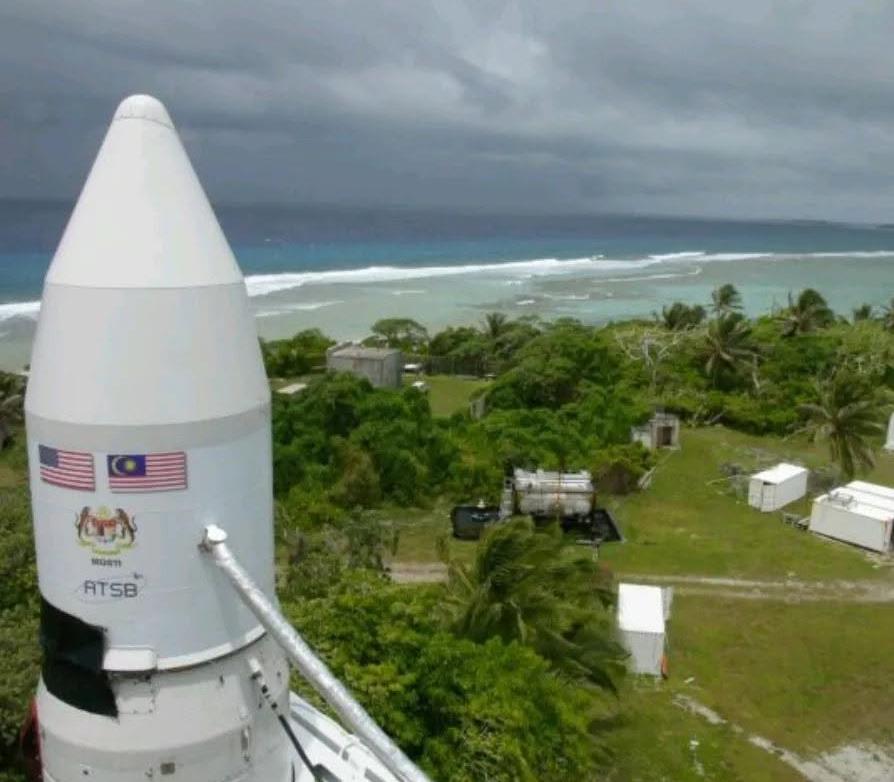
RazakSAT satellite inside Falcon 1 launch vehicle.
Image via Dr. Ahmad Sabirin ArshadImage viaYears later, a post on X resurfaced the story, describing Malaysia as having played a role in helping SpaceX survive one of the most difficult periods in its history
The post attracted a brief but notable response from Musk himself, who confirmed the story:
True!
— Elon Musk (@elonmusk) June 19, 2026
Whether Malaysia "saved" SpaceX is ultimately open to interpretation.
What is clear, however, is that RazakSAT occupies a unique place in the company's history.
Long before SpaceX became synonymous with reusable rockets, Starlink satellites, and missions to the International Space Station, a Malaysian satellite became its first commercial customer.
And behind that mission was a Malaysian executive who saw enough promise in an unknown startup to pick up the phone and start a conversation.
