
MCMC Busts Scam SMS Operation Targeting JB-Singapore Travellers
The syndicate allegedly targeted busy public areas, including routes used by people travelling between Johor Bahru and Singapore.


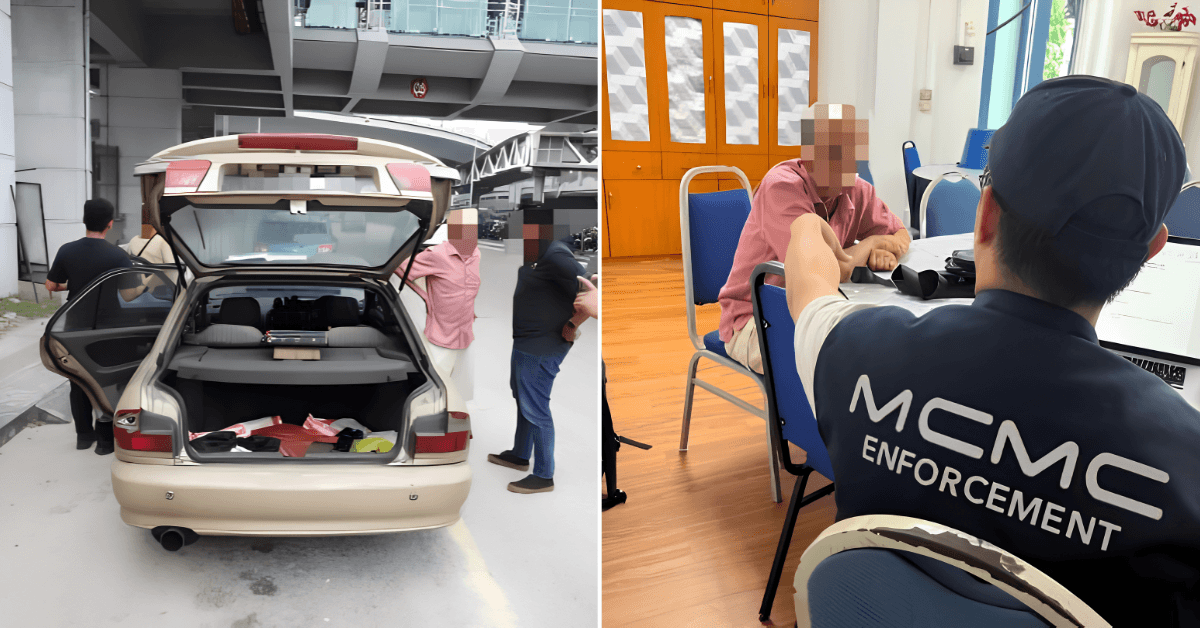 Cover image via MCMC
Follow us on Instagram, TikTok, and WhatsApp for the latest stories and breaking news.
The Malaysian Communications and Multimedia Commission (MCMC), together with the Royal Malaysia Police (PDRM), has busted a syndicate suspected of using a Fake Base Transceiver Station (Fake BTS) to send scam SMSes to the public
According to MCMC, the enforcement operation took place in Johor Bahru on Thursday, 6 August.
A 65-year-old Malaysian man was arrested after he was suspected of using a vehicle equipped with Fake BTS equipment.
The equipment allegedly transmitted radio frequency (RF) signals designed to mimic a legitimate mobile network base station, allowing scam SMSes containing malicious links to be sent to nearby users.
MCMC said the syndicate was believed to have carried out its activities in areas with high concentrations of people, particularly during peak hours
This included targeting mobile users travelling between Johor Bahru and Singapore.
During the operation, authorities seized two mobile phones, one SIM card, one GSM module, one antenna, and a vehicle believed to have been used in the activity.
The case is being investigated under Section 239(1)(a) of the Communications and Multimedia Act 1998 and Regulation 16(1)(b) of the Communications and Multimedia (Technical Standards) Regulations 2000.
The operation follows another Fake BTS syndicate bust in Johor Bahru in July
MCMC said it has carried out six operations targeting Fake BTS activities so far in 2026, with three taking place in Johor and another three in Genting Highlands.
Across these operations, five individuals have had their statements recorded to assist investigations, while five Global System for Mobile Communications (GSM) modules have been seized.
MCMC said it will continue working with PDRM and other enforcement agencies to detect and stop the misuse of communications technology and infrastructure for scams.
MCMC has reminded members of the public to be cautious of suspicious SMSes and avoid clicking links contained in them
MCMC also reminded users not to share banking or personal information without first verifying the request through official channels.
Anyone who receives an SMS suspected of being part of a scam should report it to their telecommunications provider or the relevant authorities.
