
M’sian Wins National James Dyson Award For ‘Zero Tremor’ Glove Inspired By Skyscrapers
The engineering student hopes her invention can help people with Parkinson's disease.


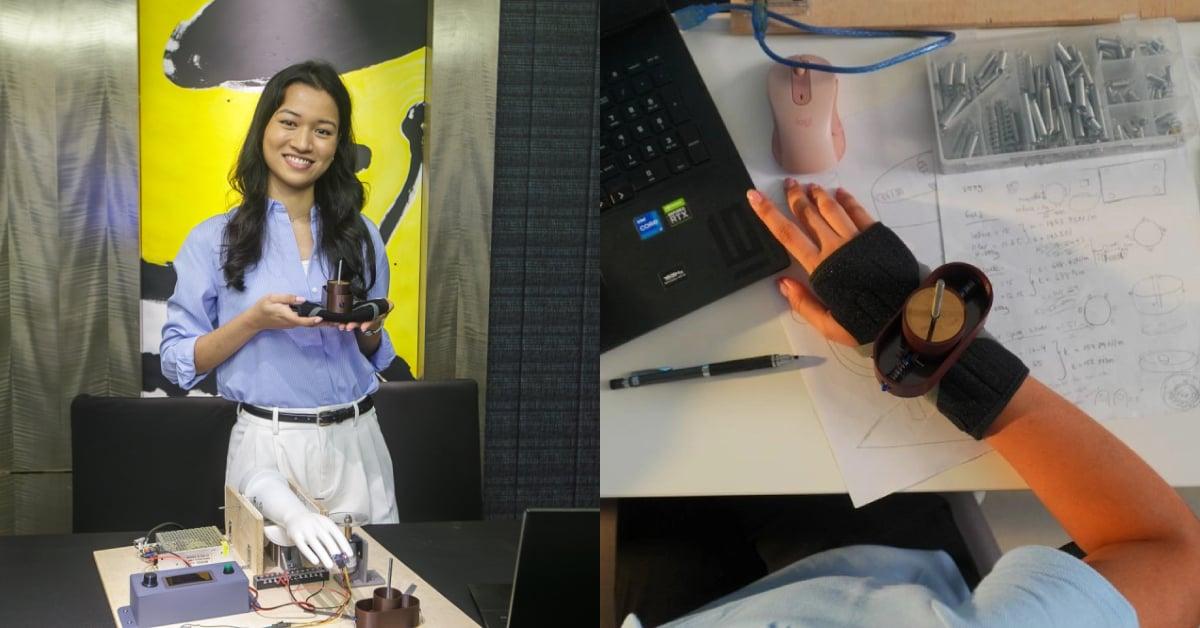 Cover image via
 Follow us on Instagram, TikTok, and WhatsApp for the latest stories and breaking news.
An engineering student from Monash University Malaysia has won the Malaysian James Dyson Award 2026 for her invention, Zemor
Short for "Zero Tremor", Zemor is a wearable device designed to help reduce hand tremors using the same engineering principle that stabilises skyscrapers.
According to her James Dyson Award entry profile, Hayley Nea Iaduray developed Zemor as her Final Year Project, with the aim of helping people affected by Parkinson's disease.
She added that existing tremor treatments can include invasive surgery, while some wearable devices can be expensive and less accessible in developing countries.
"Inspired by tuned mass dampers stabilising skyscrapers like Taipei 101, I hypothesised I could miniaturise this power-free physics principle into a tunable device that could make healthcare accessible to everyone," she said.
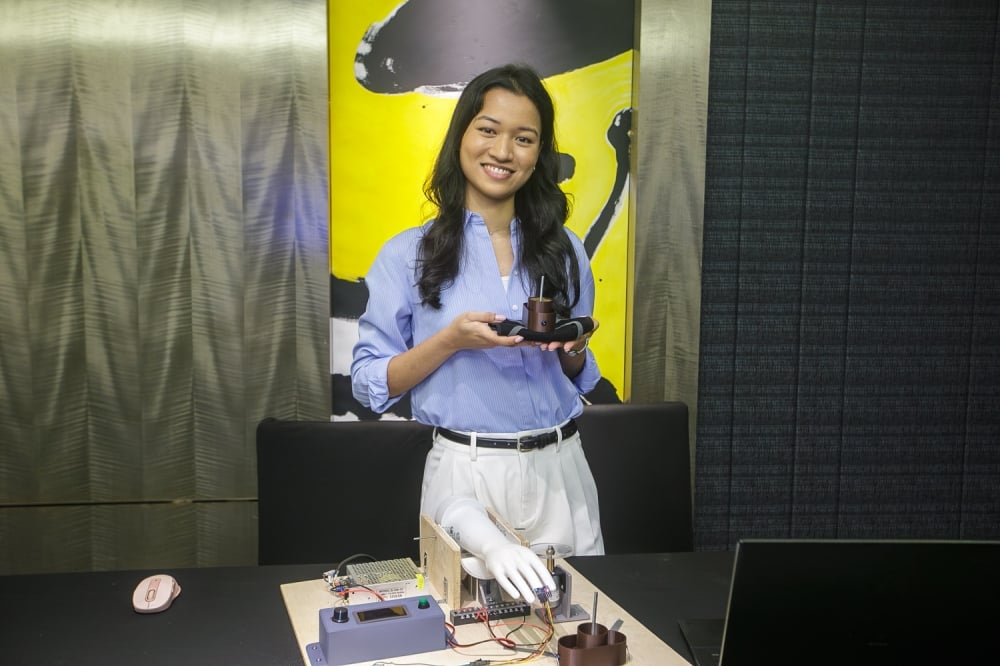
As the Malaysian national winner, Hayley will receive RM27,160 to further develop the device
She now plans to create a multi-directional system and work with medical professionals and research partners to evaluate its functionality.
Zemor will also move on to the international stage of the James Dyson Award, alongside winning projects from other countries.
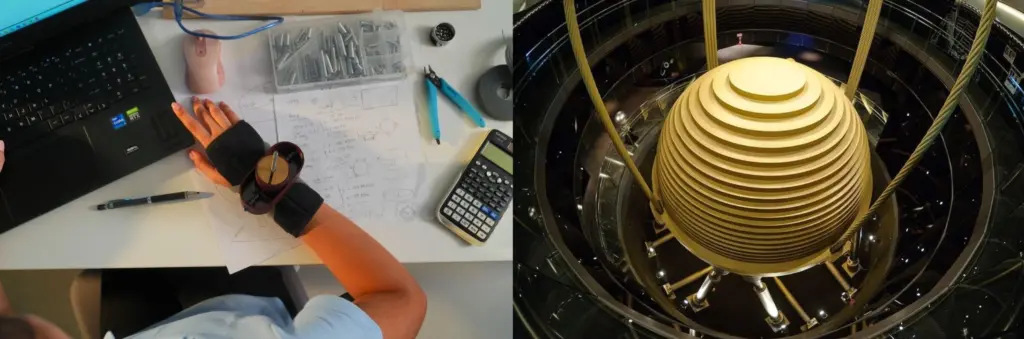
A prototype of Zemor (left), and an image of the tuned mass damper inside the Taipei 101 skyscraper in Taiwan (right).
Image via MYC.myTwo other Malaysian university projects were named runners-up
According to MYC.my, two other projects from Malaysian universities were named runners-up for the Malaysian James Dyson Award and will also progress to the international stage.
A team of students from the University of Nottingham Malaysia developed SLIC, short for Solar Liquid Integration for Communities, which is a solar-powered, luggage-style purifier designed to turn contaminated water into drinking water without relying on grid electricity.
The team said the project was developed with Orang Asli and other off-grid communities in mind.
Meanwhile, students from Asia Pacific University developed Pillay, a penguin-shaped device designed to screen a child's heart rate, breathing, temperature, and cough without requiring physical contact.
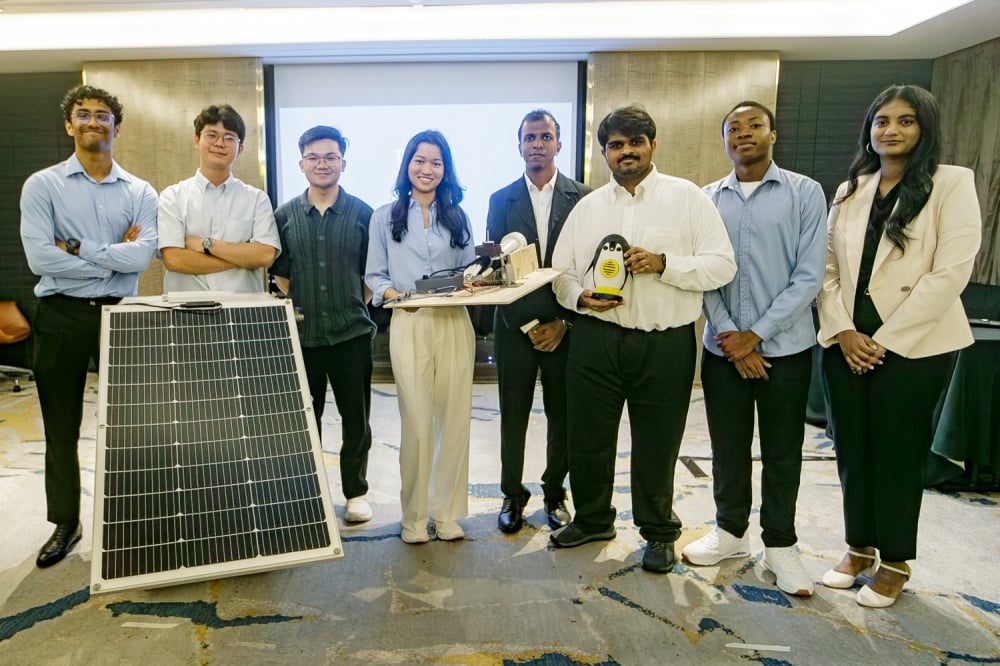
The three Malaysian projects will now compete alongside other national winners for a spot in the Top 20
The Top 20 James Dyson Award projects worldwide will be announced on 14 October, followed by the global winners on 4 November.
Read more trending stories on SAYS
Canadian Man Breaks World Record With 40 Layers Of Tattoos On His Body
Jeremy "Remy" Schofield has covered over 90% of his skin, accumulating approximately 40 layers of ink.
