What’s The RM30 Rate And The Indemnity Form Issue That Has Prompted Backlash Against MOH?
The allowance has remained unchanged since 1978, while a government doctor said healthcare workers sent on helicopter missions were given little aviation safety preparation beyond an indemnity form to sign.


 Cover image via Justine Sim
Follow us on Instagram, TikTok, and WhatsApp for the latest stories and breaking news.
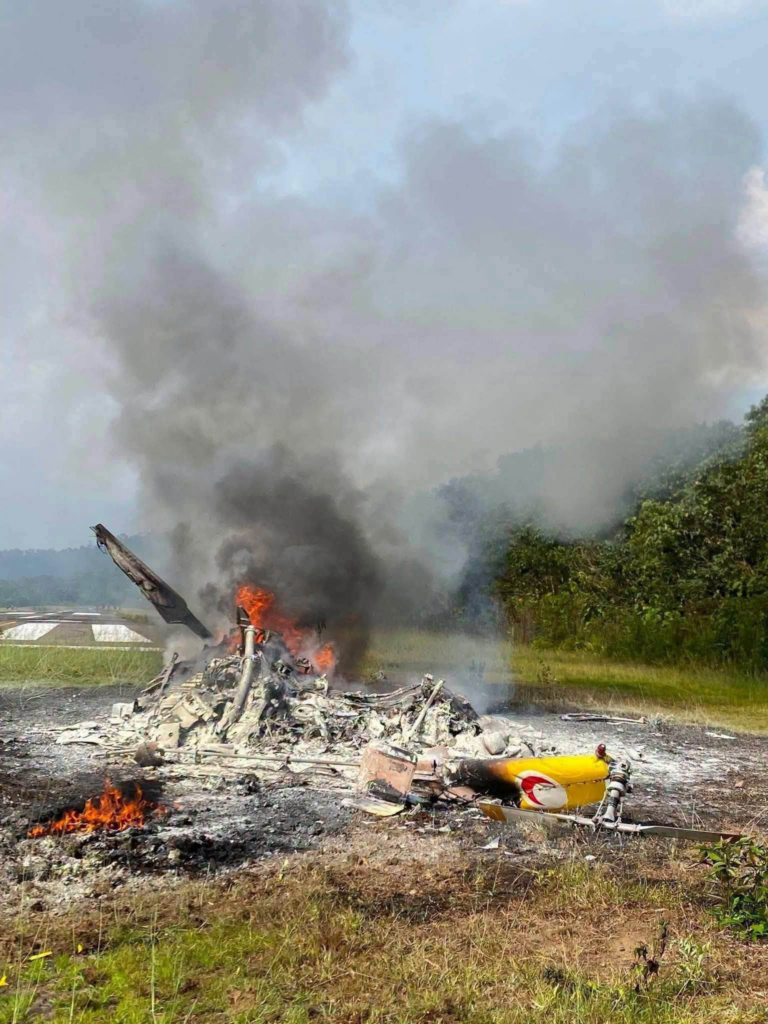
Five people were killed when a helicopter carrying a Flying Doctor Service (FDS) team crashed near Long Lellang STOLport in Ulu Baram, Sarawak, on 8 September
The victims were pilot Captain Zainol Afiq, medical officer Dr Ainul Baraah Kamaruddin, medical assistant Alexson Adit, and nurses Debra Moset and Jessie Paya.
The BO-105 helicopter, registered as 9M-LLF, was carrying the four Ministry of Health (MOH) personnel and its pilot when it crashed near the remote airport.
The Civil Aviation Authority of Malaysia (CAAM) said it received notification of the crash at around 3.58pm. The Air Accident Investigation Bureau (AAIB) under the Ministry of Transport will investigate the cause of the crash.
But the tragedy has also reignited questions over the conditions faced by healthcare workers who are required to travel by air to provide medical services in remote parts of the country.
One government doctor has highlighted an allowance of just RM30 per return flight, a rate that dates back to 1978, as well as what he described as gaps in aviation safety preparation for healthcare personnel.
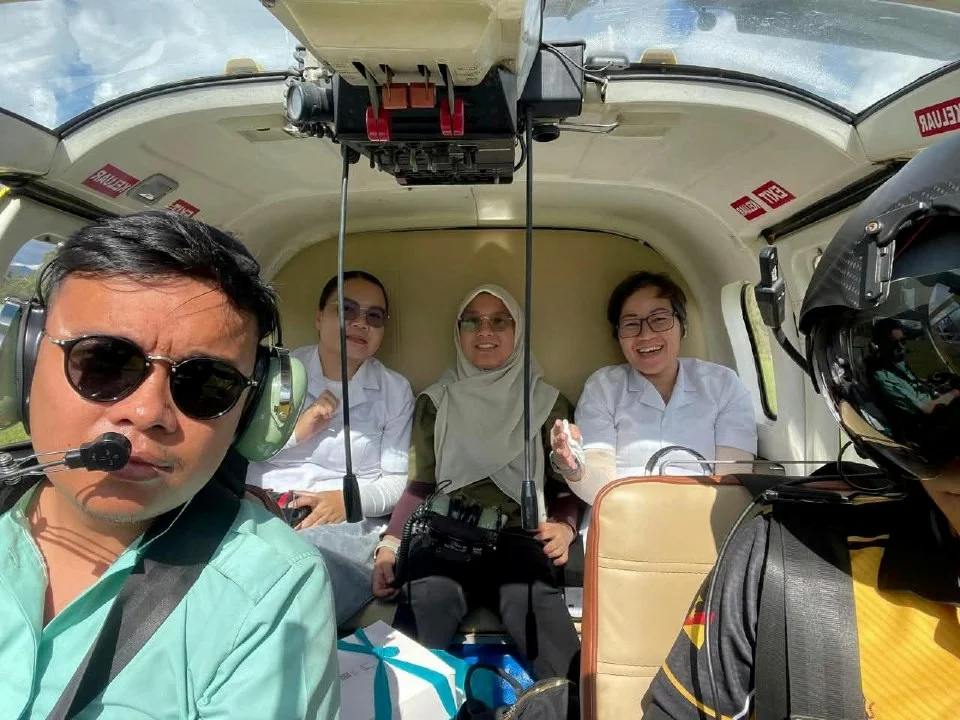
Dr Ainul Baraah (wearing a white headscarf) was among the five people on board the helicopter that crashed near the Long Lellang Airport.
Image via Berita HarianThe government doctor said he was simply told to sign and fly
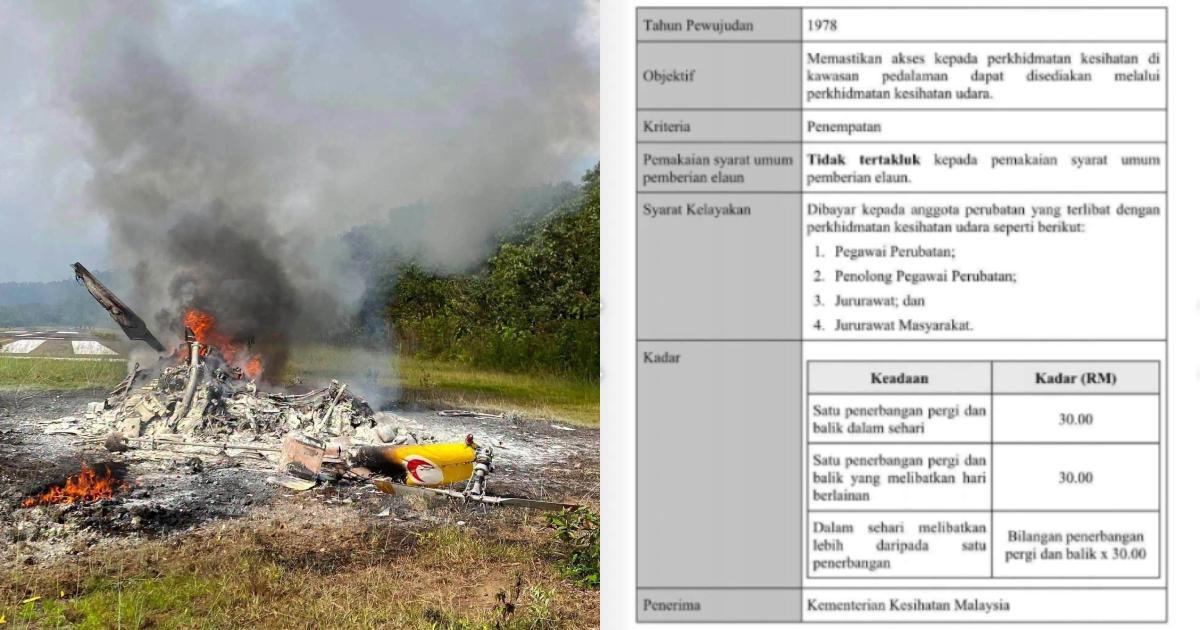
In a Facebook post shared in the Sarawak Awareness Group, Dr Justine Sim said the Air Health Service Incentive Payment for a return flight is currently listed at RM30.
The payment applies to medical officers, assistant medical officers, nurses, and community nurses carrying out official healthcare duties by air.
According to Dr Sim, the rate dates back to 1978 and remains at RM30 today. He said the amount took on a different meaning following the Long Lellang crash.
"Five lives were tragically lost," he wrote.
"A pilot and four KKM personnel were on an official Flying Doctor Service mission. They went to work. They never came home."
Dr Sim also said he was not commenting from an outsider's perspective.
In 2018, while working at Hospital Miri, he accompanied a patient with complete heart block by helicopter to the Sarawak Heart Centre as the doctor responsible for the transfer. But he said he did not even know the RM30 allowance existed at the time.
"Nobody told me. Nobody asked me to claim it either," he wrote.
For Dr Sim, the RM30 payment was not the most troubling part
He said that before his helicopter flight in 2018, he received no dedicated aviation safety training.
He described having no structured emergency evacuation training or specific briefing on brace positions, rotor hazards, fire, hard landings, or what to do if the aircraft itself became the emergency.
He also said no dedicated aviation-risk insurance protection was explained to him.
"Basically? Terus masuk helicopter & fly," he wrote.
What he did receive, he said, was an indemnity form.
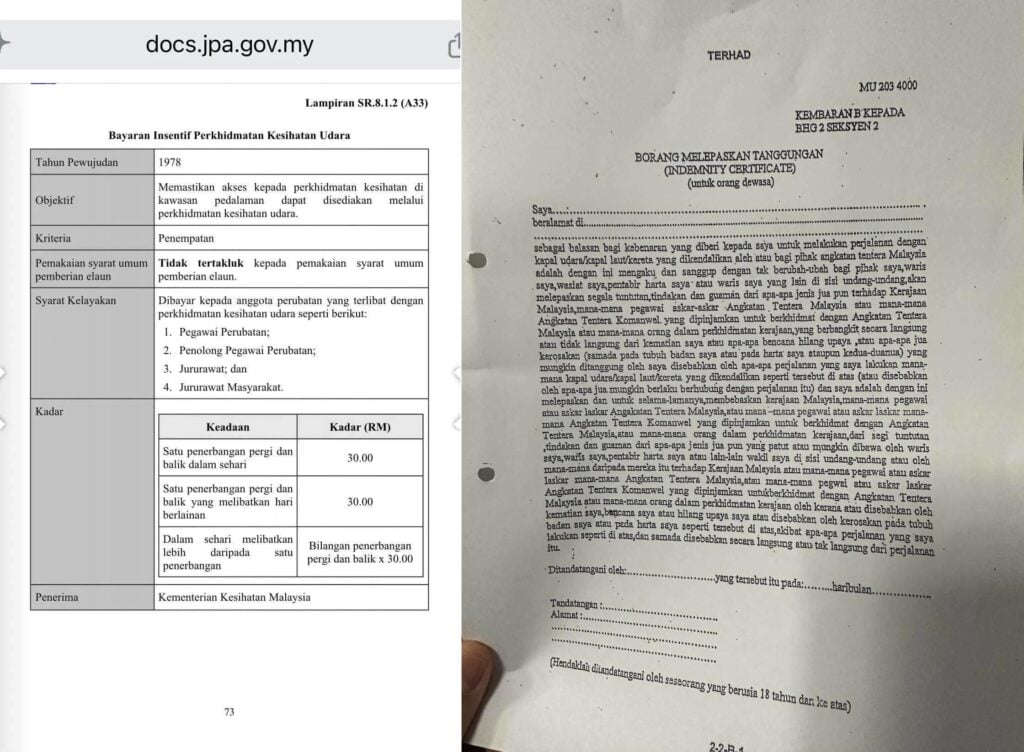
Dr Sim said he personally signed a Borang Melepaskan Tanggungan before the flight.
According to his description of the document, it seeks to indemnify the Malaysian government, Malaysian Armed Forces or any Commonwealth Armed Forces against any legal claims arising from injury, disability, or death during travel on an aircraft, ship or vehicle managed by the armed forces.
He stressed that signing such a form does not automatically mean a person could never take legal action if negligence were subsequently proven. But he questioned what such an indemnity would mean if a healthcare worker were injured or killed because of a serious technical defect, inadequate maintenance, or negligence.
"If the government requires an employee to accept extra occupational risk for official work, surely the priority should be proper training, insurance, compensation, and protection for the family if the worst happens," he wrote.
"Not simply: 'Sign here.' Then off you go."
The RM30 rate has been unchanged for nearly half a century
The Air Health Service Incentive Payment was introduced in 1978 to support healthcare services in rural and remote areas.
The current rate cited in the viral discussion is RM30 per return flight, including cases where personnel make multiple return flights in a day.
The allowance covers medical officers, assistant medical officers, nurses, and community nurses involved in air health services.
The figure has attracted renewed anger following the Long Lellang crash, with healthcare workers and members of the public questioning whether RM30 reflects the risks involved.
However, the document circulating online only specifies the incentive payment and its eligibility conditions. It does not establish that RM30 is the only form of compensation or payment available to healthcare personnel undertaking FDS duties.
Health Minister Datuk Seri Dr Dzulkefly Ahmad has since confirmed that MOH itself had already sought a review of the RM30 rate
Dr Dzulkefly said MOH submitted a proposal to review and revise the FDS allowance in November 2025. He said the ministry recognised the need for compensation commensurate with the risks and duties involved.
"This is a matter that the ministry, including myself as minister, the director-general and MOH top management, have actively looked into regarding staff welfare," the New Straits Times quoted him as saying.
"Among the proposals we have raised is the Flying Doctor Service allowance, which was submitted late last year in November 2025."
He said MOH was confident of receiving a positive response from the relevant authorities and would announce the outcome once there was an update.
Following the crash, the ministry also said financial contributions and ex-gratia assistance ranging from RM50,000 to RM150,000 would be provided to the victims' families.
Its Mental Health and Psychosocial Support team has also been mobilised to provide psychological first aid and continued support to the families and FDS team.
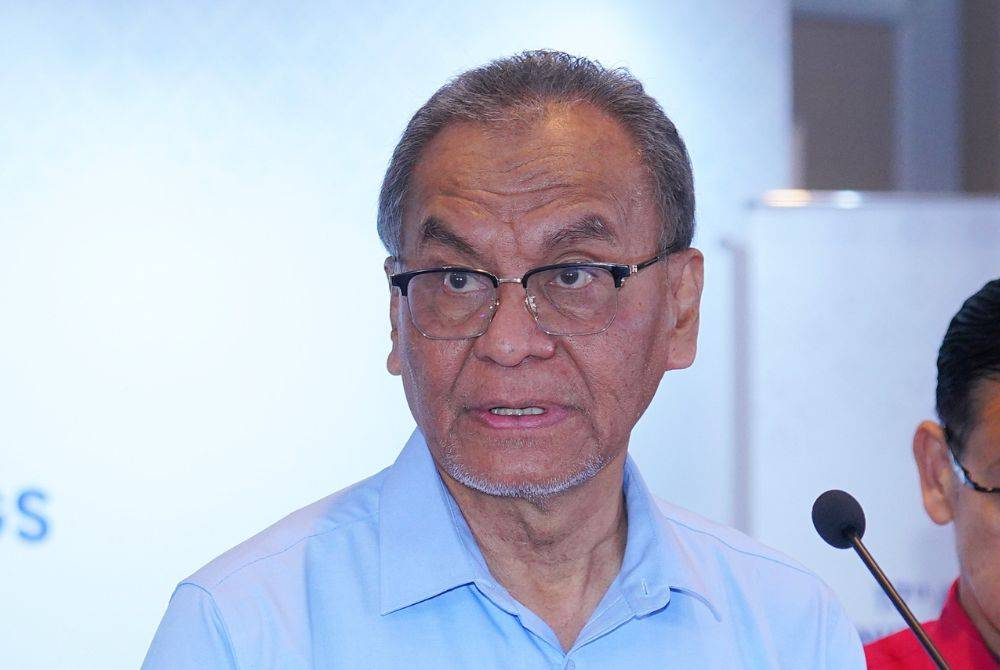
Health Minister Datuk Seri Dr Dzulkefly Ahmad.
Image via Mohd Halim Abdul Wahid/Sinar DailyHowever, the concerns are not limited to the RM30 payment
According to CodeBlue, Dr Sangeetha Siniah, a paediatrician and specialist in infectious disease, allergy and immunology, recalled her own Medevac helicopter flights in Sarawak.
She said there was once an emergency landing that was frightening enough for her to subsequently buy life insurance.
Retired paediatrician Dr Amar-Singh HSS also recalled transporting sick children by Medevac helicopter in Sarawak. He described once being caught in a storm and making an emergency landing in a field while he continued ventilating a child during the incident.
Such accounts underline why healthcare workers are questioning whether the current arrangements adequately recognise the risks involved in reaching communities that cannot easily be accessed by road or river.
The FDS has provided healthcare to remote communities in Sarawak since 1973 and remains an important part of MOH's efforts to reach rural populations in Sarawak, Sabah and Orang Asli communities in parts of Peninsular Malaysia.