
UM Academic Becomes First Malaysian Appointed To Prestigious Prince Claus Chair
Her research focuses on transboundary haze governance in Southeast Asia.


 Cover image via
 Follow us on Instagram, TikTok, and WhatsApp for the latest stories and breaking news.
Dr Helena Muhamad Varkkey, an associate professor at Universiti Malaya (UM), has become the first Malaysian appointed to the prestigious Prince Claus Chair in Development and Equity at the International Institute of Social Studies (ISS) in the Netherlands
In a statement today, 26 June, UM said Helena, an associate professor of Environmental Politics in the university's Department of International and Strategic Studies, will hold the chair for a two-year term from 1 September 2025 to 1 September 2027 while continuing her academic and research responsibilities at the university.
The Prince Claus Chair honours outstanding academics from developing countries whose work makes significant contributions to international development and equity. The chair is named after the late Prince Claus of the Netherlands.
Reacting to the appointment, Helena said she is honoured to join a distinguished group of researchers from the Global South who have previously held the position.
"As a Southeast Asian researcher working on Southeast Asian problems, I am pleased to contribute to the Chair's mission of developing and supporting knowledge from and for the Global South.
"This appointment provides an important opportunity to deepen conversations on environmental governance, equity, and sustainable development in our region and beyond," she said.
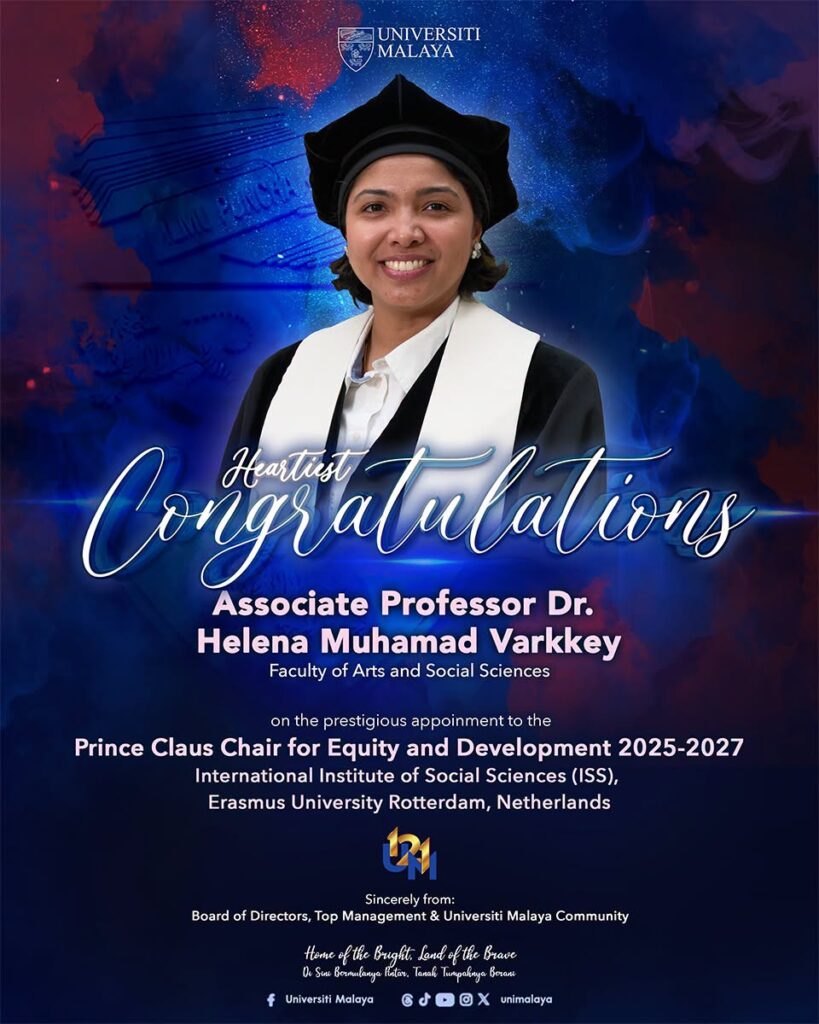
During her tenure, Helena will focus her research on transboundary haze governance in Southeast Asia, an issue that continues to pose major environmental, economic, and public health challenges across the region
She will also contribute to the Water, Securitisation Anxieties, and Border Imaginaries (WASABI) project, an international research initiative examining how communities experience and navigate securitised water borders in Sri Lanka, Central America, the Eastern Mediterranean, the Southern Caucasus, and the Sulu Sea in the Philippines.
Speaking on the significance of her research, Helena said the region's recurring haze crisis is rooted in governance rather than nature.
"The haze is not a natural disaster. It is a failure of governance and diplomacy, and it is also a deeply human story. Through this appointment, I hope to contribute to a better understanding of how environmental challenges intersect with questions of development, security, and equity across borders," she said.
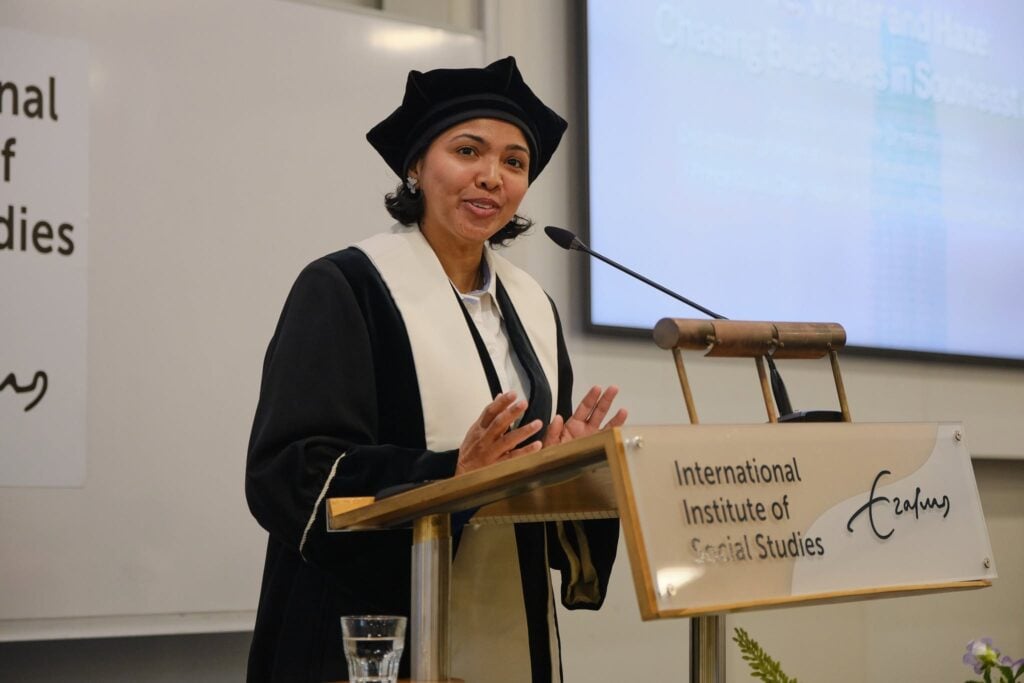
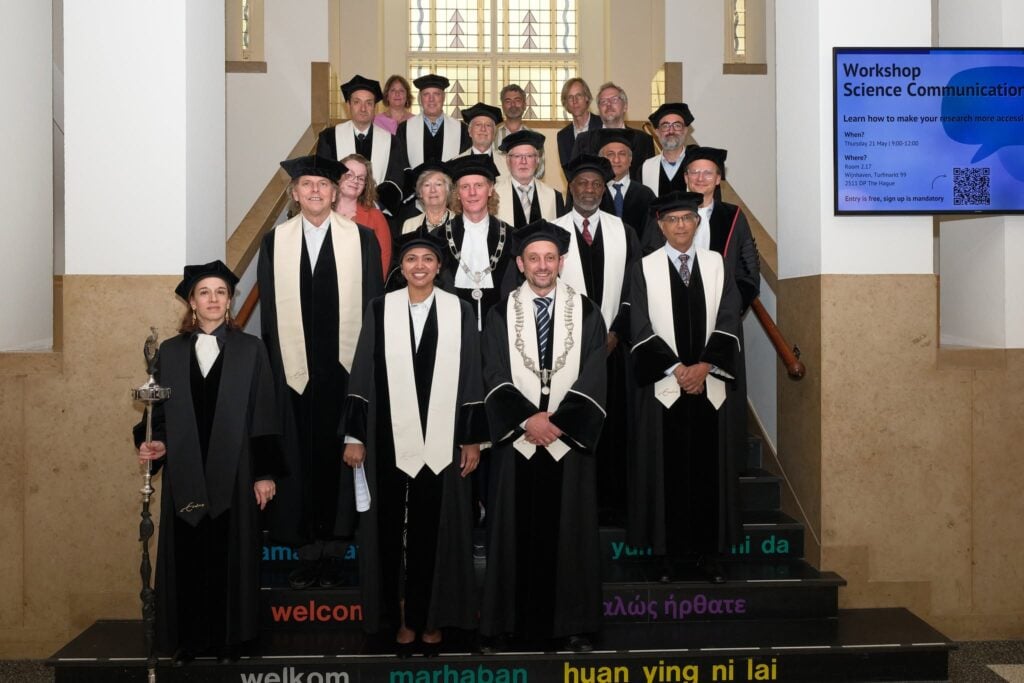
As part of the appointment, she was also invited to deliver an inaugural lecture on her research at the International Institute of Social Studies in The Hague on 19 May.
Beyond this latest appointment, Helena is already an internationally recognised expert in environmental governance
Her 2016 book, The Haze Problem in Southeast Asia: Palm Oil and Politics, remains a key reference in the field, while her 2021 essay collection, The Forests for the Palms, further explores the politics of haze, palm oil, and other environmental issues facing the region.
With nearly two decades of qualitative research experience, Helena has carried out extensive fieldwork across Southeast Asia, working with government agencies, industry stakeholders, civil society organisations, and regional institutions.
She has also edited and contributed to reports for organisations including the Academy of Sciences Malaysia, UNICEF, and the ASEAN Secretariat.
