
The Beginner’s Guide To F1 Terms & Jargon At Sepang
Here's an ultimate guide to understanding F1 speak before you head to Sepang International Circuit.


 Cover image via
 Follow us on Instagram, TikTok, and WhatsApp for the latest stories and breaking news.
You have your grandstand ticket, survived the crawl along the highway heading towards KLIA, and are finally sitting at the PETRONAS Sepang International Circuit
The engines roar, the broadcast audio kicks in, and lead commentator Martin Brundle immediately hits you with this line:
"He is suffering from massive blistering in dirty air, so he will try the undercut."
Wait, what?
If that sounded like complete gibberish, do not panic. Formula 1 takes simple real-world concepts and slaps ridiculously technical names on them.
Here is your ultimate explainer, categorised and translated into plain, everyday language so you can follow the action like a pro.
1. The Rubber on Asphalt: Understanding Tyres
Tyres dictate roughly 80% of what commentators talk about. Sepang's track temperature routinely climbs past 50°C, meaning tyre management is basically the entire race.
Tyre Management
Here is the thing about driving an F1 car: going 100% flat-out every single lap will destroy your tyres in five minutes.
Tyre management is the delicate art of driving just slightly slower than your maximum pace, coasting into corners, steering gently, to keep the rubber cool and make it last until your scheduled pit stop.
Think of it like pacing yourself during a 10km run instead of sprinting right out of the gate.
Tyre Compounds
Italian tyre maker Pirelli brings three dry options to a race weekend:
– Softs: Red colour, highest grip, fastest speed, but wear out quickly.
– Mediums: Yellow colour, the balanced option offering decent grip and durability.
– Hards: White colour, most durable option, but take longer to heat up and offer less grip.
Aside from these three, there are also wet options, which are:
– Intermediates: Green colour, when the track is damp.
– Wets: Blue tyre, heavy rain tyres.
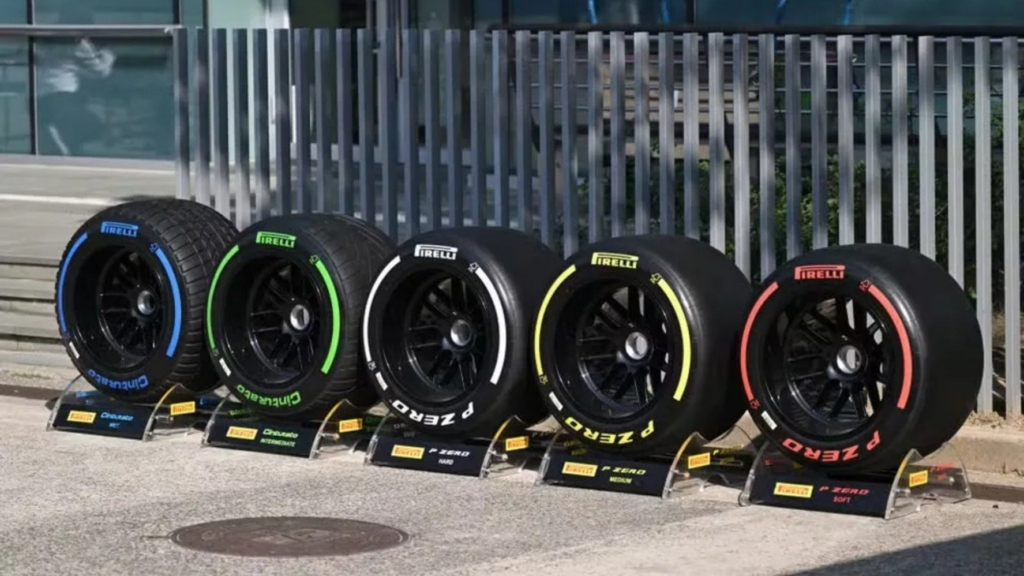
The 2026 tyre compounds.
Image via Motorshoe BrazilTyre Degradation ("Deg")
A fancy term for rubber wearing out and losing grip over time. When commentators say a driver is "suffering from high deg", it just means their tyres are getting bald and the car is starting to slide around.
Lock Up
When a driver hits the brakes too hard going into a corner, the brake system clamps down so tightly that the front wheel completely stops spinning while the car is still flying forward at 250km/h. You will see a massive cloud of white smoke and hear a loud screech.
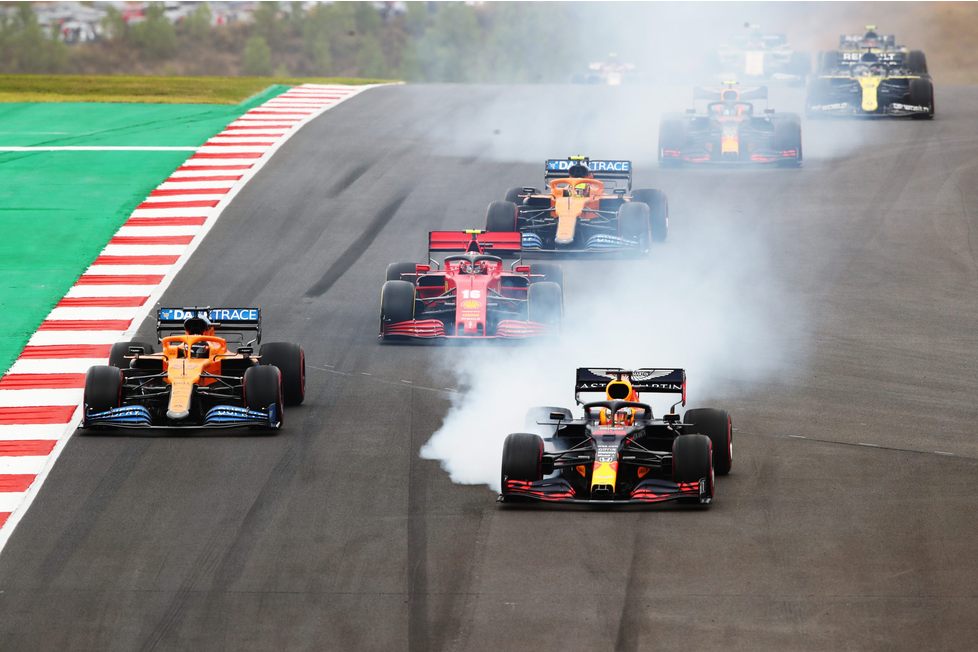
An example of 'locking up' the front wheels.
Image via F1 FansiteFlat Spots
The direct consequence of a lock-up! Because the tyre scraped flat against the asphalt while stopped, a flat patch gets shaved right into the round rubber.
Imagine riding a bicycle with a square front wheel. It would cause violent vibrations through the driver's steering wheel until they pit for fresh wheels.
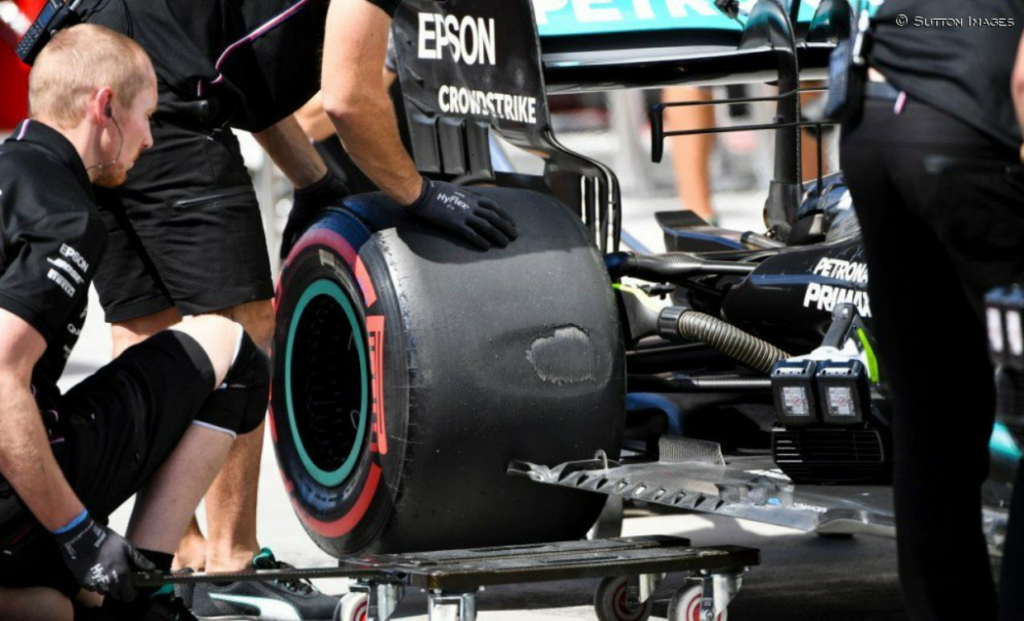
A very clear flat spot seen on the soft compound tyre.
Image via peke_f1 (Reddit)Blistering
When the inside of the tyre gets scorching hot, which is extremely common in Sepang's temperature and humidity, the air trapped inside the rubber literally boils and pops.
This tears away chunks of the surface, leaving nasty, dark gouges across the tyre.
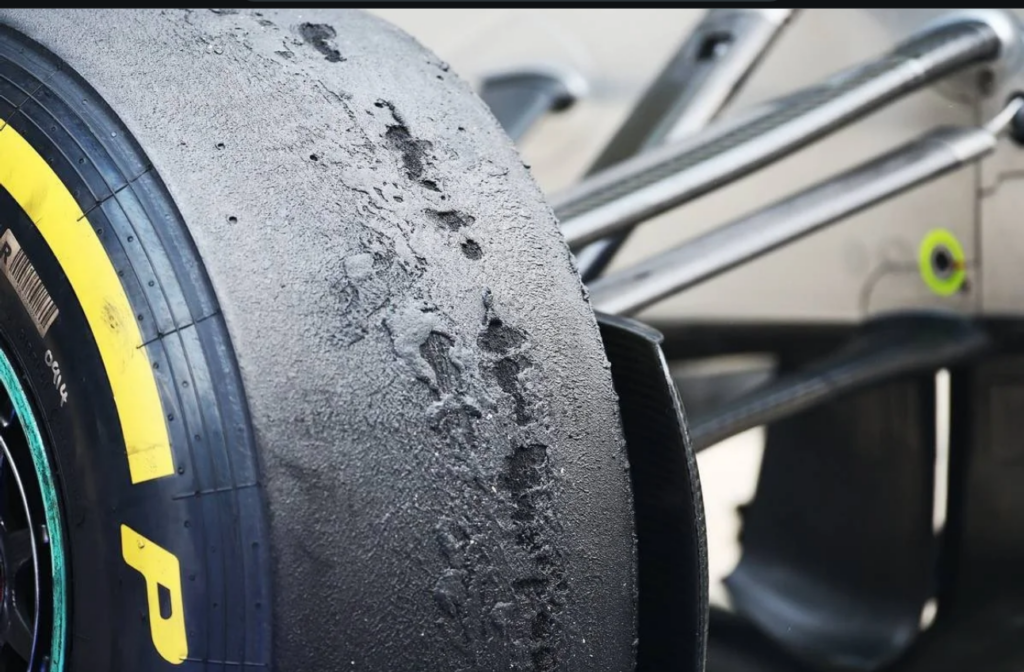
The dark spots are called 'blistering'.
Image via F1DataAnalysis (Reddit)2. Tactical Mind Games: Energy, Balance & Aerodynamics
F1 is essentially a game of high-speed chess where cars constantly struggle to handle the air around each other.
Dirty Air
F1 cars are designed to push air over their wings to glue themselves to the road.
However, a car moving at top speed leaves a churning, turbulent wake behind it; this is "dirty air".
Following right behind someone in dirty air removes downforce, causing the trailing car to lose grip and overheat its tyres.
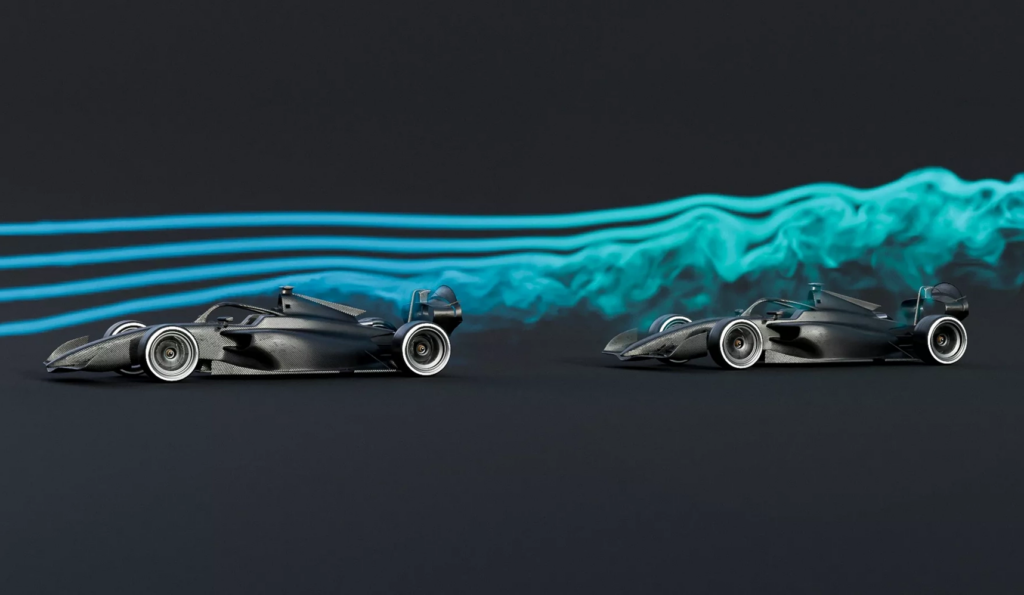
Car behind suffering from 'dirty air'.
Image via RaceteqUndercut
A clever pit-stop strategy! If Driver A cannot pass Driver B on the track because of dirty air, Driver A pits earlier for fresh, fast tyres. By driving one flat-out lap on new rubber while Driver B is still struggling on old tyres, Driver A leapfrogs ahead when Driver B finally makes their pit stop a lap later.
Understeer and Oversteer
These terms explain how the car behaves during turning. The simplest way to remember the difference:
– Understeer: The driver turns the steering wheel, but the front tyres lose grip, and the car pushes straight ahead towards the barrier. (You see the wall before you hit it).
– Oversteer: The rear tyres lose grip, causing the back of the car to swing out loose. (You hit the wall with your rear wing).
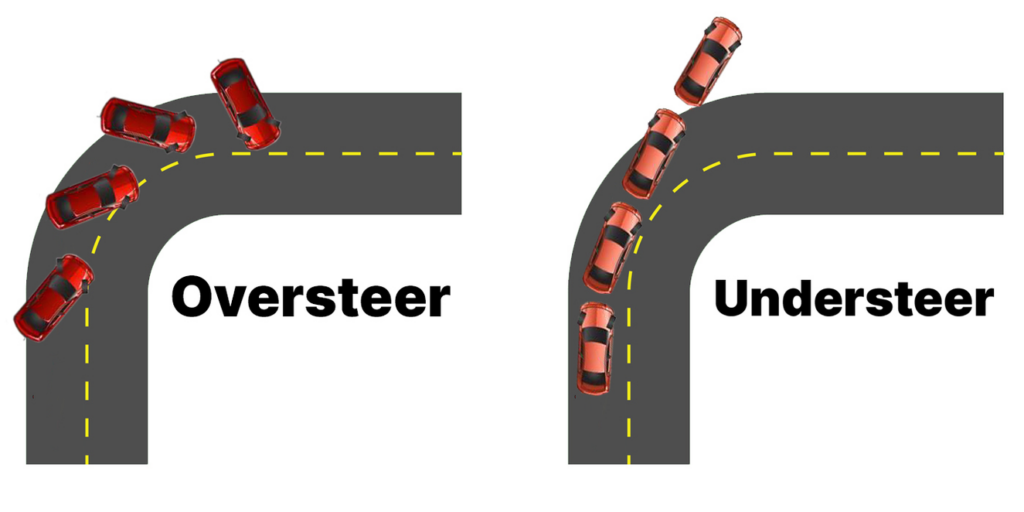
Differentiating between oversteer and understeer.
Image via KoniOvertake Mode
Modern F1 engines are complex hybrids. "Overtake Mode" is a button on the steering wheel that dumps a short, maximum burst of stored battery power directly into the engine to help a driver pull off a pass on a long straightaway.
Superclipping
F1 cars harvest electrical energy when braking and deploy it down the straights. As part of the 2026 regulations, the car is powered by part fuel, part electricity. For this year especially, the car relies on 50% electric power, meaning half of the car's power comes from the battery.
"Clipping" happens when the battery runs completely flat before reaching the end of a long straightaway, causing top speed to suddenly drop. "Superclipping" is the extreme version: the engine loses electrical power so early down the straight that the driver becomes a sitting duck to anyone behind.
3. The Weekend & Race Control: Rules of the Track
Understanding how the sessions work keeps you from wondering why cars are driving fast on a Saturday afternoon.
Qualifying
The crucial Saturday session where drivers go out on low fuel and brand-new soft tyres to set the single fastest lap time possible. Your position in Qualifying determines where you line up on Sunday's starting grid.
There are three stages: Q1, Q2, and Q3. The faster drivers progress to the next stage, giving them a chance to secure a better starting position.
Pole Position
The coveted first-place starting position at the front of the grid for Sunday's main race, awarded to whoever set the fastest lap during Qualifying.
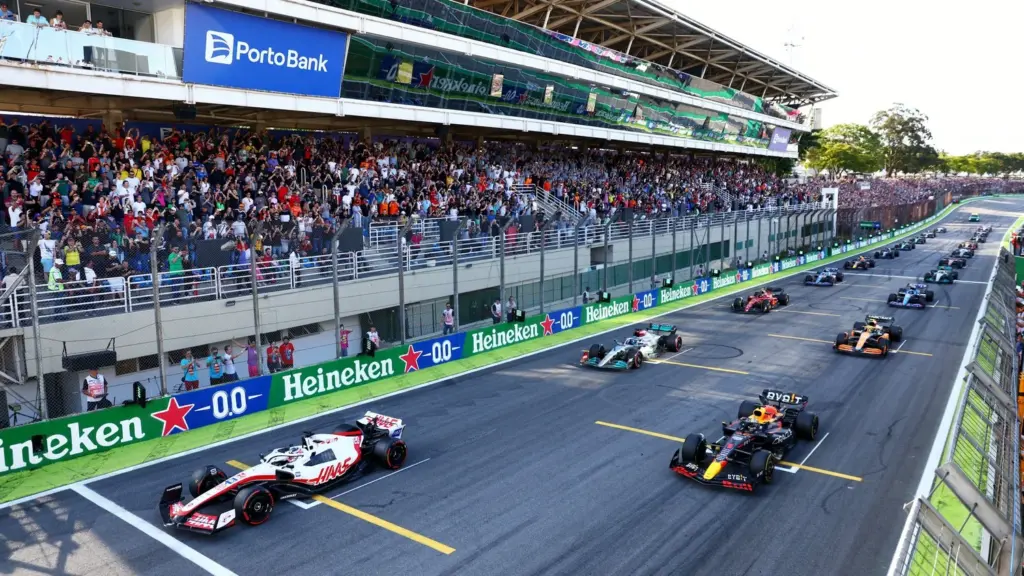
A good grid position is part of winning the race.
Image via SalracingSprint Race
A short, mini-race held on Saturdays at select Grand Prix weekends. It is roughly one-third the distance of the main race, run flat-out with no mandatory pit stops, offering extra championship points to the top eight finishers.
Safety Car & Virtual Safety Car (VSC)
– Safety Car (SC): When there is a major crash or heavy rain, a physical Mercedes or Aston Martin pace car enters the track to lead the race cars slowly while marshals clear the track.
– Virtual Safety Car (VSC): For smaller incidents (like a broken wing on track), no physical pace car comes out. Instead, digital signs light up, and every driver must immediately slow down by roughly 30% and maintain the exact gap to the car ahead.
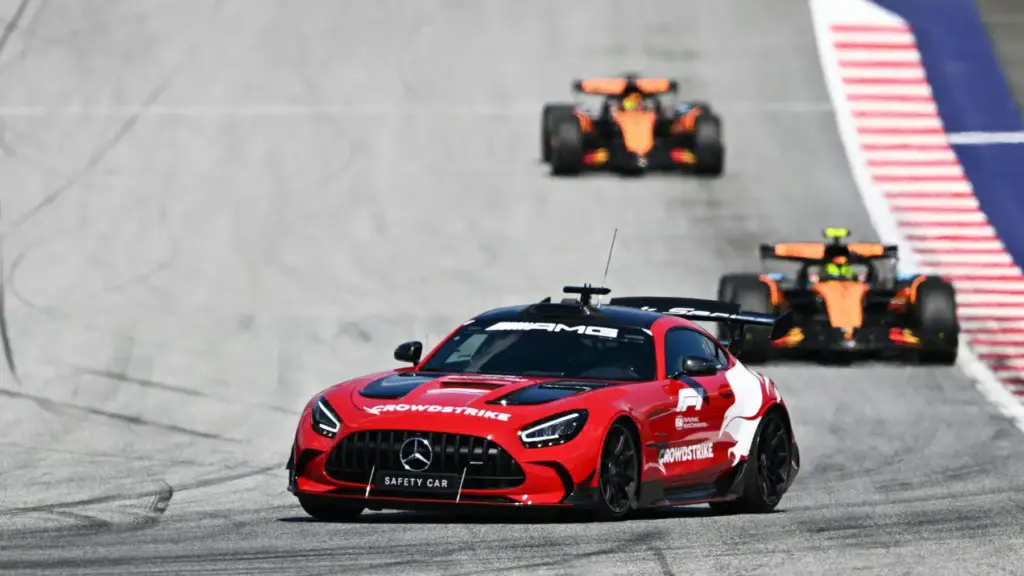
The safety car leading the race leader.
Image via Motorsport MagazineDefending
Legally positioning your car on the inside line of a corner to block a rival behind from pulling off a clean pass. F1 rules strictly dictate that a driver is only allowed to make one directional move to defend. Zig-zagging or weaving across the track is illegal.
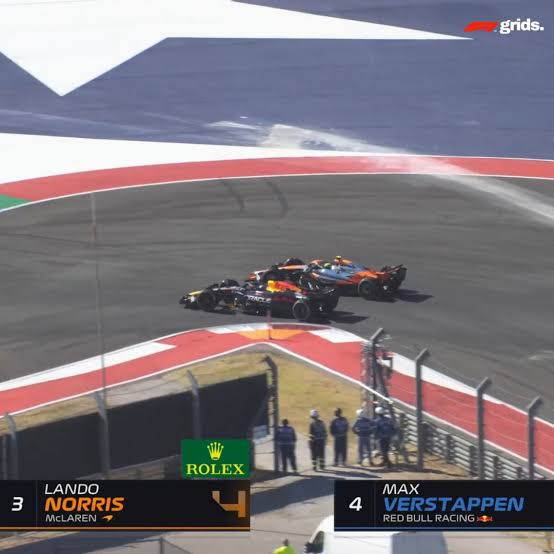
Max Verstappen defending an attack from Lando Norris.
Image via FacebookFlags
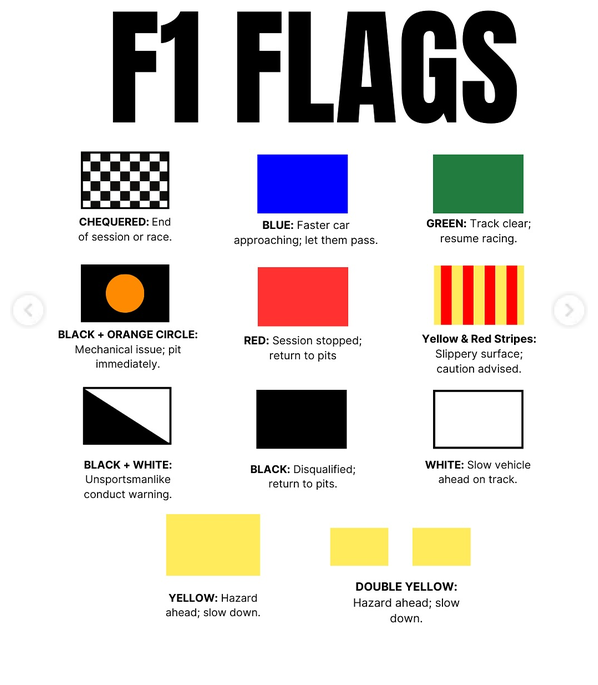
– Yellow Flag: Danger on or near the track. Drivers must slow down, and overtaking is strictly forbidden.
– Green Flag: Track is clear. Back to full-speed racing!
– Red Flag: Session stopped immediately due to a severe accident or torrential downpour. All cars must return to the pit lane.
– Chequered Flag: Waved at the finish line. The race is officially over!
Penalties
Time additions handed down by the FIA race stewards for on-track infractions (like forcing another driver off the road or speeding in the pit lane). Typically, drivers receive 5-second or 10-second penalties added to their total race time at the end.
Team Principal
The big boss sitting on the pit wall wearing a headset. Think of them as the team manager or head coach; they make the grand strategic decisions, direct team orders, and answer to the media when things go wrong.
4. Why You Won't Hear "Refuelling"
Mid-race refuelling was banned in Formula 1 back in 2010 due to safety concerns over pit lane fires and a push to encourage energy efficiency.
Today, cars start the race with their entire fuel load (around 110kg) already inside the tank. When a car pits nowadays, it is strictly for fresh tyres and quick wing adjustments!
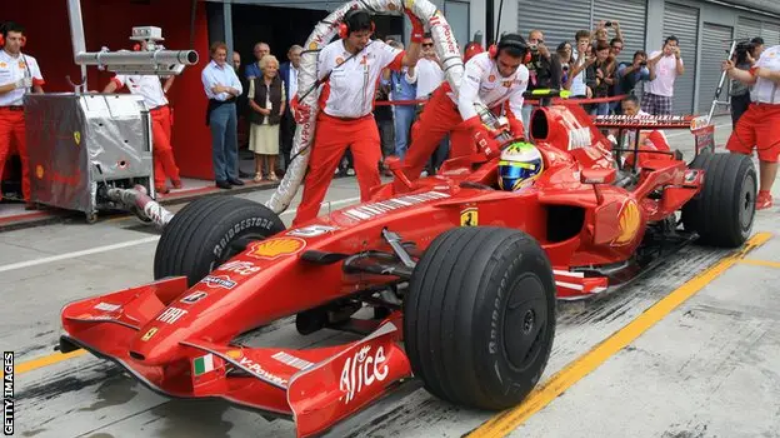
A Ferrari being refueled in the pits in 2009.
Image via BBC