
Here’s How This Massive Solar Farm In Kuantan Is Helping You Charge Your Phone With Minimal Pollution
We also tried Gentari's latest EV charging tech, and it's as simple as refuelling a petrol car!


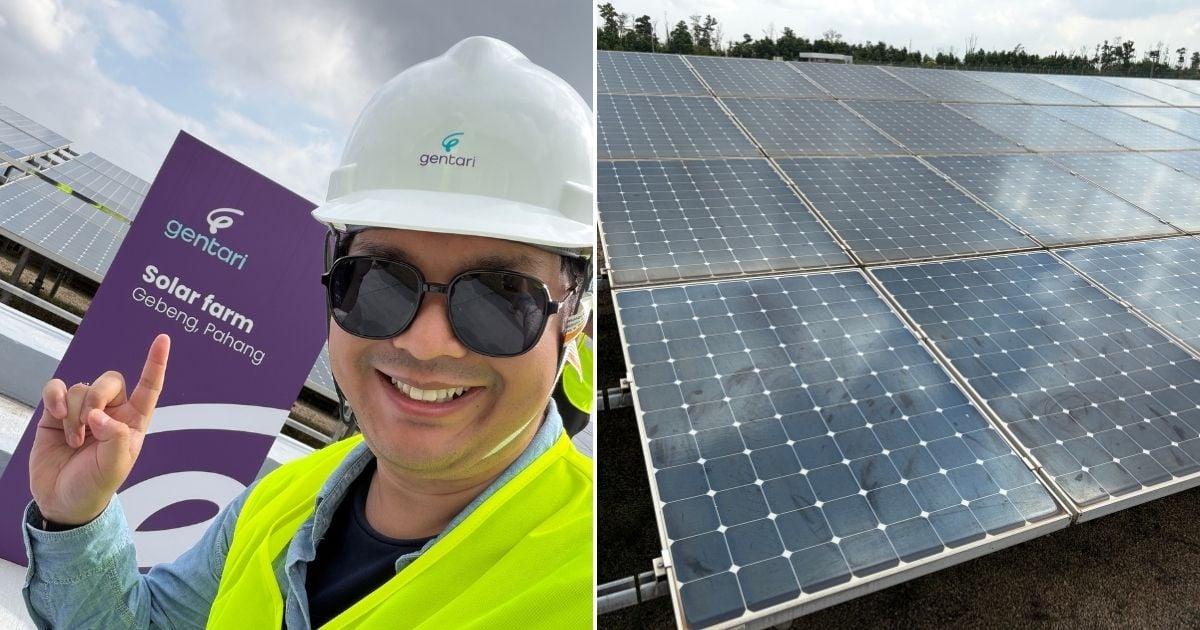 Cover image via Syazwan Bahri/SAYS
Follow us on Instagram, TikTok, and WhatsApp for the latest stories and breaking news.
Picture this: You are sitting on your favourite couch after a long day of work. You plug your phone into a wall socket to power up, or maybe you are chilling on the sofa streaming a live match. Where does that electricity actually come from?
Usually, it involves burning coal or gas. But a growing chunk of it, especially if you live or travel around the East Coast, is generated directly from a giant field of glass panels baking under the intense Pahang sun.
We recently packed a couple of bags, bought a heap of snacks, and drove to Kuantan in a convoy of electric vehicles
Specifically, we visited the Voltage Renewables Sdn Bhd (VRSB) solar power plant tucked neatly inside the Gebeng Industrial Area. It is a 10-megawatt clean energy asset managed by Gentari, the green energy arm of PETRONAS.
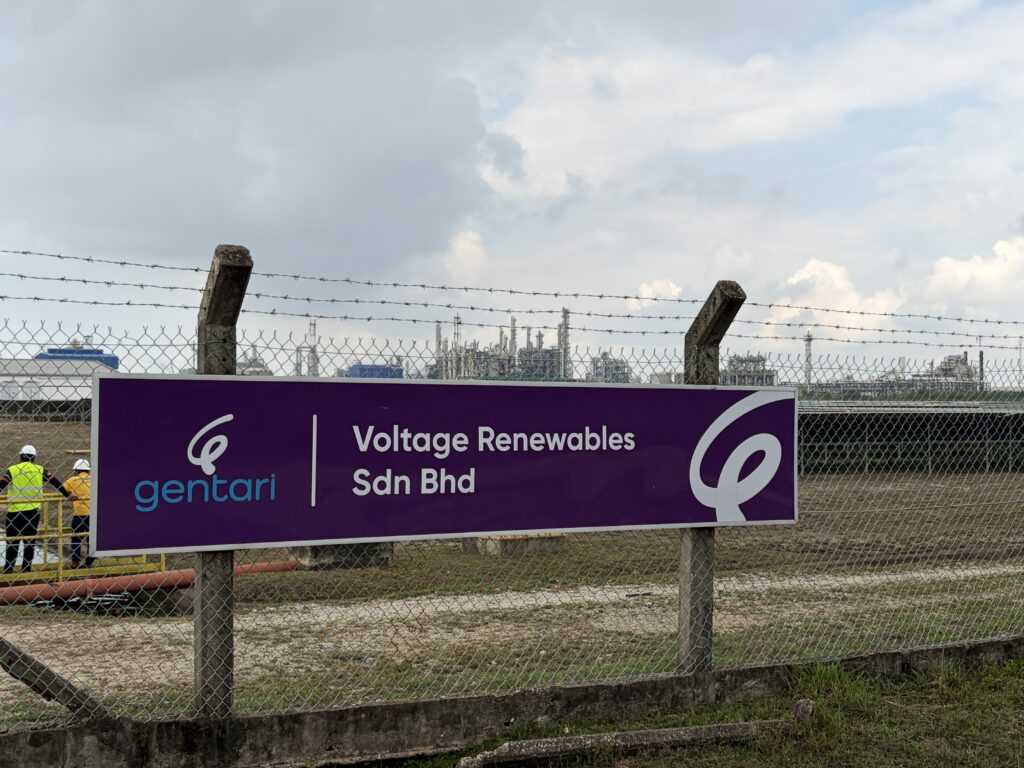
As one of the earliest utility-scale solar farms built in Pahang, it has been running quietly since January 2014. Standing next to 29,960 solar modules spread over an area that could easily fit seven football fields puts its scale into perspective.
A massive amount of behind-the-scenes engineering goes into ensuring your house stays powered without choking our atmosphere with extra carbon dioxide.
You might wonder why anyone would construct a massive solar installation right smack in the middle of heavy chemical factories and industrial yards
The answer lies in land use. The site already belonged to PETRONAS, which needed a serious, real-world environment to explore utility-scale solar energy. Instead of leaving the buffer zone unused, it was repurposed into an active testbed for clean technology.
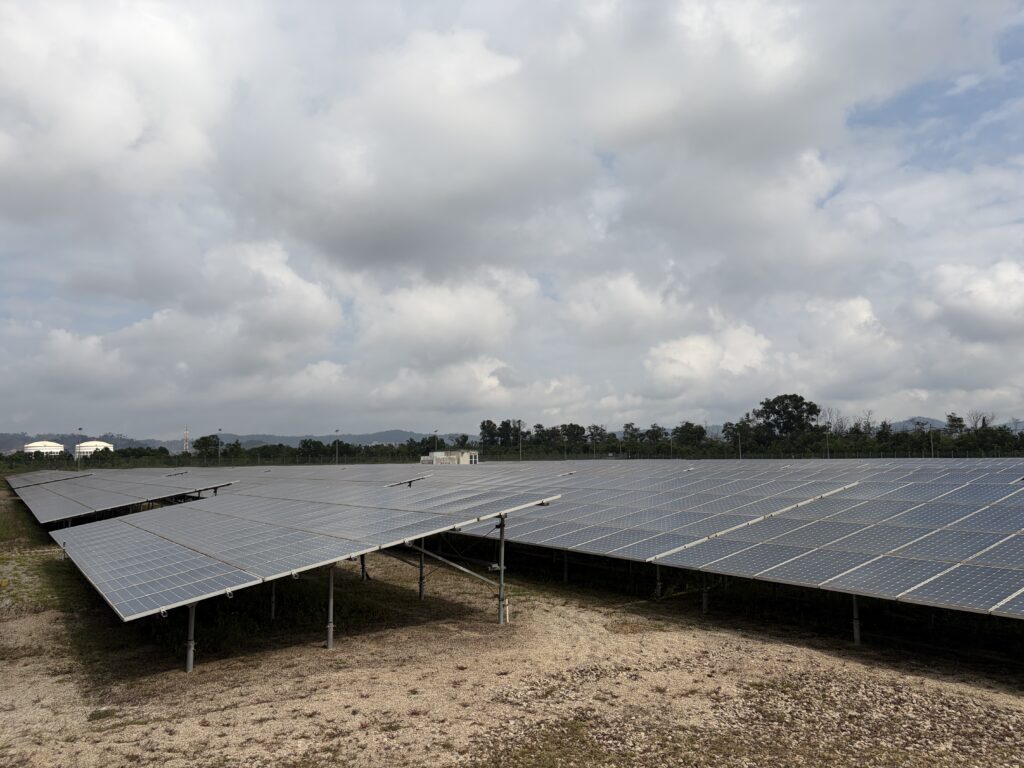
But there is a much more immediate benefit for the local area. Traditional industrial activity around the Gebeng region naturally carries a higher carbon footprint.
By feeding clean electricity into the national grid through a long-term agreement with Tenaga Nasional Berhad (TNB), the plant contributes to the gradual decarbonisation of the surrounding heavy industrial zone.
In effect, it helps offset emissions from a historically carbon-intensive area by supplying renewable energy into the wider system.
We spoke to engineers at Gentari to better understand the system behind the solar installation
Most people assume solar panels are simply laid flat on metal frames or tilted eastward to catch the morning sun. But in Malaysia, that approach can significantly reduce efficiency throughout the day.
At the VRSB facility, engineers instead adopted a different layout, arranging the solar modules in a strict north–south orientation rather than the conventional east–west configuration.
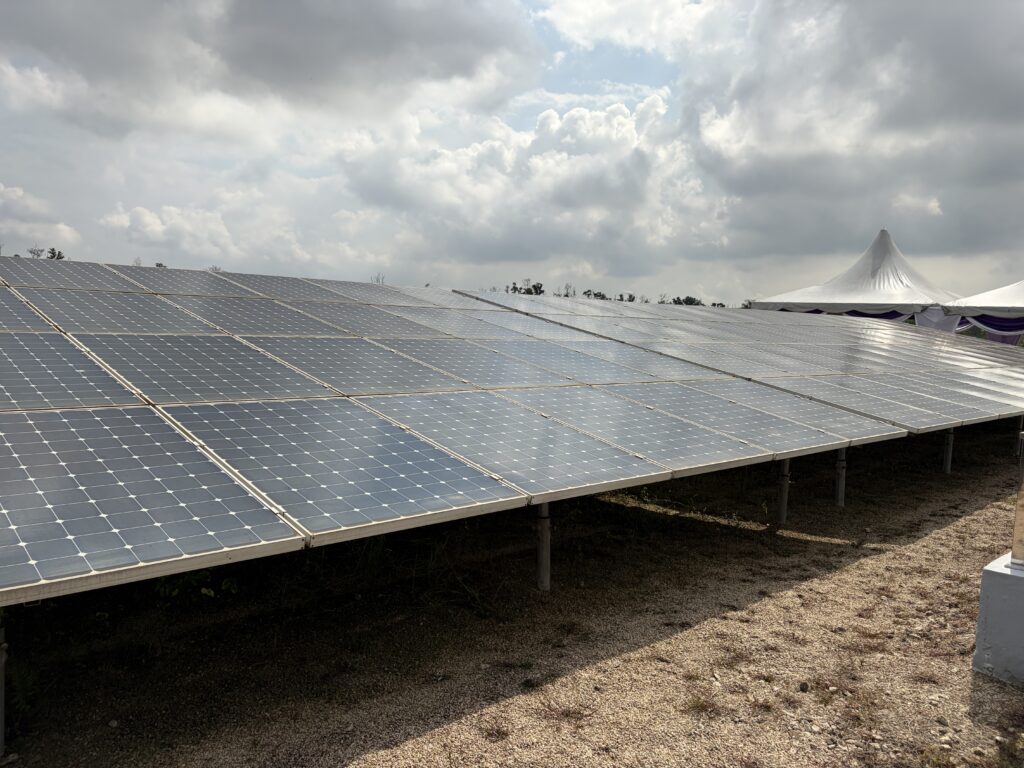
The reason is to capture optimum irradiance across the entire arc of the day. The panels are also fixed at a precise five-degree tilt, which helps maintain a steady energy yield while allowing tropical rain to naturally wash away dust, soot, and debris, reducing the need for manual cleaning.
Another key point shared by Gentari is that solar panels are sensitive to heat
Like electronic devices, their performance can drop when exposed to excessive temperatures.
The optimum operating range is surprisingly mild, around 24°C. While daytime temperatures in Kuantan are typically higher, the open coastal conditions in Gebeng provide natural airflow that helps cool the equipment.
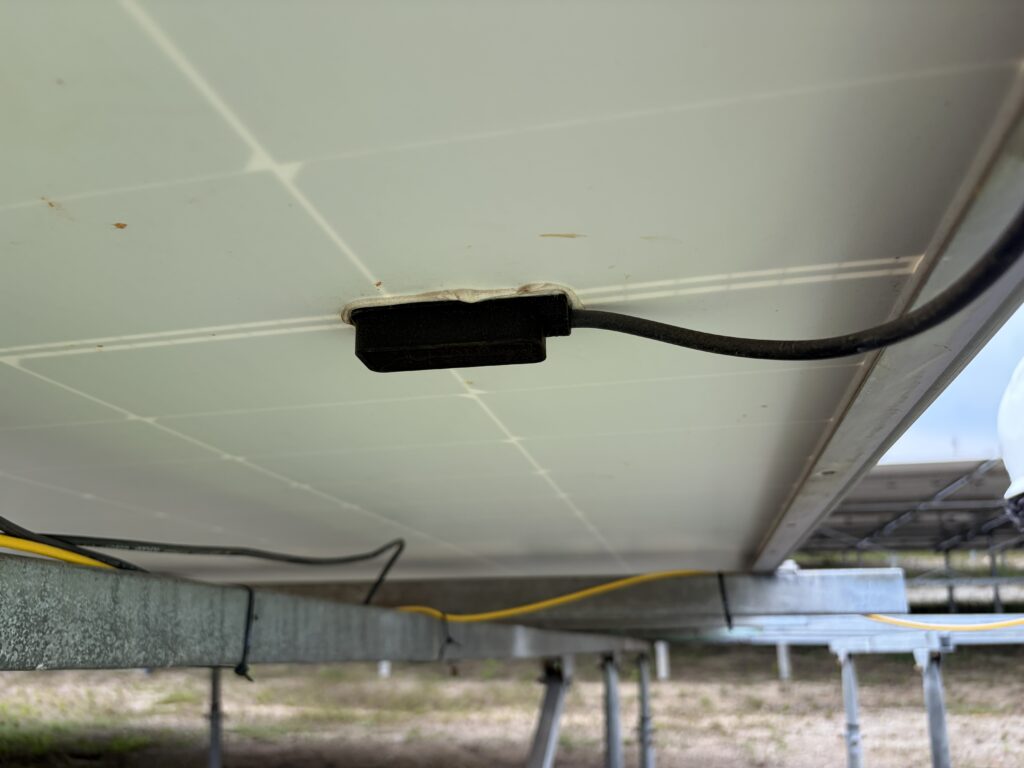
A solar panel temperature sensor module.
Image via Syazwan Bahri/SAYSEven with Malaysia's unpredictable weather patterns — heavy monsoon clouds, sudden afternoon downpours, and seasonal haze — the facility still achieves an average of 3.7 peak sun hours of high-quality generation per day.
In practical terms, it converts intense tropical conditions into stable, usable electricity for the grid.
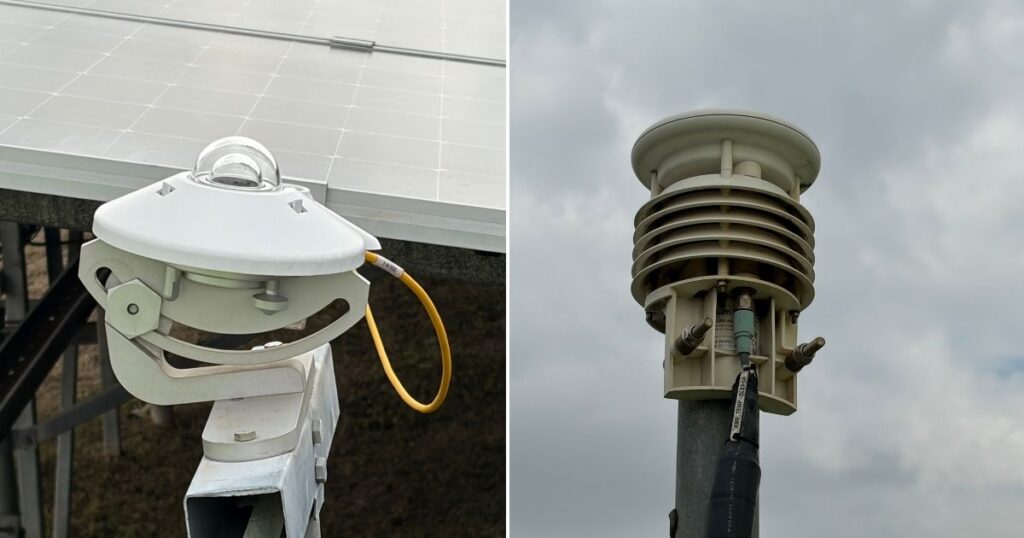
An irradiance sensor (left), and a wind sensor (right).
Image via Syazwan Bahri/SAYSHere's how VRSB's solar farm has impacted your daily life
Since its launch in 2014, the plant has generated more than 125 million kWh of clean electricity. To put that into perspective, that is roughly equivalent to saving more than 4.5 million trees, or powering about 44,147 Malaysian homes for a year.
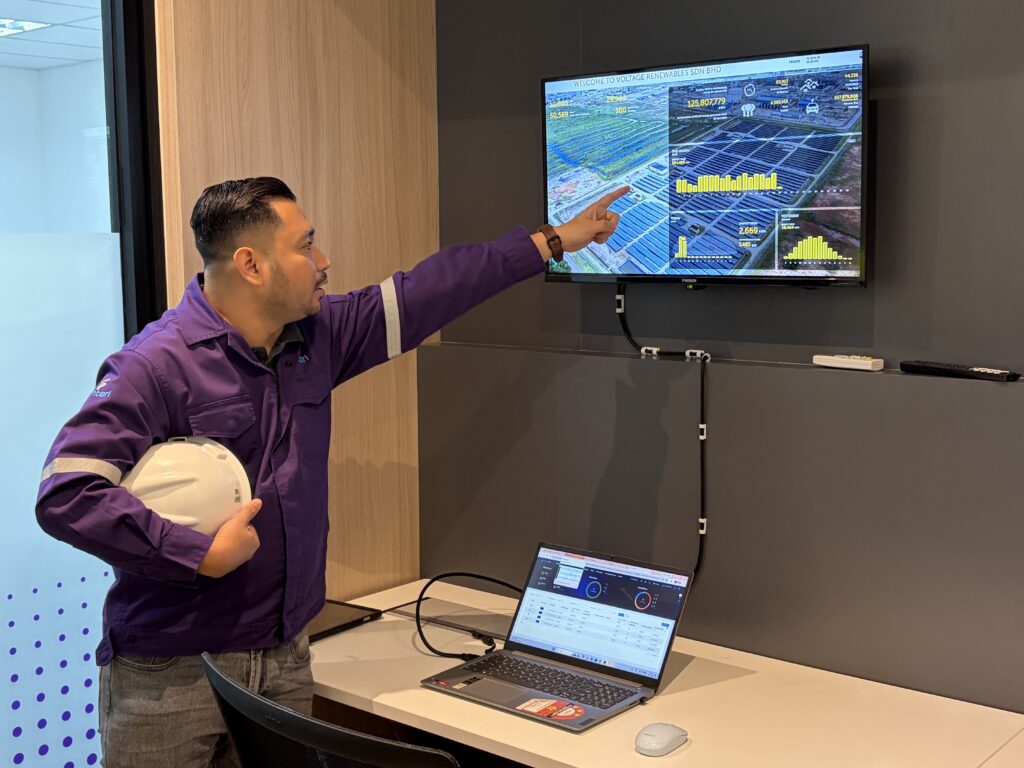
Here's why this matters now. Demand for green energy has risen sharply across Malaysia in recent years, driven by the rapid growth of data centres in Johor and Selangor, as well as increasing consumer demand for lower-carbon electricity. As a result, pressure on the national grid is growing.
To manage this shift, the government has set a target by 2050: 70% of Malaysia's installed power capacity must come from green, renewable sources.
It's a steep transition from where we currently stand, but pioneering projects like VRSB demonstrate that solar infrastructure can withstand Malaysia's challenging climate over the long term.
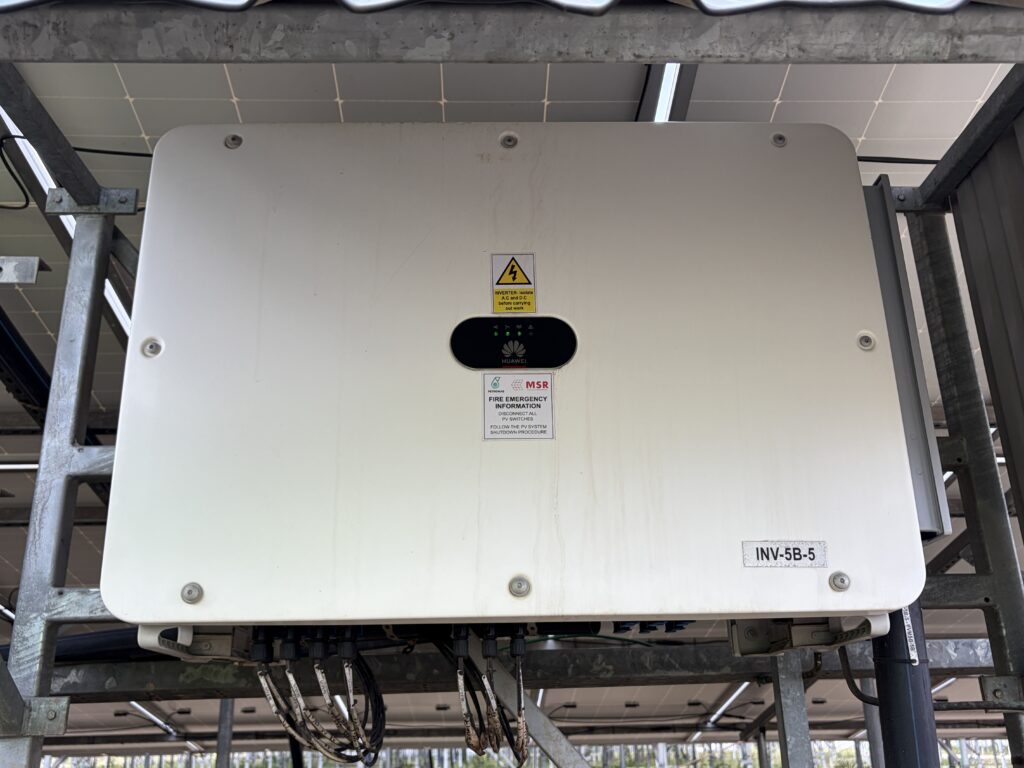
A new and improved inverter module.
Image via Syazwan Bahri/SAYSIn fact, Gentari recently completed several technical upgrades at the site, replacing old central inverters with modern string inverters to improve fault tolerance. The equipment has also been elevated on raised platforms to protect it from seasonal flash floods.
The surrounding ecosystem has also shown signs of recovery, with fish from a nearby pond reportedly moving into the facility's cleaner drainage system!
We also tried Gentari's latest EV charging method: AutoCharge
After visiting the Pahang site, the focus shifted to how the electricity is used in practice. On the drive back to Kuala Lumpur, we stopped at a highway charging station to top up our electric test cars.
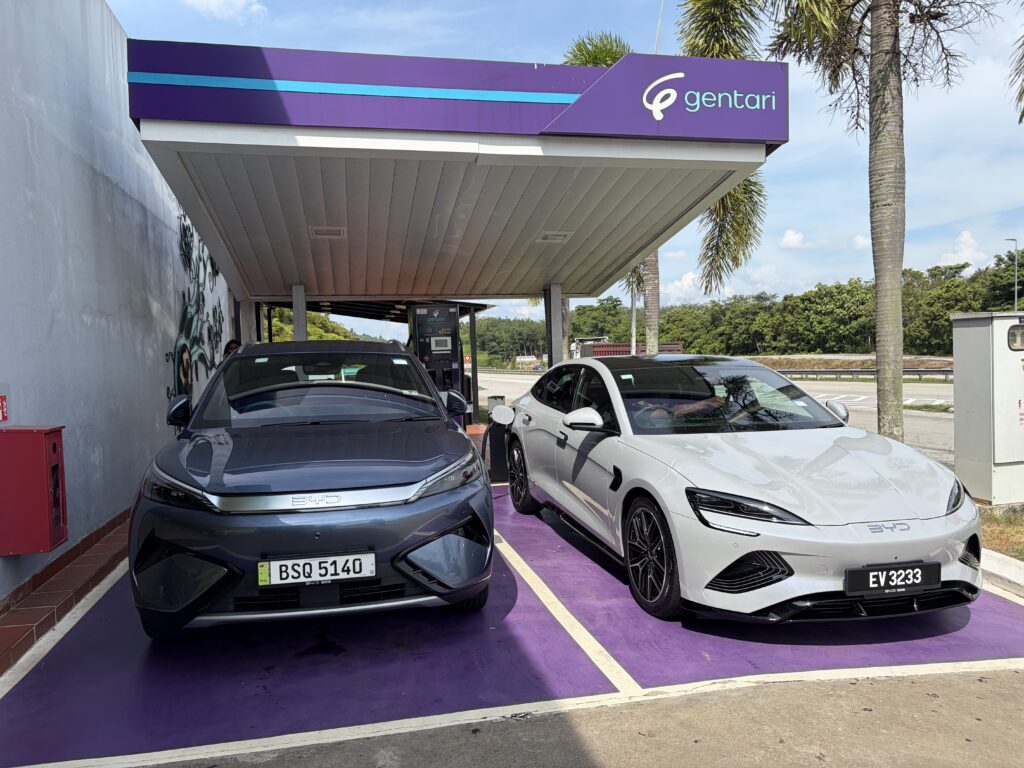
We were given the opportunity to preview Gentari's newest charging method, AutoCharge, which was officially rolled out via the Gentari Go mobile app today, 1 July.
Anyone who has used a public EV charger will know the usual process can be cumbersome: opening an app, waiting for a connection, entering payment details, or fumbling with RFID cards that often end up misplaced.
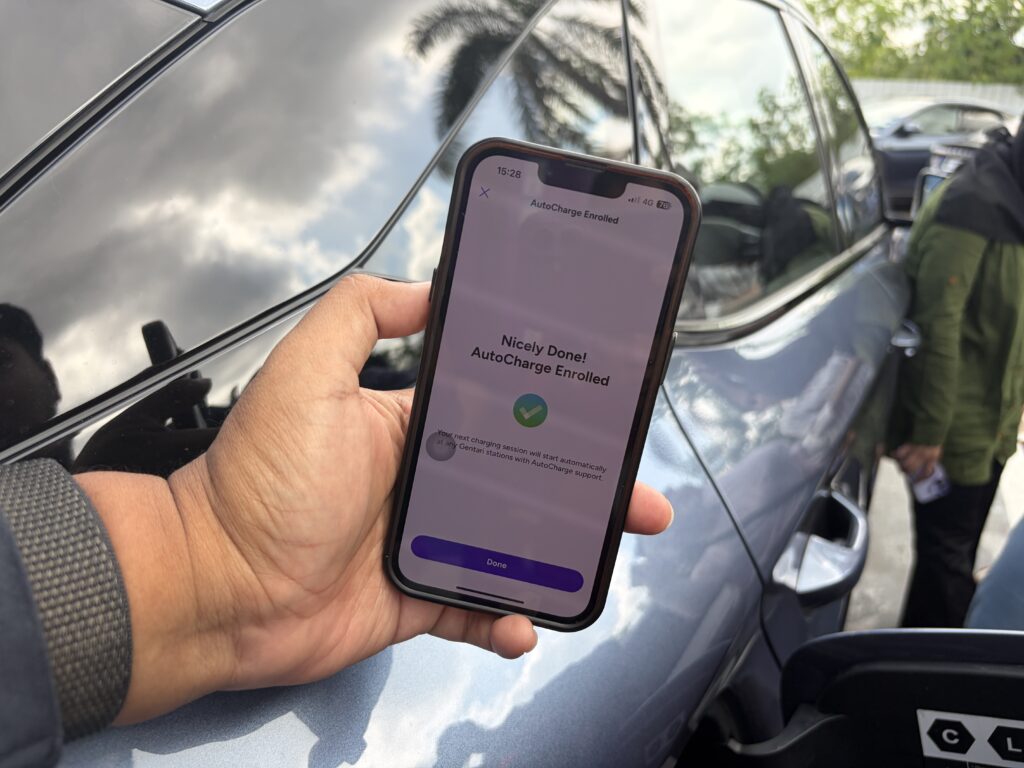
AutoCharge removes that friction by allowing a one-time registration in the app that links your user account directly to your vehicle's digital profile. Once set up, your phone can stay firmly in your pocket.
The entire process is broken into three incredibly fast steps:
You simply park at a compatible Gentari Direct Current (DC) fast charger and connect the heavy cable directly to your car's charging port.
The charging terminal communicates directly with your vehicle to verify your account in the background. No QR code scanning required.
Lastly, the charging session begins immediately.
It is a true 'plug-in, charge, and go' experience that makes public charging feel as seamless as fuelling up a regular car. There are no hidden subscription fees attached either; you simply pay the same standard charging rates you normally would.
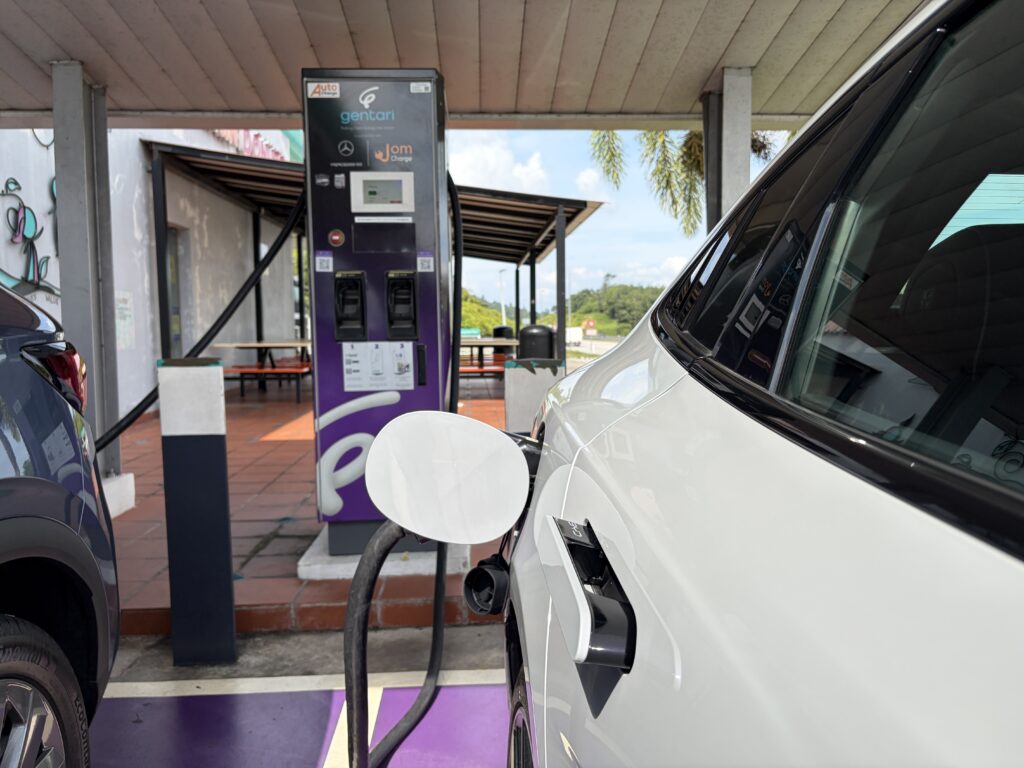
The first 500 drivers nationwide to set up and complete an AutoCharge session get RM10 credited directly back into their Gentari Go wallet
The efficiency of the charging stop meant we could beat the heavy evening crawl on the Karak Highway, arriving back in Kuala Lumpur just in time for dinner.
And knowing that the electricity powering our journey was sourced from a solar field in Gebeng adds a quiet sense of how far the technology has come.