
Malaysian Who Joined BERSIH Rally And Campaigned For DAP Explains Why He Gave Up His Citizenship For Singapore
He gave up his Malaysian citizenship after becoming disillusioned with Malaysian politicians and increasingly believing in Singapore's ability to deliver on its plans.


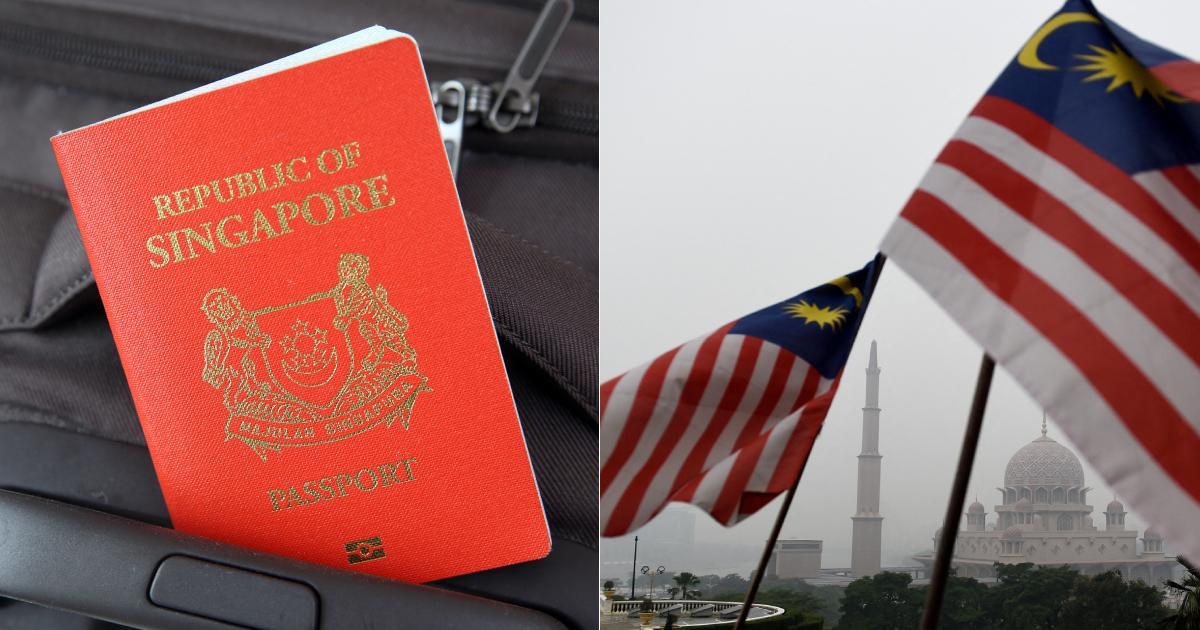 Cover image via Seah Kwang Peng/ST/SPH Media/AFP & Manan Vatsyayana/AFP
Follow us on Instagram, TikTok, and WhatsApp for the latest stories and breaking news.
In a bittersweet farewell letter written just hours before surrendering his Malaysian passport, a former activist shared how endless petty social controversies finally drove him to build a new life in Singapore
The former Malaysian, writing on a Malaysian subreddit called r/malaysianow, cited deep disillusionment with what he saw as stalled political reforms in Malaysia, alongside Singapore's economic stability and effective governance.
He said giving up his citizenship was not an easy decision. But his story is particularly striking because he was once deeply invested in Malaysia and its politics.
As a child, he recalled standing at attention and singing Negaraku, the national anthem, with full sincerity while waiting for the national broadcaster to begin its daily broadcast.
As a teenager, he became increasingly interested in politics and attended a Coalition for Clean and Fair Elections (BERSIH) rally while in Form Five, where he experienced tear gas for the first time.
He was also closely involved in the political excitement surrounding the 2008 general election, when Barisan Nasional (BN) lost five state governments.
After university, he said he became even more politically active, returning home to campaign for candidates, distribute flyers, organise protests, and speak at ceramahs organised by the Democratic Action Party (DAP).
For him, political activism was driven by a belief that Malaysia could change. However, he said that belief gradually faded over time.
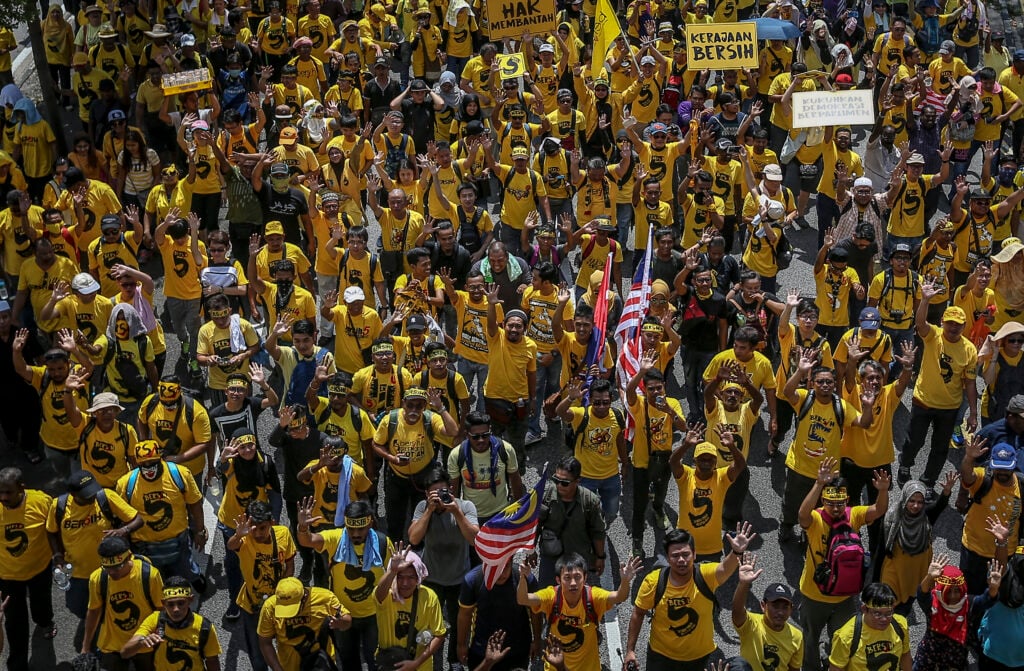
Malaysian Protesters march towards Merdeka Square during BERSIH rally in the streets of Kuala Lumpur.
Image via Mohd Daud/NurPhoto/AFPHe became disillusioned with politicians he once supported
While living overseas, he continued following Malaysian politics closely.
He said he watched people he had known from the People's Justice Party (PKR) and DAP become state executive councillors and cabinet ministers, only to later hear them make statements and defend policies that he felt were very different from the positions they had previously taken.
He was particularly disappointed by what he saw as the failure to push through meaningful reforms after the change of government.
The writer said the problem was not simply that politicians failed to fulfil every election promise.
He said he was disappointed by what he described as a lack of determination to pursue reforms, as supporters were repeatedly told to "look at the bigger picture" in the hope of winning over voters who were unlikely to be swayed.
He also pointed to several controversies that he said became symbolic of Malaysia's political priorities, including the KK Mart socks controversy and the case of a shopkeeper ordered to shut down after accidentally displaying the Jalur Gemilang upside down.
To him, these were signs that Malaysia was still getting caught up in petty disputes while other countries were dealing with foreign investment and the rapid development of AI.
His frustration eventually became more fundamental than politics. He began questioning whether he still wanted to remain a Malaysian citizen.
Despite everything, the author did not describe Malaysia as a place he hated or wanted to erase from his life
His farewell letter repeatedly returned to what Malaysia had given him, crediting his ancestors for making the difficult journey south and putting down roots in what eventually became his home.
He also acknowledged the people who fought for citizenship rights and mother-tongue education, saying this allowed him to attend Chinese schools and develop a deeper understanding of Chinese culture and the Chinese language.
He thanked Malaysia for giving him "a pretty good place to grow up" and acknowledged the friendliness and easy-going nature of Malaysians as qualities he associated with the country.
But gratitude for what Malaysia had given him did not outweigh his decision to leave. He wrote the first part of the essay in the final 20 hours before returning his Malaysian passport and identity card.
"Goodbye, Malaysia. I wish you well," he wrote.
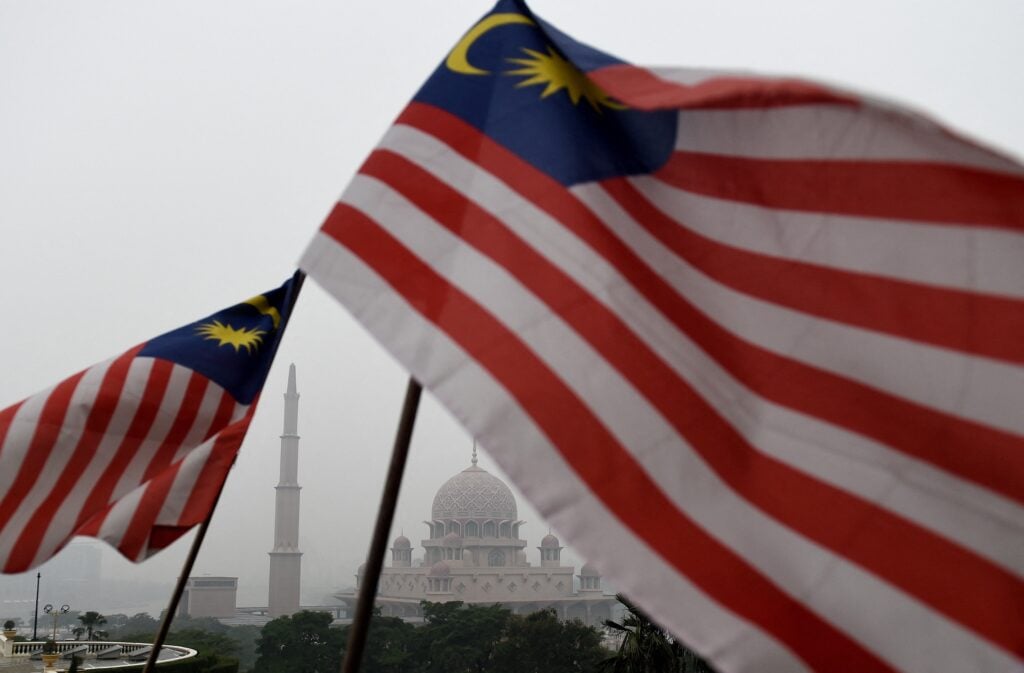
Malaysian flags fly before the Putra mosque.
Image via Manan Vatsyayana/AFPInterestingly, the author said Singapore was not always a place he particularly cared about
Growing up in Selangor, he had access to jobs and opportunities in the Klang Valley and did not initially see a reason to move across the Causeway.
His interest in Singapore began during his school years, when one of his classmates received the Singapore government's ASEAN Scholarship.
The scholarship covered school fees and other expenses and provided allowances, which gave him his first impression of Singapore as a country willing to actively recruit talented young people.
Later, he read Lee Kuan Yew's memoirs and became fascinated by Singapore's approach to government, including its emphasis on high salaries for ministers as a way to combat graft.
He eventually began dreaming of studying in Singapore. However, that dream did not immediately materialise. After completing his Unified Examination Certificate (UEC), he went to university in Perak instead, with limited money available for overseas study.
At 20, however, he finally made his first solo trip to Singapore.
While other tourists visited Universal Studios, Marina Bay, and the casino, he spent his time visiting places such as the Singapore City Gallery, Singapore Mobility Gallery, and NEWater Visitor Centre.
He joked that he was not really travelling but conducting a "site visit".
Those visits left a lasting impression.
He said he became deeply impressed by Singapore's long-term planning, vision and, most importantly, its ability to execute those plans.
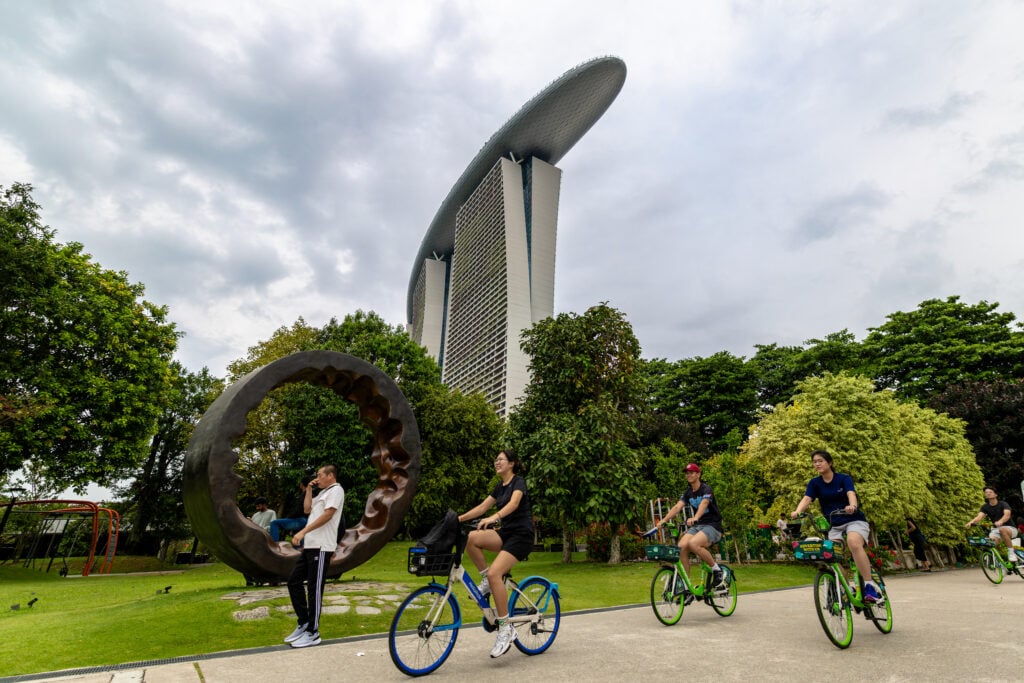
A view of Marina Bay Sands in Singapore.
Image via Mustafa Hatipoglu/Anadolu/AFPAfter graduating, he returned to Petaling Jaya and worked there for several years
His main frustration was not his salary but the amount of time he spent stuck in Klang Valley traffic. Eventually, he moved to Singapore partly because he did not want to remain in a long-distance relationship.
He stressed that he was not initially moving there simply to earn a higher salary. His first experience looking for work was not particularly welcoming.
During one interview, a construction company representative questioned the relevance of his Malaysian work experience because he had never worked in Singapore before, saying they don't "consider working experience outside Singapore as relevant experience".
Eventually, he found a job with a food ingredients wholesaler.
He rented a room in a three-room HDB flat in Lorong 8 Toa Payoh with a retired couple and began settling into his new life. The salary was slightly below the industry average, but the company provided lunch and a dinner allowance.
More importantly, he found himself appreciating the predictability of everyday life. His working hours ended at 5pm, without the expectation of staying late simply to look busy. Singapore's public transport also meant he no longer had to leave home before sunrise or spend hours stuck in traffic.
The ordinary Singaporeans he worked with also surprised him. He said the aunties and uncles at work were kind to him as a newcomer, sometimes bringing him food and insisting that he eat.
His boss trusted him enough to give him opportunities to try new things, while his partner and church community helped him settle into the country.
He eventually realised that the systems, order, and predictability of Singapore gave him a sense of security.
The COVID-19 pandemic further changed his view of Singapore
His company was classified as an essential service, meaning he continued working throughout the pandemic.
He recalled watching then-co-chairs of the COVID-19 multi-ministry task force, Lawrence Wong and Gan Kim Yong, hold frequent press conferences and communicate information about the pandemic.
One of the policies that particularly impressed him was Singapore's Job Support Scheme, under which the government spent billions supporting businesses and protecting jobs.
He was also struck by Singapore's ability to maintain its food supply despite depending heavily on imports. Later, the country made the controversial decision to "live with the virus".
He acknowledged that the decision attracted doubts and criticism at the time. But looking back, he believes the decision proved to be the right one.
For him, the pandemic reinforced something he had already begun to feel after years of living in Singapore: that the country was serious about its systems and about managing crises.
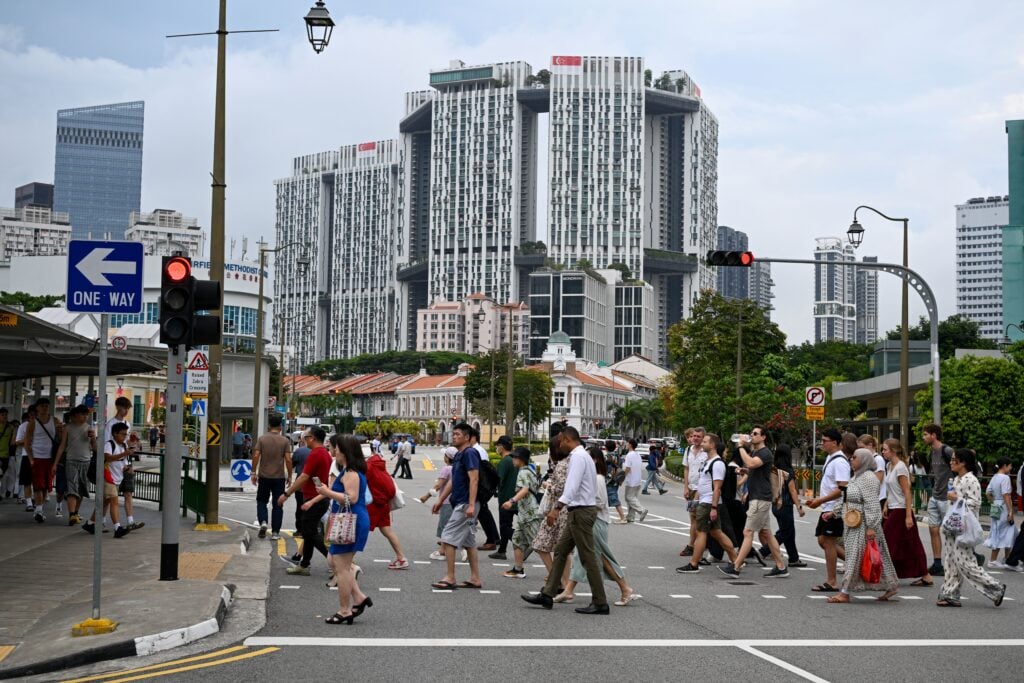
Pedestrians cross a road in Chinatown district in Singapore.
Image via Roslan Rahman/AFPFrom Malaysian patriot to Singaporean citizen
The two-part essay ultimately tells a story that is more complicated than simply choosing Singapore over Malaysia. The author began as someone deeply attached to Malaysia.
He sang Negaraku as a child, joined BERSIH as a teenager, campaigned for political candidates, and believed that changing the government could help change the country.
He later watched politicians he once supported enter government and, in his view, abandon or dilute the reform ambitions that had once motivated him.
At the same time, years spent in Singapore exposed him to a different way of organising everyday life, one that he found more predictable, orderly and reassuring.
Eventually, those experiences led him to make a decision that would once have seemed unthinkable: giving up his Malaysian passport and identity card and becoming a Singapore citizen.
Even then, he said becoming Singaporean did not erase his Malaysian identity. His culture, language and memories of growing up in Malaysia remained part of him. What changed was the country to which he owed his citizenship and allegiance.
