
Malaysians Should Brace For Higher Electricity Bills, Energy Commission CEO Warns
The commission said that while no immediate tariff review has been planned, automatic fuel adjustment could push bills up.


 Cover image via
 Follow us on Instagram, TikTok, and WhatsApp for the latest stories and breaking news.
Consumers in Malaysia have been advised to brace for higher electricity bills as global fuel costs continue to climb, although the Energy Commission has no immediate plans to review tariffs
Energy Commission chief executive officer Siti Safinah Salleh said the country remains partially exposed to fluctuations in global energy prices, even though Malaysia maintains a relatively stable domestic supply mix.
"Although our country is in a stable position in terms of energy supply, especially electricity supply and piped gas, we are not completely unaffected by the impact of the current crisis," she said at a press conference at the commission's headquarters today, 1 April.
Siti Safinah explained that Malaysia still imports some 20% of its natural gas and relies entirely on imported coal for electricity generation.
Malaysia currently procures approximately 65% of its coal from Indonesia and 20% from Australia, with the remainder sourced from various other countries.
Rising costs, she added, are not limited to fuel prices but also include logistics and insurance expenses linked to global supply disruptions.
"Therefore, the public needs to be prepared for higher costs. Although the increase may not be very high or as severe as in some other countries, there will still be an increase in costs," she said.
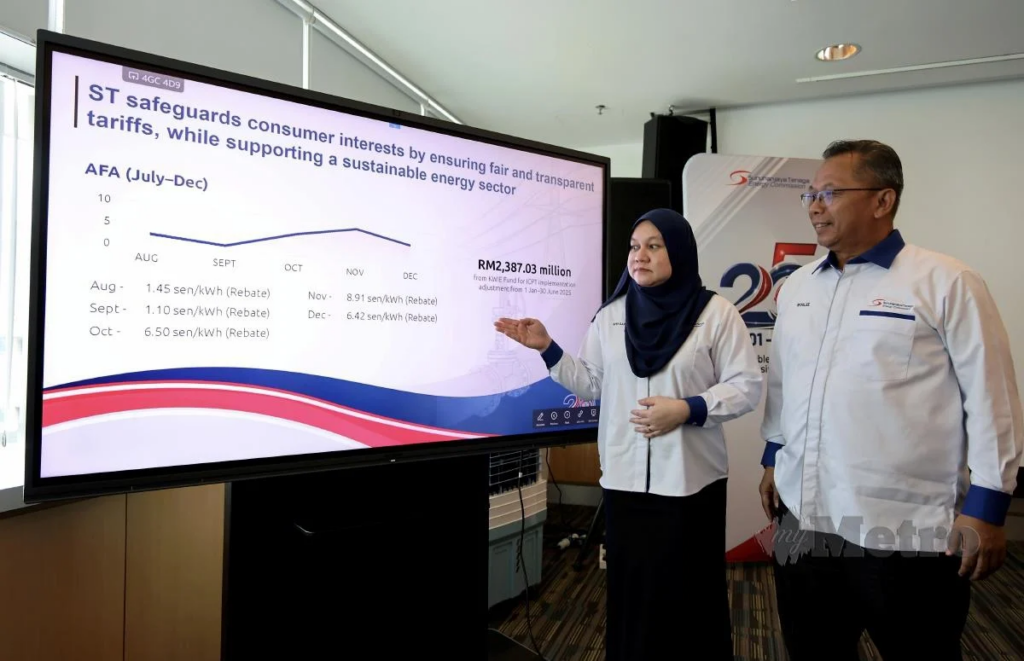
Energy Commission Chief Executive Officer Siti Safinah Salleh (left) and Deputy Chief Executive Officer Roslee Esman (right) reviewing fuel adjustment tariffs following a media briefing on the Energy Commission's Annual Regulatory Review in Putrajaya.
Image via Mohd Fadli Hamzah/Harian MetroShe noted that any increase in fuel costs would eventually be reflected in the automatic fuel adjustment (AFA) mechanism once those costs filter through the system
"There is still a lag effect because of how the supply chain works, but we do anticipate that the adjustment will start to come through in the near term," Siti Safinah said.
"If costs rise, consumers will need to pay the difference. Adjustments via the AFA are made on a monthly basis, provided the change in cost remains within a 10% threshold," she explained.
"Should the increase exceed that 10% threshold, we will seek government approval. Ultimately, a cost is a cost and must be settled; however, how that cost is channelled to the public depends on the government's decision."
Meanwhile, Tenaga Nasional Bhd (TNB) announced yesterday, 31 March, that rebates from its AFA system would be reduced from RM0.0215 per kWh to RM0.0047 per kWh for households in West Malaysia starting today
This change means households using more than 600kWh per month, with bills exceeding RM215.98, can expect to pay more for electricity starting this month.
Siti Safinah also warned that the hotter weather expected in the coming months could push up electricity demand, particularly from households using air-conditioning, placing further pressure on bills.
Comparing Malaysia to Singapore, which announced tariff hikes yesterday, she said the level of exposure differs due to the former's more diversified energy mix.
"Our supply mix is different from Singapore. They depend on imported natural gas, so they will see the impact more quickly. We are not fully insulated, but our exposure is different," she said.
She added that Malaysia currently has sufficient energy supply capacity, with additional capacity expected to increase by less than 100MW this year, while demand grows gradually.
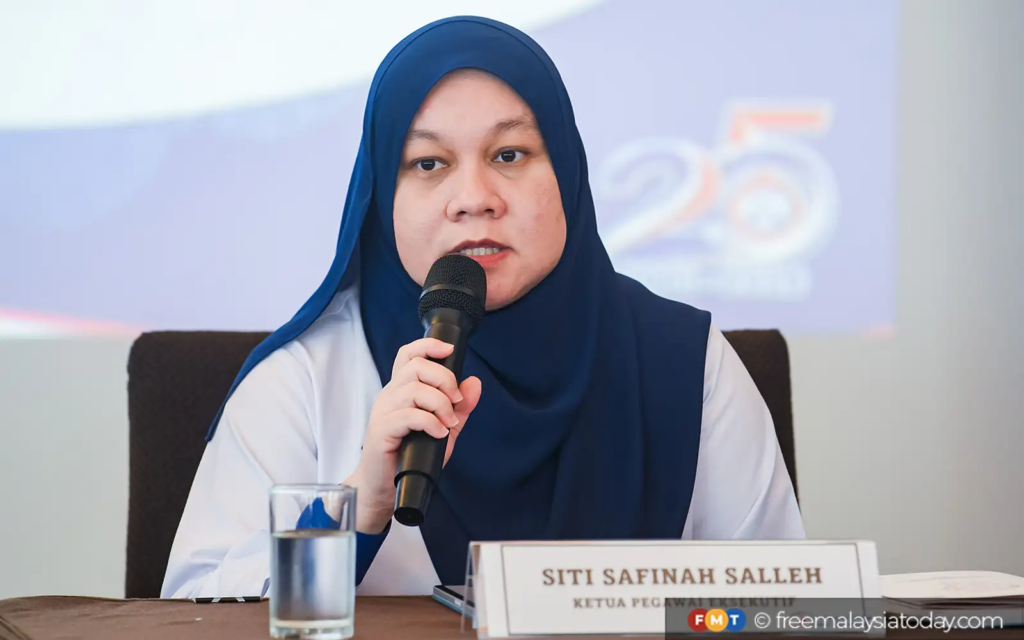
Energy Commission CEO Siti Safinah Salleh.
Image via FMT