
Malaysians No Longer Need To Fill In The Orange Arrival Card While Travelling To Australia
Australia is replacing its paper arrival cards with a digital version that Malaysian travellers can complete before they even board.


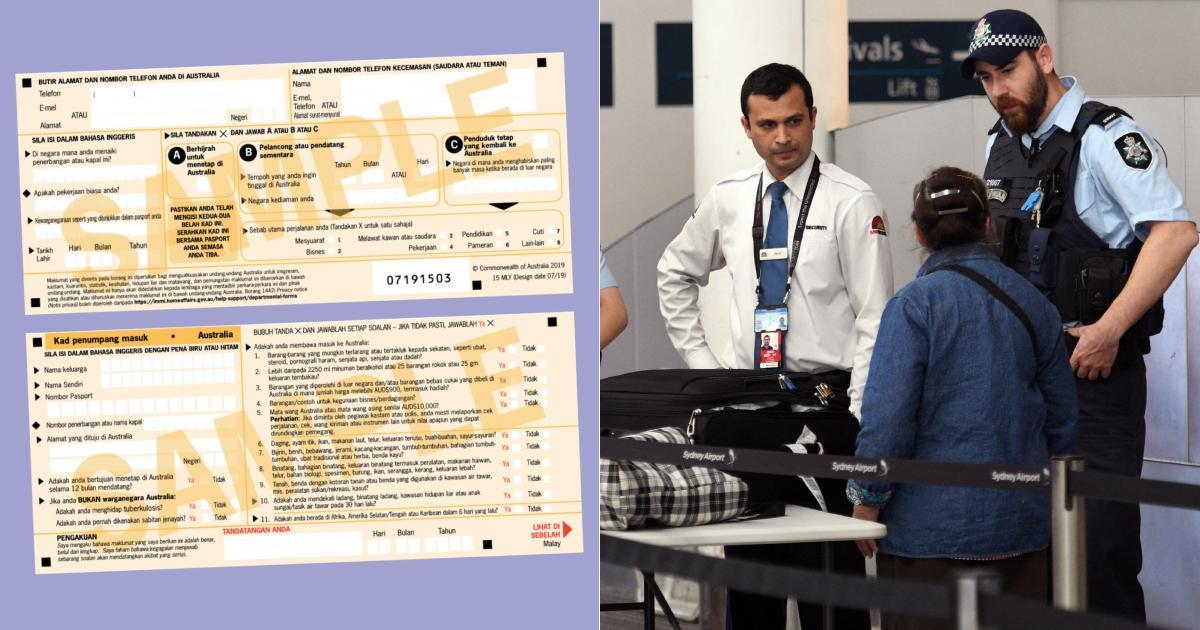 Cover image via Australian Border Force (Composite by SAYS) & William West/AFP
Follow us on Instagram, TikTok, and WhatsApp for the latest stories and breaking news.
Anyone who's flown from Kuala Lumpur to Australia has probably experienced the same routine
Sometime before landing, cabin crew hand out Australia's orange Incoming Passenger Card (IPC), leaving passengers to hunt for a pen, fill in their accommodation details, and answer customs questions while squeezed into aeroplane seats.
That experience is set to become a thing of the past.
The Australian government has announced a AUD56.1 million (about RM158 million) investment over the next four years to replace the paper arrival card with a new digital system known as the Australia Travel Declaration (ATD).
The move follows a successful trial involving more than 450,000 passengers on selected Qantas flights arriving in Sydney, Melbourne, and Brisbane, according to The Guardian.
For Malaysian travellers, here's what that means.
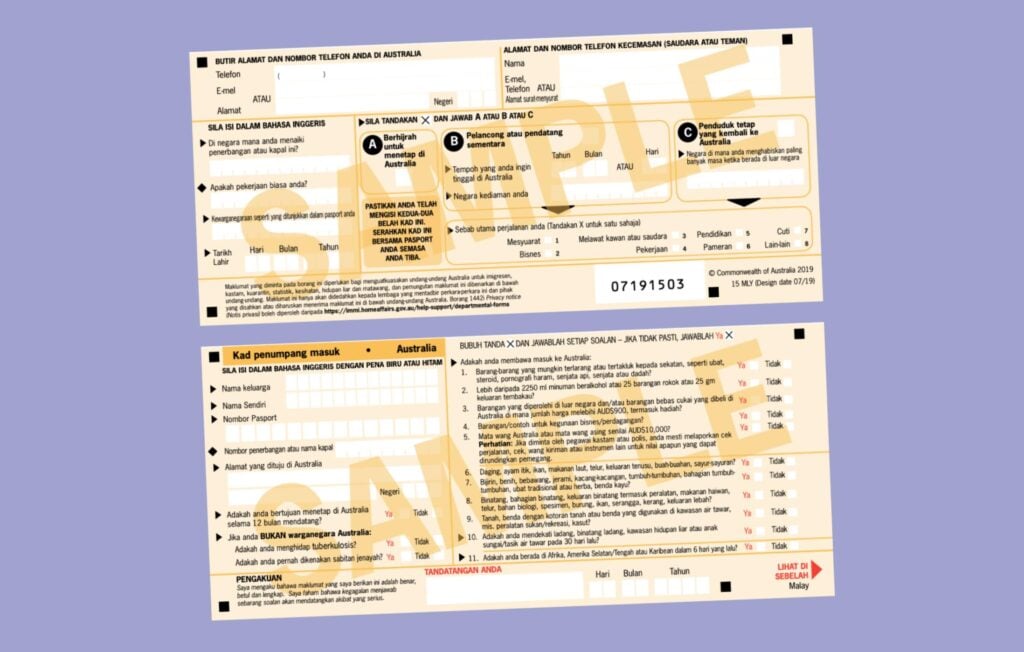
Paper arrival cards in Bahasa Melayu for entry of Malaysian travellers to Australia. These are now being replaced by digital declarations.
Image via Australian Border Force (Composite by SAYS)You'll be able to complete your arrival declaration before your flight
Instead of waiting until you're on the plane, travellers will be able to submit their arrival declaration online up to 72 hours before arriving in Australia.
The declaration will initially be available through a dedicated Australian government webform, meaning passengers flying on any airline, and not just Qantas, will eventually be able to use it.
Once completed, travellers will receive a digital pass with a unique QR code via email.
Upon arrival, the QR code can be presented to Australian Border Force and biosecurity officers instead of handing over a completed paper card.
According to the Australian government, the system is expected to reduce border processing times and speed up arrivals at international airports.
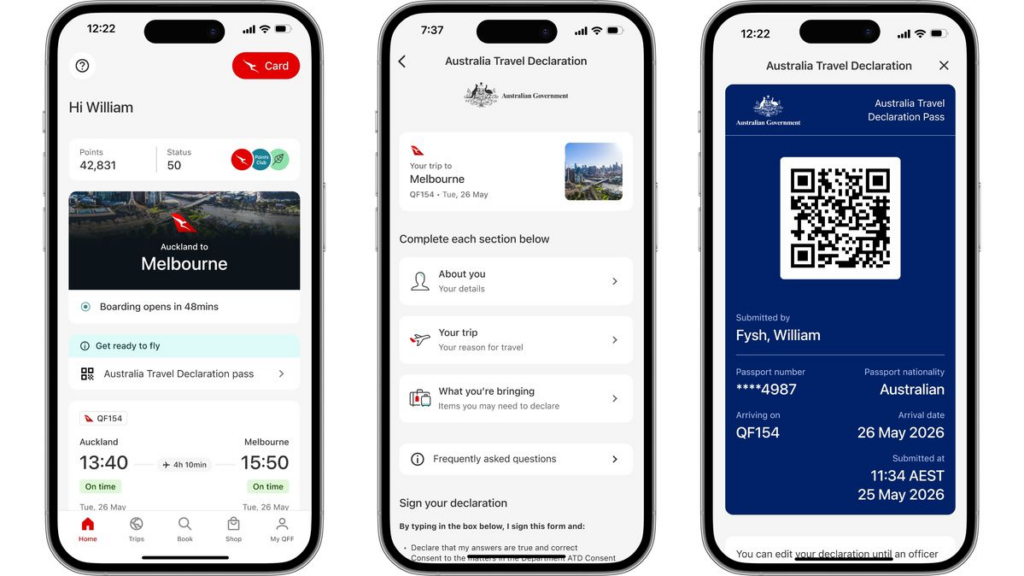
How the new Australian Travel Declaration looks when integrated into an airline app (in this case, the Qantas app).
Image via Executive TravellerWhat Malaysian travellers should note
The rollout will happen in phases, but the important part for travellers is that the new declaration is meant to make arrivals smoother, not change the border rules.
In the longer term, Australia plans to work with airlines to integrate the declaration directly into their mobile apps, meaning carriers commonly used by Malaysians, such as Malaysia Airlines, AirAsia X, and Batik Air, could eventually offer the feature during online check-in.
Australia's strict biosecurity rules are not changing
While the form is going digital, Australia's customs and biosecurity requirements remain unchanged.
Travellers will still need to declare food, plant material, animal products, traditional medicines, and other restricted items when entering the country.
This is especially relevant for Malaysians who often travel with items such as sambal, spices, ikan bilis, coffee mixes, herbal products or snacks for family and friends.
Australian authorities said the digital declaration allows border agencies to receive passenger information earlier, helping officers identify potential biosecurity risks before travellers arrive.
Failure to declare prohibited or restricted items can still result in hefty fines, seized goods or, in serious cases, visa cancellation.
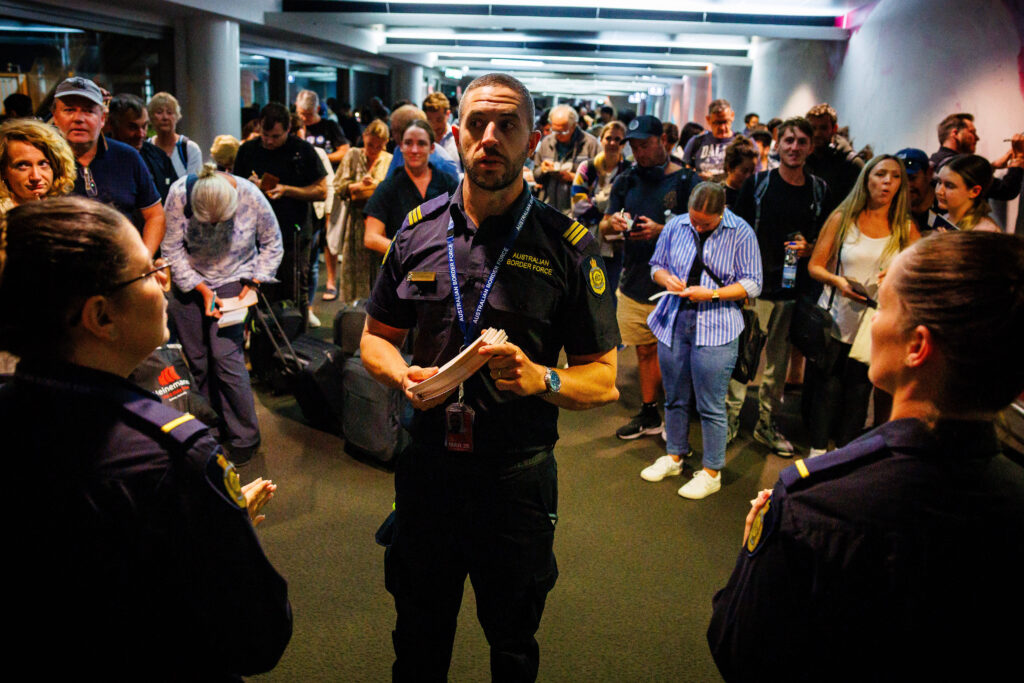
Passengers are greeted by Australian Border Force and Department of Foreign Affairs and Trade (DFAT) officers upon their arrival at Brisbane International Airport in Brisbane.
Image via Patrick Hamilton/Pool/AFPMalaysians still need an Australian visa
The Australia Travel Declaration does not replace Australia's visa requirements for Malaysians.
Malaysian passport holders must still obtain an Electronic Travel Authority (ETA) before travelling to Australia.
The ETA, costing about RM58, remains a separate requirement and must be approved before departure.
The new digital declaration simply replaces the paper arrival card that travellers complete before entering Australia.
Paper cards will still be available
For travellers who are unable to use the digital system, such as elderly passengers, those without smartphones or anyone experiencing technical issues, the traditional paper arrival card will continue to be available as a backup.
This means passengers who prefer not to complete the declaration digitally will still have an alternative option during the transition period.
Why Australia is making the switch
The Australian government says digitising arrival declarations is part of a broader effort to modernise the country's border systems, improve national security and make international arrivals more efficient.
Home Affairs Minister Tony Burke said the goal is to get visitors through airports more quickly while strengthening border operations.
"When people arrive in Australia, I want them out of the airport and experiencing the best place in the world as fast as possible," he said.
Acting Infrastructure and Transport Minister Kristy McBain added that "the days of scrambling for a pen on the plane to fill out the orange passenger card are numbered".
Trade and Tourism Minister Don Farrell said faster arrivals would allow visitors to spend less time completing paperwork and more time travelling around Australia.
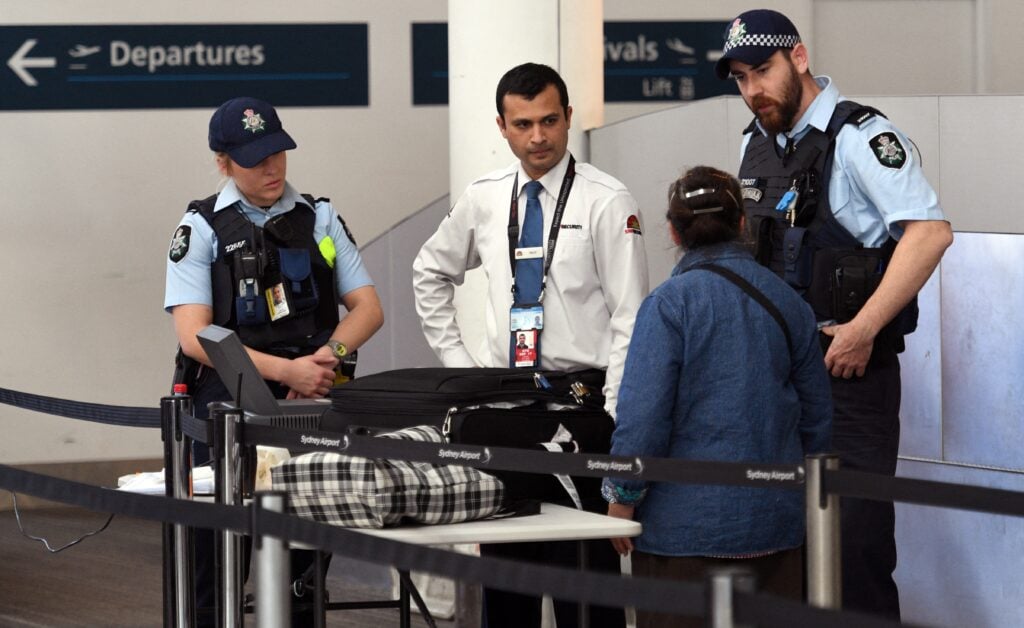
Police help screen passengers at Sydney Airport.
Image via William West/AFP