
[VIDEO] How The Global Supply Crisis Will Affect Your Everyday Life
A global problem that's large enough or carries on for too long will have big implications for businesses and consumers.


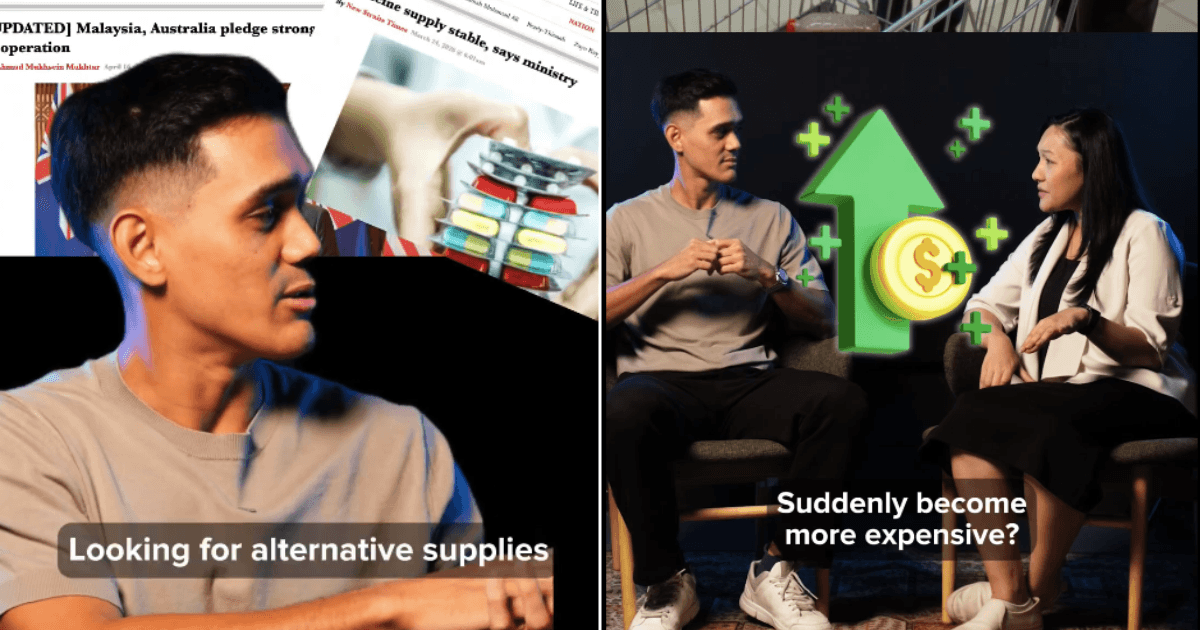 Cover image via SAYS
Follow us on Instagram, TikTok, and WhatsApp for the latest stories and breaking news.
This Spotlight is sponsored by Ministry Of Finance.
You might have heard terms like "global supply crisis", "buffer stock", and "strategic reserves" being mentioned when there's talk about shortages, rising prices, or disruptions overseas
But what do these terms actually mean, and how can something happening thousands of kilometres away affect your everyday life?
Here's what you need to know:
1. What happens overseas can eventually affect what you buy here

Think about your favourite mamak meal.
To prepare it, the restaurant needs ingredients such as chicken, cooking oil, and rice. But many of the things we use every day, or the ingredients and materials needed to make them, come from different parts of the world.
If something disrupts part of that supply, it can affect how much of a product is available and how much it costs. That disruption could happen for different reasons, including weather, conflict, shipping problems, or shortages.
2. Having different supply sources means relying less on one
So, what happens when one supply source or route is disrupted?
One way to manage that risk is by having alternatives. Malaysia has been actively looking for alternative supply sources so the country is not too dependent on just one country or route.
Fuel is one example used. When supply routes in the Middle East were disrupted, Malaysia worked to diversify where its energy comes from, including securing supplies from other countries.
3. A "supply buffer" works like an emergency fund
Think about your own emergency savings.
You hope you won't need to use them, but having some money set aside can give you some breathing room when something unexpected happens. A supply buffer works on a similar basic idea. For a country, resilience can come from having different sources of supply, local production and reserves, rather than relying on just one option.
These measures provide alternatives that can help when there is an unexpected disruption.
4. Having buffers doesn't mean Malaysia is completely protected
So, does having different supply sources, local production and reserves mean Malaysia is safe from every global supply crisis?
Not exactly.
These measures can help reduce or delay the impact of disruptions, but they cannot prevent every possible effect. If a global problem is large enough or continues for long enough, businesses and consumers can still feel the impact. That could eventually show up in everyday life, such as when something you regularly buy becomes more expensive.
This is why an issue happening thousands of kilometres away can still affect what you pay here.
You don't need to become a supply-chain expert to understand what's happening
But knowing why supply and prices can change can help you make sense of what you're seeing and make smarter decisions about your spending.
Watch the full explainer video below:
Got some cool brand news to share?

Take a look at all of our Spotlight stories to date here.
