
APMC Responds To Monastery’s Plea To Save Perak Cave Site
The company questioned the monastery's claim that it is more than 100 years old.


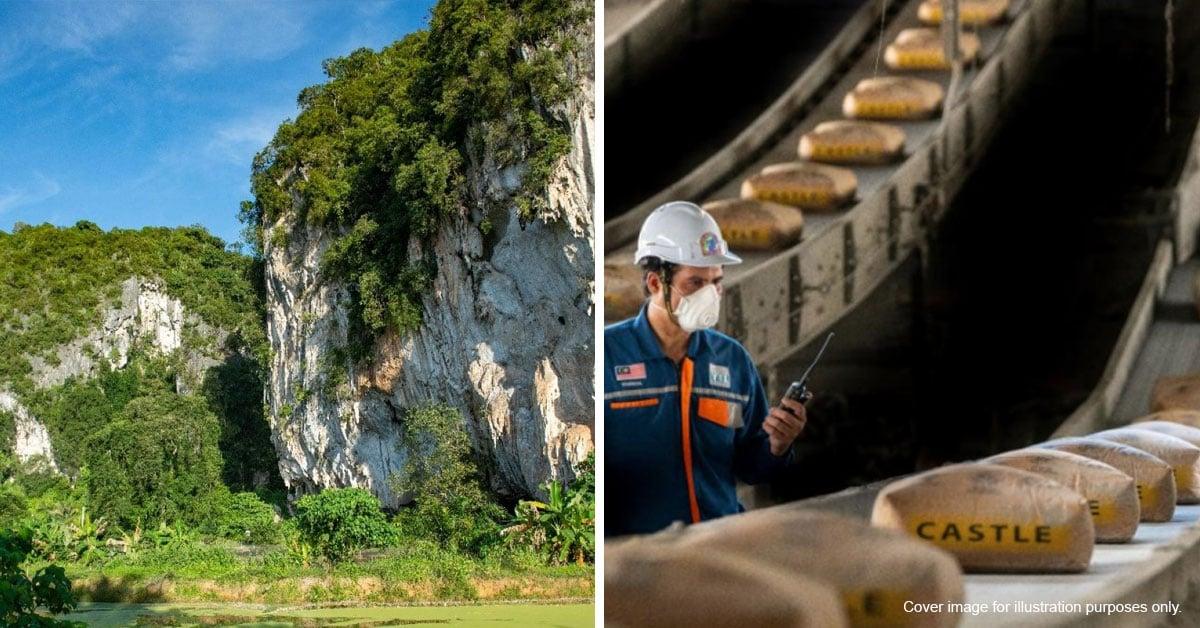 Cover image via Dagang News & Provided to SAYS
Follow us on Instagram, TikTok, and WhatsApp for the latest stories and breaking news.
Associated Pan Malaysia Cement (APMC) Sdn Bhd has responded to monks from the Dhamma Sakyamuni Caves Monastery at Gunung Kanthan, Perak, who appealed to the federal government to intervene and save their home
In a statement addressing recent reports, APMC acknowledged that issues involving religion, heritage and the environment can evoke strong reactions.
However, the company said public discussion should be "grounded in facts and the full history of the matter" to avoid narratives that may be incomplete or misleading.
APMC said the monastery is located in Compartment C of Gunung Kanthan, on land belonging to the company.
According to APMC, the land was lawfully leased to it by the Perak state government with the endorsement of the federal government. The company's briefing materials state that the lease, first granted in 1963, has been continuously renewed.
APMC said the Kanthan quarry, comprising Areas A, B, C and D, was awarded by the state for cement production.
The company added that the Court of Appeal ruled in its favour in September 2023, recognising it as the "rightful and legal owner of the land".
In February 2024, the Federal Court unanimously refused the monastery's application for leave to appeal, leaving the Court of Appeal's decision standing.
APMC said it had been trying to resolve issues involving occupants on the land since 2013, with most cases settled amicably.
However, efforts to reach an agreement with the monastery were unsuccessful, leading the company to commence legal proceedings on 29 January 2021.
"We believe Malaysia, as a respected democratic country, should always uphold the sanctity of law," the company said.
APMC also challenged claims that the monastery has occupied the site for over a century
According to the company, the claim was raised during legal proceedings but was disputed and could not be established in the appellate courts.
APMC pointed to official records showing that the monastery was registered as a society with the Registrar of Societies Malaysia in 2007.
It also questioned why the monastery had not received heritage recognition similar to established cave temples such as Perak Tong, Sam Poh Tong, Lin Seng Tong, Kwan Yin Tong, and Kek Lok Tong if it had such a long history.
The company maintained that the claimed history of the site should be distinguished from the documented history of the monastery as a registered organisation.
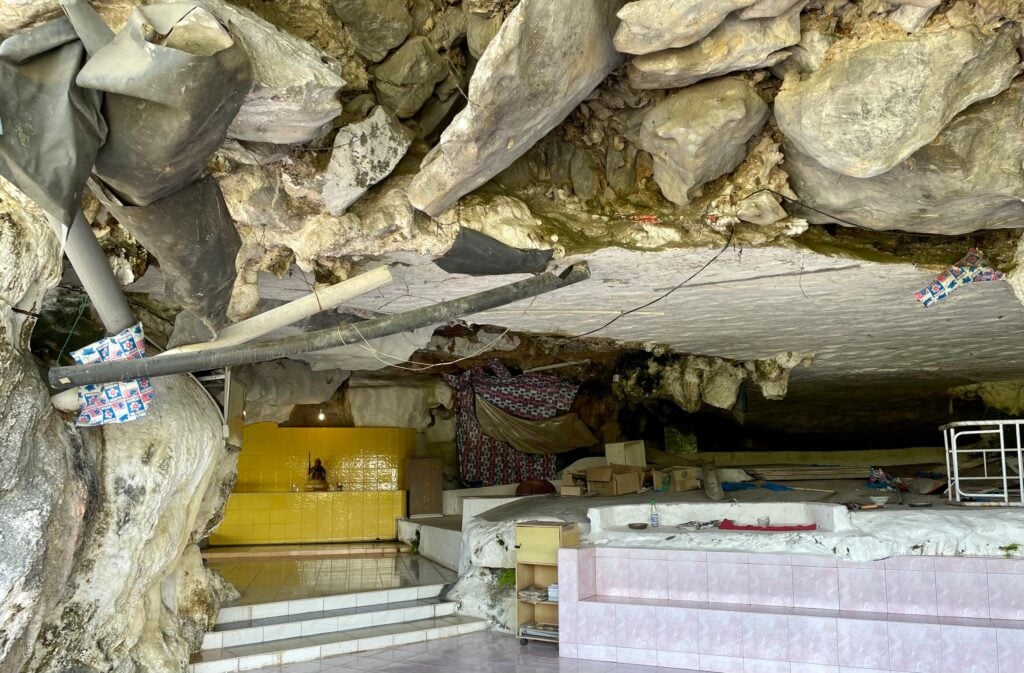
APMC said its decision was also driven by concerns over the safety of people occupying the cave
"Safety cannot be compromised," the company said, adding that limestone karst formations carry inherent geological risks, including rockfalls and structural instability.
The company's fact sheet lists seven previous limestone-related incidents in Perak. These include the 1919 collapse at Bukit Tunggal in Gopeng and the 1973 Gunung Cheroh tragedy, which APMC described as the most devastating, claiming 42 lives.
According to APMC, geological assessments of Compartment C identified fractures and evidence of previous rockfalls. The company said the area shares characteristics with the collapsed section of Gunung Cheroh, making it unsuitable for habitation.
APMC said that while the monastery serves a relatively small number of people compared with public cave temples such as Sam Poh Tong, the safety of those occupying the site could not be ignored.
The company also said the dispute should not be viewed as a religious issue.
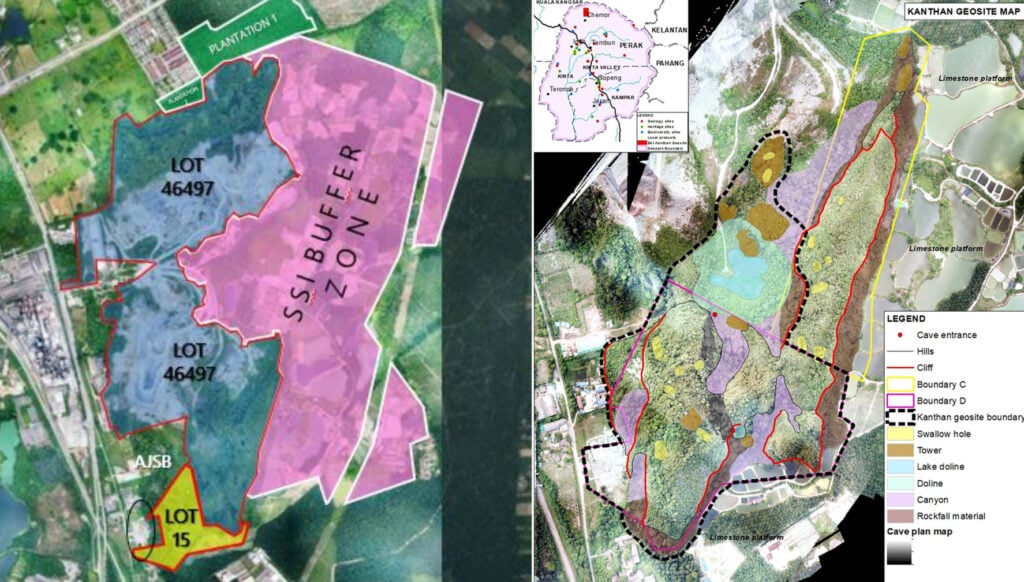
It pointed to a Hindu temple at the fringe of Area D, on Lot 15, where APMC said it has co-existed harmoniously with the temple while voluntarily conserving the surrounding land.
However, the company said the monastery occupies Compartment C, where the geological conditions, safety concerns and intended land use are different.
APMC also rejected allegations that it had disregarded Gunung Kanthan's biodiversity
The company said it voluntarily set aside Area D, also known as Bukit Kanthan, as a geosite for conservation in 2014.
It later commissioned a scientific study led by three experts, including Prof Emeritus Datuk Dr Ibrahim Komoo, to map the area and delineate the proposed conservation boundary.
The study identified Kanthan Cave and Doline Lake as rare karst features with state heritage value. It also concluded that Area C is a common limestone formation in the Kinta Valley, while highly endemic species found there are being conserved through ex-situ programmes.
APMC said its wider conservation work has included biodiversity surveys, species research, habitat management, plant conservation, and translocation programmes.
"Our approach is to understand what should be conserved and what can be responsibly developed," it said.
The company described itself as the first and only company in Malaysia to undertake conservation at an active mining site.
It has also supported tropical karst research through the University-Industry Consortium for Tropical Karst Landscape Research, launched in 2023 with researchers from five Malaysian universities.
APMC said its position throughout the dispute has been guided by four principles: respect for the law, public safety, science-based conservation, and responsible development.
"Development and conservation can coexist when decisions are guided by facts, science and responsible planning," the company concluded.
APMC's response comes after monks from the Sakyamuni Caves Monastery at Gunung Kanthan made a public plea to Prime Minister Datuk Seri Anwar Ibrahim to save their home from demolition, as the site falls within his parliamentary constituency.
