
520kg Of Malaysian Subsidised Fertiliser Seized In Thailand, Suspected Of Being Used To Make Bombs
Malaysian authorities are now investigating how the fertiliser left the country's subsidy supply chain, while stressing that the markings on the seized sacks alone do not prove who was responsible.


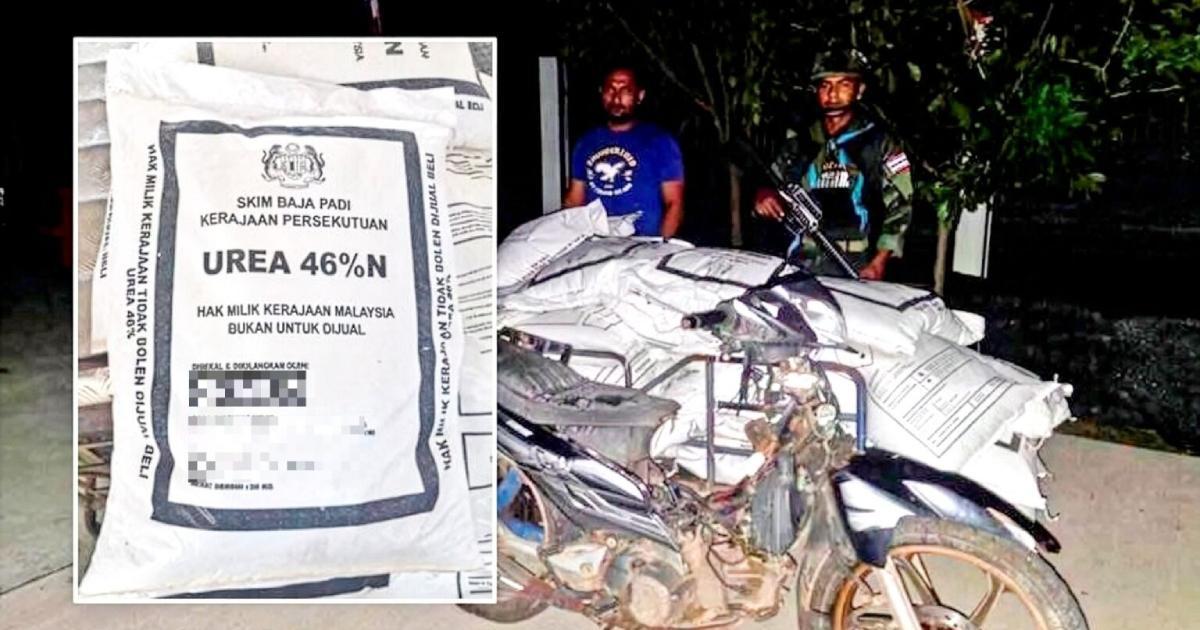 Cover image via Utusan Malaysia
Follow us on Instagram, TikTok, and WhatsApp for the latest stories and breaking news.
Malaysian government-subsidised fertiliser has been seized in southern Thailand, with Thai authorities suspecting it may have been intended for use by separatist groups in making improvised explosive devices (IEDs)
Around 520kg of urea fertiliser was seized during an operation in Koh Sathon, Tak Bai, near the Malaysia-Thailand border, last week, Utusan Malaysia reported.
Photographs published by the Malay portal showed the fertiliser sacks carrying the Malaysian coat of arms and the words Skim Baja Padi Kerajaan Persekutuan (SBPKP), which in English is the Federal Government Paddy Fertiliser Scheme, along with the logo of a subsidiary of the National Farmers Organisation (NAFAS).
The seizure has prompted Malaysian authorities to investigate how fertiliser supplied under the government's subsidy programme ended up in Thailand.
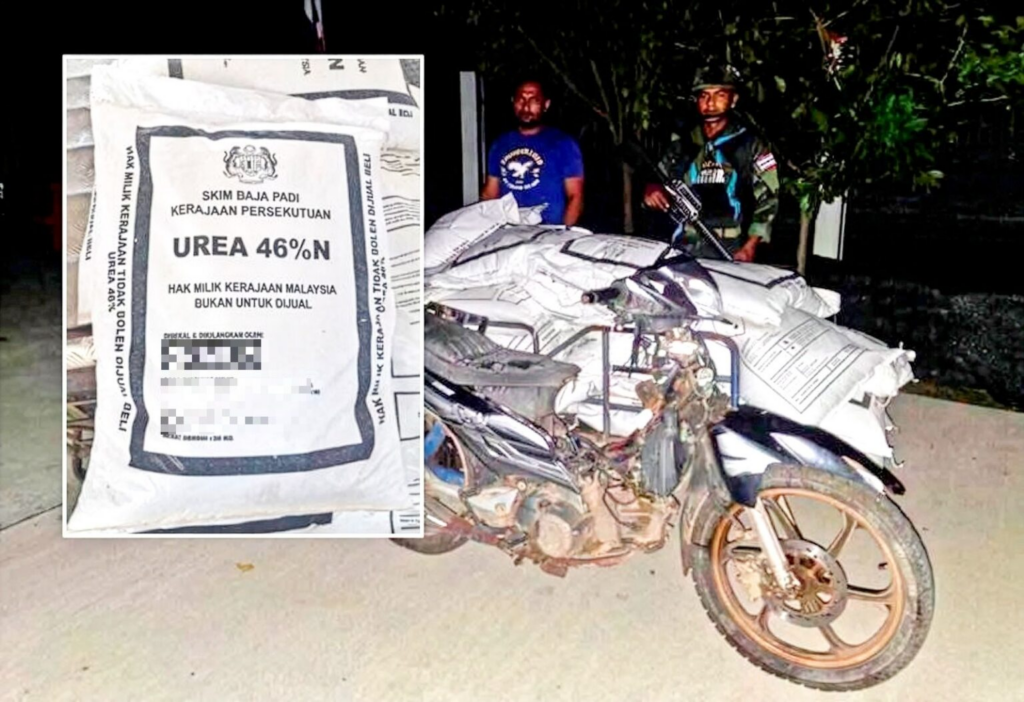
Seized fertiliser in sacks bearing the national coat of arms and the words Skim Baja Padi Kerajaan Persekutuan (SBPKP).
Image via Utusan MalaysiaAgriculture and Food Security Minister Datuk Seri Mohamad Sabu said the government was taking the matter seriously
However, he stressed that the presence of government markings on the sacks did not by itself establish that anyone involved in the Malaysian supply chain had smuggled the fertiliser across the border.
"The ministry does not want to pre-empt the investigation. Who took the fertiliser out of the country and how it ended up in Thailand must be determined based on facts and evidence," Malaysiakini quoted the minister as saying via his press secretary.
He said the ministry's responsibility was to ensure that SBPKP and its supply chain operated through designated channels for eligible paddy farmers.
If any leakage in the distribution chain is found, he said action would be taken and improvements made.
"The ministry's responsibility is to ensure that the subsidy programme and supply chain are implemented through the designated channels for eligible paddy farmers," he said.
Mohamad also stressed that smuggling was not under his ministry's jurisdiction and should be investigated by the relevant enforcement agencies.
A source from Thailand's Internal Security Operations Command Region 4 (ISOC 4) said authorities found 26 sacks of urea fertiliser from Malaysia during the operation
Each sack weighed 20kg.
A man in his 40s was arrested while transporting the fertiliser on a motorised tricycle, according to Utusan Malaysia.
Thai authorities reportedly found that he had previously been detained for questioning in connection with a security case in 2012.
The ISOC 4 source said authorities believed the fertiliser was intended to be used as a component in making IEDs by separatist groups.
The source said the seizure had potentially prevented a more serious incident, pointing to the recent spate of attacks and bomb blasts in southern Thailand.
The allegation remains part of the Thai authorities' investigation.
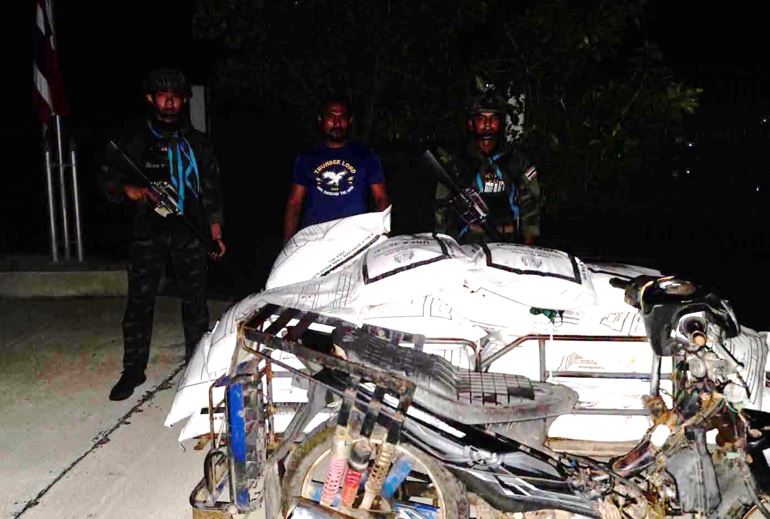
Thai authorities detained a local man (centre) and seized 26 sacks of urea fertilizer smuggled from Malaysia during an operation in Tak Bai District, Narathiwat, Thailand last Friday.
Image via Utusan MalaysiaThe seizure also highlights the potential financial incentive for moving subsidised fertiliser across the border
Utusan Malaysia, citing an unnamed paddy farmer, reported that individuals or syndicates could buy fertiliser in Malaysia wholesale before repackaging and selling it in Thailand at significantly higher prices.
The source claimed fertiliser could be bought in Malaysia for around RM2,450 per metric tonne and sold in Thailand for approximately RM5,700 per metric tonne.
That would represent a difference of more than RM3,000 per metric tonne.
The source claimed the cross-border trade had been detected over the past year, with individual shipments believed to involve around 10 metric tonnes.
The source also alleged that fertiliser was moved across the Malaysia-Thailand border by truck or through river routes.
However, these claims were made by an unnamed source and have not been independently established.
The latest seizure comes less than a year after Thai authorities publicly linked urea fertiliser to bomb-making in southern Thailand
In a report published on 31 October 2025, the New Straits Times reported that Thailand's Fourth Army Region commander, Lieutenant General Naratip Phoyanok, said authorities suspected a group behind bomb attacks in southern Thailand had used urea nitrate derived from urea fertiliser.
Naratip, who was also director of ISOC Region 4, said a detainee had admitted to obtaining urea fertiliser that was subsequently converted into homemade bombs.
He said the fertiliser had been smuggled from a neighbouring country, although he did not identify the country at the time.
The southern provinces of Narathiwat, Yala and Pattani have faced a long-running separatist insurgency, with attacks frequently occurring near the Malaysian border.
The 2025 report therefore provides some context for why Thai authorities are scrutinising the movement of urea fertiliser across the border, but it does not establish that the fertiliser seized in the latest operation was connected to the same network.
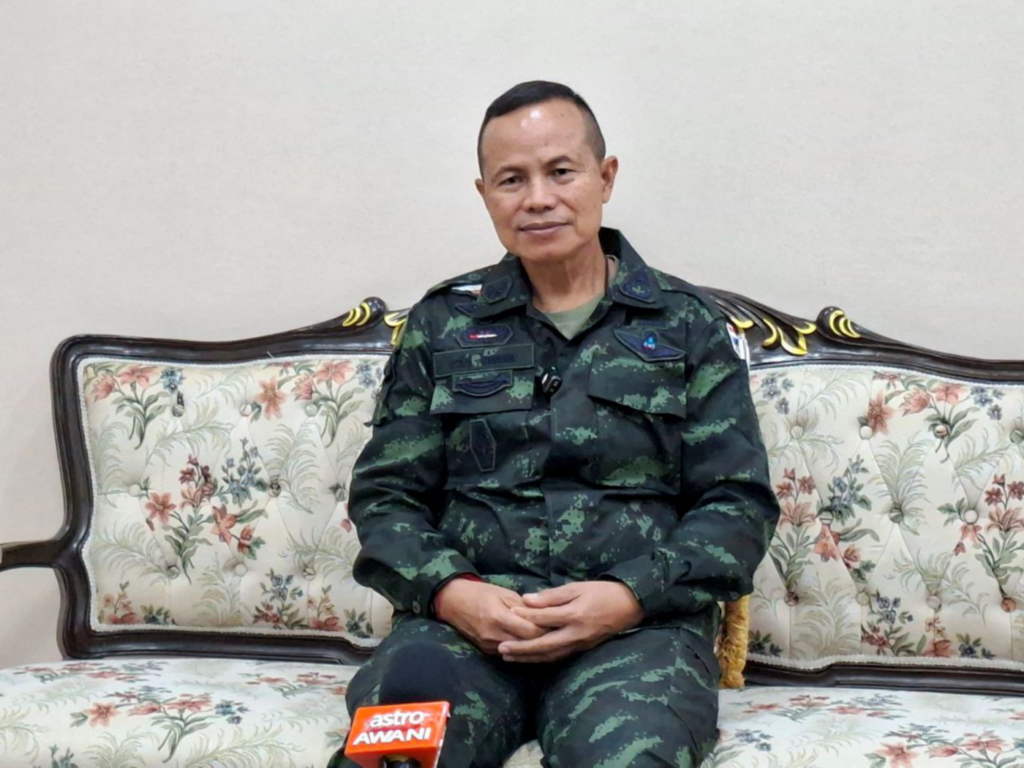
Thailand's Fourth Army Region Commander, Lieutenan General Naratip Phoyanok.
Image via Sharifah Mahsinah Abdullah/New Straits TimesMeanwhile, Home Minister Datuk Seri Saifuddin Nasution Ismail said Malaysia and Thailand would use existing bilateral mechanisms to investigate the allegations
He said the police in both countries would conduct their respective investigations, with cooperation taking place through established channels including the Border Working Group and Police-to-Police (P-to-P) cooperation.
"The police will conduct an investigation, the authorities on their side will also conduct an investigation, and we will use the mechanisms that I mentioned," he was quoted as saying by Bernama.
Saifuddin said he did not want to respond directly to every allegation surrounding the border, arguing that such matters should be handled through existing Malaysia-Thailand mechanisms to prevent tensions or mutual suspicion between the two countries.
He described P-to-P cooperation as an ongoing channel through which enforcement authorities from both countries can communicate on security matters.
The Border Working Group provides another platform for the two countries to discuss issues involving their shared border.
The investigation will ultimately need to establish how the subsidised fertiliser left Malaysia, who was responsible for moving it across the border, and whether it was actually intended for use in bomb-making.
For now, the seizure of the Malaysian-labelled fertiliser is evidence that government-supplied agricultural products have ended up in Thailand, but it does not, on its own, establish how or why they got there.
