
From Messi’s ‘FIFA Princess’ Saga To 2015 Corruption Scandal: A Look At FIFA’s Biggest Controversies
As Argentina heads into the World Cup final, accusations of favouritism have become the latest chapter in the World Cup's long history of controversies.


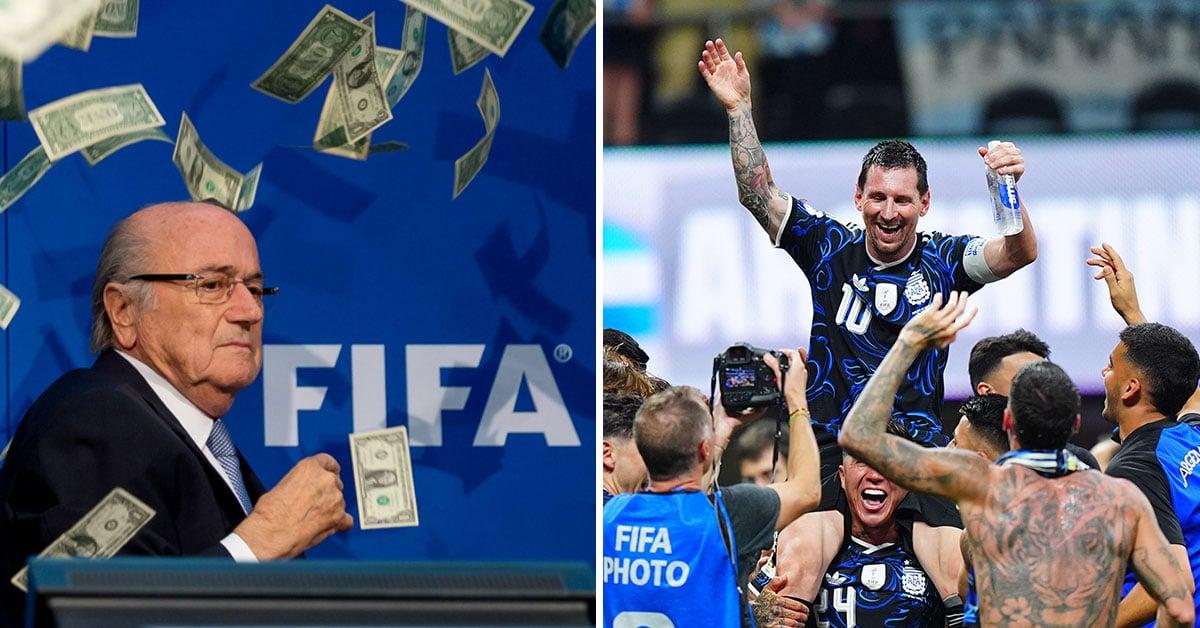 Cover image via
 Follow us on Instagram, TikTok, and WhatsApp for the latest stories and breaking news.
FIFA has long been surrounded by controversy, whether the criticism is aimed at the organisation itself, its tournament hosts, or the teams competing on football's biggest stage
But if one moment truly damaged the world football governing body's reputation, it was the corruption scandal that erupted in 2015.
In May that year, Swiss police raided the luxurious Baur au Lac hotel in Zurich at dawn and arrested seven FIFA officials just hours before the organisation's annual congress.
Swiss authorities became involved because FIFA is headquartered in Zurich. The arrests, however, were made at the request of the US, where the Department of Justice (DOJ) had unsealed indictments against FIFA officials and sports marketing executives.
Interestingly, the FBI did not intentionally set out to investigate FIFA. Agents stumbled onto the scandal while working on a separate case involving organised crime, which eventually led them to American FIFA official Chuck Blazer, who pleaded guilty and became a cooperating witness.
Although FIFA is based in Switzerland, US prosecutors were able to pursue the case because the bribes were routed through American banks and involved US dollars, giving them jurisdiction over the transactions, reported CNBC.
The scandal, later dubbed FIFAgate, involved more than USD200 million in bribes, resulting in jail sentences and lifetime bans.
It has since been described as the biggest corruption scandal in modern sports history.
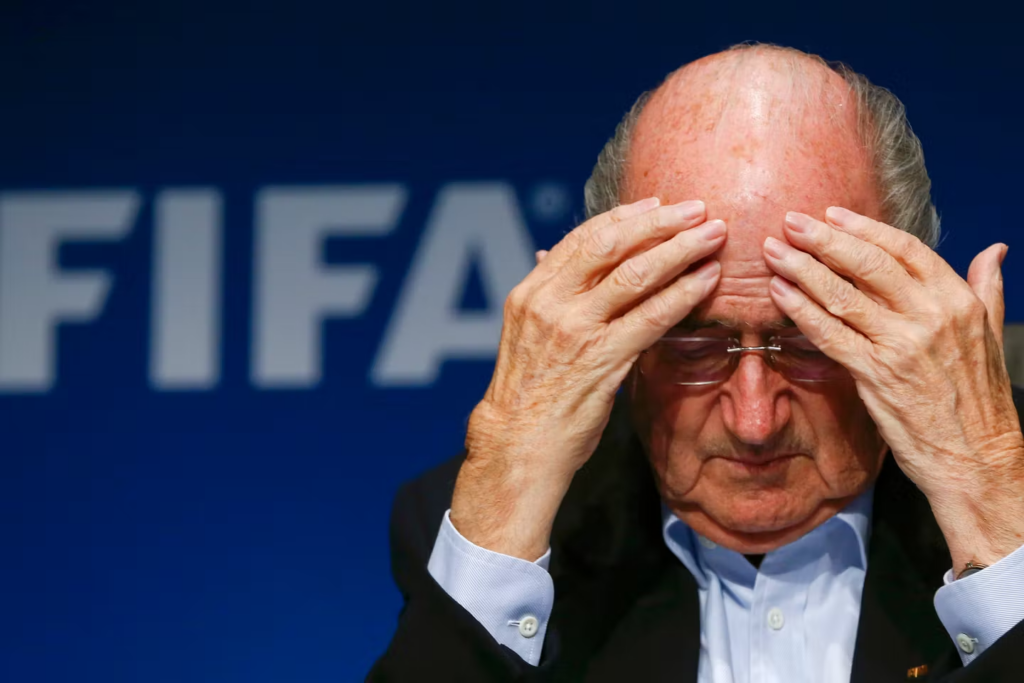
Then-FIFA president Sepp Blatter in 2014.
Image via Arnd Wiegmann/Reuters via LemondeUS prosecutors alleged that more than USD200 million (about RM850 million) in bribes and kickbacks changed hands over two decades, involving everything from marketing and broadcast rights to World Cup hosting votes. After a six-year investigation, the DOJ returned the recovered funds to FIFA, with The New York Times reporting that the organisation had been "deemed a victim of its own scandal".
Ironically, Interpol returned a 20 million euro (about RM93 million) donation from FIFA, saying it did not want its name linked to the controversy.
Several officials ended up behind bars in the US after being convicted in a Brooklyn federal court. Former Brazilian football chief José Maria Marin was sentenced to four years in a US prison, but was released early in 2020. Former FIFA vice-president Juan Ángel Napout of Paraguay received a heavier nine-year sentence. Meanwhile, FIFA president Sepp Blatter and UEFA boss Michel Platini were never jailed, but both were banned from football by FIFA's ethics committee over a suspicious 2 million Swiss franc payment, ending their leadership careers.
However, 2015 was far from FIFA's first major controversy. In 2011, presidential candidate Mohamed Hammam was banned for life after allegedly attempting to buy votes in the FIFA presidential election. In 2010, two executive committee members were suspended for offering to sell their World Cup votes to undercover reporters, according to The Guardian. And in the 1990s, top FIFA figures received secret payments from marketing company International Sport and Leisure (ISL) in one of sport's earliest mega bribery affairs.
Fast forward to 2026, Lionel Messi is being called "FIFA's princess" by rival fans who accuse the governing body of showing preferential treatment towards the Argentine superstar
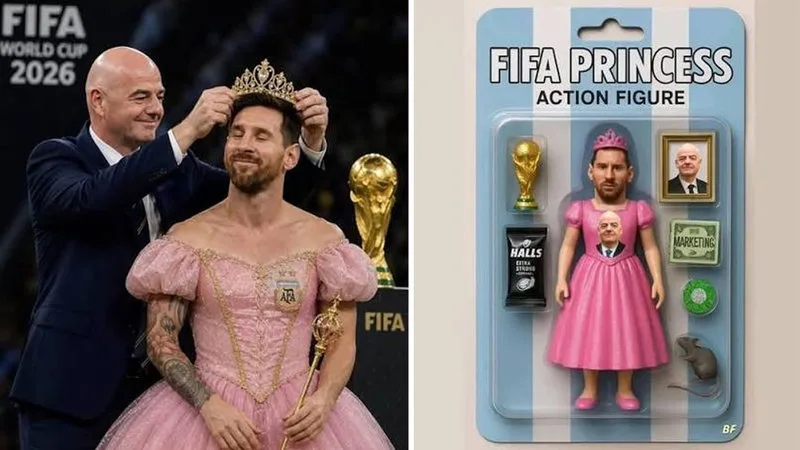
According to Forbes, Messi "has become the subject of conspiracy theories from some World Cup watchers who accuse FIFA of displaying favouritism towards him and the Argentine team".
Memes showing Messi dressed as a princess, including some AI-generated images of him alongside FIFA president Gianni Infantino, have flooded social media, with critics dubbing him "FIFA's princess".
One post on X, which gained more than a million views, accused Infantino of having "successfully taken out all of Messi's competition", while a TikTok video that received over two million likes falsely claimed Messi offered to pay "millions" for extra penalty kicks.
Forbes reported that the allegations intensified after Argentina defeated Egypt 3-2 in a controversial match decided in the final minutes.
Egypt had led 2-0 with just over 10 minutes remaining before three late goals. Egypt coach Hossam Hassan called the match "unfair" and claimed his team had "suffered injustice" after referees disallowed an Egyptian goal and appeared not to review a potential foul by Argentina.
He also suggested FIFA "wanted to keep the world champion in the competition" and wanted "Messi to stay in the running." The Egyptian Football Association said it "cannot remain silent" over decisions that "directly influenced the course of the game".
Egypt was not alone in raising concerns. The Algerian Football Federation filed an official complaint over refereeing decisions in Argentina's opening game, while Croatia's federation lodged its own complaint over what it called the "incorrect application of video assistant referee (VAR) and ball sensor technology".
Forbes also highlighted criticism from some fans that Argentina had enjoyed a favourable easy route to the semi-finals, having not faced any of the world's top 13-ranked teams before meeting England. However, it noted that Argentina's comeback victory over the No. 4-ranked Three Lions "took the steam out of some of those critiques".
The controversy was further fuelled by claims of Infantino's close relationship with US President Donald Trump
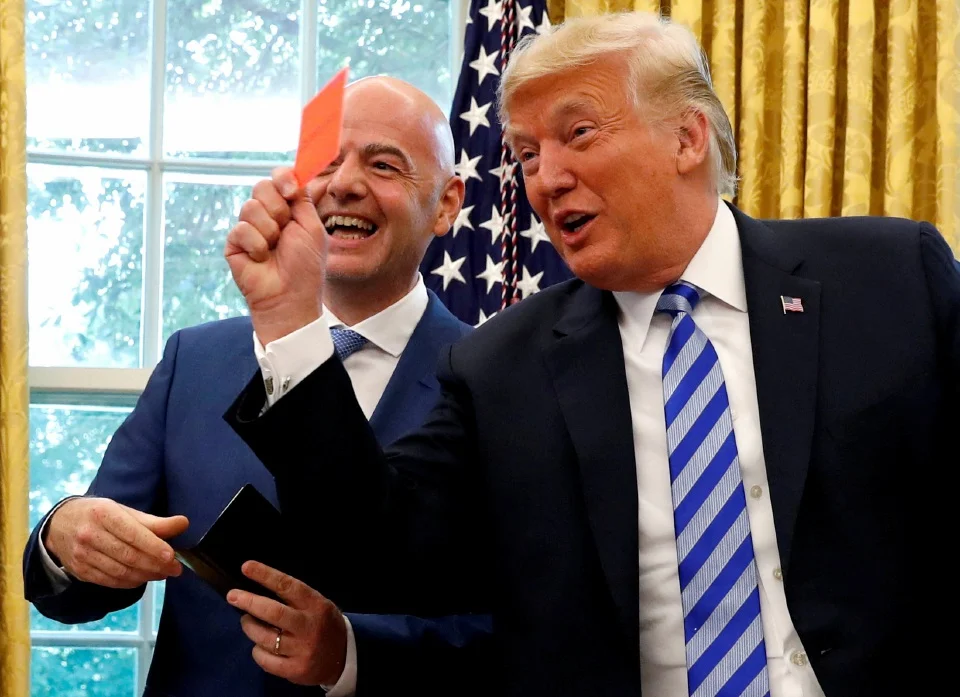
From left to right: FIFA president Gianni Infantino and US president Donald Trump.
Image via Reuters via Berita HarianWith the US being one of this year's host countries, controversy erupted after Trump reportedly called Infantino before FIFA lifted US striker Folarin Balogun's red card suspension, prompting Irish member of the European Parliament Barry Andrews to slam FIFA as a "profoundly corrupt" organisation. Former FIFA president Blatter has called today's FIFA a "dictatorship", accusing Infantino of being "submissive" to Trump.
FIFA, however, has denied the accusations. Refereeing chief Pierluigi Collina said in a statement that "unfounded allegations have no place in our sport" and that "nobody can claim that FIFA refereeing can be influenced by anyone, not even by the FIFA president". Argentina coach Lionel Scaloni also dismissed the claims, saying, "People have been saying those kinds of things about Argentina for a very long time. Social media magnifies everything… But there hasn't been any favouritism."
From corruption scandals involving secret payments in the 1990s to AI-generated princess memes in 2026, one thing is clear: FIFA and controversy continue to go hand in hand.
Argentina will face Spain in the World Cup final this Sunday, 19 July, at MetLife Stadium in New Jersey, with every refereeing decision likely to face intense scrutiny.
