
Here’s How Najib’s House Arrest Will Work
A criminal lawyer explains the legal basis for the arrangement, how it could be enforced, and what it means for Najib's separate 1MDB sentence.


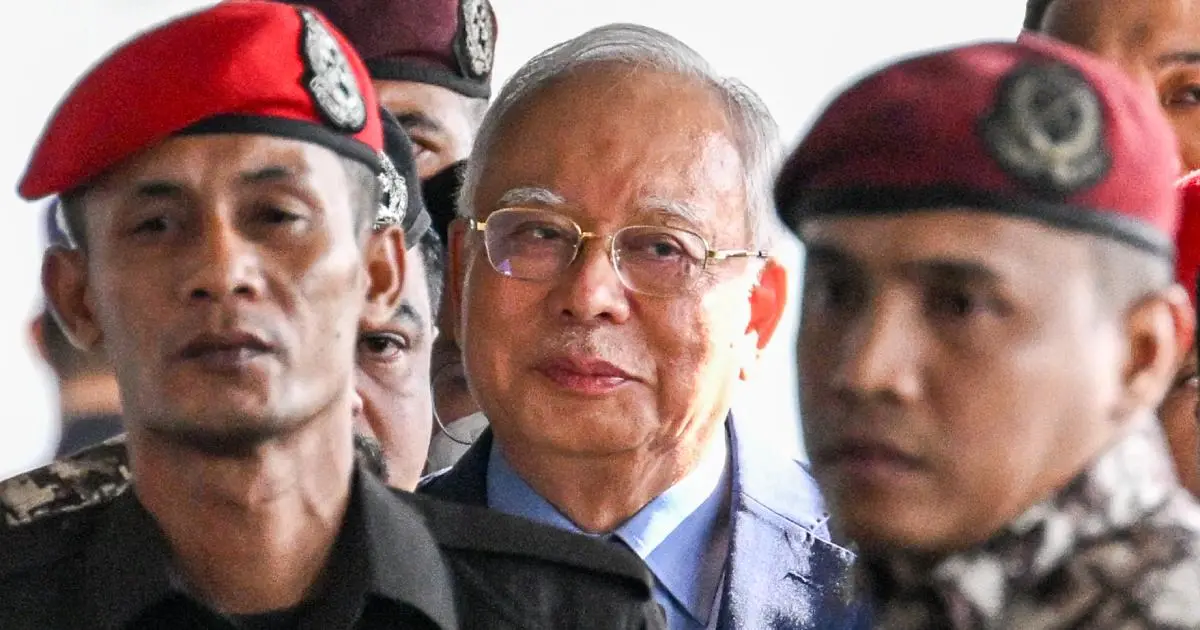 Cover image via Mohd Rasfan/AFP
Follow us on Instagram, TikTok, and WhatsApp for the latest stories and breaking news.
Datuk Seri Najib Razak's conditional house arrest raises a simple question: what does it actually mean for him to serve a prison sentence at home?
According to prominent criminal lawyer Datuk S Sivananthan, the arrangement can be implemented under existing provisions of the Prisons Act 1995, with prison authorities responsible for determining how Najib's sentence is enforced.
The New Straits Times, which reported Sivananthan's explanation, outlined several key questions surrounding the former prime minister's house arrest.
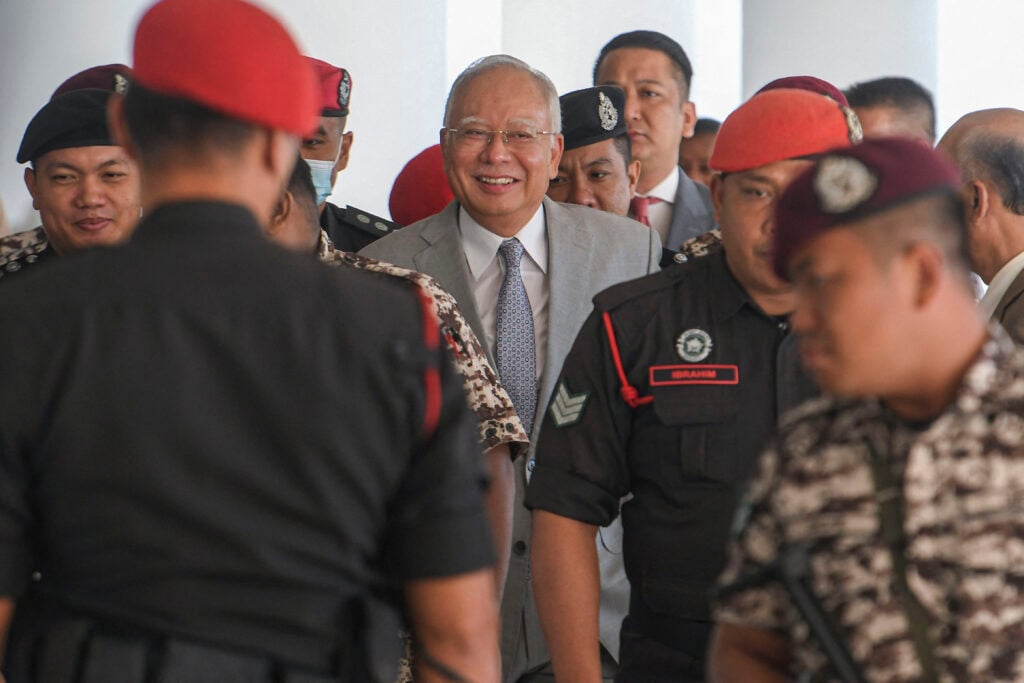
Najib Razak is seen during the 1MDB corruption trial.
Image via Mat Zain/NurPhoto/AFPThe former prime minister's home could effectively be designated as a prison
Section 3 of the Prisons Act 1995 allows the Minister of Home Affairs to declare a house, building, enclosure or other place, or part of it, as a prison through notification in the Gazette.
Sivananthan said this provision could allow Najib's residence to be designated as the place where he serves the remainder of his sentence.
"The pardon allows him to serve the sentence in his house. House arrest means he is confined to his house," he told the English newspaper.
In other words, the arrangement does not mean Najib is simply released from his sentence. He would still be serving his prison sentence, but the designated place of confinement would be his home.
Prison authorities will decide how it is enforced
The Pardons Board has granted Najib permission to serve the remainder of his SRC International sentence under house arrest, but the practical arrangements for enforcing it would fall to the prison authorities, according to Sivananthan.
These could include prison officers being deployed to his residence, electronic monitoring, and restrictions on who is allowed to visit him.
Other conditions could also be imposed by the authorities.
The Legal Affairs Division of the Prime Minister's Department has said Najib must comply with the conditions attached to the conditional pardon. If he breaches any of them, the pardon can be revoked, and he would have to return to prison to serve the remainder of his sentence.
The specific conditions have not all been publicly disclosed.
Najib still has to pay the RM50 million fine
Najib's house arrest is conditional on him paying the RM50 million fine imposed in his SRC International case.
His original sentence was 12 years in prison and a RM210 million fine after he was convicted of seven charges involving abuse of power, criminal breach of trust, and money laundering over RM42 million belonging to SRC International.
The Federal Territories Pardons Board reduced his prison term to six years and his fine to RM50 million in February 2024.
His latest conditional pardon allows him to serve the remainder of that reduced sentence at home until 23 August, 2028.

This does not cover his separate 1MDB sentence
The house arrest arrangement applies to Najib's SRC International sentence. It does not automatically cover the separate sentence he received in his 1MDB case.
On 26 December, 2025, the Kuala Lumpur High Court sentenced Najib to 15 years in prison after convicting him of four counts of abuse of power and 21 counts of money laundering involving about RM2.3 billion in 1MDB funds.
That sentence was ordered to begin after he completes his SRC International sentence. Najib has appealed against both his conviction and sentence in the 1MDB case.
He may need to seek a stay of the 1MDB sentence
Sivananthan said Najib's lawyers would have to seek a stay of the 1MDB sentence, if necessary, while the appeal is pending.
"If a stay is granted, then there would be no basis for him to be imprisoned under that sentence while the appeal is pending," he said.
The house arrest order itself therefore does not suspend or cancel the separate 1MDB sentence.
Could other prisoners ask for the same arrangement?
Najib's case could also have implications beyond his own sentence.
Sivananthan said that, to his knowledge, a Pardons Board in Malaysia had never previously allowed a prisoner to serve the remainder of a sentence under house arrest.
"This is a precedent. Anybody else can apply. A precedent has been set," he said.
He expects the decision could prompt other prisoners, particularly those convicted of white-collar offences, to seek similar treatment.
"This is going to open the floodgates. People serving sentences for white-collar crimes may ask, 'Why not me?'," he said.
However, an application would not automatically result in house arrest. Future cases would still depend on the circumstances of each prisoner and the decision made through the pardons process.
