
Malaysians Choke On Haze As Indonesia Says It Has Received No Formal Complaints
Malaysia's haze situation has worsened in recent days, with dozens of monitoring stations recording "very unhealthy" air quality readings.


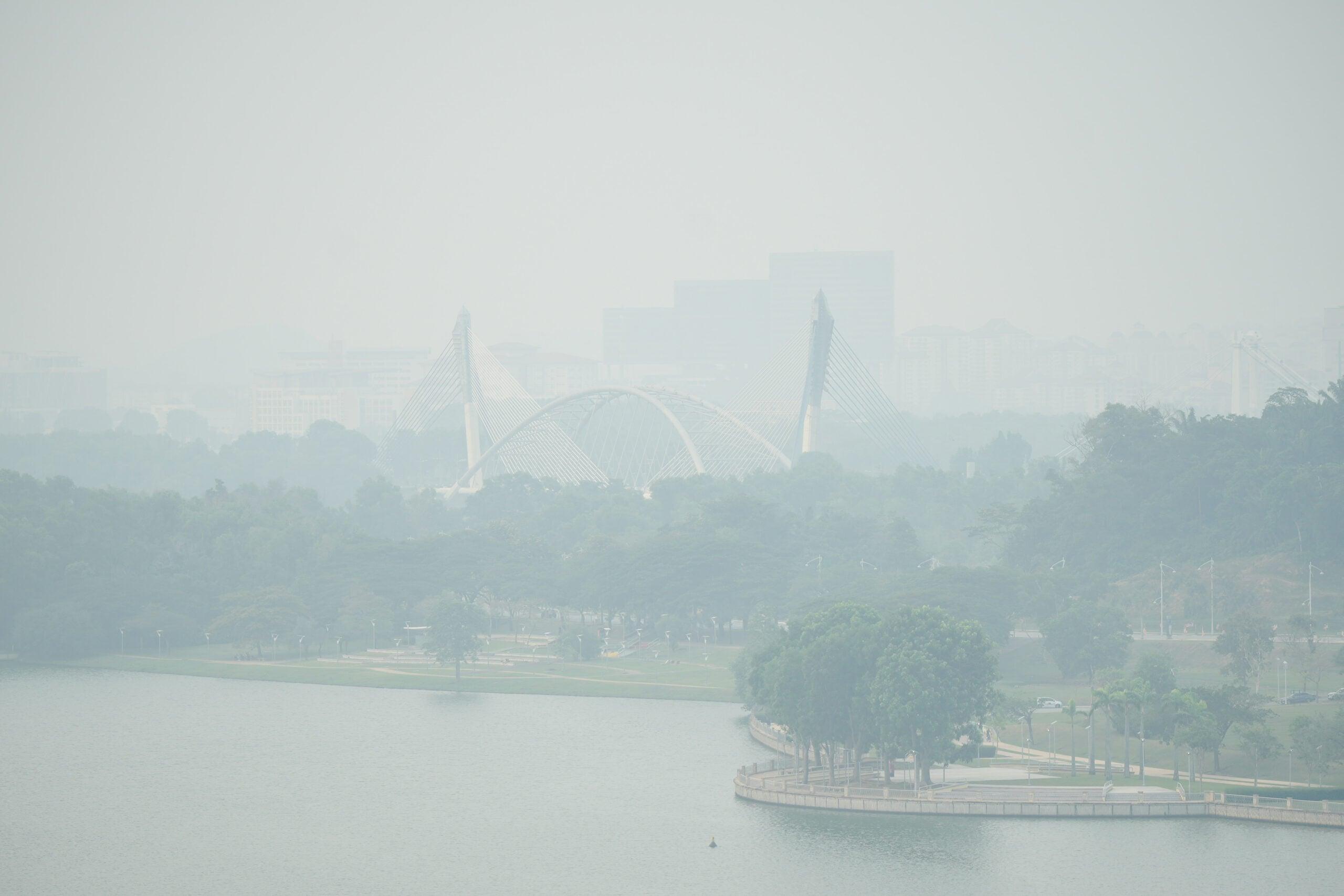 Cover image via Zahim Mohd/NurPhoto/AFP
Follow us on Instagram, TikTok, and WhatsApp for the latest stories and breaking news.
While air quality deteriorates across Malaysia, Indonesia says it has yet to receive a formal protest from any of its Southeast Asian neighbours over the transboundary haze
Indonesia's Ministry of Foreign Affairs said on Thursday, 17 September, that it had received no official note of protest despite smoke from forest and land fires spreading across Malaysia, Singapore, Brunei, and the Philippines.
"We have not received any letter of protest from countries in the region or our neighbours. There's no [notes of protest] to this day," ministry spokesperson Yvonne Mewengkang revealed yesterday, according to Indonesian media.
The comments came as Malaysia continues to deal with worsening air quality, with parts of Kuala Lumpur and surrounding areas recording very unhealthy AQI levels.
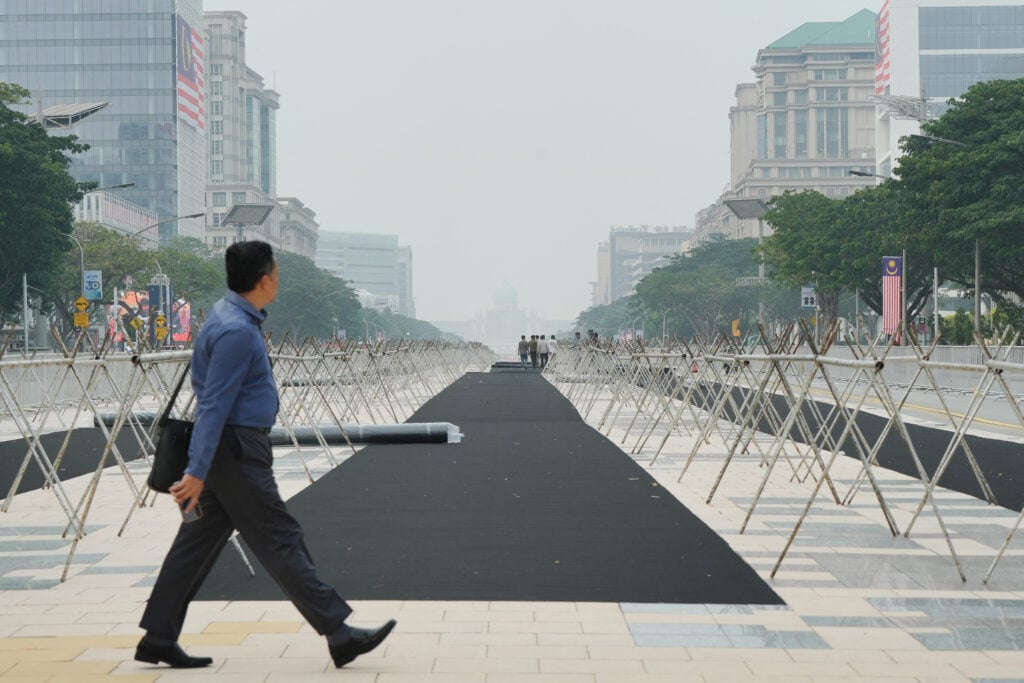
Haze shrouds Putrajaya amid deteriorating air quality across parts of Malaysia as smoke from forest fires in neighbouring Indonesia spreads across the region.
Image via Zahim Mohd/NurPhoto/AFPHaze has spread across Malaysia
Malaysia's haze situation has worsened in recent days, with dozens of monitoring stations recording unhealthy Air Pollutant Index (API) readings.
On Thursday, 17 September, 30 areas recorded unhealthy readings, including parts of Selangor, Kuala Lumpur, and Sarawak. By Friday morning, 18 September, 34 areas were recording unhealthy API readings, with Kuala Lumpur recording 206.
An API reading between 101 and 200 is classified as unhealthy, while 201 to 300 is considered very unhealthy.
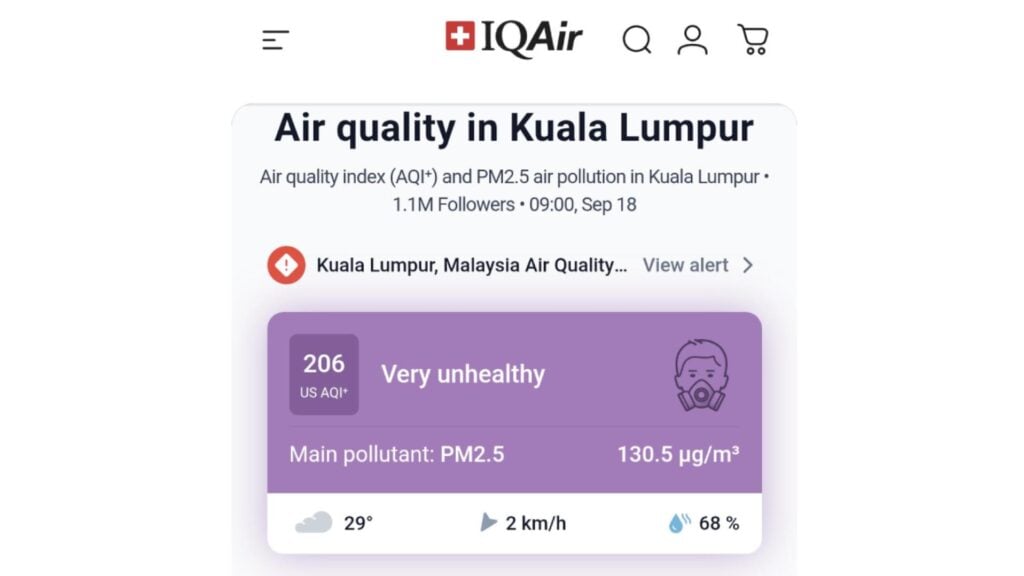
Air quality index in Kuala Lumpur as of 18 September, 2026.
Image via IQAirAt this level, exposure to fine particulate matter (PM2.5) poses immediate health risks by penetrating deep into the respiratory system and entering the bloodstream.
Residents frequently report acute symptoms ranging from persistent coughing, eye irritation, and throat tightness to shortness of breath and severe headaches.
While healthy adults experience reduced lung capacity and heightened physical fatigue during routine outdoor exposure, vulnerable groups, including children, the elderly, and those with preexisting asthma or cardiovascular conditions, face a significantly elevated risk of acute respiratory attacks and emergency hospital admissions.
Malaysia had also declared a state of emergency in Serian, Sarawak, earlier this month because of the haze, although the status was later lifted.
Indonesia says it is still working with its neighbours
Indonesia's foreign ministry said the absence of a formal complaint did not mean it was ignoring the regional impact of the fires.
Spokesperson Vahd Nabyl A Mulachela said Indonesia was continuing to coordinate, hold dialogues and communicate with neighbouring countries to address the haze.
Indonesia also said it was complying with ASEAN's existing haze response mechanisms, including daily reporting of hotspot data, projected smoke movements, and firefighting measures.
ASEAN activated a Level 3 alert for severe transboundary haze on 26 August. Under the mechanism, member states share information to help neighbouring countries take precautionary measures.
Indonesia's fires have continued to burn across parts of Sumatra and Kalimantan
According to Indonesia's SiPongi monitoring system, 1,037 high-confidence hotspots were recorded nationwide as of Tuesday evening, 15 September, 400 fewer than the previous day.
Earlier in the week, Indonesia had recorded 1,437 high-confidence hotspots, with Central Kalimantan accounting for the largest share.
The Indonesian government has deployed firefighting personnel and aircraft, while Japan sent three CH-47 Chinook helicopters to assist with water-bombing operations from 12 to 19 September.
Malaysia has also said it is ready to provide assistance, but Indonesia has yet to respond to the offer.
Indonesia has meanwhile taken enforcement action against companies linked to the fires, with authorities suspending or sealing the operations of dozens of companies as investigations continue.
The Indonesian government has also said it is open to international assistance, with President Prabowo Subianto saying Japan, China, and Russia had offered help with firefighting operations.
For now, however, the haze continues to cross borders, even as Indonesia says no neighbouring country has formally complained about it.
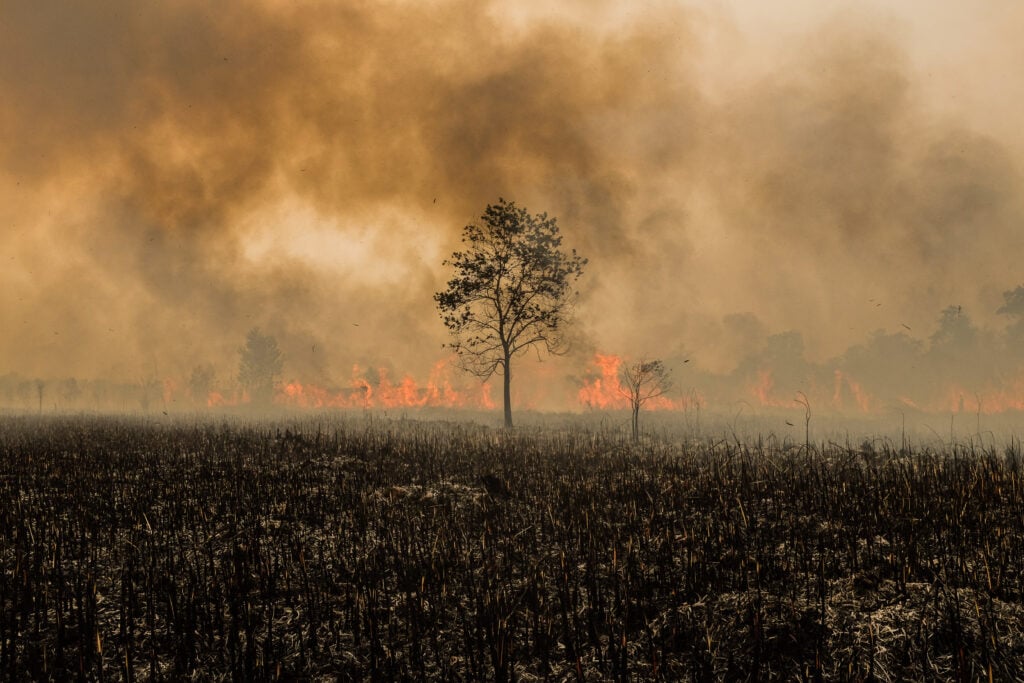
A tree stands in a blackened field as fire and smoke burn peatlands in Ogan Ilir, South Sumatra, Indonesia. The fire contributes to transboundary haze across Southeast Asia during the El Nino climate pattern.
Image via Bagus Kurniawan/NurPhoto/AFP