
Malaysians Report Worsening Haze In Klang Valley This Morning
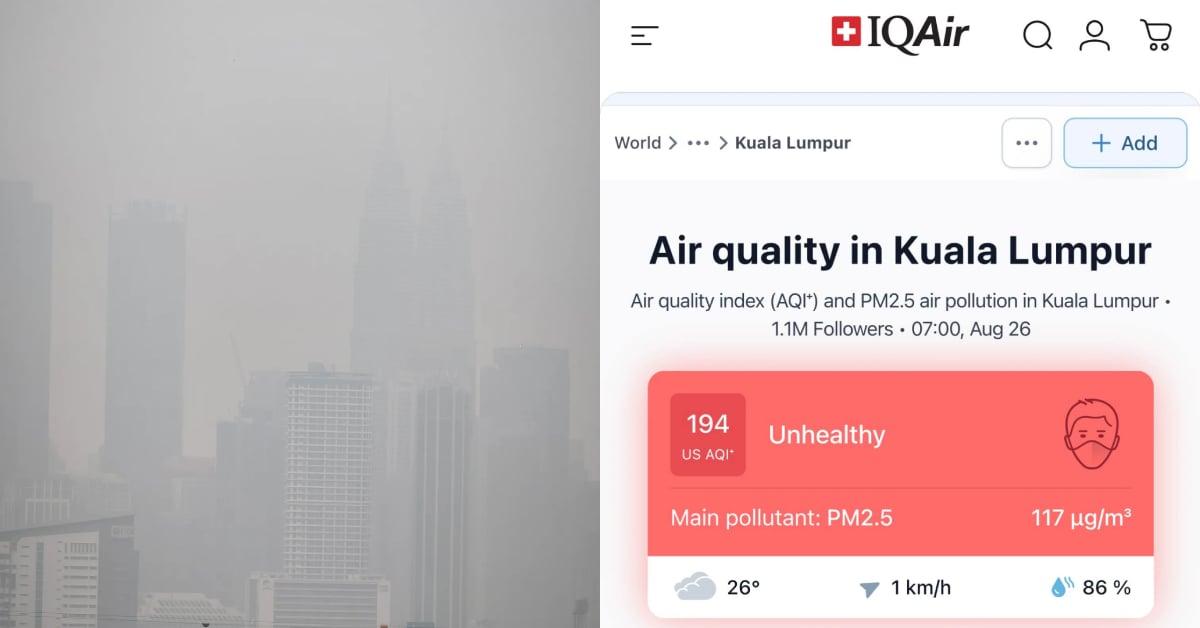
As of 11am today, several netizens on Threads have shared photos of hazy conditions around Kuala Lumpur.


 Cover image via
 Follow us on Instagram, TikTok, and WhatsApp for the latest stories and breaking news.
Malaysians have taken to social media to report worsening haze conditions across the Klang Valley this Wednesday morning, 26 August
As of 11am today, several netizens on Threads have shared photos of hazy conditions around Kuala Lumpur, with many complaining about the worsening air quality.
"KL haze is soooo bad that I literally feel like I'm breathing in smoke," one wrote.
"Okay, is it just me or is the haze REALLY bad today? The whole Kepong, Selayang, and Batu Caves area looks so hazy, and the air feels completely different," said another.
Another shared a screenshot from IQAir, an international air quality monitoring platform, showing an unhealthy air quality index (AQI) reading of 194 in Kuala Lumpur at around 7am.
"The AQI is so high in Kuala Lumpur today. Higher than previous haze," they wrote.
"If the haze is this bad, it's not just schools that have to close, but offices too," opined another, sharing a photo of the PETRONAS Twin Towers shrouded in haze.
View on Threads
View on Threads
View on Threads
View on Threads
As of 11am, Malaysia's Department of Environment Air Pollutant Index Management System (APIMS) recorded unhealthy Air Pollutant Index (API) readings in 13 areas across six states
Sri Aman in Sarawak recorded the highest API reading at 163, followed by Serian at 162 and Samarahan at 160.
Meanwhile, in the Klang Valley, Cheras and Putrajaya both recorded 158, Shah Alam recorded 156, Johan Setia recorded 155, and Batu Muda recorded 152.
Malaysia's API categorises readings between 101 and 200 as "unhealthy", while readings between 201 and 300 are considered "very unhealthy". Readings above 300 are classified as "hazardous".
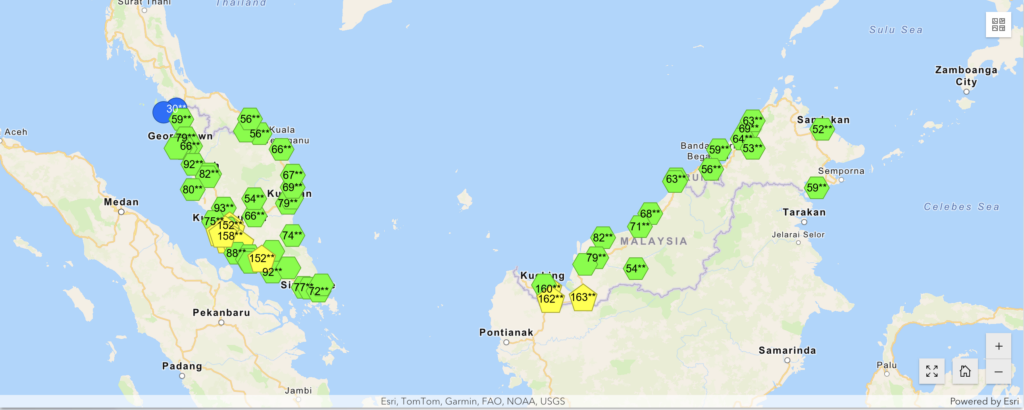
Authorities have linked the deteriorating air quality to dry weather, transboundary smoke, and localised peat and forest fires
Members of the public, particularly high-risk individuals such as expectant mothers, senior citizens, children, and patients with cardiac or pulmonary conditions, have been advised to reduce outdoor activities, wear face masks, stay hydrated, and refrain from open burning.
You can check the latest API readings through the APIMS website.

Read more trending stories on SAYS
Canadian Man Breaks World Record With 40 Layers Of Tattoos On His Body
Jeremy "Remy" Schofield has covered over 90% of his skin, accumulating approximately 40 layers of ink.