
Is Waze Really Banned In Malaysia? Here’s What Malaysians Need To Know
The government has ordered civil servants to stop using Waze for official duties and is urging the public to uninstall it, but what exactly is the issue?


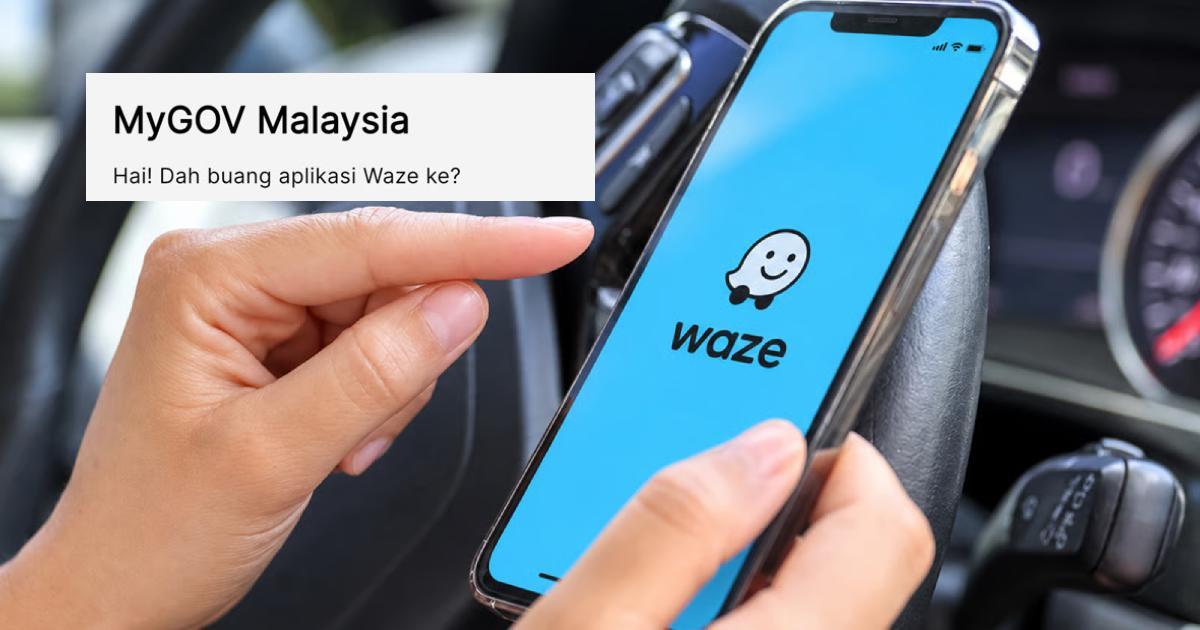 Cover image via FMT (Composite by SAYS)
Follow us on Instagram, TikTok, and WhatsApp for the latest stories and breaking news.
Malaysians are being told to ditch Waze, with the government citing "national security" concerns and promoting a locally developed alternative
However, the Malaysian government's move has raised questions about whether the popular navigation app is actually banned in the country, why Google Maps is still allowed despite the Waze concerns, and whether Malaysians must switch apps.
Here's what you need to know about the Waze controversy and what it means for everyday road users.
Is Waze banned in Malaysia?
No, not for the general public.
According to Digital Minister Gobind Singh Deo, the government has directed civil servants to stop using Waze while carrying out official duties, with immediate effect.
Civil servants who defy the directive could face disciplinary action. However, the National Security Council (NSC) has clarified that the restriction does not apply to all Malaysians.
The government is instead encouraging members of the public to uninstall Waze voluntarily, citing concerns about the collection of location data and the potential risks of that information falling into the wrong hands.
The government has also started sending push notifications through the MyGOV Malaysia app asking users, "Hi! Have you uninstalled the Waze app yet?"
Despite the strong messaging, ordinary Malaysians are not currently prohibited from using Waze.
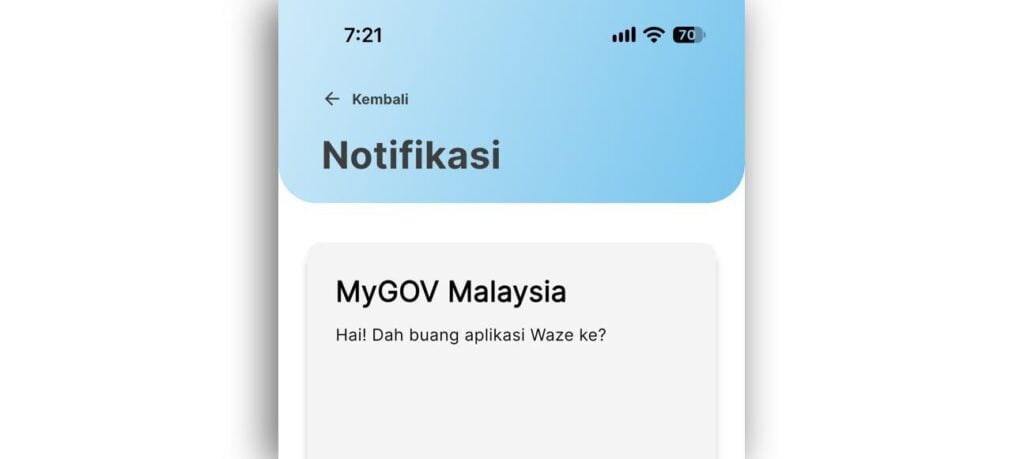
An image composite showing the in-app notification in Malay, asking if the user has uninstalled the Waze app.
Image via Sadho Ram/SAYSWhy does the government want Malaysians to stop using Waze?
The government is concerned about the legal jurisdiction governing Waze and the type of information the app collects.
Prime Minister Datuk Seri Anwar Ibrahim said the issue was discussed at a National Cyber Security Committee meeting on 20 October.
NSC said Waze collects information such as users' locations, travel movements, and device details. Depending on device settings, some information may also be collected when the app is not actively being used.
The government argues that this information could reveal people's daily routines, travel patterns, and movements.
For civil servants, the concern is that such data could potentially expose sensitive government activities or the movements of officials if accessed and exploited by malicious parties.
The government has also highlighted Waze's legal ties to Israel, saying its terms of use place relevant legal matters under Israeli law.
National Cyber Security Agency (NACSA) chief executive Dr Megat Zuhairy Megat Tajuddin said this was a key reason Waze had been singled out, while Google Maps is governed by US law.
However, the government's concerns should not be confused with proof that Waze has handed sensitive Malaysian government information to Israel.

Prime Minister Datuk Seri Anwar Ibrahim chairs the third meeting of the National Cyber Security Committee
Image via Anwar Ibrahim (Facebook)What has Waze said about the issue?
Waze has pushed back against the government's concerns.
A Waze Mobile Ltd spokesperson told the New Straits Times that claims the app collects sensitive government information or allows any entity to exploit users' personal data were "completely false".
The company also said Waze operates under strict privacy policies designed to protect user data and comply with global data protection standards.
This puts the government and Waze at odds over the implications of the app's data collection practices and legal jurisdiction.
Separately, cybersecurity firm ClearPhish reportedly found a database containing more than 7.6 million Waze user records being advertised for sale on a dark web marketplace.
According to New Straits Times, the database allegedly contained usernames, unique user identifiers, GPS location data, and travel history.
However, the reported database does not, by itself, establish that Waze deliberately exposed the data or that the records originated from a breach of its systems.
But what about Google Maps?
Google Maps remains available, and the government has not directed Malaysians to use TuJu exclusively.
NACSA's Megat Zuhairy also acknowledged that TuJu, the local navigation app being promoted by the government, is based on Google Maps.
The government said Waze was the only platform whose legal jurisdiction had been confirmed and verified as part of its assessment at that point.
In other words, the current restriction is specifically directed at Waze.
So, what is TuJu, and is it ready to replace Waze?
TuJu is a navigation app developed through a collaboration between the Malaysian Highway Authority (MHA) and Prosignal Consortium Sdn Bhd.
The government has recommended it as a locally developed alternative to Waze.
Its features include:
- Route navigation and estimated arrival times
- Toll information and traffic updates
- Live highway CCTV feeds
- Information on rest and service areas
- Emergency assistance information
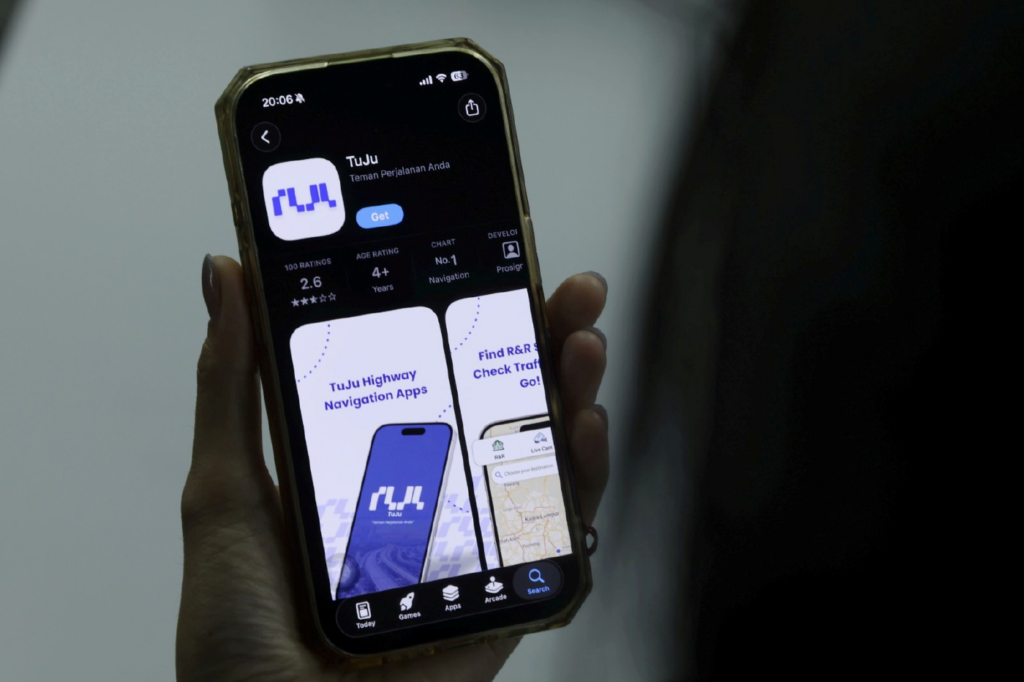
However, TuJu has faced complaints about its performance and capabilities.
On 22 October, MHA's Traffic Management Centre announced that TuJu was undergoing system improvements, temporarily disrupting its navigation function. Users could still access CCTV footage and other available features.
Gobind later said the government was looking to improve the app, including expanding its traffic information beyond highways to cover roads leading to them.
He also clarified in Parliament that the Waze restriction applied only to civil servants carrying out official duties, not to all Malaysians.
The situation highlights a practical challenge: encouraging people to switch to a local alternative is easier when that alternative can meet their everyday navigation needs.
But will Waze be banned for everyone in the future?
A nationwide ban has not been announced.
NSC director-general Datuk Raja Nushirwan Zainal Abidin said the government was taking a phased approach, starting with civil servants, while raising public awareness about the potential risks.
He said the government would assess the effectiveness of this approach before deciding whether further measures were necessary.
Raja Nushirwan also stressed that the government needed to "balance national security concerns" with human rights and freedom of choice.
For now, the public is being encouraged to make informed decisions rather than being legally compelled to stop using Waze.

National Security Council director-general Datuk Raja Nushirwan Zainal Abidin.
Image via Mohd Fadli Hamzah/New Straits TimesCan Malaysians still use Waze, or must they switch to another app?
For ordinary Malaysians, there is no current blanket ban requiring them to uninstall Waze.
You can continue using Waze, switch to Google Maps, try TuJu when its navigation function is available, or explore other suitable navigation apps. For now, the choice is up to each individual.
Civil servants, meanwhile, must comply with the directive when performing official duties and should refer to their departments for guidance on its implementation.
Ultimately, the controversy comes down to a distinction between the government's decision to restrict Waze for civil servants and its broader effort to persuade the public to stop using it.
