
MCMC Appoints TM Technology To Develop RM2.7 Billion Undersea Cable System
The 5,500km SALAM system will provide an alternative route for data if existing cables are disrupted.


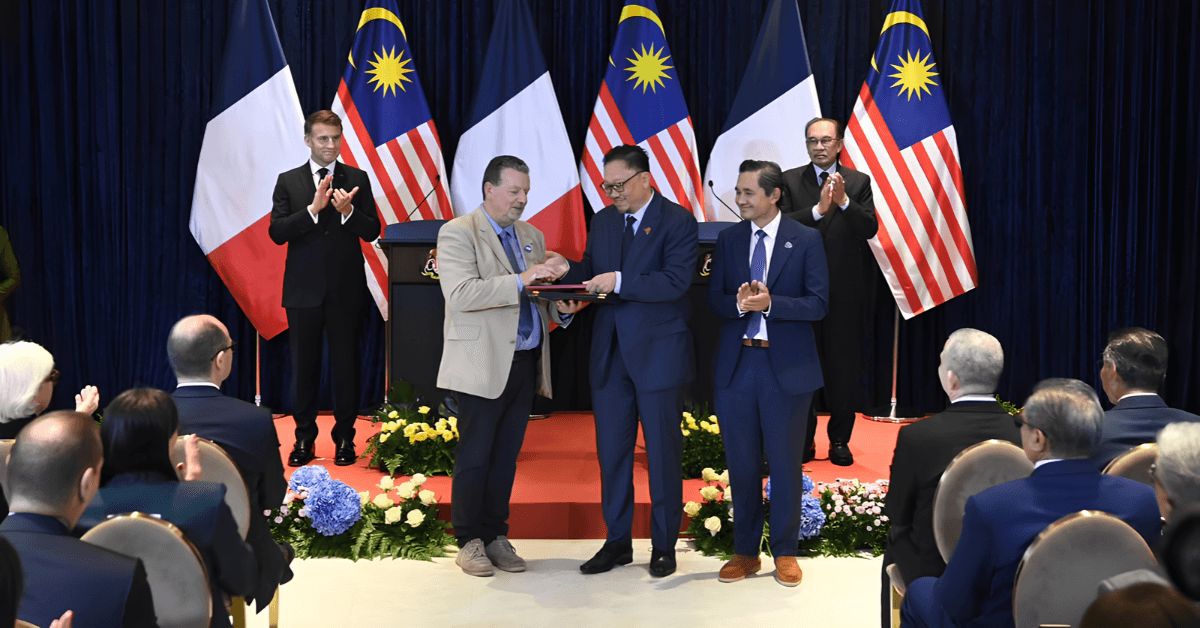 Cover image via MCMC
Follow us on Instagram, TikTok, and WhatsApp for the latest stories and breaking news.
A new undersea cable system is set to strengthen digital connections between Peninsular Malaysia, Sabah, and Sarawak
The Malaysian Communications and Multimedia Commission (MCMC) has appointed TM Technology Services Sdn Bhd (TM) to design, implement, and operate the Sambungan Kabel Dasar Laut MADANI (SALAM) system.
In a statement on 17 November, MCMC said the project's RM2.7 billion capital expenditure will be funded through the Universal Service Provision (USP) Fund.
Work is scheduled to begin in mid-December 2026, with completion expected in stages by the first quarter of 2030.
Existing undersea cable capacity is already at around 85% utilisation
According to MCMC, the existing undersea cable network has been operating since 2017, and its capacity utilisation has now reached approximately 85%.
SALAM will add capacity to meet growing demand and provide an alternative route for data traffic. This is intended to reduce the risk of service disruptions if existing undersea cables are damaged or experience faults.
The approximately 5,500km system will use submarine cable technology from Alcatel Submarine Networks (ASN).
The system will have 10 new cable landing stations across the country
These are the points where the undersea cables connect to networks on land. The locations are:
- Peninsular Malaysia: Cherating and Sedili.
- Sarawak: Kuching, Sibu (Matu), and Bintulu (Samalaju).
- Sabah: Kota Kinabalu, Kudat, Pulau Banggi, Sandakan, and Tawau.
MCMC said the additional capacity will support the expansion of broadband and 5G networks, as well as cloud services, artificial intelligence (AI), and data centres.
The aim is to support more reliable digital services for communities, businesses, and the government, while widening digital opportunities, particularly in Sabah and Sarawak.
Four fibre pairs will be reserved for the country's strategic needs
These will support sovereign cloud infrastructure, government digital services, and cybersecurity, according to MCMC.
The dedicated capacity forms part of SALAM's role in strengthening Malaysia's digital infrastructure alongside its wider communications links.
