
Sports Cardiologist Shares Safety Advice After Report Of Cardiac Arrest At HYROX
Dr Akanis shared advice on how competitors can manage their effort during the race.


 Cover image via
 Follow us on Instagram, TikTok, and WhatsApp for the latest stories and breaking news.
A Bangkok-based internal medicine and sports cardiology specialist has urged HYROX competitors to listen to their bodies after hearing news that an athlete allegedly suffered a cardiac arrest during the competition
In a Facebook post on Friday, 14 August, Dr Akanis Srisukwattana, who also competed in the recent race in Bangkok, addressed HYROX competitors and shared advice on managing their effort during the race.
Dr Akanis said cardiac arrest can occur while competing in sports, with the incidence estimated at one in 100,000 among the general population.
For people aged 50 and above or those with underlying health conditions, he said the rate could be as high as one in 5,000.
However, he noted that there is currently not enough data to determine whether HYROX carries a higher risk of death than running or other endurance sports.
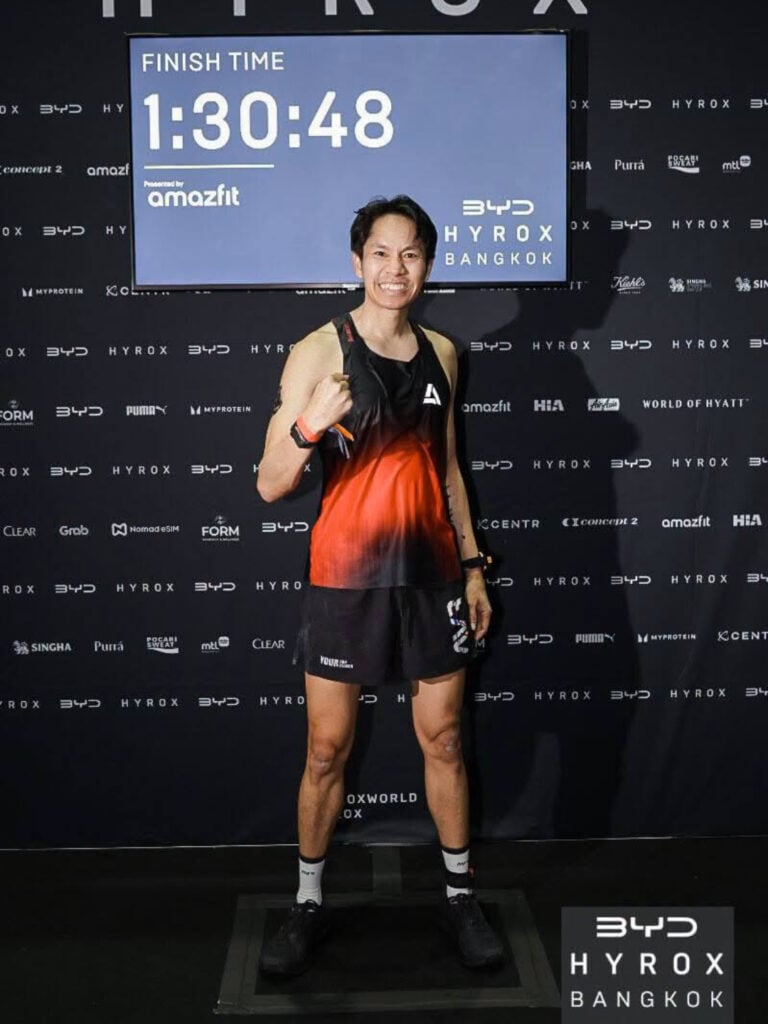
Dr Akanis Srisukwattana also competed in the recent race in Bangkok.
Image via Akanis Srisukwattana (Facebook)Dr Akanis said HYROX combines running with power endurance exercises, which can cause heart rate and blood pressure to rise significantly during the more demanding stations
A standard HYROX race consists of eight 1km runs interspersed with eight functional workout stations: a 1,000m SkiErg, 50m Sled Push, 50m Sled Pull, 80m Burpee Broad Jumps, 1,000m Row, 200m Farmers Carry, 100m Sandbag Lunges, and 100 Wall Balls.
He said this is particularly the case during stations requiring substantial resistance, such as the Sled Push, Sled Pull, and Burpee Broad Jumps.
"The important advice is to compete according to your training. Don't push yourself beyond your physical limits on that day, especially for those at risk, such as high blood lipids, high blood pressure, diabetes, smoking, and a history of heart or vascular disease, as these can cause fat deposits to break off and cause sudden cardiac arrest," he said.
He also advised competitors to ease off at certain points and control their breathing.
"During the competition, you shouldn't push yourself to the limit, take breaks, and control your breathing, especially during heavier stages, to reduce the load on your heart before continuing to run," he recommended.
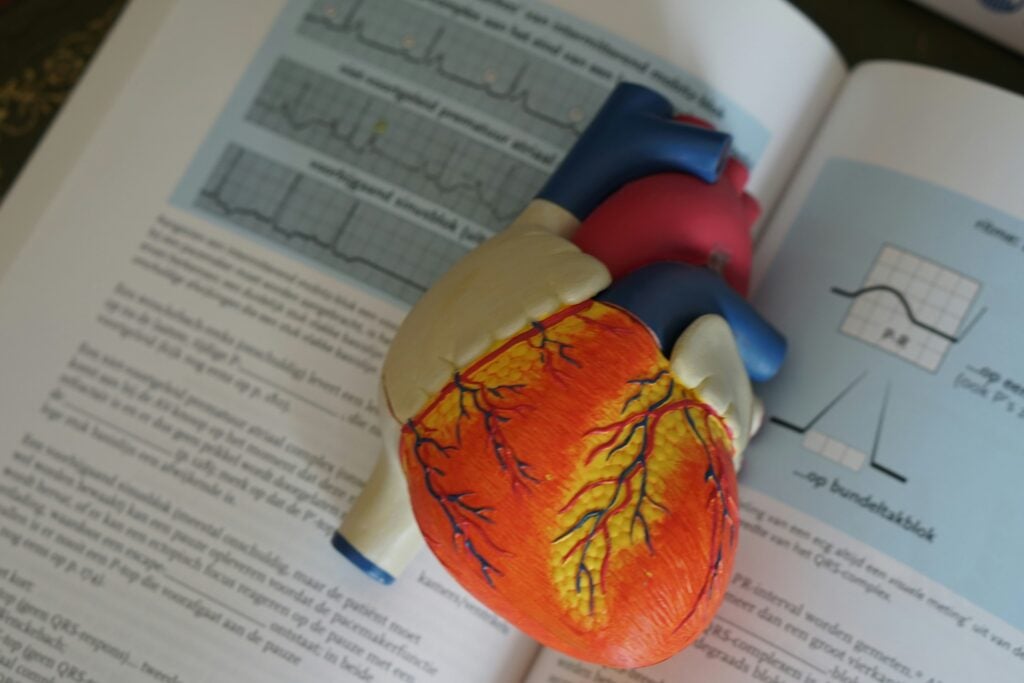
He said competitors at higher risk should keep most of their exertion at around seven out of 10 on the rate of perceived exertion (RPE) scale, where they are tired but can still speak in short sentences
"At around 7 out of 10 RPE, a person is fatigued, but still able to speak in short sentences.
"At an intensity of 8 to 9 out of 10, where fatigue can become so severe that a person can barely speak, this may occur during the competition, but should not be sustained for a long period," he said.
Dr Akanis also advised competitors to stop immediately and alert the event's medical team if they experience chest tightness or pain, unusual shortness of breath compared to the intensity of the exercise, dizziness, lightheadedness or fainting, abnormal heart palpitations, cold sweats, or a feeling that they are about to faint.
Dr Akanis also stressed the importance of pre-competition health screening to assess an individual's risk and plan their training according to their physical condition
"Everyone, have fun during the competition. But remember to train in a way that suits your fitness level and not overexert yourself," he advised.
At the time of writing, HYROX Thailand has not confirmed that a participant died during the HYROX Bangkok race, which was held at the Queen Sirikit National Convention Center from 13 to 16 August.
However, the family of fitness coach Leroy Saunders, 41, has confirmed his death after he collapsed during the event. The circumstances and cause of Saunders' death have not been publicly confirmed.
SAYS has reached out to HYROX Thailand for comment.
