
Can You Lose Your Right To Vote In Malaysia? Here Are 4 Things That Could Disqualify You
Being bankrupt is not one of them.


 Cover image via
Follow us on Instagram, TikTok, and WhatsApp for the latest stories and breaking news.
With automatic voter registration and the voting age lowered to 18, most Malaysian citizens are eligible to vote once they reach adulthood

However, that does not mean every Malaysian qualifies to cast a ballot.
Malaysia's Federal Constitution and election laws set out a few specific situations where a person can lose, or be disqualified from, their right to vote. Article 119 of the Federal Constitution sets out the basic voter eligibility rule.
But first, who is eligible to vote?
To vote in a Malaysian election, a person must first meet these basic requirements:
- Be a Malaysian citizen
- Be at least 18 years old
- Be registered on the Election Commission's (SPR) electoral roll through the automatic voter registration system
- Not be legally disqualified from voting
ㅤ
Anyone who does not meet these basic requirements, such as non-citizens or those under 18, is not eligible to vote in the first place.
Here's a look at what could disqualify you from voting in Malaysia:
1. People currently serving a prison sentence

A person who is serving a sentence of imprisonment on the qualifying date can also be disqualified from voting.
This does not mean anyone who has ever been to prison automatically loses the right to vote forever. The disqualification applies when a person is serving a prison sentence at the relevant time.
If a person has already completed their sentence, their situation may be different. They should check their voter status instead of assuming they are permanently barred.
2. Certain people convicted of serious offences in Commonwealth countries
A person may also lose their voting rights if they have been convicted of an offence in any Commonwealth country and sentenced to death or imprisonment for more than 12 months, and still have to serve the punishment on the qualifying date.
If the case is complicated, it is best to check directly with SPR or get legal advice.
3. People convicted of certain election offences

Voting rights can also be affected if a person is convicted of specific offences under Malaysia's election laws. These offences generally involve acts that undermine the integrity of elections, such as bribery, treating, undue influence, personation, or other serious electoral misconduct.
What can happen if someone commits an election offence?
Penalties depend on the offence. For example, bribery, treating, undue influence, and personation can carry up to two years' jail, fines, and disqualification from voting/office. In serious cases, an election court may also void a result through an election petition if corrupt or illegal practices affected the election – in 2023, the Election Court annulled the GE15 result for the Kemaman parliamentary seat after finding that bribery had taken place to influence voters.
Common types of election offences in Malaysia:
| Type of offence | What it can involve |
|---|---|
| Vote buying | Giving, offering, promising, or receiving money or benefits to influence voting |
| Treating | Giving food, drinks, entertainment, or hospitality to influence voters |
| Undue influence | Threatening, pressuring, or intimidating voters over how they vote |
| Impersonation | Voting as someone else or using another person's identity |
| Ballot paper offences | Forging, destroying, removing, or interfering with ballot papers or ballot boxes |
| False voter information | Making false statements for voter registration or election purposes |
| Illegal campaigning | Campaigning where or when it is not allowed |
| Misleading election material | Publishing false candidate claims or campaign materials without required details |
| Breaching ballot secrecy | Revealing, exposing, or interfering with the secrecy of someone's vote |
| Employer interference | Stopping workers from taking a reasonable period to vote |
| Election spending offences | Breaking campaign spending or reporting rules |
4. People legally detained as being of unsound mind
Under Article 119 of the Federal Constitution, a person can be disqualified if they are detained as being of unsound mind on the qualifying date.
This does not mean anyone with a mental health condition is automatically disqualified from voting.
The law refers to a specific legal situation, such as someone who has been legally detained as being of unsound mind. In other words, ordinary mental health treatment, therapy, medication, or diagnosis should not be casually treated as a reason someone cannot vote.
Does mental illness disqualify someone from voting?

Mental illness by itself should not be treated as automatic disqualification from voting.
Article 119 refers to a person who is detained as a person of unsound mind on the qualifying date.
That is more specific than simply having a mental health condition, receiving treatment, or seeing a doctor.
The key issue is whether the person falls under the legal category described in the Constitution on the qualifying date. Ordinary mental health treatment should not be casually described as voting disqualification.
What does not usually disqualify you from voting?
Some issues can affect your voter record, polling place, or registration details, but they do not automatically mean you have lost the right to vote.
For example, these scenarios do not disqualify you from voting:
| Situation | What it usually means |
|---|---|
| You moved house | Your voting area may still follow your old address until you update it |
| You rent somewhere | Renting does not automatically change your voter record |
| You study in another state | Your voting place does not automatically move to your campus area |
| You live overseas | You may need to check whether you qualify for postal voting |
| You are bankrupt | This does not usually disqualify ordinary voting by itself |
| Your name is missing from MySPR Semak | It may be a registration, address, or voter-roll timing issue |
This is why it is important not to panic if something looks wrong in your voter record.
A missing or outdated record is not always the same as legal disqualification.
How can you check if you are qualified to vote in Malaysia?
The easiest first step is to check your voter record through MySPR Semak.
You can use your MyKad, military, or police service number to check whether your name appears on the electoral roll. If your name does not appear, do not immediately assume you have been disqualified. It could be due to incomplete address information, a pending voter-roll update, or another registration issue.
Most Malaysians don't need to worry
For the vast majority of Malaysians, there is little risk of losing the right to vote.
As long as you are a Malaysian citizen aged 18 or above, are on the electoral roll, and do not fall under any of the legal disqualifications listed above, you are generally eligible to cast your ballot during elections.
The safest thing to do is simple: Check your voter status early, before an election is near. That way, if there is an issue with your record, address, or registration details, you still have time to sort it out.
BONUS: Come voting season, another thing to be aware of is what you can and cannot post online during an election
It's common to see everyday Malaysians discussing politics online But even seemingly harmless social media posts can still create legal risks, if you aren't careful about it. As a general rule, avoid posting anything that exposes your vote, spreads false election information, threatens voters, offers benefits for votes, defames candidates, or continues campaign activity where it is not allowed.
This matters because Malaysia's Election Offences Act 1954 covers offences such as maintaining voting secrecy, bribery, treating, undue influence, false statements about candidates, and polling day restrictions. The Malaysian Communications and Multimedia Commission (MCMC) has also warned social media platforms to curb false election-related information, especially on polling day.
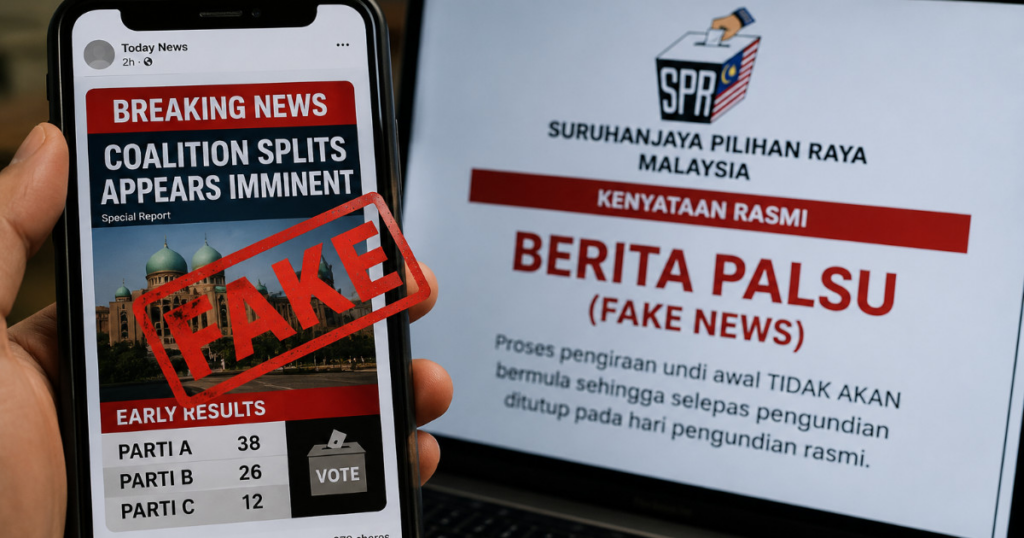
Here's what you should avoid posting on election day:
- Do not post photos of your marked ballot paper
- Do not post fake election results
- Do not post false claims about candidates
- Do not post offers that link money, gifts, jobs, favours, food, transport, or benefits to voting support
- Do not threaten or pressure voters online
- Do not post content that promotes hostility to influence voting
- Do not campaign where or when campaigning is restricted (e.g. on polling day itself)
- Do not post misleading campaign material without proper details
- Do not share unverified voting information
Frequently asked questions:
Can prisoners vote in Malaysia?
A person serving a prison sentence on the qualifying date can be disqualified from voting under Article 119 of the Federal Constitution.
Can someone with a past conviction vote?
A past conviction does not automatically answer the question. Article 119 refers to certain serious convictions where the person was sentenced to death or imprisonment for more than 12 months and still has to serve punishment on the qualifying date.
Can someone charged with a crime vote?
Being charged is not the same as being convicted. Whether a person can vote depends on the legal status of the case and whether any disqualification applies.
Does bankruptcy stop someone from voting?
Bankruptcy does not usually disqualify someone from ordinary voting by itself, though different rules may apply for becoming an election candidate.
What if my name is missing from MySPR Semak?
Your name may be missing because your record is still processing, your address information is incomplete, or the latest voter-roll update has not appeared yet. It does not always mean you are disqualified.
Can I post who I voted for?
You should not post a photo of your marked ballot paper. You may talk about politics generally, but avoid anything that exposes your ballot or proves your vote.
Can I post a ballot selfie?
You should not post a selfie showing your marked ballot paper because it can interfere with ballot secrecy.
Can I share election results from WhatsApp?
Only share results if they come from official or credible sources. Do not present forwarded screenshots as confirmed results.
Can I criticise a candidate online?
You can discuss politics and criticise candidates, but avoid false statements, defamatory claims, threats, or posts that promote hostility.
Last updated: 14 October 2026
Read more trending stories on SAYS

Flight Attendant Who Ploughed Into Work Crew, Killing DBKL Road Supervisor, Granted Bail
Mohd Iman Nafiz Fong Mohd Sabirin, 26, allegedly recorded a blood alcohol level above Malaysia's legal limit.