
What Do MPs & ADUNs Do In Malaysia? Here Are Their Roles & Constituencies Explained
MPs, both in the government and opposition, have specific roles to play.


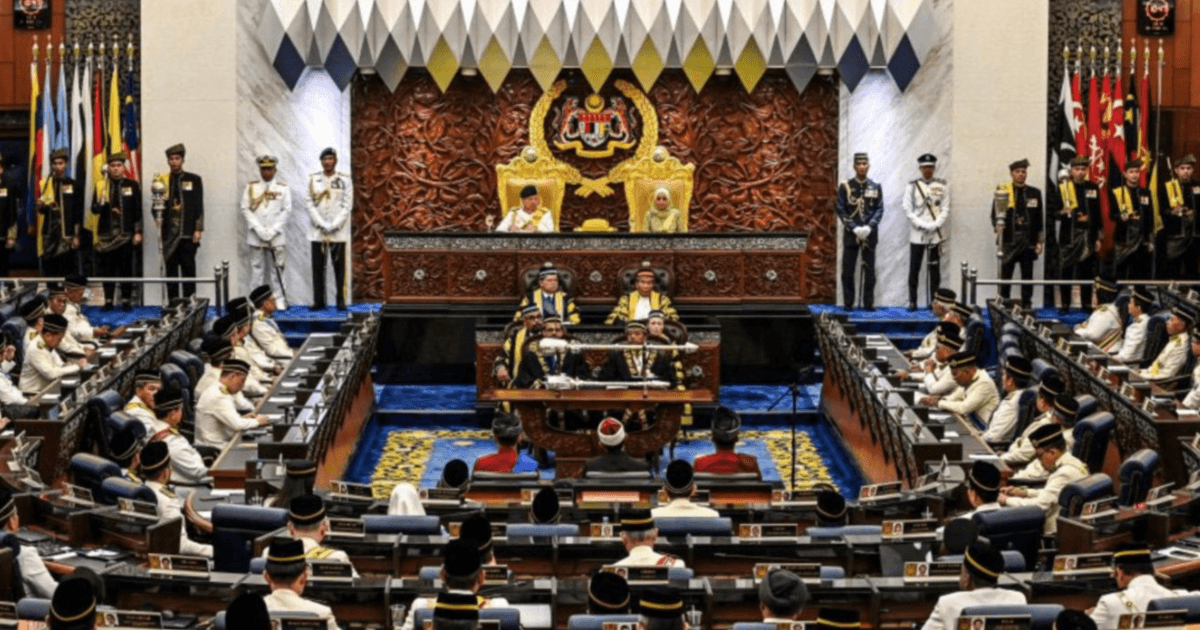 Cover image via Information Department
Follow us on Instagram, TikTok, and WhatsApp for the latest stories and breaking news.
If you voted in the last general election, you most likely cast a ballot for an MP, or Member of Parliament.
But, once an MP is elected, what does he or she actually do?
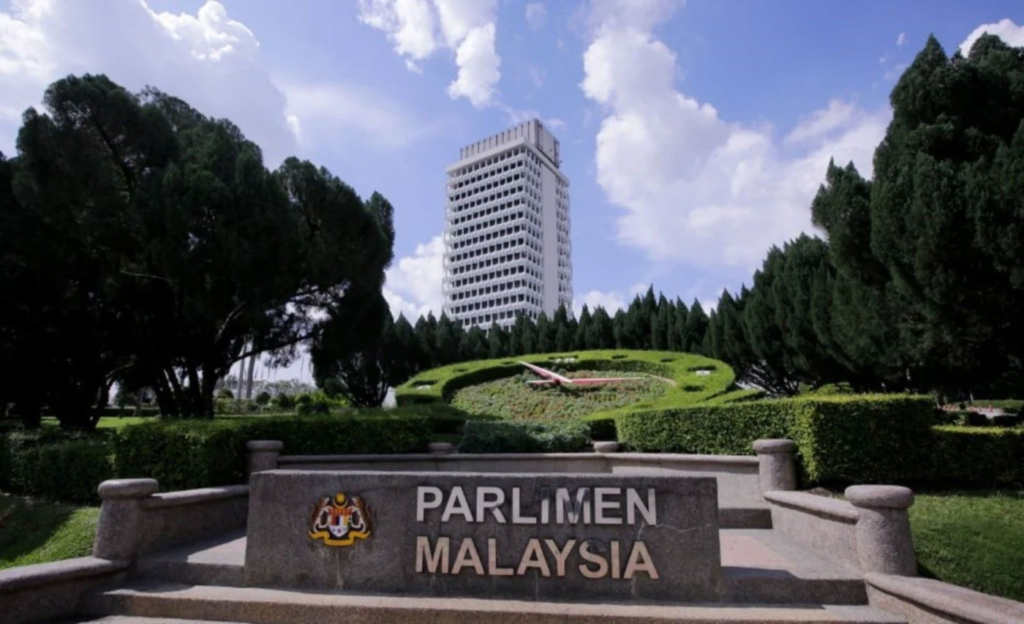
In Malaysia, voters elect MPs during a general election or parliamentary by-election. Once elected, an MP represents the people in that parliamentary seat, debates national issues, votes on federal laws, checks government decisions, and raises constituency concerns in Parliament.
Put simply, your MP is your elected representative at the federal level. Some MPs may also be appointed to extra government roles, such as minister or deputy minister, but not all MPs become ministers.
Before we jump into the details, here's a quick overview of what an MP is and isn't:
| Question | Short answer |
|---|---|
| What does an MP do? | Represents a parliamentary constituency in the Dewan Rakyat |
| Where does an MP sit? | Dewan Rakyat |
| Is an MP the same as an ADUN? | No |
| Is an MP the same as a minister? | No |
| Does every MP become a minister? | No |
| Does an MP handle federal or state issues? | Mainly federal issues |
| Can an MP raise local problems? | Yes, but not every local issue falls under their jurisdiction |
| Does every Malaysian voter have an MP? | Yes |
| Can an MP vote on laws? | Yes |
Malaysia's Parliament has two Houses: The Dewan Rakyat and the Dewan Negara
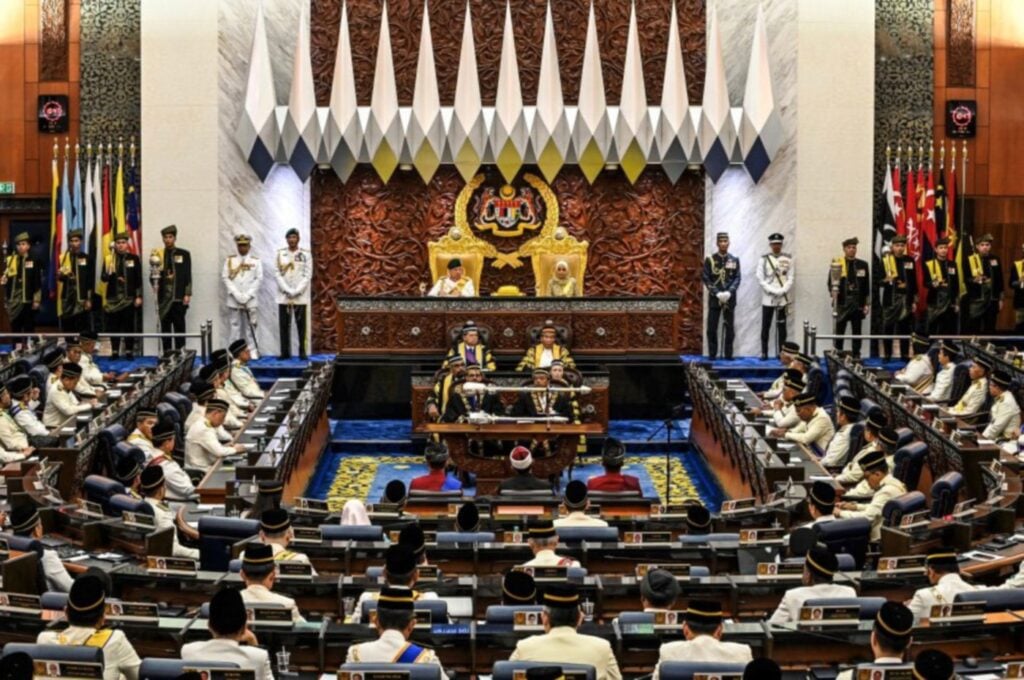
Your MP is your elected representative in the Dewan Rakyat, which is the House directly elected by voters during a general election. They represent your parliamentary seat at the federal level.
The Dewan Negara is different. It is Malaysia's Senate, and its members are called senators. Senators are also Members of Parliament, but they are either elected by State Legislative Assemblies or appointed by the Yang di-Pertuan Agong on the advice of the Prime Minister.
What does an MP do in Parliament?
An MP debates federal laws, raises issues, checks government policy, and votes in the Dewan Rakyat. Parliament passes and amends federal laws, examines government policies, approves government spending, and approves new taxes. MPs take part in this work through debates, questions, motions, committee work and voting.
What kinds of issues can your MP raise?
Your MP can raise national issues and constituency concerns in Parliament.
This can include matters such as:
- Cost of living
- Federal roads and transport
- National healthcare policy
- Education policy
- Public safety
- Taxation
- Federal budgets
- Government programmes
- Issues affecting people in their constituency
An MP may raise these issues through parliamentary questions, speeches, debates, motions, committee work, or direct engagement with ministries.
Does your MP solve local problems?
An MP can help raise local problems, but not every local issue falls directly under an MP's power.
MPs are federal representatives, not local councillors or state assemblypersons. For example, an MP may help highlight a local flooding problem, but the solution may involve a local council, state government department, federal ministry, drainage authority, or several agencies at once.
This is because different levels of government are responsible for different matters.
| Issue | Who may be involved |
|---|---|
| Federal laws and national policy | MP / Parliament |
| State matters | ADUN / state government |
| Local council services | Local council |
| Road, drain, flood or public facility issues | Depends on which agency controls it |
| Constituency complaints | MP may help raise, coordinate or follow up |
Your MP may be a useful channel for complaints, but they may not personally control every agency needed to solve the problem.
Is an MP the same as a minister?
No. An MP is an elected representative, while a minister is an additional government role.
Only some MPs are appointed as ministers or deputy ministers. Ministers lead federal ministries, while deputy ministers assist them. An MP from the ruling side does not automatically get a ministry. Many MPs who support the government sit in Parliament without holding any ministerial portfolio.
| Role | What it means |
|---|---|
| MP | Elected representative for a parliamentary constituency |
| Government backbencher | Government-side MP who is not a minister or deputy minister |
| Minister | Government member appointed to lead a ministry |
| Deputy minister | Government member appointed to assist a minister |
| Opposition MP | MP who is not part of the government |
Can a minister come from the Dewan Negara?
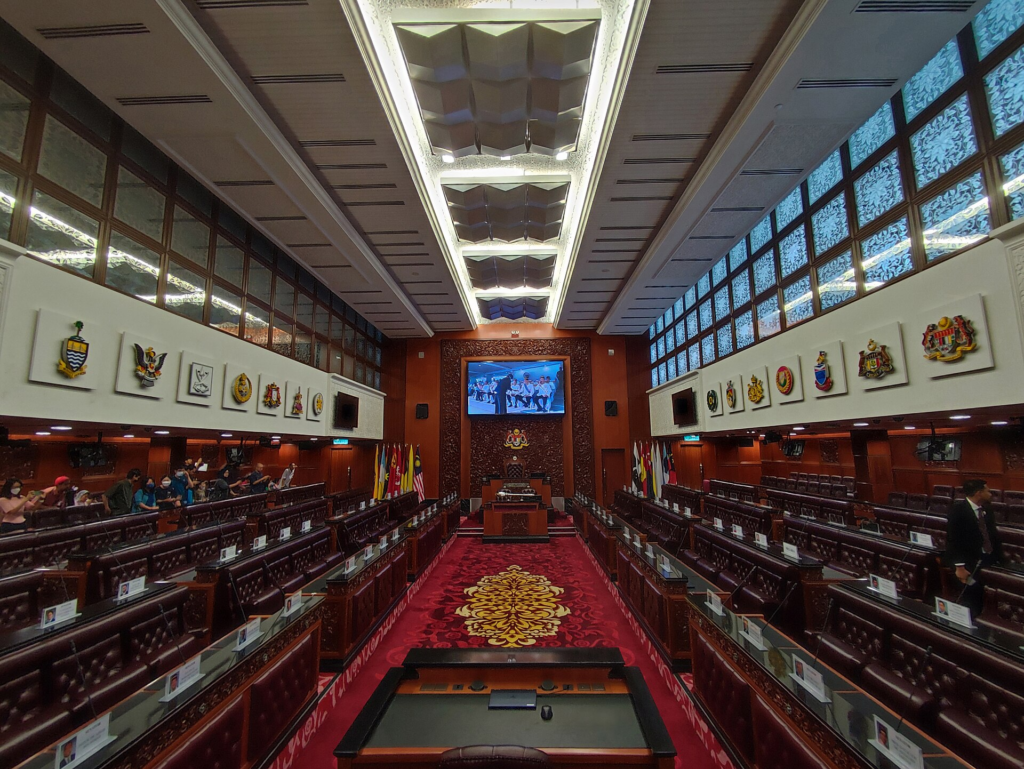
Yes. A minister or deputy minister does not always have to be an elected Dewan Rakyat MP.
Under the Federal Constitution, ministers and deputy ministers can be appointed from either House of Parliament. This means someone who is not an elected MP can still become a minister if they are appointed as a senator.
Do opposition MPs still have power?
Yes. Opposition MPs do not run ministries, but they still have a role in Parliament.
Opposition MPs can debate laws, ask questions, sit on committees, raise constituency concerns and vote in the Dewan Rakyat. They may have less executive power than ministers, but they still represent voters and help hold the government accountable.
What's the difference between an MP and an ADUN?
An MP represents voters at the federal level, while an ADUN represents voters at the state level. An MP sits in the Dewan Rakyat. An ADUN sits in the State Legislative Assembly, or DUN. Parliament handles federal laws and national policy, while State Legislative Assemblies handle state-level matters.
| Representative | Where they sit | Main level |
|---|---|---|
| MP | Dewan Rakyat | Federal |
| ADUN | State Legislative Assembly / DUN | State |
In most states, voters have both an MP and an ADUN, although the two representatives have different responsibilities.
Can someone be both an MP and ADUN?
Yes. A politician can be elected as both an MP and an ADUN, representing voters at the federal and state levels.
If someone holds both positions, they have responsibilities in the Dewan Rakyat as an MP and in the State Legislative Assembly as an ADUN.
They may also be appointed to an additional government role, such as federal minister or deputy minister. However, being an ADUN alone does not qualify someone to become a federal minister. They must also be a member of the Dewan Rakyat or Dewan Negara.
What does your ADUN actually do?
An ADUN represents a state constituency, debates state laws, raises local issues and checks state government decisions.
ADUN stands for Ahli Dewan Undangan Negeri, or State Assemblyperson. While MPs focus mainly on federal matters, ADUNs are involved in state-level issues such as:
- Land matters
- Local government issues
- State roads
- Drainage and flooding
- Markets and hawker areas
- Local infrastructure
- State welfare programmes
- State housing matters
- Issues involving state agencies
Like MPs, ADUNs can raise constituency concerns even when the actual solution depends on another agency. For example, if residents are facing rubbish collection problems, the local council may be responsible for resolving them, but an ADUN can help follow up on complaints.
What is an EXCO member?
An ADUN is an elected state representative, while an EXCO member holds an additional role in the state government.
Only some ADUNs are appointed to the State Executive Council, commonly called the EXCO, where they take responsibility for state government portfolios.
This is similar to how some MPs become ministers, but not all MPs are ministers.
| Role | What it means |
|---|---|
| ADUN | Elected representative for a state constituency |
| Government backbencher | Government-side ADUN without an EXCO portfolio |
| EXCO member | Member of the state government administration responsible for a portfolio |
| Opposition ADUN | ADUN who is not part of the state government |
Opposition ADUNs can still raise issues, debate state laws, ask questions and represent their constituents, even though they do not run the state government.
Now that we've looked at what it means to be an MP and ADUN, how do Malaysian constituencies work?
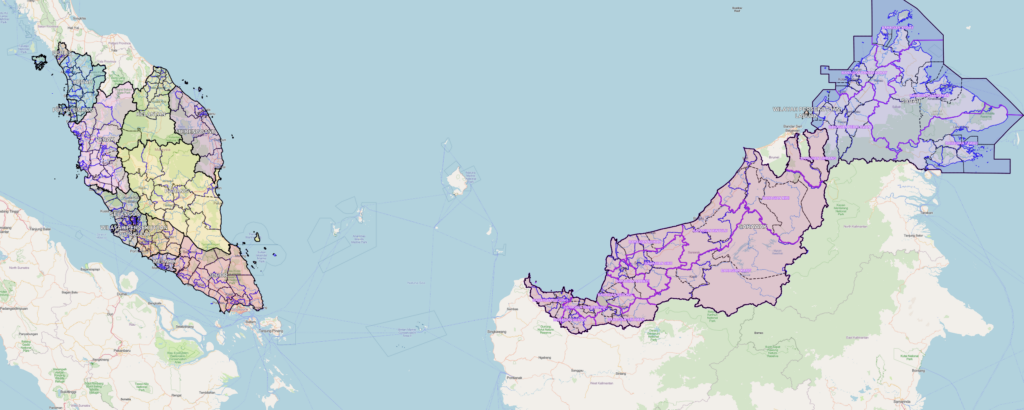
A constituency is an election area where voters choose one representative.
Malaysia has two main types:
| Type of constituency | Who voters elect | Where the representative sits |
|---|---|---|
| Parliamentary constituency | One MP | Dewan Rakyat |
| State constituency / DUN seat | One ADUN | State Legislative Assembly |
In most states, one parliamentary constituency contains several DUN constituencies. This means voters in the same parliamentary seat share one MP, but they may have different ADUNs depending on which DUN seat they belong to. Your constituency matters because it determines which candidates appear on your ballot paper and who represents you after the election.
Why is your voting constituency different from your city?
Your constituency may have a different name from your city because electoral boundaries do not always follow city, town, postcode or local council boundaries.
Petaling Jaya is one example. During GE15 in 2022, voters in the wider Petaling Jaya area were not necessarily voting in the same parliamentary seat. Parliamentary constituencies included Petaling Jaya, Damansara and Subang, depending on the exact electoral boundaries.
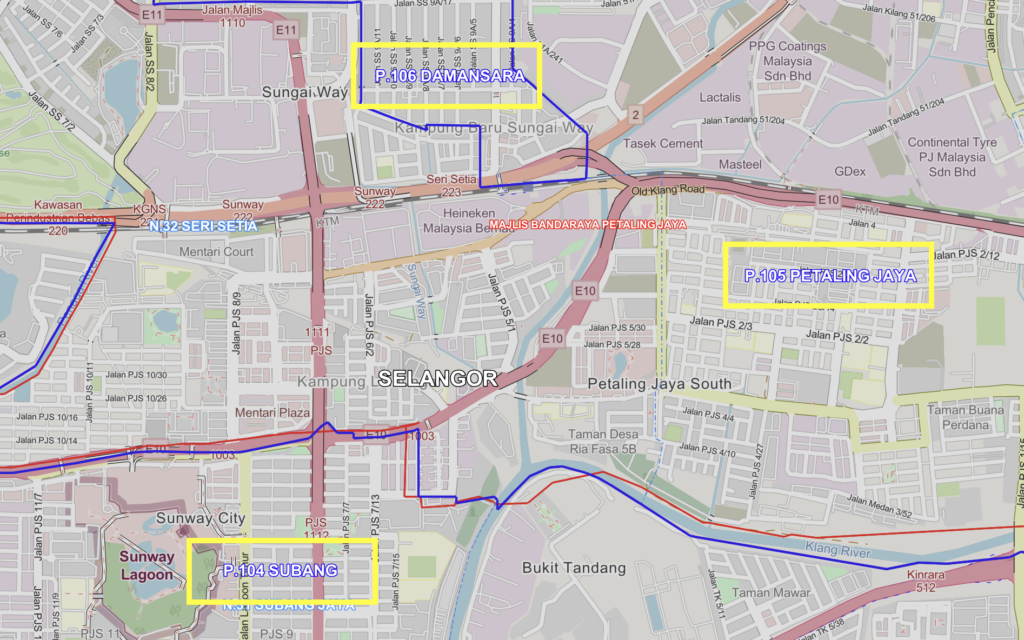
So, two people who both say they live in PJ may belong to different parliamentary or DUN seats. Your city name is not enough to determine your constituency. Your official registered voter details determine which seat you belong to.
Why do some constituencies have more voters than others?
Some constituencies have more voters because electoral boundaries are not drawn based only on voter numbers.
The Federal Constitution provides for approximately equal numbers of electors within constituencies in a state, while allowing weightage for rural areas because of geography, distance and access difficulties. However, differences can still become very large, especially when urban populations grow.
For example:
| Constituency | Number of voters | Representatives elected |
|---|---|---|
| Seat A | 40,000 | 1 MP |
| Seat B | 160,000 | 1 MP |
Illustrative example only.
Both constituencies elect one MP, even though Seat B has four times as many voters. This difference matters because each parliamentary seat still counts as one seat when determining the composition of the Dewan Rakyat.
What is malapportionment, and how is it different from gerrymandering?
Malapportionment refers to unequal voter numbers between constituencies, while gerrymandering refers to how boundaries are drawn in ways that favour particular political interests. Both can affect representation and election outcomes, but they are different issues.
So, how are constituency boundaries decided in Malaysia?
The Election Commission (EC) reviews constituency boundaries through a process called redelineation, or persempadanan.
Under the Federal Constitution, boundary reviews consider factors such as voter numbers, geography, administrative boundaries, accessibility and rural weightage. The process involves formal proposals, opportunities for objections and approvals before new boundaries take effect. The government cannot simply redraw constituency lines overnight. The process must follow constitutional requirements.
Back to something practical. How do you know who your MP or ADUN is?
Check your parliamentary and state constituency details through MySPR Semak, then refer to official Parliament or State Legislative Assembly records to identify your elected representative.
The process is straightforward:
- Visit MySPR Semak.
- Enter your identification number.
- Check your parliamentary seat and DUN seat, if applicable.
- Look up the elected representatives for those seats using official Parliament or state assembly information.
If you live in Kuala Lumpur, Putrajaya or Labuan, you will have a parliamentary seat but no DUN seat because Federal Territories do not have State Legislative Assemblies.
What should you contact your MP or ADUN about?

Contact your MP for federal-level concerns and your ADUN for state-level concerns, although both may help with local constituency problems.
| Problem or concern | Who to contact |
|---|---|
| Federal policies, taxation or national programmes | MP |
| State programmes or land matters | ADUN |
| Rubbish collection or local council services | Local council |
| Drainage, flooding or public infrastructure | Relevant local, state or federal agency |
| Difficulty identifying the responsible agency | MP or ADUN service centre |
If you are unsure which authority handles your problem, contact your MP's or ADUN's service centre. They may be able to direct your complaint to the relevant agency.
However, contacting an elected representative does not guarantee an immediate solution, especially when the problem involves a department or authority outside their direct control.
Frequently asked questions
What is an MP called in Malay?
An MP is commonly referred to as an Ahli Parlimen.
Does every Malaysian voter have an MP and ADUN?
Every parliamentary constituency elects one MP, but not every voter has an ADUN. Voters in Kuala Lumpur, Putrajaya and Labuan do not have ADUNs because Federal Territories do not have State Legislative Assemblies.
Can an MP become prime minister?
Yes. The prime minister must be a Dewan Rakyat member who, in the Yang di-Pertuan Agong's judgment, is likely to command majority support in the House.
Can an ADUN become menteri besar or chief minister?
Yes. The menteri besar or chief minister is appointed according to the relevant state constitutional rules and must generally command the confidence of the State Legislative Assembly.
Can an opposition MP or ADUN help with local problems?
Yes. Opposition representatives can raise constituency complaints and follow up with the relevant authorities, although they do not control government ministries or state portfolios.
Can an MP become a minister without winning an election?
A person does not necessarily need to win a Dewan Rakyat seat to become a minister. Ministers can also be appointed from the Dewan Negara, meaning a senator may become a minister.
Does an MP get paid more if they become a minister?
An MP who becomes a minister holds both a parliamentary and an executive role. The law provides remuneration for these roles, although the amount actually received may be affected by applicable arrangements or voluntary pay cuts.
Can two people in the same parliamentary constituency have different ADUNs?
Yes. In most states, a parliamentary constituency contains several DUN seats, so voters may share the same MP but elect different ADUNs.
Can two people living in Petaling Jaya vote in different constituencies?
Yes. The wider Petaling Jaya area crosses different electoral boundaries, so voters may belong to different parliamentary or state seats depending on their registered addresses.
Can your MP or ADUN change without a general election?
Yes. A parliamentary or state by-election may be held when a seat becomes vacant, subject to the applicable election laws and timing rules.
Is a constituency with more voters automatically unfair?
Not necessarily. Constituency sizes can differ for geographical and rural-access reasons. However, very large differences in voter numbers may raise questions about the equality of representation.
Can malapportionment or gerrymandering be fixed before the next election?
Changes to electoral boundaries require a formal redelineation process. They cannot be implemented immediately simply because an election is approaching. Any new boundaries would have to complete the required process before they could be used in an election.
What is a marginal seat?
A marginal seat is a constituency won by a relatively small majority. A small change in voter support at a later election could therefore change which candidate wins.
How do you read a constituency result on election night?
Look at the winning candidate, their party, the number of votes received and the winning majority. The majority is the difference in votes between the winner and the runner-up. Each constituency produces one winning representative, regardless of how many voters live there.
For the latest information about your parliamentary and state constituency, check MySPR Semak. For details about your current representative, refer to the official Parliament or State Legislative Assembly website.
Last updated: 15 October 2026
