
Election Terms Every Malaysian Voter Should Know & How Elections Work
A simple glossary of election terms for first-time Malaysian voters, including MySPR Semak, saluran, ballot paper, candidate, coalition, and government.


 Cover image via SAYS
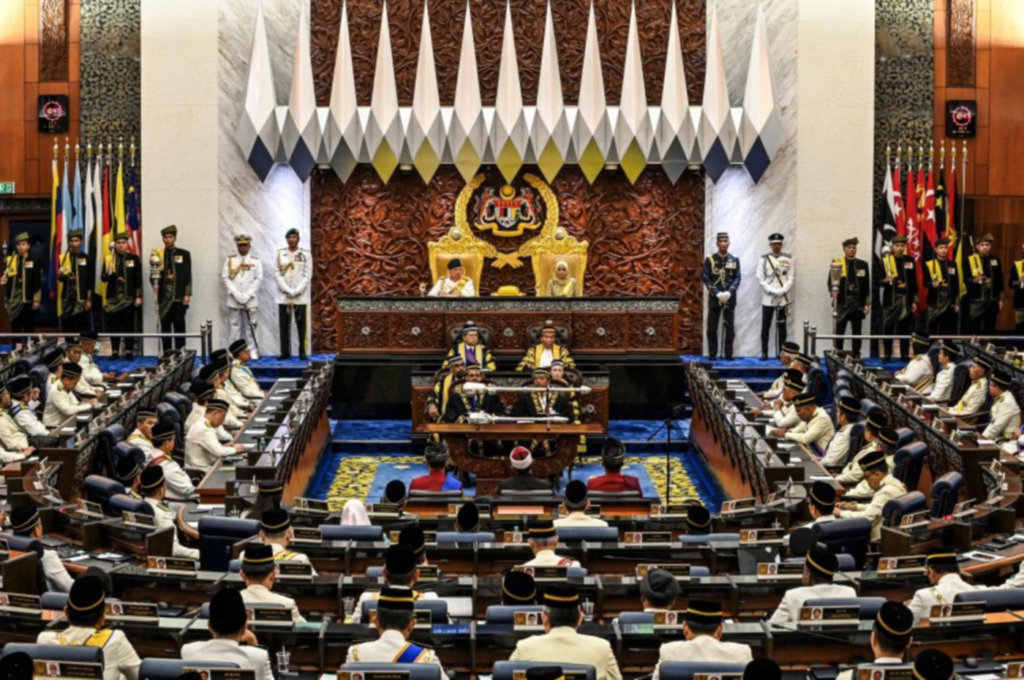
Election terms in Malaysia can be confusing for first-time voters, especially when words like saluran, polling centre, candidate, coalition, manifesto, and ballot paper start appearing before polling day.
This guide explains common Malaysian election terms and where they're commonly used. It also covers how elections work, how governments are formed after the results are announced, and the basic rights Malaysians have when voting.
The basic terms you will see before polling day:
| English term | Malay term | What it means |
|---|---|---|
| Election Commission (EC) | Suruhanjaya Pilihan Raya Malaysia (SPR) | The body that manages elections in Malaysia |
| MySPR Semak | MySPR Semak | The official system used to check voter and polling details |
| Electoral roll | Daftar Pemilih | The official list of registered voters |
| Supplementary Voter Roll | Daftar Pemilih Tambahan (DPT) | A voter roll update that includes new or changed voter records |
| Polling centre | Pusat Mengundi | The place where you vote, such as a school or hall |
| Voting stream | Saluran | Your assigned room or line inside the polling centre |
| Voter sequence number | Nombor Bilangan Pemilih | The number that helps election workers find your name in the voter list |
| Recommended voting time | Masa Keluar Mengundi Yang Digalakkan | A suggested time to vote, usually to help manage crowds |
The most important terms to check before polling day are polling centre, saluran, and voter sequence number. These tell you where to go and which line or room to join when you arrive.
The terms that explain who you are voting for:
| English term | Malay term | What it means |
|---|---|---|
| Candidate | Calon | The person contesting in your seat |
| Constituency | Bahagian Pilihan Raya | The voting area represented by one elected representative |
| Parliamentary seat | Bahagian Pilihan Raya Parlimen | The area that elects one Member of Parliament |
| State seat | Bahagian Pilihan Raya Negeri | The area that elects one State Assemblyperson |
| Member of Parliament (MP) | Ahli Parlimen | The person elected to represent a parliamentary seat |
| State Assemblyperson (ADUN) | Ahli Dewan Undangan Negeri | The person elected to represent a state seat |
| Seat | Kerusi | A parliamentary or state contest that elects one representative |
In a general election, you vote for the candidate contesting in your parliamentary seat. In a state election, you vote for the candidate contesting in your state seat. If both elections are held at the same time in your area, you may receive two ballot papers.
The terms that explain parties and government:
| English term | Malay term | What it means |
|---|---|---|
| Political party | Parti politik | The organisation a candidate may represent |
| Coalition | Gabungan parti | A group of political parties working together |
| Manifesto | Manifesto | A list of promises or policy plans |
| Government | Kerajaan | The side that has enough support to lead after the election |
| Opposition | Pembangkang | Elected representatives who are not part of the government |
| Majority | Majoriti | Enough support or seats to win or form government |
| Simple majority | Majoriti mudah | More than half of the seats or votes involved |
| Hung parliament | Parlimen tergantung | A result where no party or coalition has enough seats to govern alone |
You do not vote directly for the prime minister in a general election.
You vote for the candidate in your parliamentary seat. After the election, the federal government is formed based on who commands enough support in the Dewan Rakyat.
The terms you will hear at the polling station:
| English term | Malay term | What it means |
|---|---|---|
| Ballot paper | Kertas undi | The paper you mark to choose a candidate |
| Voting booth | Petak undi | The private space where you mark your ballot |
| Ballot box | Peti undi | The box where completed ballot papers are placed |
| Indelible ink | Dakwat kekal | Ink placed on your finger to show you have voted |
| Polling station chief | Ketua Tempat Mengundi (KTM) | The officer in charge of a voting stream or polling room |
| Checking booth | Barung | The EC checking booth where voters can confirm polling details |
| Spoilt ballot | Kertas undi rosak | A ballot accidentally spoilt before it is cast |
| Rejected ballot | Kertas undi ditolak | A cast ballot that is not counted because the voter's choice is unclear or invalid |
Common election terms people mix up
Some election terms sound similar, but they do not mean the same thing.
| Common mix-up | What it actually means |
|---|---|
| Polling centre vs saluran | The polling centre is the building. The saluran is your assigned room or line inside it |
| Candidate vs party | The candidate is the person contesting. The party is the organisation they may represent |
| Party vs coalition | A party is one organisation. A coalition is a group of parties working together |
| MP vs ADUN | An MP represents a parliamentary seat. An ADUN represents a state seat |
| Government vs Parliament | Parliament is the law-making body. The government is the side with enough support to lead |
| Spoilt ballot vs rejected ballot | A spoilt ballot happens before casting. A rejected ballot is decided during counting |
| MySPR vs MySPR Semak | MySPR is the wider EC portal. MySPR Semak is used to check voter and polling details |
What is the difference between a political party, coalition, and government?
A political party is an organisation that contests elections, a coalition is a group of parties working together, and the government is formed by the side with enough support to lead.
Here's a simple way to understand how these different terms relate to each other:
Candidate
Person
The individual you vote for in your constituency.
Political party
Organisation
The candidate may represent the party's policies and priorities.
Coalition
Group of parties
Parties may work together to gain enough seats and support.
Government
Side that leads
Formed based on support in Parliament or the state assembly.
ㅤ
When you vote, you're choosing a candidate in your constituency. That candidate may represent a party, and that party may be part of a larger coalition.
Parties can also form or change coalitions after an election. This becomes especially important if no single party or coalition wins enough seats to govern on its own.
How do elections work in Malaysia?
Malaysia uses a seat-based election system. Voters choose representatives in individual constituencies, and the results help determine who forms the federal or state government.
At the federal level, Malaysians elect MPs to the Dewan Rakyat.
At the state level, voters elect ADUNs to the State Legislative Assembly, or DUN.
The number of seats won, together with support among elected representatives, determines which side can form the government.
What is the difference between a general election, state election and by-election?
| Election type | What happens | Who votes |
|---|---|---|
| General election (GE) | All Dewan Rakyat seats are contested following dissolution of Parliament | Eligible voters across Malaysia |
| State election | State Legislative Assembly seats are contested following dissolution of that assembly | Eligible voters in the affected state |
| By-election (PRK) | A vacant parliamentary or state seat is contested | Only eligible voters registered in that constituency |
A by-election can happen when an MP or ADUN dies, resigns, is disqualified, or otherwise loses their seat under the law.
However, not every vacancy necessarily results in a by-election. The applicable rules and timing matter, particularly near the end of a legislative term.
A snap election, meanwhile, is simply a general election called earlier than the end of the normal parliamentary term.
How does first-past-the-post voting work?
In Malaysia, the candidate who receives the most votes in a constituency wins the seat. This is called the first-past-the-post system.
In this example, 36,000 votes were cast among three candidates. The candidate with the highest number of votes wins the seat.
Candidate A Winner
Candidate B
Candidate C
ㅤ
Candidate A wins the seat because they received the most votes, even though they did not receive more than half of all votes cast for these three candidates.
What is the difference between winning seats and winning the popular vote?
The popular vote is the total number of votes received, while seat count refers to how many constituencies a party or coalition wins.
These are not necessarily the same thing. For example, one party could receive many votes in a smaller number of constituencies but win fewer seats overall. Another party might win more constituencies by relatively narrow margins and end up with more elected representatives. This is why receiving the most votes nationwide does not automatically mean a party or coalition will form the federal government.
How many seats are needed to form a government in Malaysia?
As of October 2026, Malaysia's Dewan Rakyat has 222 seats, making 112 seats the usual simple-majority threshold for forming the federal government.
This means a party, coalition or group of MPs with the support of at least 112 MPs would normally have a majority in the full House.
| Dewan Rakyat | Number |
|---|---|
| Total parliamentary seats | 222 |
| Half of all seats | 111 |
| Simple majority | 112 |
Important: These figures reflect the current 222-seat composition of the Dewan Rakyat. If the number of parliamentary seats changes in the future, the simple-majority threshold will also change.
The number needed to form a state government is different because each State Legislative Assembly has its own number of seats.
What happens if no party or coalition wins 112 seats?
Malaysia may have a hung Parliament, meaning no single party or coalition has enough seats to govern alone.
In that situation, different parties or coalitions may negotiate support to establish a parliamentary majority. This happened after GE15 in 2022, when no single party or coalition won enough seats on its own. A federal government was subsequently formed with support from multiple political groups.
Winning the most seats does not automatically guarantee that a political party can form the government. It must still be able to command sufficient support in the Dewan Rakyat.
How is Malaysia's prime minister chosen after a general election?
Malaysians do not vote directly for the prime minister. The Yang di-Pertuan Agong appoints an MP who, in His Majesty's judgment, is likely to command the confidence of the majority of Dewan Rakyat members.
This is provided for under Article 43 of the Federal Constitution. In practice, the person appointed is often the leader of a party or coalition with sufficient parliamentary support, but this is not automatic.
A party president does not necessarily become prime minister simply because their party won seats. For example, in 2021, Ismail Sabri Yaakob became prime minister even though he was not UMNO president at the time. He was appointed based on support from MPs.
The key question is whether the individual has enough parliamentary confidence to lead the federal government.
What happens after election results are announced?
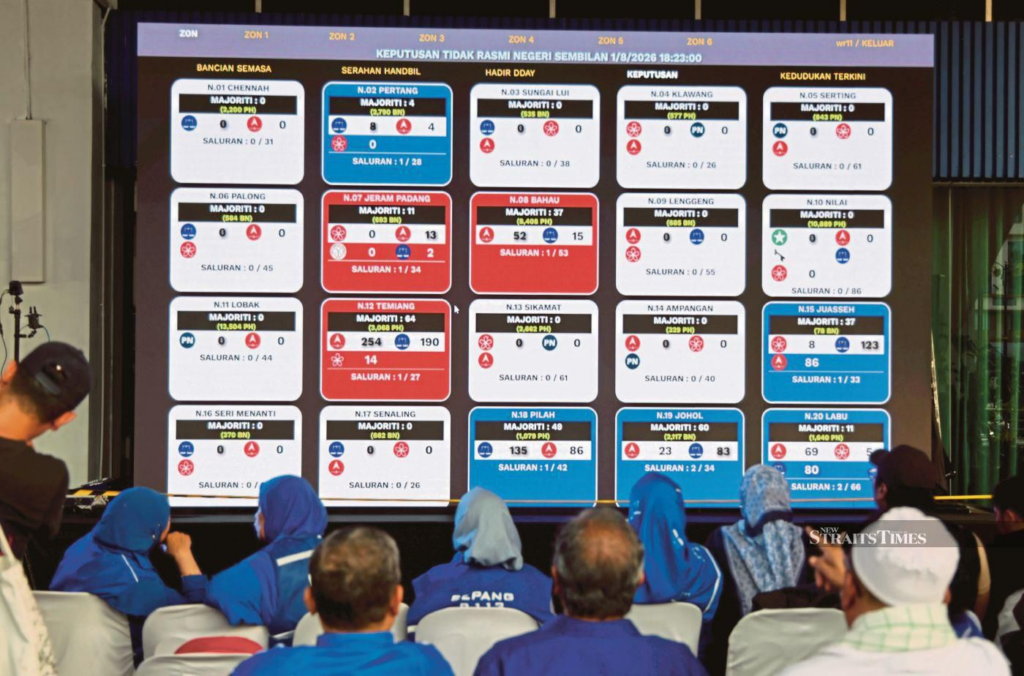
Once election results are confirmed, attention shifts from individual seat winners to who has enough support to form the government.
At the federal level, the process generally follows these steps:
Election results are confirmed
The Election Commission confirms the winners, who become the elected MPs for their constituencies.
Parties and coalitions count their seats
Each side looks at how many seats it has won and whether it has enough support to form a government.
Majority support is established
The key question is which side is likely to command the confidence of the majority of the Dewan Rakyat.
If no side has a clear majority
Parties or coalitions may negotiate agreements or support to establish who has enough backing to govern.
The Prime Minister is appointed
The Yang di-Pertuan Agong appoints an MP who is likely to command the confidence of the majority of the Dewan Rakyat.
The new government is formed
The Prime Minister is sworn in, followed by Cabinet appointments and the formation of the new administration.
What happens after a state election?
A similar process takes place at state level.
The EC confirms which candidates have won their DUN seats. Based on support in the state assembly, a Menteri Besar or Chief Minister is appointed according to the state's constitutional rules. The state government can then form its administration and appoint the relevant executive councillors.
What rights do voters have in Malaysia?
Malaysian voters have the right to vote in secret, protection against election-related intimidation, and reasonable time off work to cast their vote.
However, elections also come with legal restrictions intended to protect the voting process.
| Question | What voters should know |
|---|---|
| Is your vote secret? | Yes. Your ballot choice is protected by election secrecy rules |
| Can your employer stop you from voting? | Employers must allow registered voters reasonable time to vote |
| Can someone else vote using your MyKad? | No. Voting as another person is impersonation |
| Is vote buying illegal? | Yes. Offering or accepting benefits in exchange for voting support can be an offence |
| Can someone threaten you over your vote? | Intimidation or undue influence can amount to an election offence |
| Can you take a photo of your marked ballot? | Do not photograph your marked ballot, as this can interfere with ballot secrecy |
| Can you wear party logos at the polling centre? | Party and campaign materials are restricted in specified polling areas |
| Can you campaign on polling day? | Campaigning is subject to election-day restrictions, including around polling centres |
These protections and restrictions are covered by Malaysian election laws, including the Election Offences Act 1954.
Is your vote secret in Malaysia?
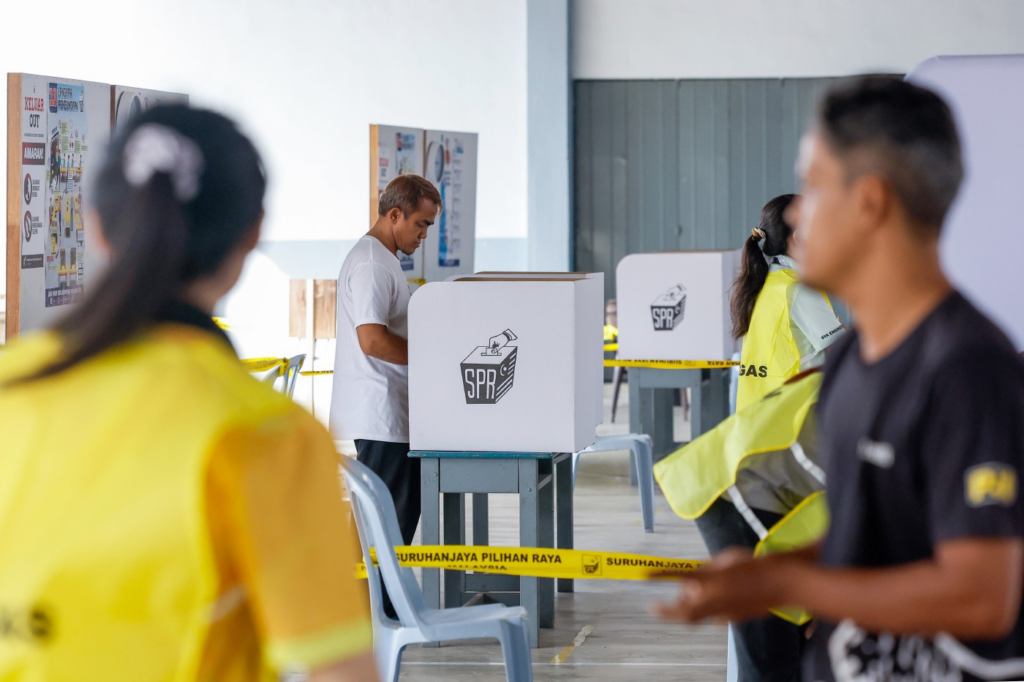
Yes. Your choice on a ballot paper is secret, and ordinary people, employers and political parties cannot simply check who you voted for.
When you vote, you mark your ballot privately inside the voting booth. Election workers and appointed agents also have legal duties relating to ballot secrecy.
Why do ballot papers have serial numbers if voting is secret?
Ballot papers may have serial numbers, official stamps and other security markings to help election workers manage and verify genuine ballots. The EC has explained that these numbers are used for ballot-paper control rather than to create a public record of how individuals voted.
The voting process is designed to prevent ordinary people, employers, candidates, or political parties from looking up a voter's choice. During counting, votes are counted for each candidate. The final results do not publicly reveal how any individual voter voted.
Frequently asked questions about Malaysian elections
What is a caretaker government?
A caretaker government continues necessary administration after Parliament or a state assembly is dissolved, until a new government is formed. It is generally expected to avoid major new commitments unless necessary.
Does winning the popular vote mean winning the election?
Not necessarily. Malaysia uses first-past-the-post voting, so the number of constituencies won matters more for government formation than the nationwide popular-vote total.
Can a coalition be formed after an election?
Yes. Political parties can agree to work together after the results, especially when no single party or existing coalition has enough seats to form a government.
Can someone become prime minister without being an MP?
No. The prime minister must be a member of the Dewan Rakyat. A senator who is not also a Dewan Rakyat member cannot be appointed prime minister.
What is a unity government?
A unity government is generally understood as a government supported by multiple political parties or coalitions that agree to govern together. The term became especially prominent after Malaysia's GE15 in 2022.
Can a by-election change the government?
It can affect the balance of seats, especially when the government's parliamentary majority is small. However, a by-election normally concerns only the affected constituency.
Can the number of parliamentary seats change in the future?
Yes. Malaysia's Dewan Rakyat has not always had 222 seats. Any change to its constitutionally specified composition requires the applicable constitutional process.
Can someone vote on your behalf using your MyKad?
No. Impersonating another voter is an election offence. Special assistance for eligible voters is different from allowing someone else to cast a vote on your behalf.
Can a political party find out who you voted for?
No. Political parties cannot simply access a record showing which candidate an individual voter selected. Ballot secrecy rules protect the voting process.
Why is there a general election every five years?
Under the Federal Constitution, Parliament continues for five years from its first meeting unless dissolved earlier. A general election must be held within 60 days after dissolution. This means elections can occur before the full five-year period if Parliament is dissolved early.
Last updated: 16 October 2026
