
AI Has Now Designed Functional Viruses From Scratch, Scientists Say
The research team analysed genetic sequences from millions of organisms, which the AI then used to generate thousands of potential viral blueprints.


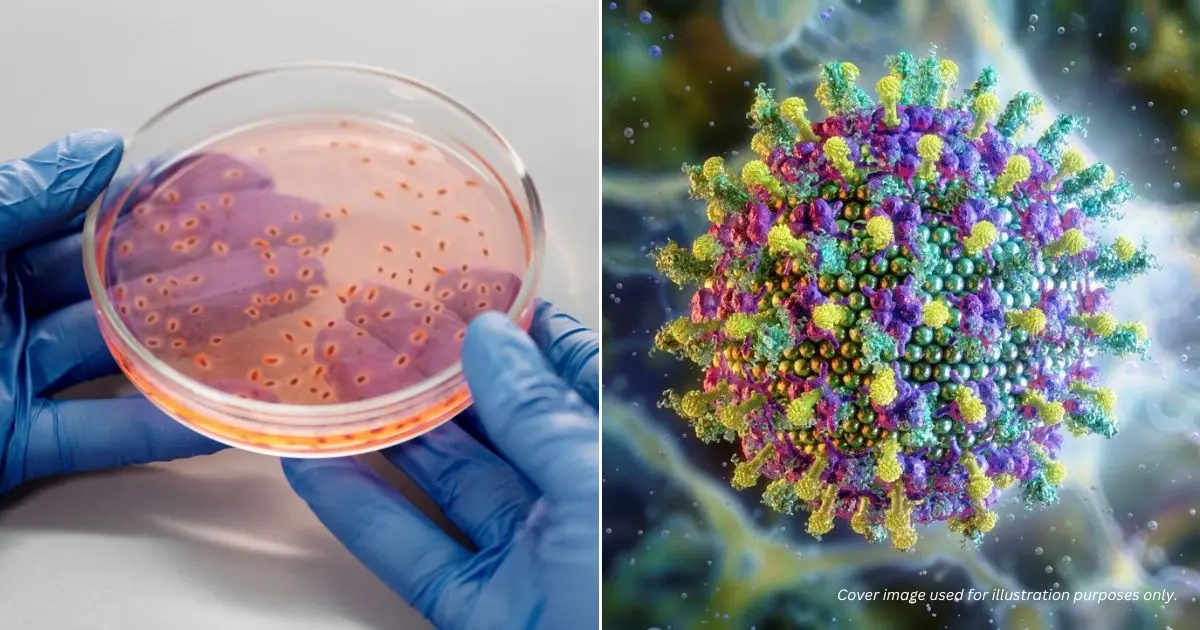 Cover image via
 Follow us on Instagram, TikTok, and WhatsApp for the latest stories and breaking news.
Generative artificial intelligence (AI) has moved beyond writing essays and coding software to designing functional, synthetic viral genomes from scratch
According to CNN, researchers from Stanford University and the Arc Institute used an AI tool called Evo to analyse genetic sequences from millions of organisms before generating thousands of potential viral blueprints.
From these candidates, the team constructed and lab-tested roughly 300 viral genomes inside Escherichia coli (E. coli) bacteria cells, successfully producing 16 viable viruses.
Image for illustration purposes.
Image via Daniel Dan / PexelsThese lab-made bacteriophages target bacteria rather than human cells, with some showing an ability to infect and kill drug-resistant bacterial strains that natural phages had failed to eliminate
Jordi García Ojalvo, a professor of systems biology at Pompeu Fabra University, described the achievement as significant.
However, experts from the Johns Hopkins Center for Health Security expressed caution in a response piece published in Science.
"Although this is promising for life sciences applications, it also raises urgent biosafety and biosecurity questions," they wrote.
The experts warned that regulatory frameworks have not kept pace with advancements in technology
"The ability to compose viral genomes using generative AI now exists; the governance to safely steer it does not," they said.
They cautioned against using these models to create pathogens that can infect humans, animals, or plants, warning that such pathogens could behave in ways that existing treatments and other countermeasures may not be able to contain.
However, García Ojalvo played down fears of an immediate apocalypse, saying "it is difficult to imagine these models automatically generating viable genomes 'out-of-the-box'," given the low efficiency rate and required lab testing.
