
How Does AI Slop Actually Affect Your Child’s Brain Development?
An exclusive interview with Dr Loh Wai Loong, Consultant Paediatrician at Ara Damansara Medical Centre.


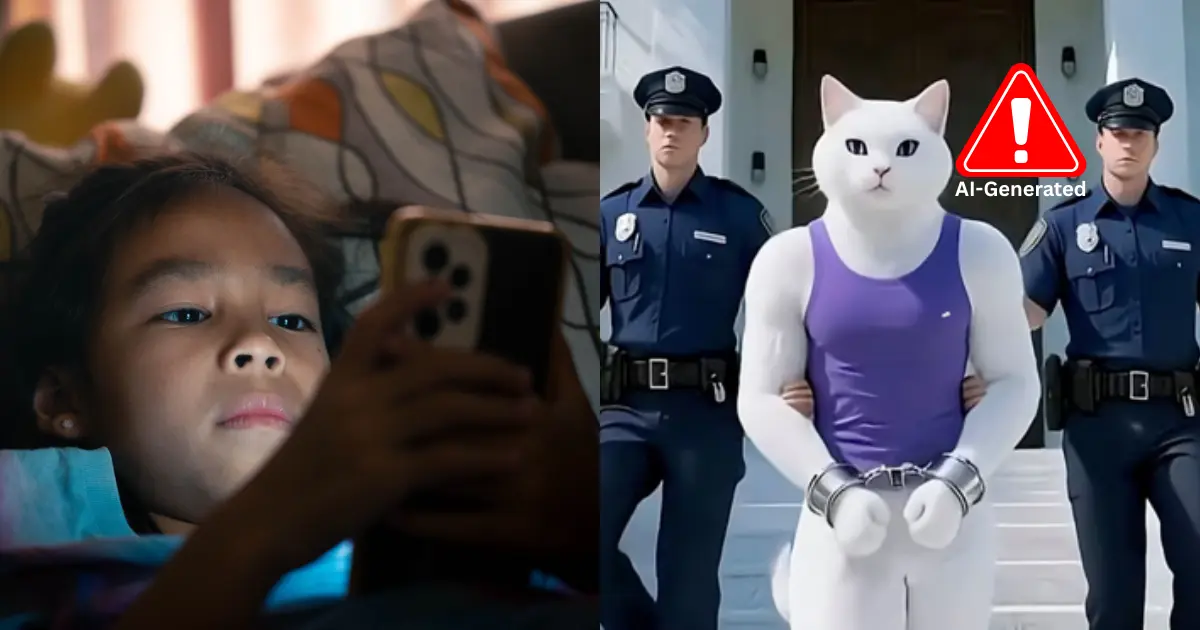 Cover image via Canva & The Guardian
Follow us on Instagram, TikTok, and WhatsApp for the latest stories and breaking news.
From bizarre AI-generated characters to rapid-fire videos designed to keep viewers scrolling, so-called "AI slop" is becoming increasingly difficult to escape online

An example of 'AI slop' videos generated to entice young children to stay on their screens.
Image via The GuardianFor children growing up with YouTube, TikTok and Instagram at their fingertips, the question for parents is no longer simply, "How much screen time is too much?"
We spoke to Dr Loh Wai Loong, Consultant Paediatrician at Ara Damansara Medical Centre, for more insights on the affect of AI slop on children and their developing brains.
From a child development perspective, what should parents be concerned about?
Dr Loh: Too much exposure to AI-generated videos may make it more difficult for children to distinguish between fantasy and reality, especially at a younger age.
Most of these videos are fast-paced, highly stimulating content that can 'train' a child's mind to become easily bored with less stimulating activities such as reading a book, solving a puzzle, or even taking a walk in the park.

Image used for illustration purposes only.
Image via CanvaWhat exactly is "AI slop" and "brainrot", and how is it different from regular children's content?
Dr Loh: Both are informal modern-day terms used to describe how artificial intelligence has influenced genuine creativity and originality of what human minds can produce, with the former telling how people are now prioritising a massive influx of highly stimulating content to reach more viewers, while the latter describes the heavy dependence on AI-generated content negatively affecting the attention, behaviour and thinking of a person.
Most regular children's content, although fictional, has some educational value and is created to help them learn. AI-generated content, on the other hand, is usually highly stimulating and fast-paced, designed to draw massive attention and views.
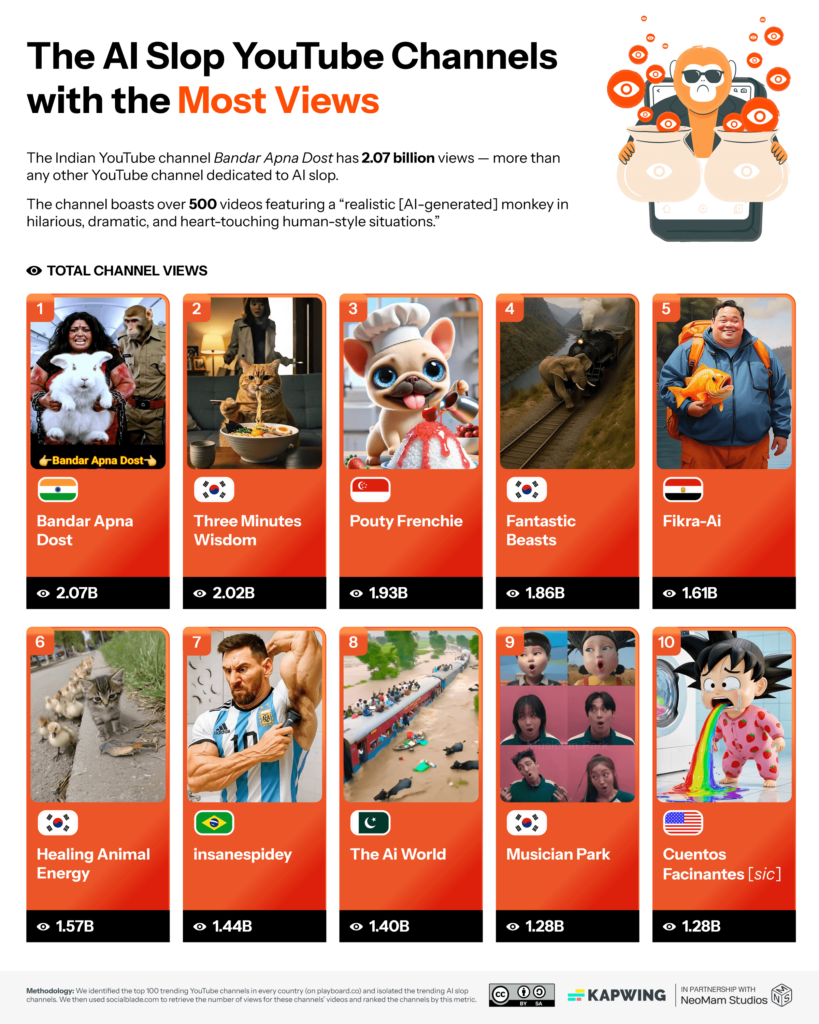
A 2025 report by Kapwing found that between 21 and 33% of YouTube's feed consists of AI slop or brainrot videos.
Image via KapwingCan watching fast-paced, repetitive AI-generated videos affect a young child's brain development?
Dr Loh: Growing research is highlighting the potential negative impact of frequent exposure to easily accessible short-form videos on attention span and, consequently, learning, particularly when screen time gradually replaces sleep, social interaction, and play.
Could excessive exposure to AI-generated content impact creativity or imagination?
Dr Loh: As the name implies, 'brainrot' is now a common term to describe a person's declining brain potential, possibly due to heavy reliance on AI tools for day-to-day responsibilities or even routines.
Our brain needs constant training and exercise to remain healthy and strong, just like our muscles that carry us around every day. Creativity develops through activities such as imaginative play, storytelling, drawing, reading, and social interaction.
When children spend excessive time consuming passive digital content instead of actively creating or exploring, they may have fewer opportunities to develop these skills.
Image used for illustration purposes only.
Image via CanvaHave you noticed any behavioural patterns among children who spend a lot of time consuming this type of content?
Dr Loh: This is especially evident during and after the COVID era when MCO was implemented. Most children are confined indoors and therefore spend more time on screen-based entertainment.
When social interaction, two-way communication, and human touch are restricted in these circumstances, many healthcare professionals have begun noticing a surge in developmental delays, especially in the speech and language domain.
Is the concern the AI itself, or is it more about screen time and the design of highly stimulating content?
Dr Loh: Even before the AI boom, reduction of screen time has long been advocated by healthcare professionals. These recommendations are all backed by strong scientific evidence that prolonged screen time can influence a child's development.
The problem arises when we spend too much time on screen, and the issue is further compounded by the rapid creation of highly stimulating content, no thanks to AI.

Image used for illustration purposes only.
Image via CanvaAre toddlers and preschoolers more vulnerable than older children?
Dr Loh: The younger the child, the more susceptible they are to being affected by surrounding stimuli. It is crucial to provide young children with stimuli because their brain is constantly developing, but too much is equally damaging. Moderation is always the key.
What are some signs that a child's media consumption may be becoming unhealthy?
Dr Loh: When a child gradually shows no interest in activities other than screen time, constantly asks for gadgets when they are not doing anything, they start and end their day with screen time, throws a tantrum when they do not get their screen time, or develops sleep problems, these are some of the signs that their media consumption is getting unhealthy and something needs to be done to rectify it before it gets out of hand.

Image used for illustration purposes only.
Image via CanvaShould parents ban this type of content altogether, or is moderation enough?
Dr Loh: Banning screen time or media usage altogether is impractical these days. Most of the time, extreme restrictions will only end up pushing them to find alternative ways to get the things they want, because human nature makes us curious about things we are unfamiliar with.
What are some healthier alternatives that still allow children to enjoy screens?
Dr Loh: Outdoor activities that involve physical movement, social interaction and pretend play are all encouraged. These not only help them to learn, but also enhance their growth.
For example, we can look for puzzles and board games that can be played on screen by the whole family, or use gadgets to hold a drawing contest among siblings. Children can then learn, interact and socialise while still having the opportunity to enjoy screen time.

Image used for illustration purposes only.
Image via CanvaHow much screen time would you recommend for different age groups?
Dr Loh: Children below 2 years old should not be given any screen time, except for video calls, while those aged 2 and above are encouraged to have no more than one hour (in total) of high-quality screen time throughout the day.
If a child has already been watching a lot of this content, is it possible to reverse any negative effects?
Dr Loh: Children develop habits through repeated opportunities to practise them, whether they are good or bad.
Babies learn to communicate by being given opportunities to ask for what they want.
Toddlers may learn to throw tantrums when they want something if parents give in every time they scream.
Similarly, children may learn to avoid vegetables if saying no to greens means the vegetables are simply removed from their plates.
When we realise that a habit may be unhealthy, there is no better time to change it than now. Rather than abruptly changing a long-established routine, find ways to gradually reshape the habit. Look for alternative activities to keep children engaged, so they do not automatically turn to gadgets whenever they have free time.

Image used for illustration purposes only.
Image via CanvaIf you could give parents just three tips for raising healthy digital consumers in the age of AI, what would they be?
Dr Loh: AI is becoming an increasingly important part of everyday life. Rather than avoiding it completely, parents should teach children how to use it responsibly and critically.
Nobody is born with the knowledge to differentiate good from bad. That is how future generations can benefit from the experience of past generations. Always be there to guide our children, so they stay on the right path.
Moderation is always the key. Too little and you risk them finding alternatives without supervision, while too much may cause stagnant development. Finding balance is not always easy, but it gets easier when there is consistent effort.
Image used for illustration purposes only.
Image via CanvaDoctor Loh Wai Loong is a Consultant Paediatrician at Ara Damansara Medical Centre.

REAL ke AI? Fact-check before you act. Everyone plays a role.