
Malaysia Sets Out Plans For Stronger Digital Security And Better Connectivity
MCMC will work with security agencies and telcos on a shared platform to test quantum-resistant technologies.


 Cover image via
Follow us on Instagram, TikTok, and WhatsApp for the latest stories and breaking news.
Malaysia is developing a national plan to strengthen the security of its critical digital infrastructure
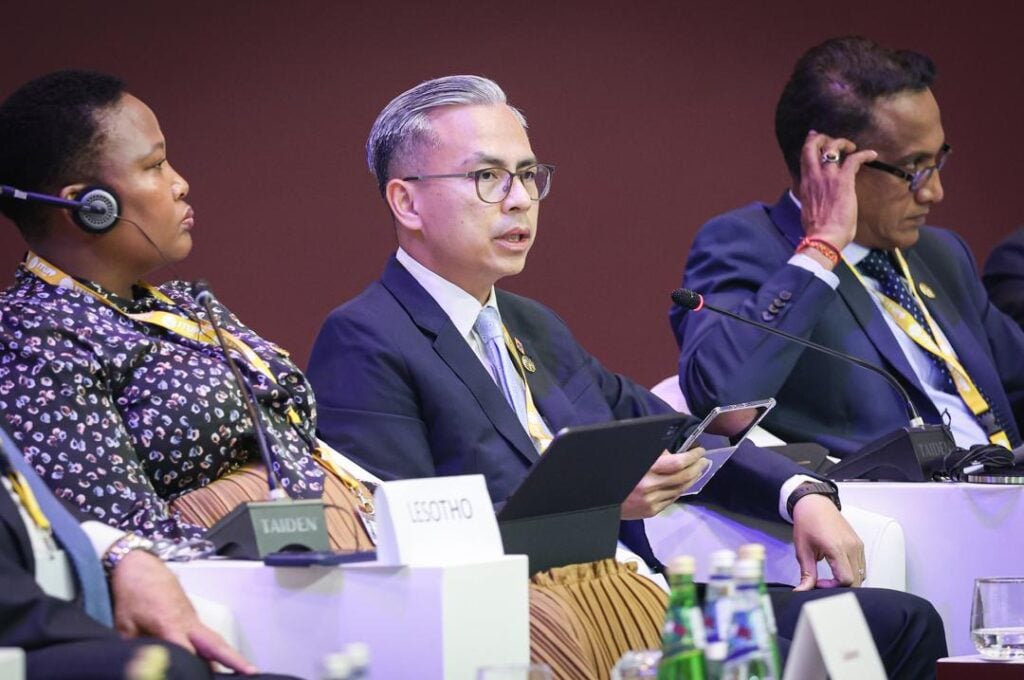
Communications Minister Datuk Seri Fahmi Fadzil outlined the plan while delivering Malaysia's policy statement at the International Telecommunication Union (ITU) Plenipotentiary Conference 2026 in Doha, Qatar, on 9 November.
The plan involves moving critical information infrastructure to post-quantum cryptography, which is designed to protect data against potential threats from future quantum computers.
"As quantum communications develop, governments and industry players must build trust and interoperability through common standards, equipment testing and a phased transition to quantum-resistant cryptography, without disrupting essential services.
"Malaysia is developing a national plan to move critical information infrastructure to post-quantum cryptography," Fahmi said, as reported by the New Straits Times.
He said he had asked the Malaysian Communications and Multimedia Commission (MCMC) to engage the National Security Council, the National Cyber Security Agency, and telecommunications operators on a shared research and development testbed. The proposed platform would allow them to test solutions together and support a coordinated transition.
"This would let us test solutions together, and accelerate the transition securely," he said.
Connectivity efforts could extend beyond populated areas to ports, railway networks, and highways

According to his policy statement, internet coverage reached 99.75% of populated areas as of September 2026, while the country recorded 31.3 million 5G subscriptions. The statement highlighted the National Digital Network initiative, JENDELA, as part of ongoing efforts to expand coverage, particularly in underserved areas.
Fahmi also outlined Malaysia's interest in looking beyond populated areas to improve connectivity in key economic locations, including ports, railway networks, and highways.
Reliable connections in these areas would support businesses and economic activity. He encouraged the ITU and its member states to explore this approach to make digital development more inclusive and sustainable.
Fahmi also highlighted community access to digital skills and efforts to improve online safety

The policy statement pointed to Malaysia's 1,099 National Information Dissemination Centres (NADI), which support communities with digital skills and entrepreneurship opportunities. NADI joined the ITU's Digital Transformation Centres network in April 2026.
The statement also highlighted the Online Safety Act 2025 as part of efforts to strengthen platform accountability and protect users, particularly children. Alongside these efforts, Malaysia's nationwide Internet Safety Campaign had reached more than three million participants, promoting digital literacy and responsible online behaviour.
The conference also provided a platform for Malaysia's bid to retain its ITU Council seat for the 2027–2030 term. An ITU member since 1958, Malaysia sought fellow member states' continued support for its candidature.
