
Malaysians Warned Again Not To Open ZIP Files On WhatsApp Without Checking
The files could contain malware that steals personal information and banking details.


 Cover image via
Follow us on Instagram, TikTok, and WhatsApp for the latest stories and breaking news.
Malaysians have been warned against opening suspicious ZIP files sent through WhatsApp, as they could contain malware that steals passwords and banking information
In a viral Threads post, a social media user reminded Malaysians to verify files with the sender before downloading or opening them, even if they come from someone they know.
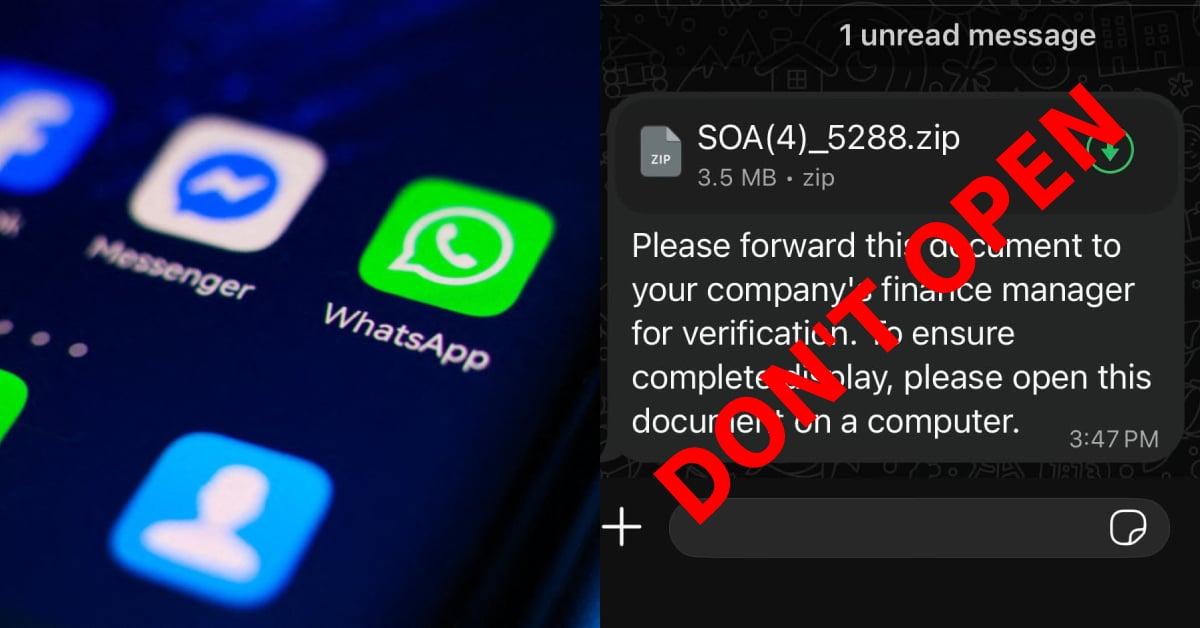
The user shared a screenshot of a suspicious message asking recipients to forward an attached document to their company's finance manager for verification.
The message also instructed recipients to open the attachment on a computer for the best viewing experience.
The Threads user warned that such files could contain malware that spreads through a victim's phone and automatically forwards itself to other contacts.
View on Threads
A cybersecurity expert has also warned that such attachments could steal passwords and banking details
According to the New Straits Times, Universiti Kuala Lumpur Malaysian Institute of Information Technology (UniKL MIIT) deputy dean Dr Shafiza Mohd Shariff said the files could contain malware that records keystrokes, steals passwords and login details, accesses personal information, and monitors users' activities, particularly on financial applications.
She advised users to contact the sender to verify suspicious attachments and avoid downloading files from unknown contacts.
"You can call the person who sent (the files to) you and check with them. If it comes from somebody you do not know, do not download it or open it," she said.
She also recommended installing antivirus software on mobile devices and keeping it running to detect and quarantine malicious files.

MyCERT has also warned Malaysians about suspicious ZIP files
In June, the Malaysia Computer Emergency Response Team (MyCERT) issued an advisory about an active cyberattack campaign in Malaysia involving malicious files disguised as financial documents.
These files were circulated through WhatsApp and made to look like invoices, account statements, and payment documents.
According to MyCERT, opening or extracting the ZIP attachments and running the programmes inside them on a Windows computer could install malware that allows attackers to remotely control the affected device.
