
Why Was The Klang Drunk Driver Charged With Murder When Others Weren’t?
Saktygaanapathy Ravichandran faces the death penalty for killing a father of three.


 Cover image via Social media & Malay Mail
Follow us on Instagram, TikTok, and WhatsApp for the latest stories and breaking news.
When the news broke on 1 April that Saktygaanapathy Ravichandran, 28, had been charged with murder for killing motorcyclist Amirul Hafiz Omar in Klang, the initial reaction from many Malaysians was relief
Amirul's widow, Nor Nadia Abdul Majid, 32, summed it up simply outside the courtroom:
"I only want to say one thing, life for life. That's all."
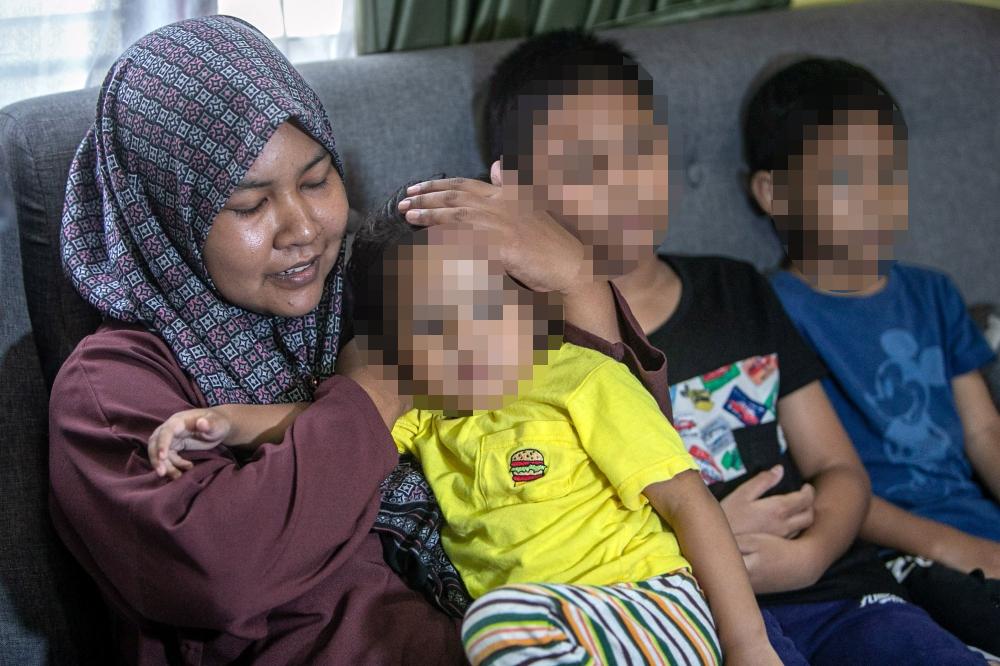
Nor Nadia Abdul Majid, the widow of Amirul Hafiz Omar, is seen with her children Muhammad Aqif Amsyar (third from left), Muhammad Atif Izz Rayqal (right), and Nur Humaira (second from left) in Kampung Repoh, Batu Kurau.
Image via Malay MailBut soon after, a second wave of reaction followed, not relief, but questions
Screenshots and posts began circulating online, pointing to other fatal crashes involving drivers who tested positive for drugs or alcohol.
Three deaths here.
A couple killed on Valentine's Day there.
Families destroyed in the same way, by the same recklessness.
In those cases, no murder charges were filed.
"Such as 'kes bunuh mangsa'!! Before this, there were many cases that happened in Malaysia… many led to accidents that caused death as well, but [none were ever treated] as 'kes bunuh'."
— A social media user in a widely shared post
The question Malaysians are really asking is this: what makes the Klang case different — and is the law being applied consistently?
This writer spoke to two criminal lawyers to help break this down.
First, what actually happened in court?
The charges at a glance:
Charge 1
Murder (Section 302, Penal Code): Saktygaanapathy is accused of murdering Amirul on Jalan Raya Barat, Klang, at 11.47am on 29 March.
No plea was recorded as murder cases fall under the High Court's jurisdiction.
The charge carries the death penalty, or imprisonment of between 30 and 40 years, plus a minimum of 12 strokes of the cane if the death penalty is not imposed.
Charge 2
Drug Consumption (Section 15(1)(a), Dangerous Drugs Act 1952): Saktygaanapathy pleaded guilty to self-administering benzodiazepine and tetrahydrocannabinol (THC) at the Klang Selatan district police headquarters.
This carries a fine of up to RM5,000, up to two years' jail, or both.
He was unrepresented in court. Bail was denied. The next mention date is 3 June, while the court awaits a chemical report.
Notably, no charge was filed under the Road Transport Act 1987, the law that has historically been used in fatal drunk driving cases. That omission is at the centre of the legal debate now playing out publicly.
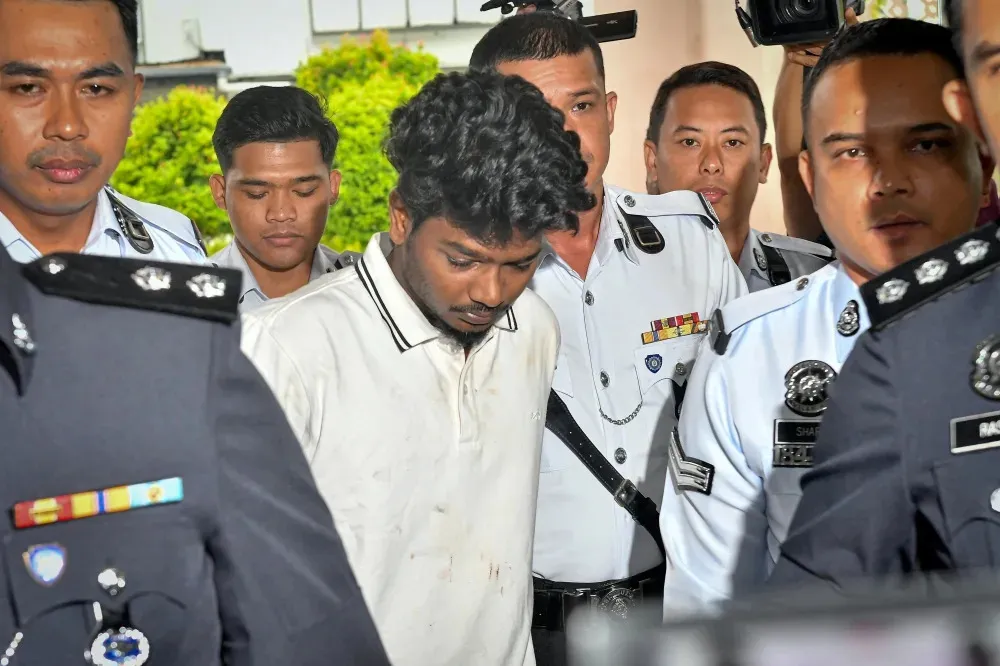
Saktygaanapathy Ravichandran (centre).
Image via Social mediaMurder vs culpable homicide: What's the difference?
Most people assume murder and culpable homicide are entirely separate offences.
But they're not, criminal defence lawyer Sivahnanthan Ragava told SAYS.
"Many people misunderstand this concept and assume that murder is entirely different from culpable homicide. In truth, murder is a species of culpable homicide. All murders are culpable homicides, but not all culpable homicides amount to murder."
Think of it as a spectrum.
At the lower end: culpable homicide not amounting to murder (Section 304 would fall here) — cases where there is no intention to kill or premeditation, such as a sudden fight that turns fatal.
At the upper end: culpable homicide amounting to murder (Section 302 would fall here) — cases where intent, or a sufficiently high degree of dangerous knowledge, can be established.

"The main differences between Sections 302 and 304 are: the existence of the intention to kill and premeditation," Sivahnanthan added.
Which part of the law is the prosecution using?
Under Section 300 of the Penal Code, culpable homicide becomes murder if any one of four conditions is met.
Both lawyers we spoke to independently identified the same condition as the most likely basis for the prosecution's case in this instance.

Section 300(d) is significant because it does not require the prosecution to prove that Saktygaanapathy intended to harm Amirul specifically. It only needs to show that he knew what he was doing was so dangerous that death was a probable outcome.
"The prosecution will have to show the court that the accused knows very well that when he drinks alcohol and administers dangerous drugs into himself, he should not drive a car, because the accused 'knows' that 'it is so imminently dangerous' that by doing that 'it must in all probability cause death,'" Sivahnanthan told us.
He drew a parallel to a classic legal illustration: if a person fires a loaded cannon into a crowd and kills someone, they are guilty of murder even without a premeditated design to kill any specific individual.
The prosecution's argument, in essence, is that getting into a car heavily intoxicated on both alcohol and drugs and driving at speed is the functional equivalent.
Another lawyer, Datuk Geethan Ram Vincent, a former deputy public prosecutor with the Attorney-General's Chambers (AGC) who now focuses on criminal law, agreed that Section 300(d) appears the more fitting limb, though he cautioned that without full access to the case facts, it is difficult to be definitive.
"Section 300(d) may be more fitting because it does not require intent to harm a specific person, but rather that the accused knew the act of driving while intoxicated was imminently dangerous — that it could have resulted in death. However, driving against traffic while heavily intoxicated does not automatically meet the threshold."
Does the argument that "he was too drunk to know what he was doing" help him?
This is one of the first defences people assume a drunk driver could raise. It doesn't work the way most people think.
Section 85 of the Penal Code is explicit in stating that intoxication is not a defence to any criminal charge unless the intoxication was caused without the accused's consent by someone else, or the intoxication rendered the accused temporarily insane.
Voluntary, self-induced intoxication — which is exactly what Saktygaanapathy's situation appears to be — does not qualify.
Saktygaanapathy has already pleaded guilty to knowingly self-administering benzodiazepine and THC.
Geethan notes that while this guilty plea does not formally bar him from raising an intoxication defence on the murder charge, as they are separate proceedings, evidentially, it is damaging, as Saktygaanapathy has already admitted in court that his intoxication was voluntary. Raising a defence premised on involuntary intoxication would be exceptionally difficult to sustain.
Back to the big question: Why this case and not the others?
This is the question most Malaysians online have been asking.
When Malaysiakini asked the Attorney-General directly why the AGC did not pursue both murder and drink-driving charges, Tan Sri Dusuki Mokhtar defended the decision without elaborating on the evidentiary reasoning.
"The AGC has viewed this matter as a serious one which attracts public uproar. Looking into the facts of the case, it warrants us to charge him under Section 302 of the Penal Code (for murder)," Dusuki said.
"The act of the accused entering the opposing lane intentionally and at high speed resulted in a situation that was 'so imminently dangerous' to the deceased, as provided under Section 300(d) of the Penal Code," he added.
"It was a blatant disregard of human life."
Dusuki also pushed back on the idea that this is unprecedented.
He pointed to two prior road accident cases where murder charges were similarly pursued: a 2018 hit-and-run in Cyberjaya, in which a Libyan student, Ahmed Abdullah Ali, 24, was charged with the murder of Wan Amirah Wan Alias; and an ongoing case in Terengganu, where Norizan Ismail, 50, was charged with the murder of three UiTM Dungun students and the attempted murder of another following a road crash.
So Section 302 for road fatalities is not, strictly speaking, a first in Malaysia.
It is, however, rare, and that rarity is precisely what is fuelling public confusion about why some cases cross that threshold, and others don't.
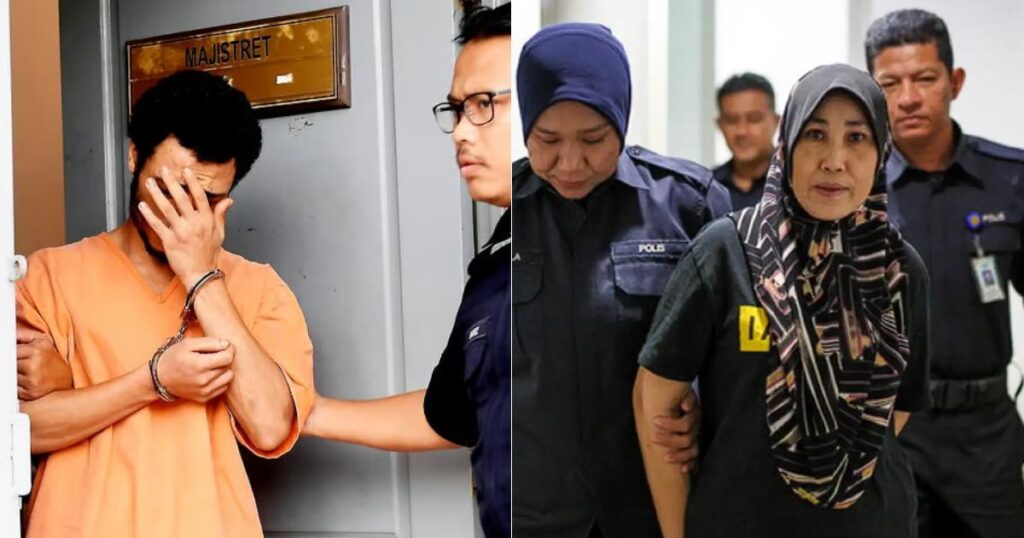
Libyan student Ahmed Abdullah Ali at the Magistrate's Court in Sepang, and Norizan Ismail at the Kuala Terengganu High Court last year.
Image via Bernama (Collage by SAYS)However, there's another case that's drawing the sharpest comparison to the current one
Jelutong member of parliament RSN Rayer has raised the inconsistency most directly, and with a specific example.
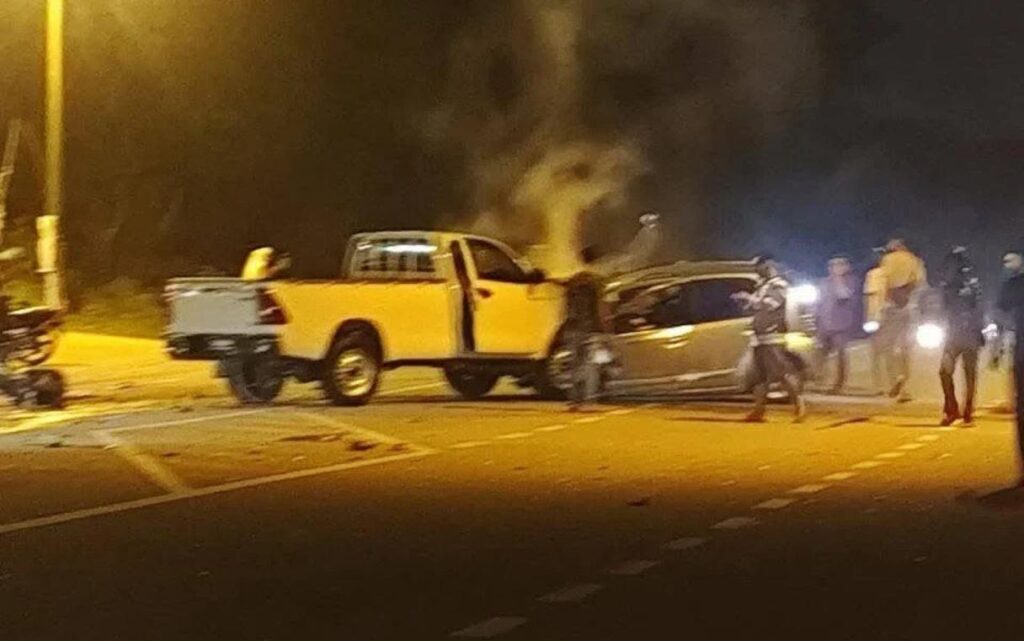
On 9 February this year, a fatal accident in Batu Gajah, Perak, claimed the lives of three family members: SR Sarala Devi, 34; G Sarasbathy Gopal, 65; and 3-year-old S Shaastikka.
The driver of the Toyota Hilux involved was also believed to have been under the influence of THC, the same drug found in Saktygaanapathy's system.
That driver was investigated under Section 41(1) of the Road Transport Act for reckless and dangerous driving.
Not murder.
Citing Article 8 of the Federal Constitution, which guarantees equality before the law and prohibits discrimination, Rayer probed the AGC to explain himself.
Lawyer Latheefa Koya, a former MACC chief commissioner, echoed the demand and highlighted a third case: lorry driver Rudi Zulkarnain, who was charged on 16 May last year under Section 41 of the RTA for causing the deaths of nine FRU constables.
Again, reckless driving, not murder.
The online debates around this case have since taken on a racial character
Some online commentators are targeting the Indian community in the wake of the case because Saktygaanapathy is an Indian Malaysian, arguing that the community is known for its drug and alcohol problems.
However, Latheefa described the racist rhetoric targeting Indian Malaysians as "unacceptable".
She was direct about this, stating, "In any case, driving under the influence of drugs or alcohol is not confined to any particular race; news reports are replete with examples of perpetrators from all races."
Rayer made a similar point, stressing that any inconsistency in how charges are applied, regardless of the reason, risks feeding exactly this kind of race-based narrative.
The legal question, why Section 302 here and not in other similar cases, is therefore legitimate and deserves a proper answer.
The racial framing of that question, however, misreads how prosecutorial discretion works: charges are assessed on the specific facts of each case, not the ethnicity of the accused.
The legal community's concern is about the consistency of application, not about the identity of who is charged.
Both lawyers we spoke to acknowledged they could not fully explain the AGC's internal reasoning.
"We are unsure as to why the Public Prosecutor has decided to skip the Road Transport Act entirely.
"However, the charge preferred on an offender is within the discretionary powers of the public prosecutor, and in deciding which charge to prefer, they take into account the facts of the case, public interest, and the strengths and weaknesses of the facts," Geethan added.
The uncomfortable reality is this: the decision to charge under Section 302 rather than the Road Transport Act is a prosecutorial call, not an automatic one.
The public prosecutor has wide discretion, and that discretion is not always transparent to the public. Whether the specific facts of the Klang case — the broad daylight timing, the viral dashcam footage, the combination of alcohol and two different drugs, the reckless high-speed overtaking — crossed a threshold others didn't, or whether public pressure played a role, is something the AGC has not yet fully explained.
In such a case, Rayer is right that an explanation is owed.
The rule of law depends on the public being able to understand why the same conduct leads to different charges in different cases.

Attorney-General (A-G) Tan Sri Mohd Dusuki Mokhtar.
Image via New Straits TimesSo, what happens if the murder charge doesn't succeed?
This is an important question, and both lawyers clarified that a failed murder charge does not mean Saktygaanapathy walks free.
Even if the prosecution cannot prove the elements required under Section 302, the court retains the discretion to consider whether the facts support a conviction under a lesser charge, such as culpable homicide not amounting to murder under Section 304, which still carries up to 30 years in prison.
"Even if the prosecution does not amend the charge, the court has the discretion to do so," Geethan shared.
Sivahnanthan added that the judge can call the accused to enter a defence under other sections of the law, depending on the findings, based on the facts and circumstances of the case.
Notably, since no charge under the Road Transport Act was filed, the standard RTA penalties, including the 10-year driving licence disqualification, do not currently apply in this case. If convicted solely under Section 302 of the Penal Code, the sentence would be governed entirely by that provision.
Is this a turning point, or a one-off?
Given that the AGC itself cited precedents in Cyberjaya and Terengganu, Section 302 for road fatalities is neither new nor unprecedented in Malaysia.
What is new is the speed and intensity of public attention on this particular case, and the pressure that came with it.
Both lawyers we spoke to were measured about what this means going forward.
"Hard to say — I think it would always depend on the facts of each case and the assessment on strengths and weaknesses before charging an accused," Geethan said.
The more pressing question is not whether murder charges can be brought for road fatalities, but what the criteria are
The Cyberjaya case was a hit-and-run.
The Terengganu case involved multiple deaths.
The Klang case involved two substances and a viral video.
The Batu Gajah case, where three family members died, resulted in a reckless driving probe.
The FRU case, where nine officers died, resulted in a Road Transport Act charge.
What is the difference?
It's not to say that Saktygaanapathy's charge is necessarily wrong, but without clear criteria, the law looks arbitrary. And an arbitrary law, as the Jelutong lawmaker noted, erodes the very public confidence it is meant to protect.
The case is scheduled for mention on 3 June, pending a chemical report
It will be transferred to the High Court, where Saktygaanapathy will be asked to enter his plea on the murder charge. He is currently unrepresented.
Amirul's widow, Nor Nadia, is pursuing a civil suit seeking up to RM1 million in compensation for herself and their three children, aged 2, 7, and 9.
