
From A Wooden Shack In Gombak Lane To A Temple Serving 2,000 Devotees: The 105-Year Story Of KL’s Shree Lakshmi Narayan Mandir
What began as a small wooden temple in Gombak Lane has grown into a major Navratri gathering in Kuala Lumpur, drawing thousands of devotees as the 105-year-old temple continues to expand.


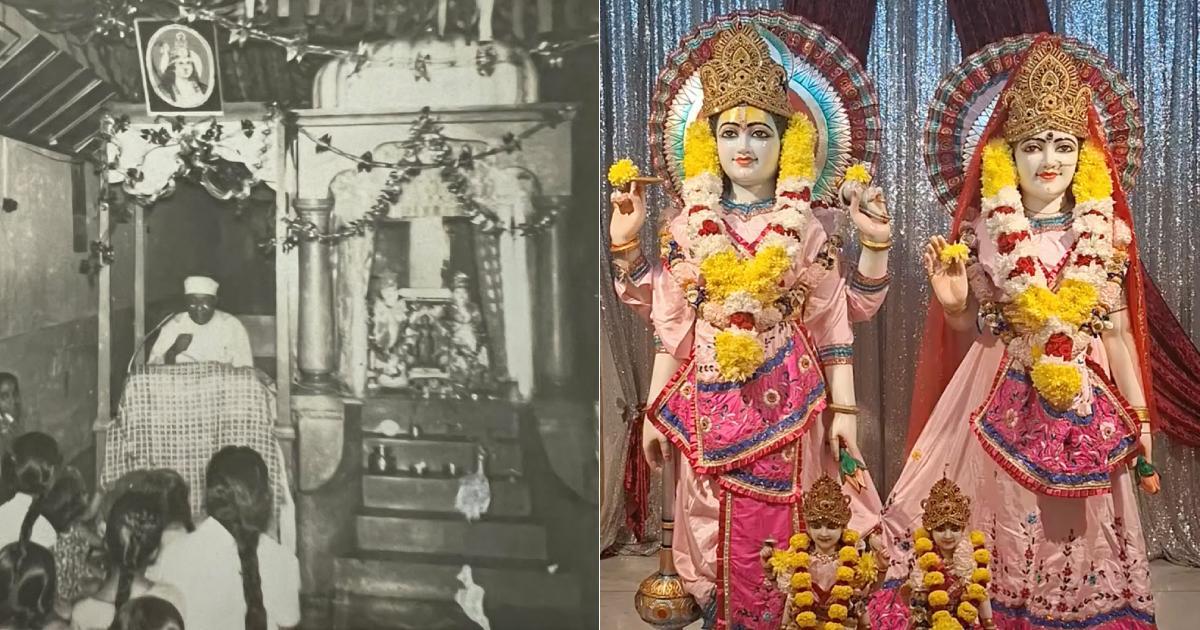 Cover image via Sadho Ram/SAYS
Follow us on Instagram, TikTok, and WhatsApp for the latest stories and breaking news.
Shree Lakshmi Narayan Temple in Kuala Lumpur has come a long way from the days when its Navratri celebrations drew just 200 to 300 people and had to be held at a nearby Tamil school because the temple lacked space
Today, the annual festival attracts between 1,000 and 2,000 people a night, according to Rajesh Kumar, the temple's newly elected president and longtime chairman of its Navratri celebrations.
The festivities now take place at the temple's grounds in Kampung Kasipillay, where devotees gather for prayers and Garba and Dandiya nights, vibrant traditional dance celebrations held during the nine-night Hindu festival of Navratri, honouring Goddess Durga.
But the growth of Navratri is only part of the story. The temple itself has moved from a small wooden structure in Gombak Lane to a permanent home that continues to expand more than a century after its founding.
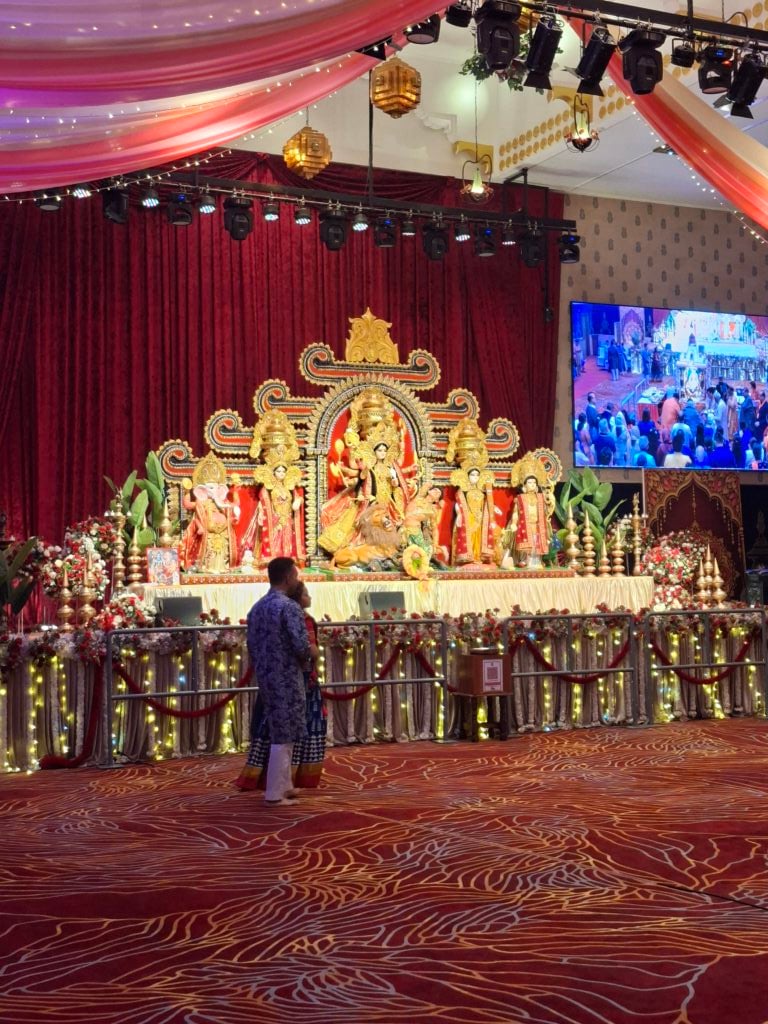
The statue of Goddess Durga installed at the Shree Lakshmi Narayan Mandir Kuala Lumpur during the Navratri festival.
Image via Sadho Ram/SAYSNavratri celebrations in Malaysia began in Gombak Lane in 1965
According to Rajesh, the Gujarati community began organising Navratri celebrations in Malaysia in 1965, when the temple was still based in Gombak Lane, near what is now Kuala Lumpur City Hall (DBKL) in Jalan Raja Laut.
The small wooden temple could not accommodate the growing celebrations, so organisers moved them to SJKT Appar near Jalan Raja Laut in 1973.
Even after the temple relocated to Kampung Kasipillay, Navratri continued at the school because there was insufficient space at the temple's temporary premises. Punjabi and Sindhi devotees subsequently joined the celebrations, broadening the festival's reach.
The breakthrough came in the early 1980s, when the temple's permanent building was completed. Rajesh said Datuk Seri Makhanlal Saigal, who acquired the land and built the temple, encouraged organisers to hold the Garba celebrations on the temple grounds.
"Look, just combine the Gujarati Garba to the temple because we have space," Rajesh recalled him saying during an interview with SAYS.
Navratri moved to the present temple grounds in 1983. That makes 2026 the 43rd year the festival has been held at the site, and the 62nd year since the celebrations began in Malaysia.
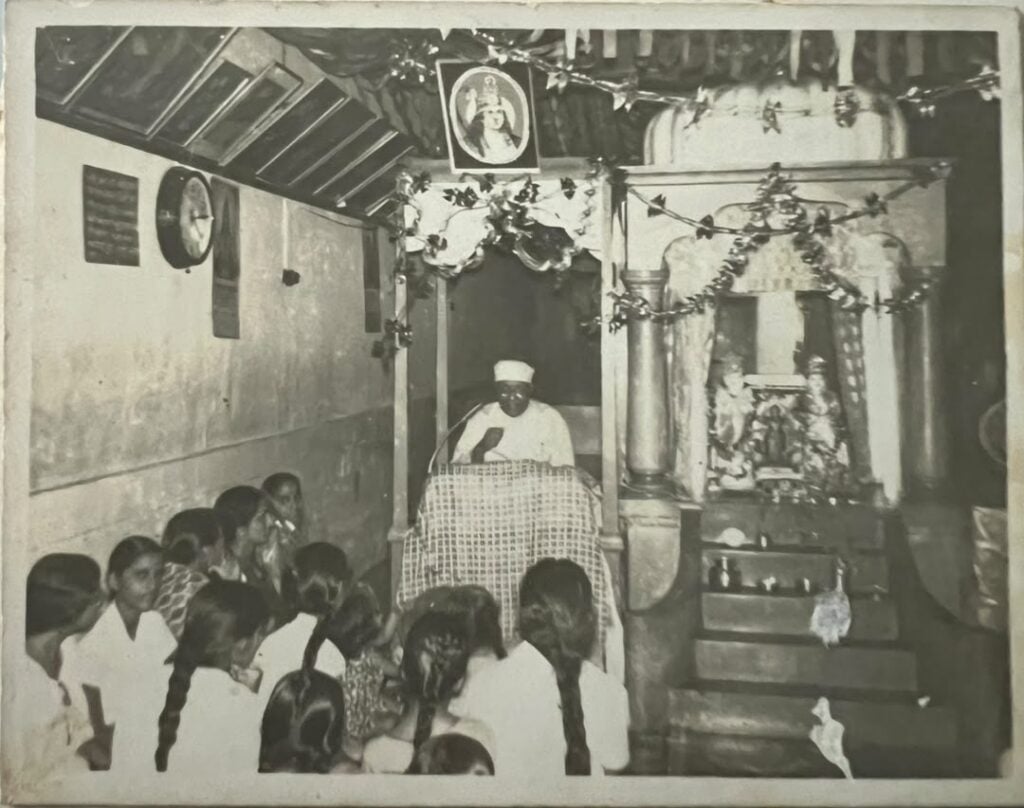
Shree Lakshmi Narayan Temple at Gombak Lane in its earlier days.
Image via Provided to Sadho Ram/SAYSFrom a few hundred devotees to thousands every night
Rajesh has chaired the Navratri celebrations for around 15 years, but his connection to the festival began in childhood. He initially helped with the music before becoming more involved in organising the event alongside his family.
He has since watched the gathering grow substantially.
"From a number of 200 to 300 people has now reached 1,000 to 2,000 people," he said.
The temple's newer Raj Bagri Hall provides additional space for major events.
According to Anil Sharma, the temple's vice-president, the hall can accommodate around 500 seated guests and is also used for weddings and other community functions.
The wider temple complex is undergoing further development, with plans to complete its frontage, improve the car park, and upgrade the kitchen.
Despite the larger crowds, Rajesh said the organisers remain committed to putting religious observance first.
"Being outside India, for all these 62 years, we have still followed the culture of prayers first, and then the Garbas, and then the aarti," he said.
"We emphasise a lot on prayers."
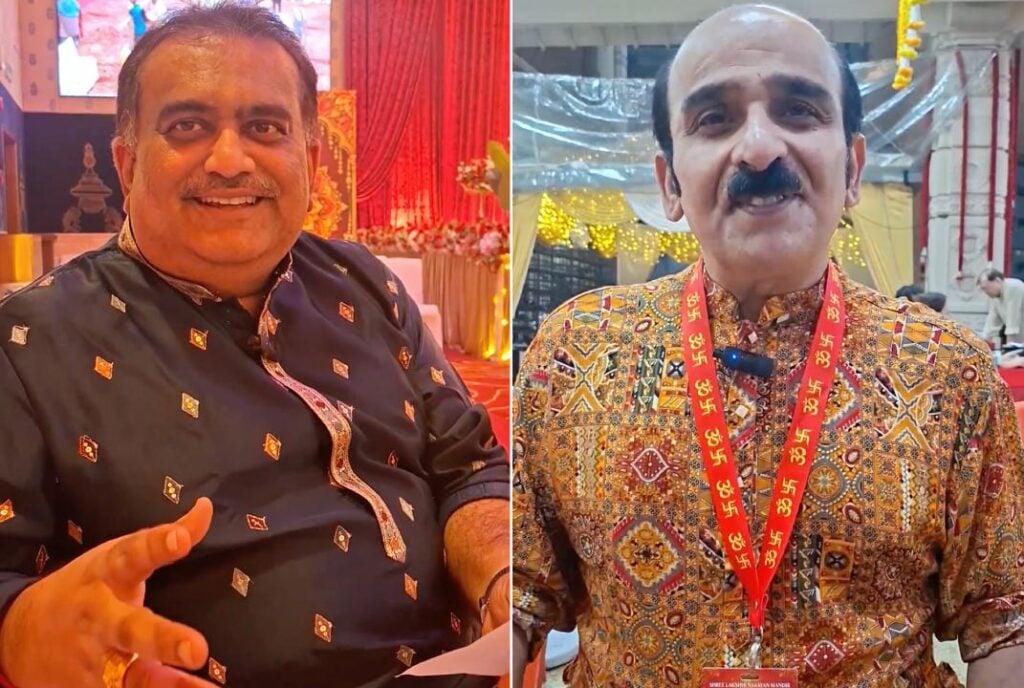
Rajesh Kumar and Anil Sharma.
Image via Sadho Ram/SAYSA gathering place for different communities
Although Navratri has distinct regional traditions across India, the celebrations at Shree Lakshmi Narayan Temple bring together people from several North Indian communities, including Gujaratis, Punjabis, and Sindhis.
Rajesh said the temple strives to make everyone feel welcome, regardless of their community background.
"I think, basically, I would say all the Northern Indian community, they love this place because we are like one family," he said.
"We don't separate anything by religion or any one community, be it Gujarati, Sindhi, or anyone else. It's all one home."
Attendance is free, he added, and visitors can come to pray, receive prasad, and participate in the festivities.
The temple also holds late-night prayers dedicated to Goddess Saraswati and Goddess Kali during Navratri. Rajesh said the number of people staying for these prayers has grown from around 10 when they were first introduced to approximately 500 today.
The Saraswati prayers take place late on Friday night, while the Kali Puja begins late on Saturday and continues into the early hours of Sunday.
For Rajesh, the growing turnout reflects the importance of maintaining the spiritual side of Navratri alongside its public celebrations.
A century of history, with more plans ahead
Anil said the temple is 105 years old.
When the community left Gombak Lane, it relocated to a house in Kampung Kasipillay, less than 500m from the present temple.
The original Lakshmi Narayan idols from that period are still kept at the temple, he said.
The present building took shape in the early 1980s and now houses around 14 idols, with Lakshmi Narayan as its principal deity.
Beyond religious observances, the temple distributes food on Tuesdays and Sundays and provides facilities for weddings, charitable activities, and other community events.
Anil said the hall is used by both North and South Indian communities.
For him, the temple's transformation has been remarkable. Having grown up with the community, he has witnessed its journey from Gombak Lane to its present home.
"I grew up seeing this temple from Gombak Lane, to where the house was, and today to see where we are, it's like I must say it's wow," he said.
He credited the generations who established and maintained the temple, and welcomed the younger generation's continued involvement.
"It is a blessing from our forefathers, our ancestors, who actually started all this," he said.
"And today it's good that we, as well as the younger youth, are carrying on all this."
