
Hindus In Malaysia Are Celebrating Navratri & Durga Puja. Here’s What You Should Know
Both festivals honour Goddess Durga and take place around the same time, but their rituals, food, and cultural traditions can look worlds apart.


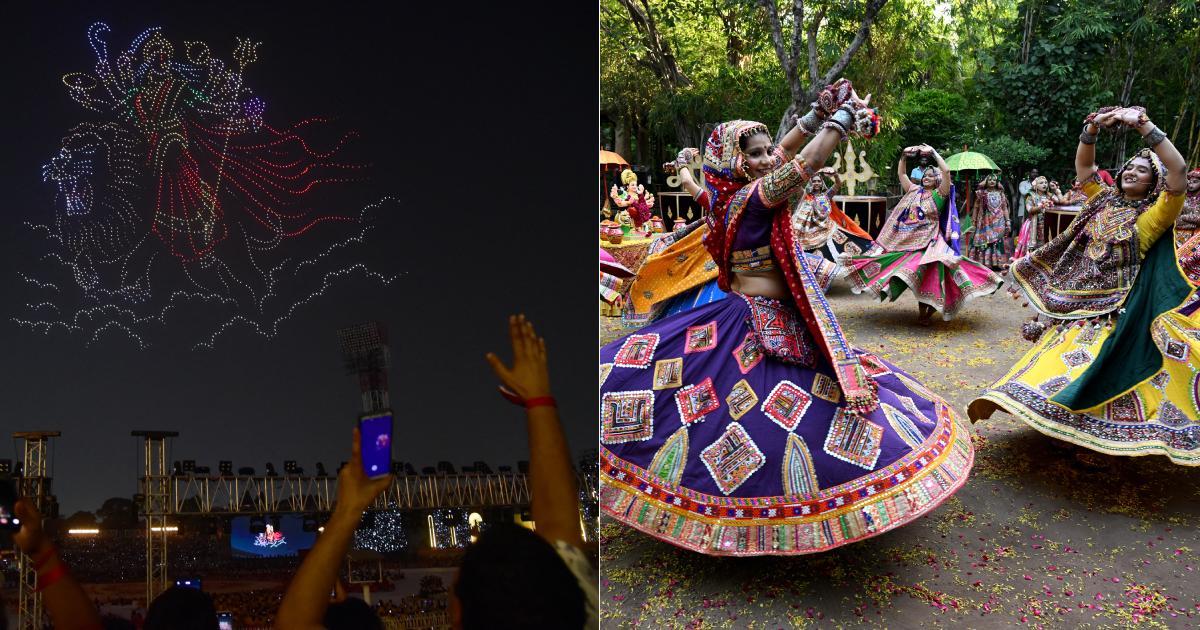 Cover image via Debajyoti Chakraborty/NurPhoto/AFP & Shammi Mehra/AFP
Follow us on Instagram, TikTok, and WhatsApp for the latest stories and breaking news.
If you walk into a Navratri celebration in Gujarat, you might find thousands of people dancing Garba late into the night
Walk into a Durga Puja celebration in West Bengal around the same time, and you could instead find enormous pandals (temporary structures), towering idols of Goddess Durga, the booming sound of dhaak (membranophone), and people eating plates of bhog (religious offerings).
Both are celebrations dedicated to the divine feminine, or Shakti.
So why do they look so different?
The short answer is that Navratri and Durga Puja are closely related but distinct traditions, shaped by different regions, communities, and interpretations of Goddess Durga.
They also overlap on the Hindu calendar, which is why the two are often mistaken for being the same festival.
Navratri is nine nights of worship
The word Navratri literally means "nine nights".
Sharad Navratri, the autumn festival observed across much of India, is dedicated to different manifestations of the Goddess over nine nights.
The festival is particularly prominent in northern and western India, although it is also celebrated in southern states.
Each day is traditionally associated with a different form of the Goddess, beginning with Shailaputri and continuing through the nine forms collectively known as the Navadurga.
For many devotees, fasting is an important part of the observance. Dietary rules vary, but people observing a vrat commonly avoid meat, eggs, onion, and garlic, while eating specific fasting foods instead.
But Navratri is not just about fasting and prayers.
In Gujarat, the festival comes alive through Garba and Dandiya nights. In parts of North India, it overlaps with Ramlila performances depicting the story of Lord Rama, culminating in Dussehra, the celebration of the victory of good over evil, marking the tenth day of the Hindu lunar month of Ashvina.
In Tamil Nadu and other parts of South India, families may mark the occasion with Golu, elaborate stepped displays of dolls and figurines.
In Malaysia, members of the Indian Malaysian community also celebrate Golu, with the Sri Thandayuthapani Temple in Sentul being one of the places where the tradition can be observed.
The same festival, therefore, has very different cultural expressions depending on where you are.
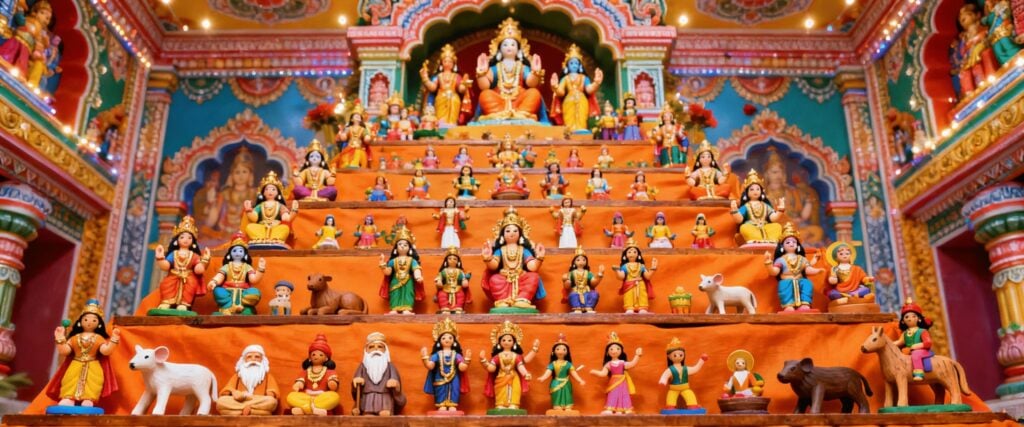
Golu festival.
Image via SanskritiDurga Puja focuses on Durga's victory over Mahishasura
Durga Puja is particularly associated with Bengal and eastern and northeastern India, especially Bihar, Jharkhand, West Bengal, Odisha, Assam, and Tripura.
Its central story is the battle between Goddess Durga and Mahishasura, the buffalo demon.
According to Hindu beliefs, Mahishasura had become so powerful that the gods could not defeat him. Durga was created through the combined powers of the gods and ultimately defeated him.
This victory represents the triumph of good over evil.
But in Bengal, there is another layer to the story that gives Durga Puja its distinctive emotional character.
Durga is also seen as Uma, the daughter of the Himalayas, returning to her parental home from Mount Kailash for a few days each year.
She is traditionally depicted arriving with her children, Ganesha, Saraswati, Lakshmi, and Kartikeya.
That makes Durga Puja not just a celebration of a warrior goddess defeating a demon, but also a story about a daughter coming home.
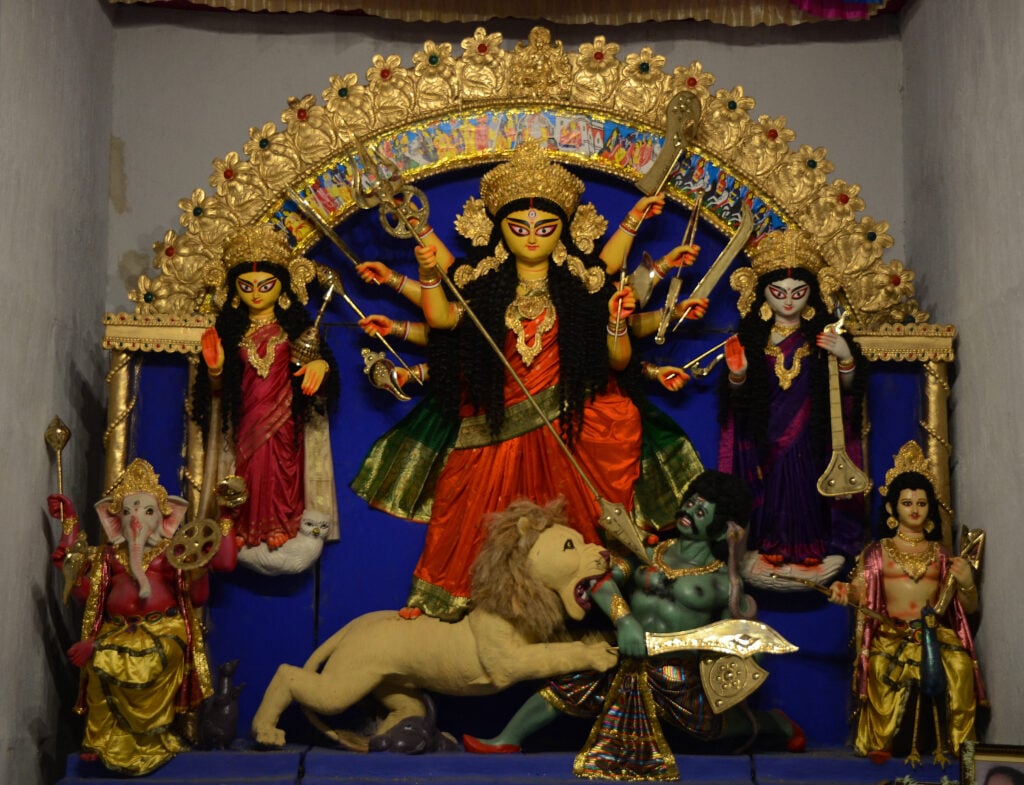
Durga Puja festival marks the victory of Goddess Durga over the evil buffalo demon Mahishasura . Thus, Durga Puja festival epitomises the victory of Good over Evil.
Image via Sonali Pal Chaudhury/NurPhoto/AFPThe biggest difference is what the celebrations look like
Navratri is spread across nine nights, with worship, fasting, and regional traditions forming the heart of the festival.
Durga Puja's most intense celebrations are concentrated around the final days of this broader festive period, beginning with Maha Shashti and continuing through Vijayadashami.
And visually, the difference is hard to miss.
Navratri can mean Garba circles, Dandiya sticks, temple prayers, and household rituals. Durga Puja means Durga idols, elaborate pandals, drums, cultural programmes, and huge community gatherings.
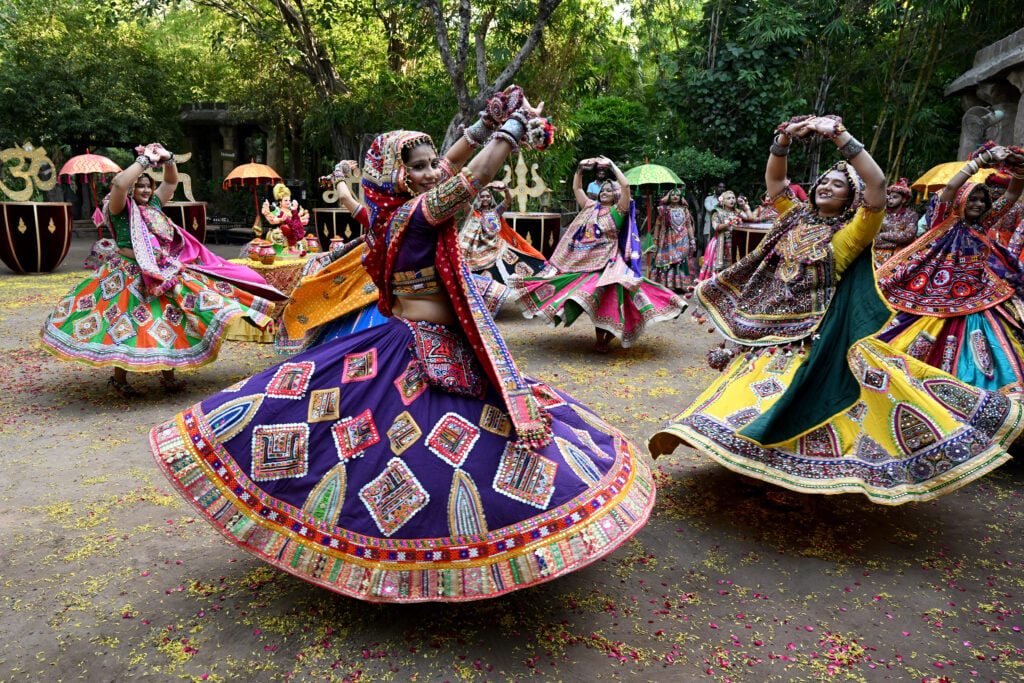
People in traditional dresses take part in a 'Garba' practice session ahead of the Hindu festival of Navaratri in Ahmedabad.
Image via Shammi Mehra/AFPWhat is a pandal?
A pandal is a temporary structure built to house the Durga idol during the festival.
In Kolkata, these can become enormous works of temporary architecture, with neighbourhoods and organisations spending months creating elaborate themes and designs.
A few years ago, a pandal replica of Malaysia's PETRONAS Twin Towers was built in Kalyani, West Bengal.
The structure, designed to resemble the KLCC, had 88 levels like the original Malaysian twin towers, although it stood at 45 metres compared with the real towers' 451-metre height.
People then travel from one pandal to another, turning the city into one giant public celebration.
The idol itself usually depicts Durga defeating Mahishasura, with her four children positioned alongside her.
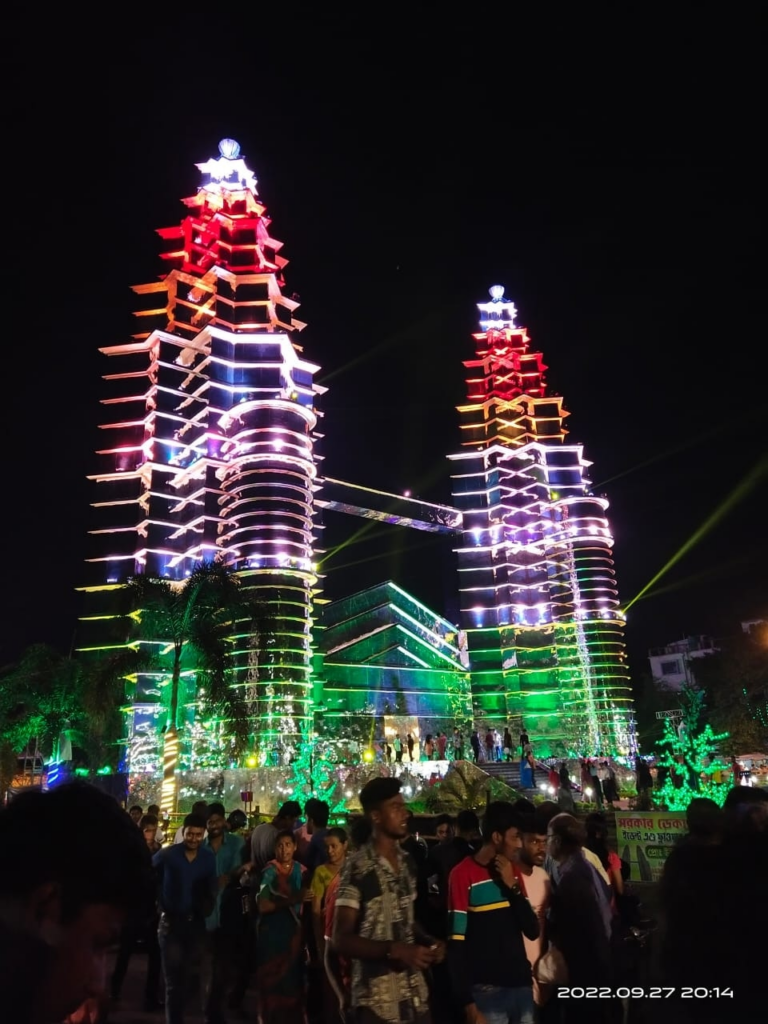
Malaysia's Twin Tower-themed Durga Puja pandal in West Bengal.
Image via India TodayThe sound of Durga Puja is different too
One of the defining sounds of Durga Puja is the dhaak, a large traditional Bengali drum. Its deep, powerful beats accompany major rituals and help create the distinctive atmosphere associated with the festival.
Another well-known tradition is Dhunuchi Nritya/Naach.
During this ritual dance, devotees hold clay vessels containing burning coconut husks and fragrant incense called dhuno while dancing to the rhythm of the drums.
It is energetic, smoky, and deliberately dramatic, a very different sensory experience from a Navratri Garba night.
Then there is the food
Food is another major difference between the two traditions.
For many people observing Navratri, the festival involves some form of dietary restriction or fasting. Meat, eggs, onion, and garlic are commonly avoided, although specific practices differ between communities.
Durga Puja, meanwhile, is closely associated with feasting in Bengali culture.
One of the most important traditions is bhog, food that is first offered to the Goddess and then distributed among devotees. A traditional bhog spread can include khichuri, a rice-and-lentil preparation; labra, a mixed vegetable dish; and payesh, a rice pudding.
Bengali Durga Puja celebrations can also include non-vegetarian food outside the ritual bhog, including fish and mutton dishes.
So while Navratri is often associated with restraint and fasting, Durga Puja is equally famous for bringing people together over food.
How the festivals are celebrated in Malaysia
The distinction is also visible in Malaysia, where both Navratri and Durga Puja are celebrated by different Indian communities.
Navratri is observed at Hindu temples and within communities across the country, with prayers and special rituals taking place over the nine nights. Malaysian Gujarati and North Indian communities also organise Garba and Dandiya events.
Durga Puja is more closely associated with Malaysia's Bengali community.
Because the Bengali community here is much smaller than in India, Malaysian celebrations tend to be concentrated around community-organised venues rather than the huge neighbourhood pandal culture seen in eastern India.
The scale may be different, but many of the defining elements remain: the Durga idol, dhaak, bhog, cultural performances, and the eventual farewell to the Goddess.
The final day tells another story
Both traditions culminate around Vijayadashami, but the way the day is experienced can be very different.
In many parts of North India, Dussehra is marked by the burning of large effigies of Ravana, symbolising Rama's victory over him.
For Durga Puja, the focus is instead on Goddess Durga's victory over Mahishasura and her departure from Earth.
Before the idol is immersed, married women traditionally take part in Sindoor Khela, applying red vermilion, or sindoor, to Durga and to one another.
The ritual is associated with wishes for marital well-being and prosperity.
The idol is then taken for visarjan, or immersion, marking Durga's return to her divine home.
That farewell is particularly poignant because of the homecoming story at the heart of Bengali Durga Puja: the daughter has arrived, spent a few days with her family, and now has to leave again.
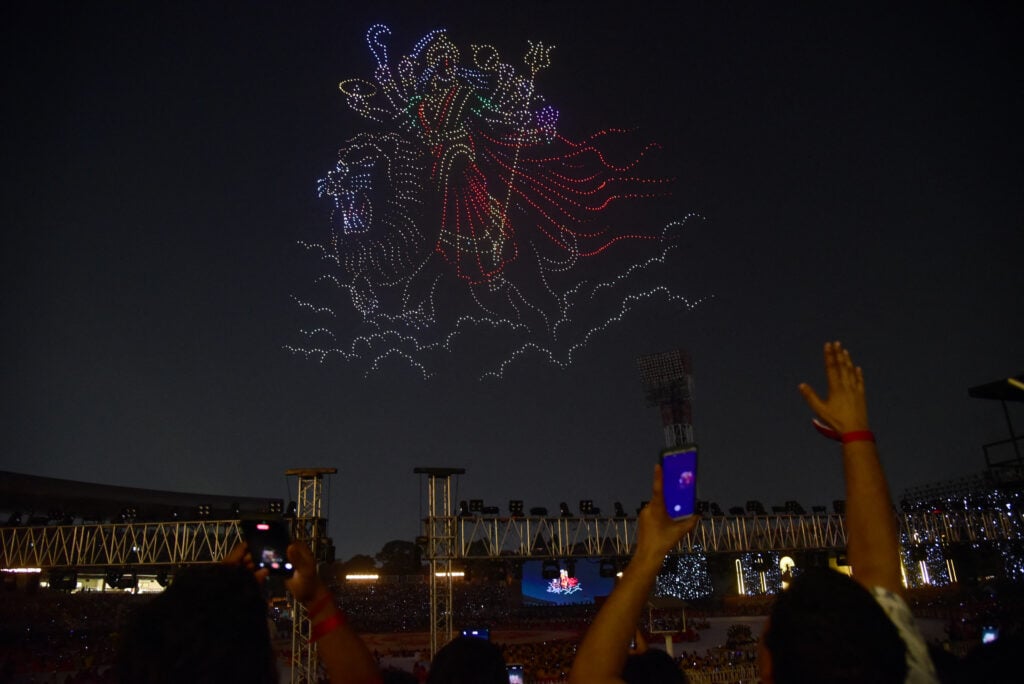
A drone show titled 'Mahisasur Maddini' is displayed during the Grand Mahalaya and Durga Puja celebration at Eden Gardens cricket stadium in Kolkata, India, on 10 October, 2026.
Image via Debajyoti Chakraborty/NurPhoto/AFPSo, are Navratri and Durga Puja the same thing?
They are connected, but they are not interchangeable.
Both are part of India's wider autumn festival season, and both involve devotion to Goddess Durga and the divine feminine.
But their emphasis is different.
Navratri centres on nine nights of worship and the different forms of the Goddess, with regional traditions such as fasting, Garba, Dandiya, Ramlila, and Golu shaping how it is celebrated.
Durga Puja centres on Durga's battle with Mahishasura, while Bengali tradition adds the deeply personal story of Durga returning home as a daughter and mother.
That is why the same Goddess can inspire a night of Garba in Gujarat, a Golu display in Tamil Nadu or a five-day celebration surrounded by pandals and dhaak in Kolkata.
They are different expressions of the same broad religious and cultural world, and that difference is precisely what makes India's festive traditions so varied.
Important dates:
Navratri in 2026 will be celebrated from 11 to 20 October, and Durga Puja takes place from 17 to 21 October.
