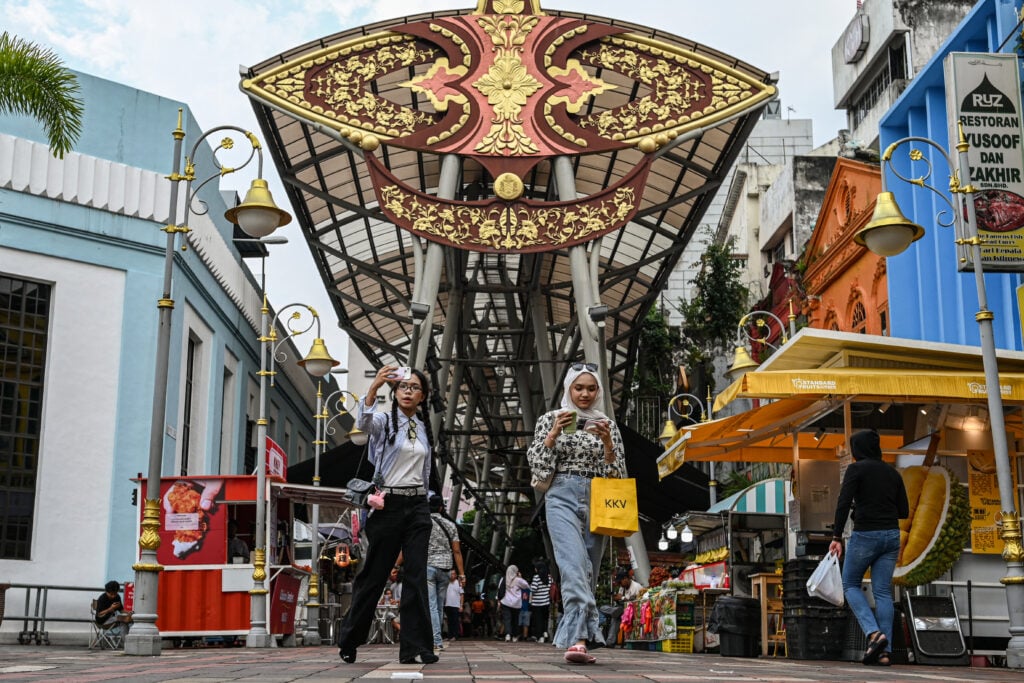
1 In 5 Malaysian Jobs Is Now Linked To Tourism, Latest DOSM Data Shows
DOSM says 3.66 million people were employed in tourism-related industries in 2025, with retail and F&B accounting for nearly three-quarters of those jobs.


 Cover image via Jam Sta Rosa/AFP
Follow us on Instagram, TikTok, and WhatsApp for the latest stories and breaking news.
Tourism is not just a major source of spending for Malaysia; it's also supporting more than one in every five jobs in the country
The Department of Statistics Malaysia (DOSM), in its Tourism Satellite Account 2025 Report today, 15 September, found that 3.66 million people were employed in tourism-related industries in 2025, equivalent to 22.1% of Malaysia's 16.6 million-strong workforce.
That was the highest share recorded in the 2019–2025 period, up from 21.6% in 2024 and 21.4% in 2023.
Tourism-related employment also grew by 3.5% last year, adding around 123,000 jobs.
But the numbers reveal something less obvious about Malaysia's tourism economy: most of these jobs are not in hotels, airlines, or travel agencies.
Retail and F&B account for most tourism jobs in Malaysia
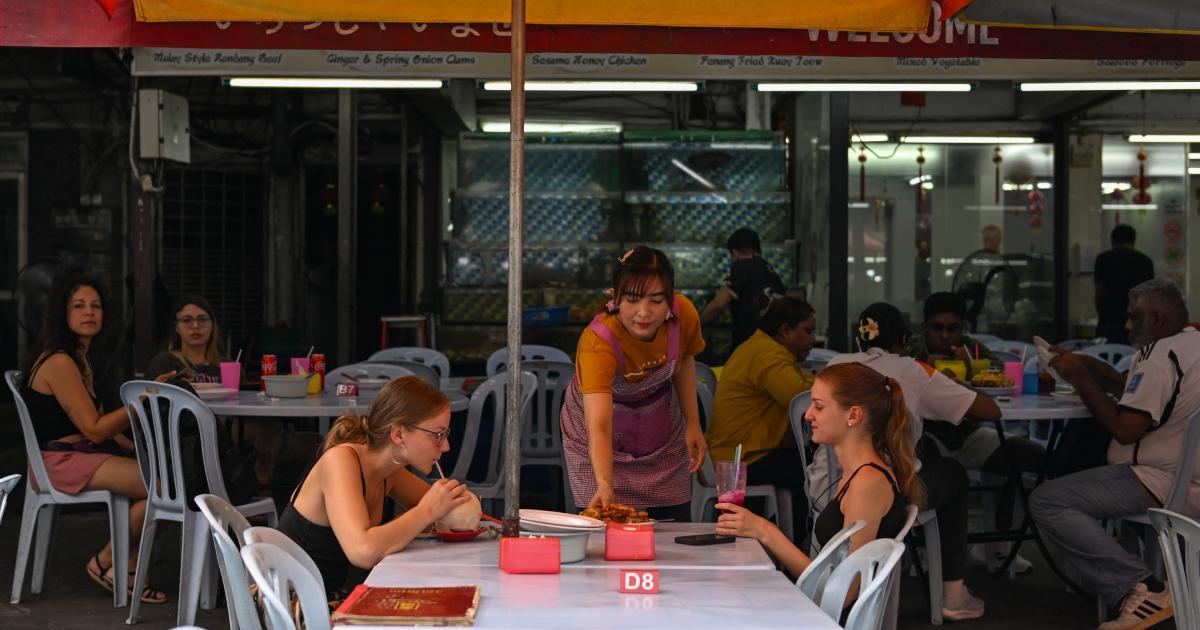
Of the 3.66 million people employed in tourism-related industries, 1.39 million worked in retail trade, while another 1.34 million worked in food and beverage serving services. Together, the two sectors accounted for 2.73 million jobs, or 74.6% of all tourism employment in Malaysia.
Accommodation services, by comparison, accounted for 241,400 workers, or 6.6% of the tourism workforce. Passenger transport employed another 182,200 people, while cultural, sports, and recreational services accounted for 58,600.
The figures show that Malaysia's tourism labour market is closely tied to everyday commerce and services.
A tourist spending money at a shopping centre or eating at a restaurant is contributing to the tourism economy, and the jobs supported by that spending can sit far beyond the traditional hospitality sector.
Meanwhile, the travel agent is becoming a much smaller part of tourism
One of the clearest signs of how the industry has changed is the relatively small workforce in travel agencies and reservation services. Just 30,200 people were employed in the sector in 2025, representing 0.8% of tourism employment.
That was an improvement from the 23,600 recorded in 2022, but still well below the 40,700 workers recorded in 2019. The contrast is notable because Malaysia recorded 42.2 million visitor arrivals in 2025.
In other words, the number of people travelling to Malaysia has grown substantially, while the workforce in traditional travel agencies has not returned to its earlier size.
The figures are consistent with a tourism market in which travellers increasingly make bookings and arrangements directly through digital platforms rather than relying on traditional agents.
Tourism is becoming a bigger part of Malaysia's labour market
Tourism employment fell during the early years of the period covered by DOSM, from 3.32 million workers in 2019 to 3.18 million in 2020, and 3.22 million in 2021. It then began expanding again, reaching 3.38 million in 2023, 3.54 million in 2024 and 3.66 million in 2025.
Growth has moderated from the 4.9% recorded in 2023 and 4.6% in 2024 to 3.5% last year. But the sector's share of the overall workforce has continued to rise.
At 22.1%, tourism-related industries now account for more than one in five jobs in Malaysia. That makes tourism not merely a visitor economy, but a significant part of the country's wider employment base.