
He Left His RM40,000-A-Month Job To Sell Hokkien Mee. Now He Works Longer Hours But Says He’s Happier
The former software engineer took a huge pay cut and gave up CPF contributions, but says the freedom is worth it.


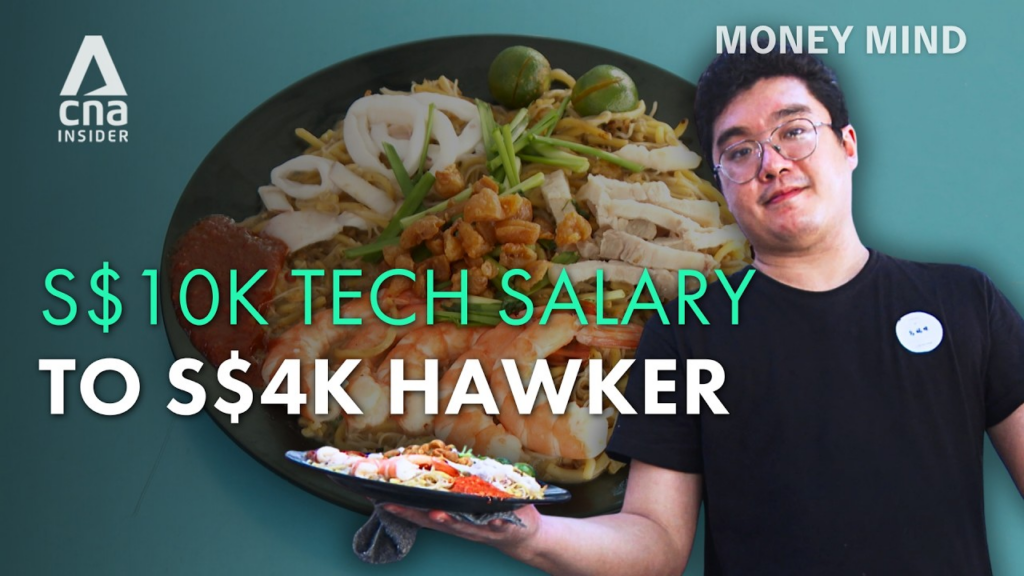
 Cover image via @CNAInsider (YouTube)
Follow us on Instagram, TikTok, and WhatsApp for the latest stories and breaking news.
Leaving a high-paying job is one thing
Walking away from a salary of SGD10,000 (around RM40,000) a month, knowing you'll earn far less while working longer hours, is another.
But that's exactly what Singaporean Alvin Tan did.
Tan said seeing his former company retrench around 10% of its workforce convinced him it was time to leave on his own terms rather than wait for circumstances outside his control.
"If I were to be kicked out by someone, how about I just be kicked out by myself?" he said.
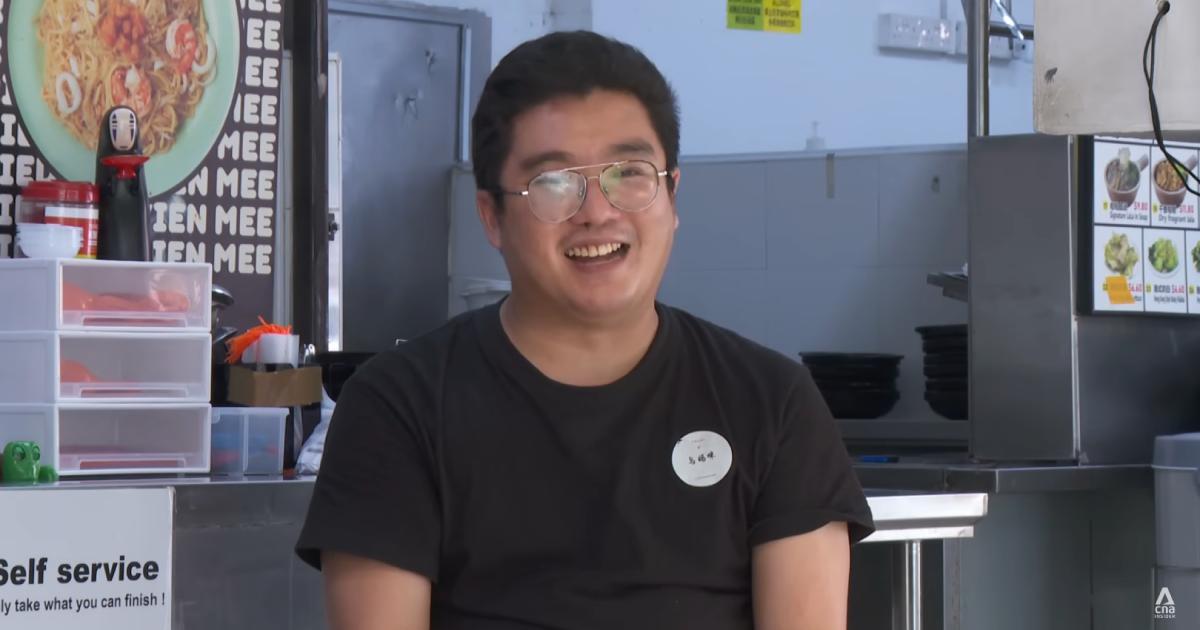
The former software engineer left his five-figure tech salary to open a Hokkien Mee stall called Umami, where he now takes home roughly SGD3,000 to SGD4,000 (about RM9,500 to RM12,700) a month, around a third of what he previously earned.
Speaking to CNA Insider's Money Mind, Tan openly shared the financial reality behind his career switch, explaining why he believes owning his own business is ultimately more rewarding despite the sacrifices.
He didn't jump straight into opening a hawker stall
Contrary to what many might expect, Tan didn't quit his job and immediately invest heavily in a food business.
Instead, he approached the venture the same way he would develop software.
He first cooked Hokkien Mee at home and gave it away for free to gather feedback before selling it at food events to see whether customers would actually pay for it.
Only after gradually building confidence did he open his own stall.
"I also believe that I can do what I do in software and apply it to what I do in business," he said.
"You start small and slowly build it into a proper product."
Looking back, Tan said his biggest mistake wasn't perfecting the recipe but failing to understand the numbers behind the business.
When he first gave away free plates, he focused solely on making the best Hokkien Mee possible without considering food costs or profit margins.
He later realised that even a well-received dish has to fit within what customers are willing to pay if the business is to survive.
His stall makes SGD19,000 a month, but that's nowhere near what he earns
One of the biggest misconceptions people have about running a food business, Tan said, is confusing revenue with income.
Today, his stall generates up to SGD19,000 (around RM61,000) in monthly sales.
But nearly half of that goes towards ingredients, before rent, utilities, and manpower costs are even factored in.
Once everything is paid, Tan keeps around 20%, leaving him with a monthly income of about SGD3,000 to SGD4,000.
Tan said he only starts paying himself after selling around 45 plates each day. Everything sold after that effectively becomes his income.
The journey wasn't smooth either.
During the first few months, he often failed to sell enough food to cover costs and sometimes had to throw away unsold ingredients.
"There were also days that I threw away a lot of my ingredients, which felt very sad," he recalled.
"But I think once you get through that phase, you get more regulars, you get more people knowing your stall, I think that's where the magic starts."

Rising costs mean his own income takes the hit
Tan currently sells his Hokkien Mee for SGD6 and SGD8 (RM20 and RM25) a plate.
However, he said increasing costs, especially prawns and cooking gas, have steadily reduced what he takes home.
Instead of immediately increasing prices, he has chosen to absorb those costs himself.
"It can only eat into what you take home," he explained.
If his income falls below what he considers sustainable, only then would he consider raising prices.
Today, the stall sells around 100 plates daily and is profitable.
Even so, Tan said growing further will eventually require hiring permanent staff, which would once again reduce his own earnings in the short term.
He no longer receives employer Central Provident Fund (CPF) contributions
Leaving salaried employment also changed the way Tan manages his finances.
As a self-employed hawker, he no longer receives employer CPF contributions, Singapore's version of Malaysia's Employees Provident Fund (EPF).
He admitted he is not currently contributing to his CPF, although he plans to begin making minimum contributions in preparation for financing his upcoming Build-To-Order (BTO) flat.
He also acknowledged that his decision may not suit everyone.
Because he lives relatively simply and isn't planning to have children, he feels he has greater flexibility to take financial risks than someone supporting a family.

His next challenge isn't finding customers; it's finding the right person
Selling around 100 plates a day has made the business profitable, but Tan believes the next stage of growth will depend on bringing someone else on board.
However, he isn't simply looking for another employee.
"I can't do this alone," he said.
"I will definitely need someone that I can trust to walk this journey with me as well… not just as a worker, but someone who can see this as something that can be pushed even further in the future."
At the moment, Tan says he can afford to hire a part-time worker, but bringing on a full-time employee remains financially out of reach.
He acknowledged that expanding the business would temporarily reduce his own take-home income, but believes it's a necessary investment if he wants to meet growing demand.
"If my business is growing, demand is growing, but I'm unable to match the demand, I would not earn that amount of money and I would still stay at the same spot," he explained.
He earns less, works more and sleeps less, but says the freedom is worth it
Tan doesn't sugarcoat what entrepreneurship has cost him.
Compared with his previous career, he now works significantly longer hours, gets less sleep and spends less time with family and friends.
Rather than describing those sacrifices negatively, however, he views them as the "opportunity cost" of building something he owns.
He even joked that entrepreneurship isn't necessarily easier than corporate life.
"You won't get retrenched," he laughed.
"You will only suffer a more miserable fate."
Despite that, Tan believes the trade-off has been worthwhile. He said the biggest difference isn't the money but the control that comes with running his own business.
Instead of navigating office politics or worrying about decisions made by others, he can make changes immediately, learn from his own mistakes and continually improve the business.
For him, that's a freedom his previous career couldn't offer.
"That freedom actually can be quite fulfilling and satisfying," he said.
"You finally made it after so many hours of hard work. That is magical."
Watch Alvin Tan's interview here:
Read more trending stories on SAYS
“Red Means Go” — This Short Film Reminds M’sians To Keep Moving Forward Amid Life’s Challenges
It doesn't matter if you're expanding your business, starting your family, or saving up for the future.
