
Why Do Multiplication Tables Almost Always Stop At 12 × 12?
"Yi yi yi, yi er er."


 Cover image via Canva Teams
Follow us on Instagram, TikTok, and WhatsApp for the latest stories and breaking news.
Many Malaysians remember learning multiplication tables differently
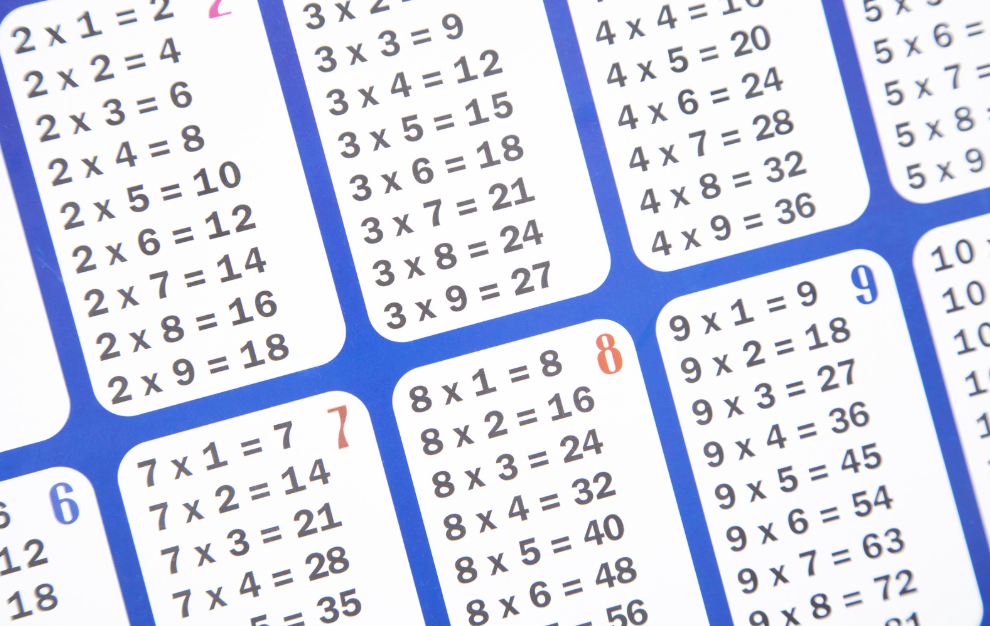
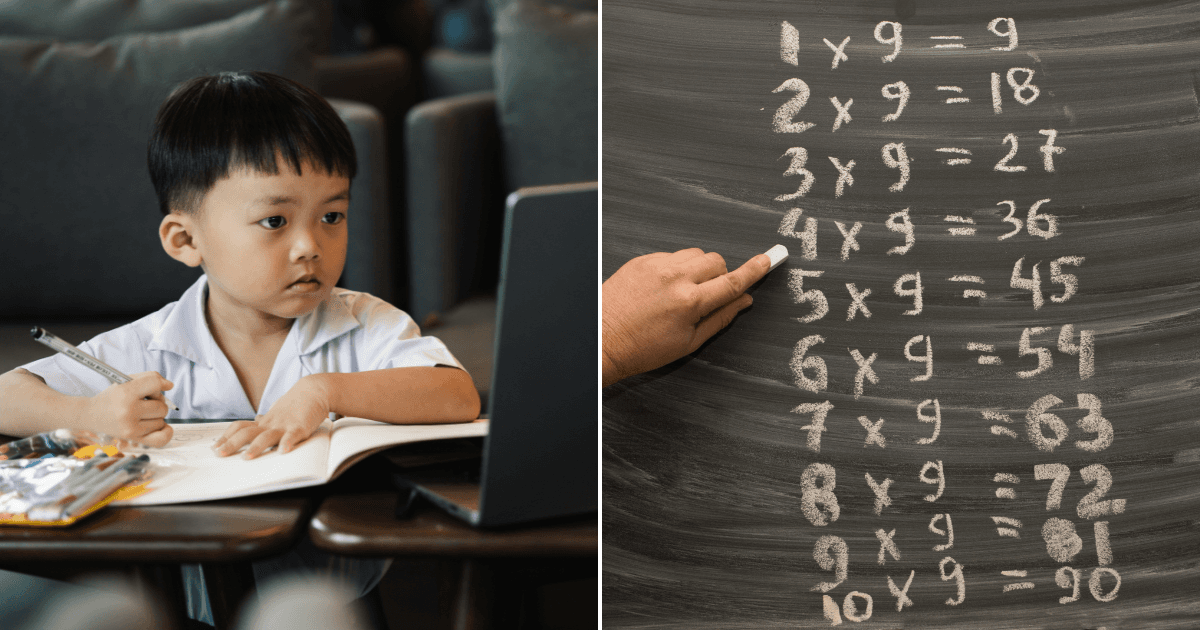
Those who attended Chinese primary schools may recall reciting "yi yi yi, yi er er" aloud each morning. Others remember practicing with flashcards, or memorising multiplication charts by visualisation.
But whether you studied in a national school, a vernacular school, or an international school, the multiplication table often ends at 12 × 12.
The reason is not that mathematics stops there.
Instead, 12 was a practical standard deeply connected to how people measured, traded, and kept time for centuries.
1. The number 12 was once everywhere in daily life
Before modern decimal systems became dominant, many everyday calculations involved groups of 12.
For example:
- 12 inches = 1 foot
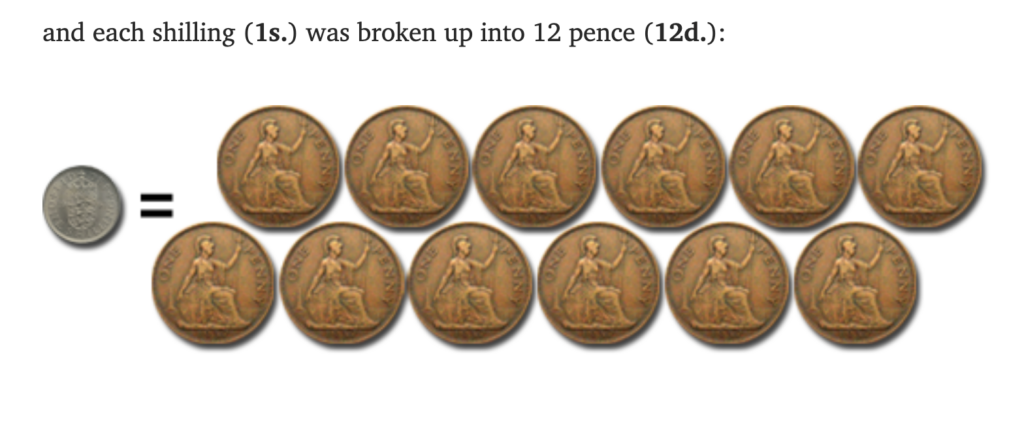
- 12 pennies = 1 shilling in old British currency
- Eggs were commonly sold by the dozen
- Large quantities were sold by the gross, which equals 144 (12 × 12)
ㅤ
This mattered because people had to calculate prices, lengths and quantities mentally. Knowing the 12 times table was as practical then as knowing percentage discounts is today.
Malaysia inherited many British systems during the colonial period. We only began transitioning to the metric system in 1972, which replaced former British Imperial and traditional Malay units.
2. Time still follows a 12-based pattern
Hours
12 hours appear on a standard clock face.
Months
12 months make up one calendar year.
Day
24 hours make up one day. 2 × 12 hours
Half-day
12 hours make up half a day.
ㅤ
Look at a clock and you can still see the legacy of 12. Because timekeeping remains universal, the number 12 continues to feel familiar and useful. A child who knows the 12 times table can quickly work out things like:
- 12 × 5 = 60 minutes
- 12 × 2 = 24 hours
- 12 × 30 ≈ 360 days
3. Twelve is mathematically convenient
One reason mathematicians have long favoured 12 is that it has many divisors.
Why 12 is easier to split
10 divides cleanly by
1, 2 and 5
12 divides cleanly by
1, 2, 3, 4 and 6
Because 12 has more whole-number divisors, common fractions of 12 are easier to calculate mentally.
Half of 12
6
One-third of 12
4
One-quarter of 12
3
ㅤ
This is much cleaner than trying to divide 10 into thirds or quarters. Historically, that made calculations involving sharing, trading and measuring far easier.
4. Modern education kept the old standard
Even after countries adopted decimal currencies and metric measurements, the 12 × 12 multiplication chart remained embedded in educational systems.
In England, for example, pupils are expected to know multiplication tables up to 12 × 12 by the end of Year 4. Because many international schools in Malaysia follow British or British-influenced curricula, the same benchmark is commonly used here.
Meanwhile, Malaysia's national curriculum focuses on multiplication fluency, but schools may teach it using different methods:
Different classroom approaches
-
National schools (SK)
Teaching may emphasise conceptual understanding, arrays, repeated addition and problem-solving.
-
Vernacular schools
Lessons may place stronger emphasis on memorisation and oral recitation of multiplication facts.
-
International schools
Methods vary by curriculum but may include visual multiplication grids and mental-maths strategies.
ㅤ
So why not stop at 10?
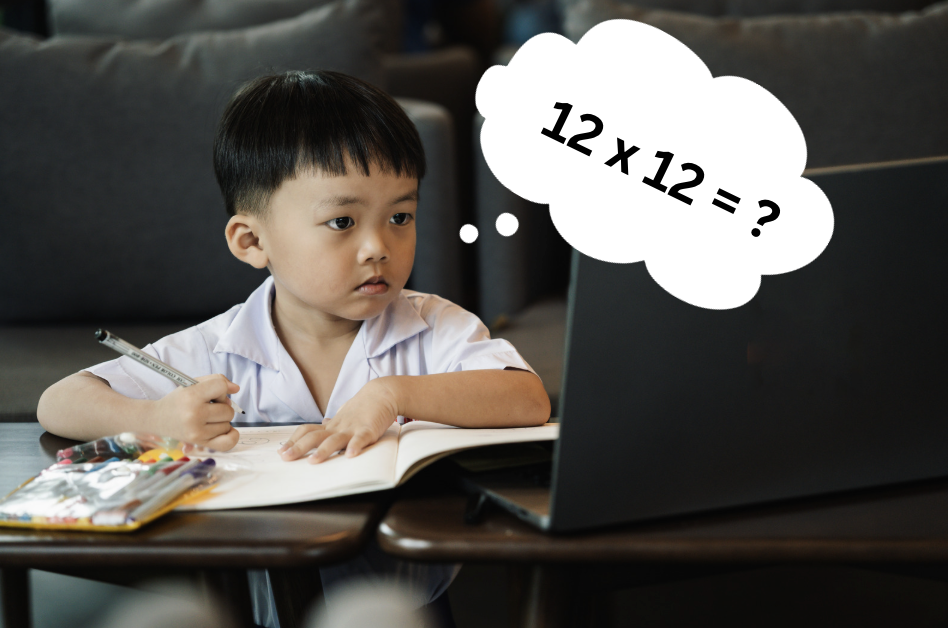
A common question is: If we now use a base-10 number system, shouldn't multiplication tables end at 10?
Standard Anglo-American classrooms traditionally stop at 12 x 12, but many schools in continental Europe stop at 10 x 10 because they are fully metric. Conversely, parts in South Asia like India, Bangladesh, and Pakistan require students to memorise grids up to 30 x 30 to supercharge raw mental computation speeds.
All in all, knowing the 10 and 11 times table is relatively easy because it follows a simple pattern. The 12 times table serves as the first real structural test to combine mental groups, and provides access to many practical calculations involving time, dozens, and fractional divisions.
