
Budget 2027: Who Benefits, Who Pays More, And What Malaysians Should Watch Out For
Higher wages, tax savings, and cash credits offer some financial relief, but new employer costs, higher taxes for millionaires and tighter regulations could bring trade-offs.


 Cover image via Agoes Rudianto/Anadolu/AFP
Follow us on Instagram, TikTok, and WhatsApp for the latest stories and breaking news.
Belanjawan 2027 has plenty of measures that could leave Malaysians with more money in their pockets, from lower income taxes to higher wages and cash assistance for adults who do not qualify for targeted aid
But not everyone stands to benefit in the same way.
While workers and some households could get additional financial breathing room, businesses will have to contend with higher wage obligations, high-income earners will face a higher tax rate, and new regulations could change how companies pay employees, transport operators work, and overseas shopping platforms operate.
Here is a closer look at who stands to gain from Budget 2027, who could face additional costs, and what Malaysians should watch as the measures are implemented.

1. The middle class gets tax relief, but the savings will vary
One of the more significant changes for middle-income taxpayers is the increase in basic individual tax relief from RM9,000 to RM12,000.
The government will also cut income tax rates by one percentage point for taxable incomes between RM70,000 and RM150,000.
Around five million taxpayers could receive up to RM1,600 in additional disposable income from the changes. However, the actual savings will depend on taxable income, eligibility for the reliefs, and how much each person can claim.
The expanded tax reliefs cover a broader range of expenses, including AI software subscriptions, sports shoes, postnatal care, pet adoption fees from registered shelters, and care expenses for parents and grandparents.
For people juggling housing payments, groceries, transport, and family expenses, these changes could provide some financial breathing room.
High earners will face a different outcome
While some taxpayers will benefit from lower rates, wealthy individuals earning more than RM1 million annually will face an adjusted income tax rate of 30%.
That creates a clear contrast within the same budget: some taxpayers will receive tax relief, while the highest earners will face a higher rate.
For most middle-income households, the practical question is how much they can actually save after accounting for their income and eligible expenses. For those in the highest income bracket, the focus will be on the additional tax liability.
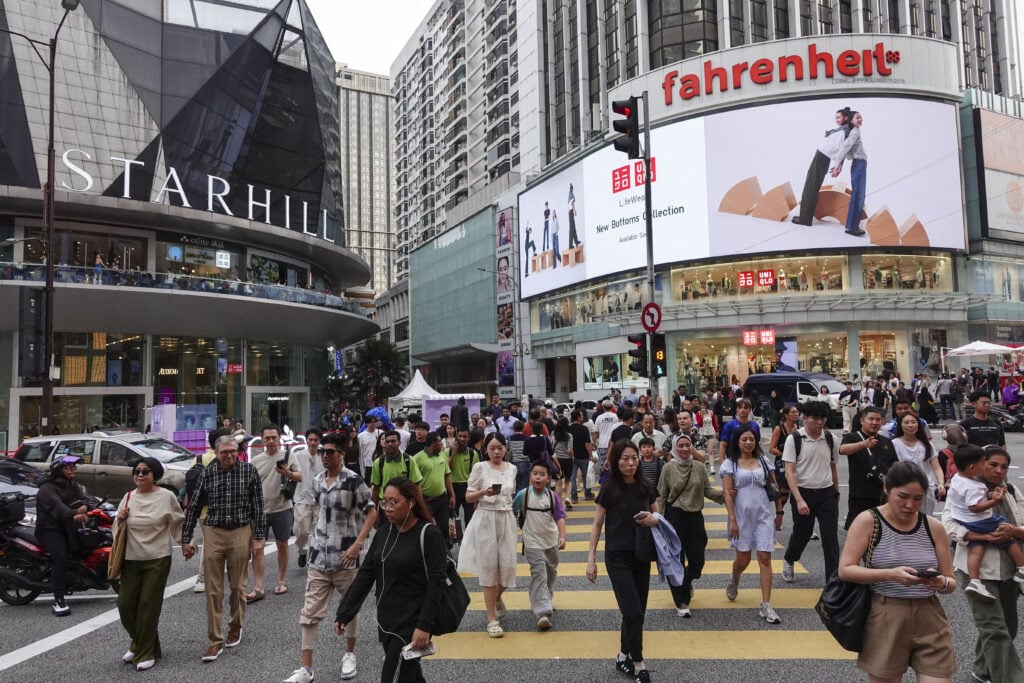
Pedestrians are seen at Bukit Bintang shopping area in Kuala Lumpur.
Image via Agoes Rudianto/Anadolu/AFP2. Workers could earn more, but employers will face higher wage costs
The minimum wage will rise from RM1,700 to RM2,000 per month from June 2027. The government has also announced a RM2,500 monthly minimum salary baseline for semi-skilled positions and fresh university graduates.
For workers currently earning the minimum wage, the increase represents an additional RM300 a month before deductions. The higher salary baseline could also improve starting-pay expectations for eligible graduates and semi-skilled workers.
But higher wages also mean higher payroll costs for employers.
Businesses with sales revenue below RM50 million are exempt from the minimum wage increase under the announced arrangements. Other businesses will need to prepare for the higher wage floor, adding to expenses such as rent, utilities, supplies and staffing.
Some employers may absorb the additional costs. Others could respond by changing staffing arrangements, adjusting their budgets or raising prices.
That means the wage increase could have two effects on household finances: workers who qualify may earn more, while consumers could face higher prices if businesses pass some of their additional costs on to customers.
Whether that happens, and by how much, remains uncertain. The outcome will depend on each business's margins, operating costs, competition, and ability to absorb the increase.
The government has also imposed a new condition on non-MSME companies claiming tax deductions for employee wage expenses: payments must go through prescribed banking channels in accordance with the Employment Act 1955.
This places greater emphasis on documented payroll payments and could create additional compliance work for businesses that have relied on informal arrangements.
3. Gig workers get support, but the details matter
E-hailing drivers and delivery riders are also among the groups targeted by Budget 2027.
A RM160 million joint package involving the government and Grab is expected to support gig workers through vehicle maintenance, insurance and PERKESO contributions. The announced measures could increase net monthly income by up to RM227 for e-hailing drivers and RM100 for p-hailing delivery riders.
The government will also match 35% of social security contributions for gig workers, with the rate rising to 50% when their platforms contribute as well.
This support matters because gig workers often have to cover the costs of earning their income themselves, including fuel, vehicle maintenance, and insurance.
However, the announced maximum income boosts should not be interpreted as guaranteed monthly payments for every driver or rider. The actual benefit will depend on eligibility and how the package is implemented.
For workers in this sector, the important question is how much of the assistance translates into money retained after operating expenses, rather than simply how much support is announced.
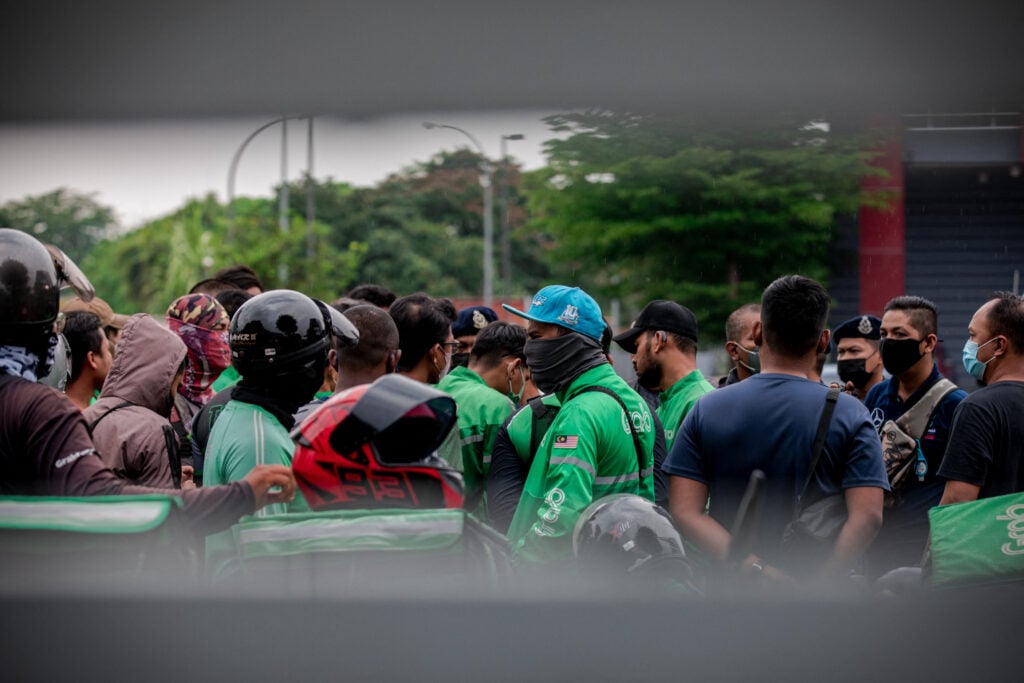
Gig workers in Selangor.
Image via Syaiful Redzuan/Anadolu/AFP4. Cash credits and loan relief offer help, but they are not the same as extra salary
Budget 2027 also extends some assistance beyond households that qualify for targeted cash aid.
Malaysians aged 18 and above who do not receive Sumbangan Tunai Rahmah (STR) will receive RM100 in SARA MADANI credits twice a year, before Aidilfitri and Merdeka. That amounts to RM200 annually for eligible recipients.
STR recipients can receive monthly SARA credits of up to RM150, worth as much as RM1,800 a year.
The distinction is important: the twice-yearly credits give eligible adults some additional purchasing power, but they are not the equivalent of an unrestricted cash payment or a permanent increase in income.
PTPTN borrowers will also receive repayment relief based on their earnings. Those earning RM2,500 or less a month will qualify for repayment deferment, while those earning between RM2,500 and RM3,000 will have a minimum repayment of RM50 a month.
For recent graduates facing rent, transport expenses and other bills, this could ease monthly financial pressure. But borrowers should check the final terms to understand how deferment affects their repayment schedules.
The same principle applies to other education-related benefits, such as the RM2,500 annual living allowance for Form Six students and the increase in the FlySiswa flight subsidy from RM400 to RM500. These measures can help with specific expenses, but they do not necessarily address every cost faced by students and families.
5. New driving rules could bring greater accountability and new obligations
Budget 2027 includes plans to amend the Road Transport Act to require drivers involved in accidents while under the influence of alcohol or drugs to pay financial compensation to victims.
The government also plans to require commercial vehicle operators to use telematics tracking and pre-drive alcohol detection devices.
The measures could strengthen accountability and road safety, particularly where impaired driving causes harm to other people.
However, the precise financial consequences for drivers and the obligations placed on operators will depend on the final legislation and implementation rules.
For commercial transport businesses, mandatory monitoring equipment could also bring additional costs and operational requirements. Those costs may be absorbed by operators or influence their wider operating expenses, but any effect on transport prices remains uncertain.
The details will matter: how compensation is assessed, how the rules are enforced, and which vehicles must comply will determine the practical impact.
6. Overseas online shopping could change, but higher prices are not a given
The proposed E-Commerce Bill and tighter oversight of foreign e-commerce platforms are intended to protect local traders. For Malaysian consumers who regularly buy inexpensive goods directly from overseas sellers, the changes are worth watching.
Additional compliance requirements could affect how foreign platforms operate in Malaysia, which sellers can reach local customers, and how certain products are listed or delivered.
But tighter regulation does not automatically mean that overseas goods will become more expensive or harder to obtain. The effect will depend on the final rules and how platforms respond.
For local businesses, stronger oversight could help address concerns about competition from overseas sellers. For consumers, the balance will be whether the rules improve accountability and protect buyers without significantly reducing choice or affordability.
What Malaysians should watch next
Budget 2027 presents a mix of direct financial assistance, tax changes, and new obligations. The benefits are not distributed equally, and some of the wider economic effects will only become clear once the measures take effect.
For workers, the minimum wage increase and tax changes are among the most tangible announcements. For businesses, payroll costs and compliance requirements deserve attention. Gig workers, borrowers and eligible SARA recipients should check the conditions governing the assistance they can receive.
Meanwhile, the effects of higher wages on prices, tighter e-commerce regulation on overseas purchases, and new commercial driving requirements remain dependent on implementation.
The important distinction is between what the budget directly promises and what could happen as a consequence. The former can be measured against the announced terms; the latter will depend on how employers, businesses, consumers and regulators respond.