Budget 2027: All The Changes To Your Cash Aid, Taxes, Savings And Daily Spending
The measures include monthly SARA aid of up to RM150 for STR recipients, RM100 payments for other adult Malaysians twice a year, a RM2,000 minimum wage from June 2027, and expanded tax reliefs.


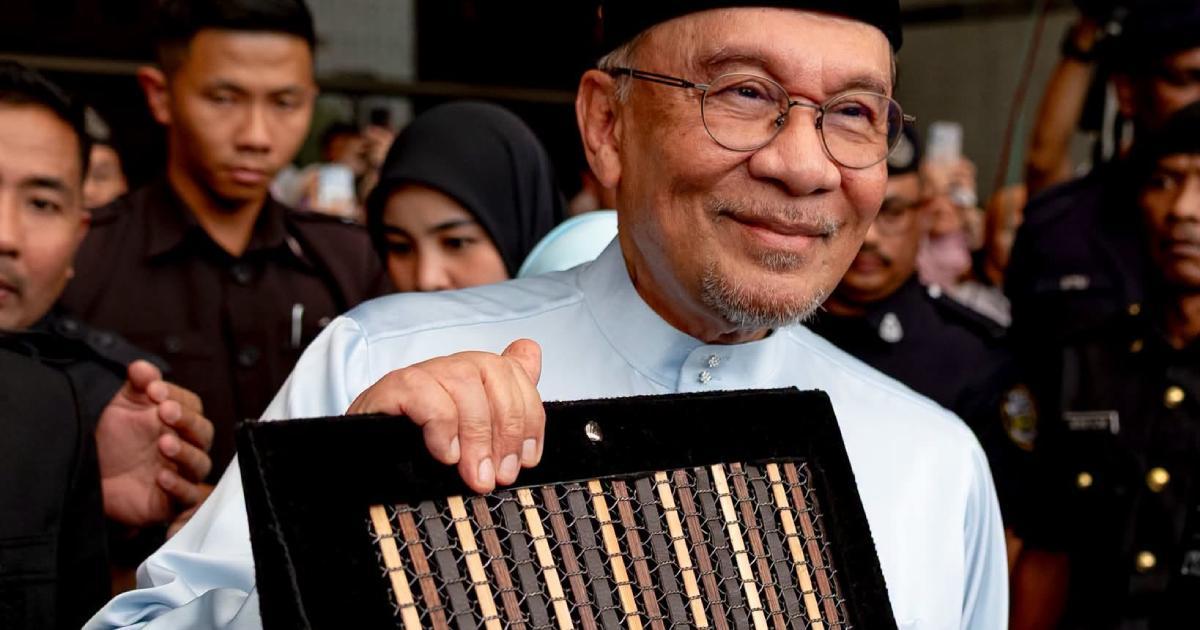 Cover image via Anwar Ibrahim
Follow us on Instagram, TikTok, and WhatsApp for the latest stories and breaking news.
Malaysians can expect changes to cash assistance, income taxes, wages, housing support and everyday expenses under Belanjawan 2027, as Prime Minister cum Finance Minister Datuk Seri Anwar Ibrahim announced a series of measures aimed at easing household financial pressures
Among the biggest announcements are an increase in the minimum monthly wage from RM1,700 to RM2,000 from June 2027, expanded Sumbangan Asas Rahmah (SARA) assistance, and changes to personal income tax reliefs that the government says could give around five million taxpayers up to RM1,600 in additional disposable income.
The budget also includes housing loan guarantees for first-time buyers, additional education assistance, cheaper public transport options for commuters, and higher support payments for eligible senior citizens and persons with disabilities (OKU).
Here are the main Budget 2027 announcements that could affect your income, savings, and household spending.
1. STR recipients to get up to RM150 in monthly SARA aid
The government will increase the allocation for Sumbangan Tunai Rahmah (STR) and Sumbangan Asas Rahmah (SARA) to RM16 billion.
Under the expanded assistance, all STR recipients will receive monthly SARA aid of up to RM150, equivalent to a maximum of RM1,800 a year. The government expects the measure to benefit nine million recipients.
Malaysians aged 18 and above who do not receive STR, including those in the M40 income group, will also receive SARA MADANI payments of RM100 on two occasions: before Aidilfitri and before Merdeka.
The payments are expected to reach up to 13 million people.
SARA credit can also be used to buy fresh and wet goods at 216 Federal Agricultural Marketing Authority (FAMA) farmers' markets, known as pasar tani or tamu, as well as 10,000 small retail shops and cooperatives nationwide.
The government will allocate RM750 million for 35,000 discounted sales events, comprising 30,000 Jualan RAHMAH events and 5,000 Agro MADANI sales. The latter will offer fresh fish, chicken and vegetables at discounts of up to 30%.
2. Electricity subsidy protection expanded to 800kWh
The government will expand the electricity subsidy protection threshold from 600kWh to 800kWh a month.
The measure is expected to protect more than eight million domestic electricity users, or around 90% of households, from higher electricity rates.
For fuel assistance, the monthly eligibility quota will be set at 300 litres under BUDI95 and 400 litres under BUDI Diesel for eligible jeep and pickup truck users.
Households affected by disasters will also receive more assistance to repair damaged homes, with the maximum financial aid doubled from RM5,000 to RM10,000 per household.
3. Income tax relief increased to RM12,000
The government will raise the basic individual income tax relief limit from RM9,000 to RM12,000, marking the first increase since 2010.
Resident individual income tax rates will also be reduced by one percentage point for two taxable income brackets:
- The RM70,000 to RM100,000 bracket will be taxed at 18%.
- The RM100,000 to RM150,000 bracket will be taxed at 24%.
Combined with the higher basic relief, these changes are expected to provide around five million taxpayers with up to RM1,600 in additional disposable income.
At the other end of the income scale, the tax rate for individuals earning more than RM1 million will be adjusted to 30%.
The government will also expand the scope of several tax reliefs.
These include postnatal care services under medical relief, a wider range of parental and grandparent care expenses, sports shoes, tuition fees for children, and education expenses covering all fields of study.
Lifestyle-related reliefs will be expanded to include AI software subscriptions, vaccinations, and pet adoption fees from registered shelters.
Cash contributions to the School Public Contribution Fund will also qualify for a tax deduction of up to 10% of aggregate income.
4. Minimum wage to rise to RM2,000 from June 2027
Malaysia's minimum wage will increase from RM1,700 to RM2,000 a month from June next year.
The government expects more than four million workers to benefit, although micro, small, and medium enterprises (MSMEs) with annual sales revenue below RM50 million will be exempted from the new requirement.
A separate minimum wage baseline of RM2,500 a month will be introduced for semi-skilled workers and graduates.
Government-linked investment companies (GLICs) and government-linked companies (GLCs) will also raise their living wage benchmark from RM3,100 to RM3,400 a month, benefiting an estimated 230,000 workers.
For gig workers, a joint RM160 million package involving the government and Grab is expected to increase net income by up to RM227 a month for e-hailing drivers and up to RM100 a month for p-hailing delivery riders, including support for vehicle maintenance and insurance costs.
The government will also introduce matching contribution incentives for gig workers under PERKESO, with a 35% government contribution that increases to 50% if the platform company contributes as well.
More than 200,000 self-employed people in 17 sectors where social security contributions are not mandatory will receive a 70% matching contribution incentive.
Tax relief will also be expanded for mandatory Self-Employment Social Security Scheme contributions, with up to RM150 in additional relief for voluntary 24-Hour and Self-Employment protection schemes.
5. EPF registration to become automatic at age 18
Malaysian citizens will be automatically registered with the Employees Provident Fund (EPF) upon turning 18.
Gig workers will also be eligible for EPF matching contributions of up to RM600 a year, subject to a lifetime limit of RM6,000.
For older members, those aged 55 and 60 will be able to opt for the i-Emas monthly withdrawal scheme, allowing their remaining EPF balances to continue earning dividends.
Separately, Bank Simpanan Nasional (BSN) and Agrobank will provide RM270 million in dedicated financing for gig workers looking to purchase their first homes or start businesses.
6. First-time homebuyers to get up to RM20 billion in loan guarantees
The government will provide up to RM20 billion in housing loan guarantees through the Syarikat Jaminan Kredit Perumahan (SJKP) to support 80,000 first-time homebuyers.
The scheme is particularly relevant to self-employed Malaysians and those without fixed monthly incomes, who may face greater difficulty qualifying for conventional housing loans.
Stamp duty exemptions will also be available for first-home purchases.
For homes priced at RM500,000 or below, buyers will receive full stamp duty exemptions on loan agreements and transfer instruments.
For homes priced up to RM750,000, the first RM500,000 will be fully exempt, while the remaining balance will receive a 50% exemption. These measures will apply to sale and purchase agreements signed between 1 January 2027 and 31 December 2030.
Full stamp duty exemptions will also be provided for original buyers and rescue contractors involved in revived abandoned housing projects.
Meanwhile, the Bukit Jalil MADANI City affordable housing development, which will include vertical schools, is set to open Phase 1 registration on Monday, 12 October 2026.
7. School aid increased to RM200 per student
The government's Bantuan Awal Persekolahan (BAP) will increase from RM150 to RM200 per student.
The assistance will benefit all 5.3 million primary and secondary school students, with payments distributed directly through schools.
Form Six students will also receive a living allowance of RM2,500 a year, bringing their allowance in line with that offered to matriculation students. The measure is expected to benefit 90,000 students.
For National Higher Education Fund Corporation (PTPTN) borrowers, those earning up to RM2,500 a month will receive a full repayment deferment.
Borrowers earning between RM2,500 and RM3,000 a month will have their minimum monthly repayments set at RM50.
Consistent borrowers with no arrears will also receive a 10% repayment discount, while employers who pay off their employees' PTPTN loans will be eligible for tax deductions.
For university students, the FlySiswa flight ticket subsidy will increase from RM400 to RM500.
The Dapur Siswa MADANI initiative, which provides cooking equipment, food supplies and RM5 Menu Kasih Siswa meals, will also be expanded to polytechnics and teacher training institutes.
8. Commuters to get more public transport assistance
The My50 travel pass will continue for 300,000 bus and rail commuters in the Klang Valley.
A new MyKomuter50 pass will also be introduced for 40,000 KTM Komuter users, with estimated savings of up to RM160 a month.
Free public transport will be provided to 360,000 school students, persons with disabilities, and children under 6.
Taxi and hire-car drivers will receive one-off financial assistance of RM1,000, as will eligible school bus drivers under a separate allocation.
The payments will cover 38,000 taxi and hire-car drivers and 15,000 school bus drivers nationwide, with disbursement scheduled for the following week.
9. MediAsas health plan to launch in January 2027
The government will launch the MediAsas basic health plan in January 2027, with affordable premiums and hospital charges based on diagnosis and treatment types.
EPF members below 55 will be allowed to pay premiums using savings in Akaun Sejahtera.
For small and medium-sized enterprises with fewer than 75 employees, the government will subsidise RM200 towards each eligible worker's first-year premium, capped at 50 workers per company.
The government also plans to standardise private hospital bill categories from 2027 to make charges more transparent.
Separately, the Medical Assistance Fund allocation will rise from RM40 million to RM60 million, while RM80 million will be allocated to PeKa B40 for free health screenings, medical equipment assistance and cancer treatment incentives for eligible STR recipients and their spouses aged 40 and above.
10. Senior citizens and OKU to receive more assistance
The government will increase the allocation for senior citizen cash assistance to RM1.3 billion, covering nearly 200,000 elderly recipients.
Service tax on senior care services will be reduced from 8% to 6%, with a full tax exemption on care fees of up to RM96,000 a year.
For persons with disabilities and chronic patients, monthly assistance for bedridden individuals will rise from RM500 to RM600.
The income eligibility threshold for the OKU Worker Allowance will increase from RM1,700 to RM2,000.
The allowance for students with special educational needs will rise from RM150 to RM200 a month, while the incentive for special education teachers will increase from RM250 to RM300 a month.
The government will also raise the bankruptcy threshold from RM100,000 to RM150,000 and introduce automatic discharge pathways after three years.
11. Rubber smallholders, paddy farmers, and fishermen to get more support
Rubber smallholders will receive a higher Rubber Production Incentive (IPG) rate of RM3.30 per kg, up from RM3. The measure is expected to benefit more than 300,000 smallholders.
Paddy farmers will receive assistance worth approximately RM4,300 per hectare, covering seeds, fertiliser and price support. The paddy harvesting incentive will also double from RM50 to RM100 per hectare per season.
For oil palm smallholders, RM100 million in hybrid financing will be made available for replanting. Under the scheme, smallholders will only need to repay half the loan, with a four-year repayment deferment and an interest rate of 2%.
Subsidised diesel for fishermen will remain at RM1.65 per litre, while the special sampan licence quota will be expanded to 20,000 fishermen.
12. MSMEs to pay lower income tax
Micro, small, and medium enterprises (MSMEs) will receive a one-percentage-point reduction in tax rates for two chargeable income brackets.
The first RM150,000 of chargeable income will be taxed at 14%, while the RM150,000 to RM600,000 bracket will be taxed at 16%.
The government estimates that 300,000 MSMEs could save up to RM6,000.
First-time MSME applicants seeking halal certification will also be eligible for matching grants of up to RM5,000.
A total of RM6.6 billion in microfinancing will be made available through agencies including Amanah Ikhtiar Malaysia (AIM), TEKUN Nasional and BSN.
This includes RM3 billion through AIM, RM1.3 billion through TEKUN, RM1.7 billion through BSN, and RM150 million in dedicated TEKUN and AIM financing for Indian entrepreneurs.
Three commercial banks — Alliance Bank, Maybank, and CIMB — will also offer basic credit cards with interest rates capped at 14% a year.
In Kuala Lumpur, more than 10,000 small traders renting DBKL hawker centres, markets and food courts will receive a 50% rental discount throughout 2027.
13. Minimum pension raised to RM1,350
The minimum pension floor will increase from RM1,000 to RM1,350 a month, benefiting approximately 59,000 retirees, Armed Forces veterans, and derivative pension holders.
Allowances for volunteers serving with RELA, Auxiliary Fire Services, Volunteer Police, and the Civil Defence Force will also increase.
Volunteer allowances will rise to RM9 an hour, while supervisors will receive RM10.80 an hour. The maximum maternity allowance will be increased to cover 98 days per birth.
Families of civil servants who die in workplace accidents will also receive a higher lump-sum ex-gratia death benefit, increasing from RM20,000 to a maximum of RM50,000.
For religious education and community workers, KAFA teachers instructing students with special needs will receive a RM150 monthly incentive. The government will also cover full PERKESO contributions for tok siak, imams, bilals, and takmir teachers.
14. Youth to get AI subscriptions and volunteer incentives
Young Malaysians who complete designated volunteering hours with approved non-governmental organisations will be eligible for a RM100 e-wallet incentive under the BUDI Belia volunteering initiative.
The government will also provide 100,000 additional free AI software subscriptions for young people, including ChatGPT.
In the Federal Territories, tickets for local films and theatre productions will receive a 100% entertainment duty exemption from 2027.
Meanwhile, the duty-free purchase limit for visitors to Langkawi and Labuan will increase to RM10,000, subject to a minimum stay of 48 hours.
These measures cover a wide range of groups, from students and gig workers to retirees, small business owners and first-time homebuyers. The actual benefit each person receives will depend on the relevant eligibility rules, spending limits, and implementation dates.
Follow SAYS on Instagram, Facebook, and TikTok for updates!