
JPJ Discontinues KPI Based On Summonses Issued By Officers. Here’s What It Means To You
JPJ has shifted its focus to road safety outcomes and AI-driven enforcement under a new 2026 transport policy.


 Cover image via
 Follow us on Instagram, TikTok, and WhatsApp for the latest stories and breaking news.
The Road Transport Department (JPJ) has officially discontinued the practice of setting key performance indicators (KPIs) based on the volume of summonses issued by its enforcement personnel
This strategic pivot signifies a fundamental shift in the department's operational philosophy; it moves away from quantitative penalty metrics toward the qualitative goals of improving road safety and driver compliance.
Director-general Datuk Aedy Fadly Ramli announced the decision during the JPJ monthly gathering on Friday, 3 April, emphasising that the enforcement division will now review and overhaul previous performance benchmarks to reflect this new direction, as reported by The Star.
The move aligns with a broader policy directive from the Ministry of Transport aimed at strengthening enforcement strategies to deliver a more significant impact on national road safety
Under this framework, the effectiveness of JPJ officers will be assessed through safety outcomes and the overall success of field operations rather than the raw number of fines collected.
This transition follows a firm stance taken by Transport Minister Anthony Loke in March 2026, where he stated that the primary mission of the ministry is to reduce fatal accidents instead of simply penalising motorists.
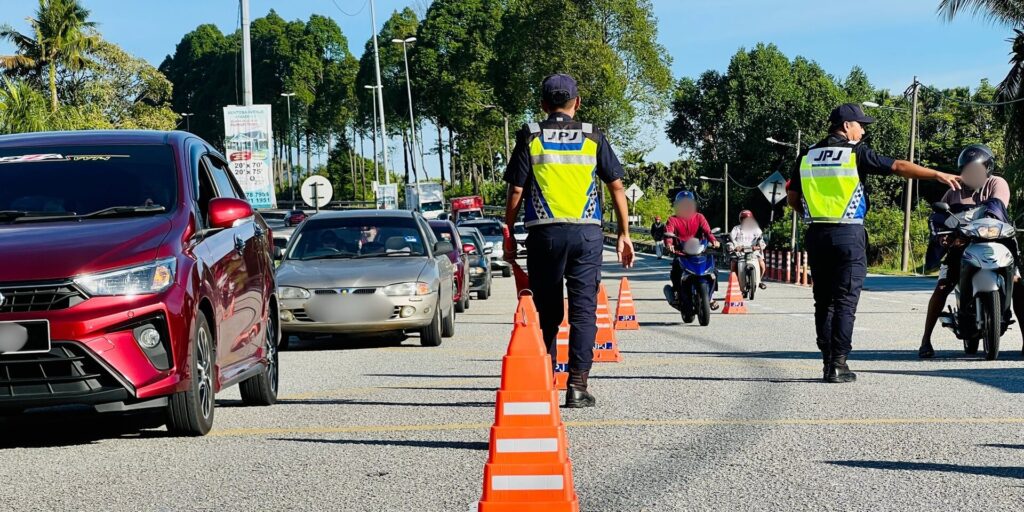
Image used for illustration purposes only.
Image via JPJ Negeri Perak (Facebook)Here's what it means for Malaysians:
To achieve these safety objectives, JPJ is intensifying its "Perception of Being Caught" (POBC) strategy through increased visibility and preventive measures.
Enforcement operations will now prioritise active patrols and monitoring in high-risk "hotspots" to encourage more cautious driving behaviour.
This physical presence is being augmented by advanced technology, including a network of over 1,000 AI-powered cameras known as AES 2.0 (Automated Awareness Safety System).
These upgraded systems can identify multiple violations simultaneously, such as illegal phone use and seatbelt neglect, while drones and officer body cameras provide broader, real-time surveillance during special operations.
Aedy reiterated that the department's ultimate goal is to ensure all road users strictly adhere to traffic laws to minimise the risk of accidents
By shifting the focus to preventive action and modern monitoring, the department hopes to transform its public image from a fine-collecting agency into a proactive guardian of road safety.
This reform is expected to streamline operations at all JPJ offices and Urban Transformation Centres (UTCs), as officers redirect their efforts toward ensuring the integrity of the nation's transport infrastructure.
