
KL Is Now The World’s Most Polluted City Amid Ongoing Haze
The air quality has reached the "Very Unhealthy" category as haze blankets the Malaysian capital.


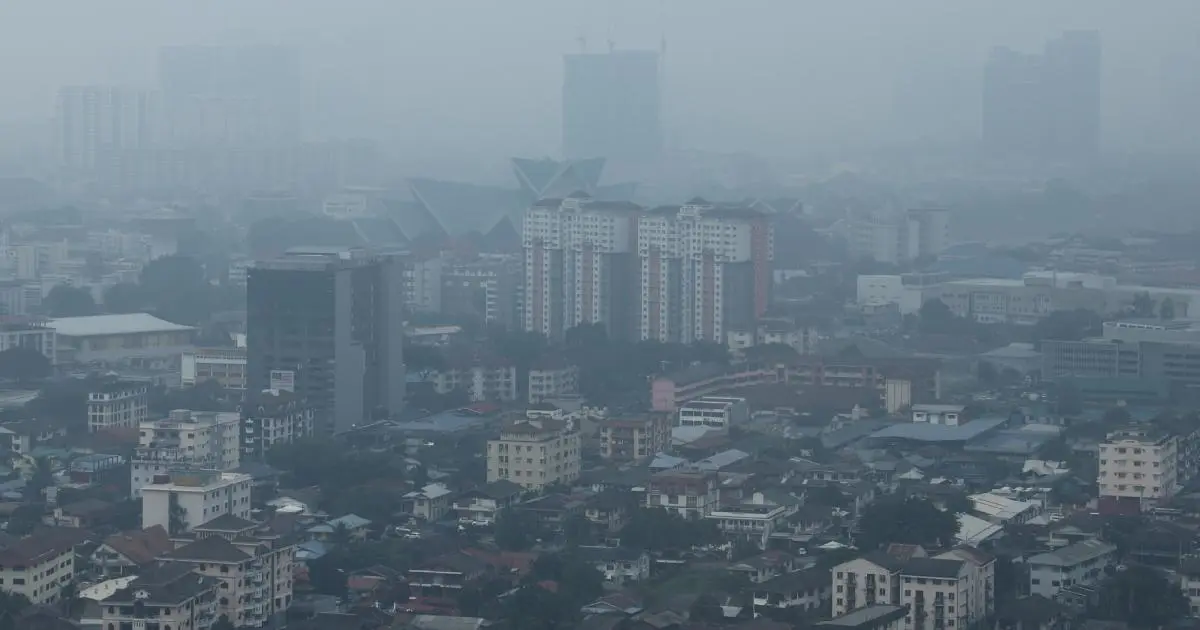 Cover image via Jakub Porzycki/NurPhoto/AFP
Follow us on Instagram, TikTok, and WhatsApp for the latest stories and breaking news.
Kuala Lumpur has climbed to the top of IQAir's live ranking of the world's most polluted major cities, with its air quality reaching the "Very Unhealthy" category as haze blankets the city
According to IQAir's live World Air Quality Ranking, Kuala Lumpur recorded an AQI of 211 as of this morning, 7 October, putting it ahead of Dhaka, Bangladesh, which was in second place with 182, and Jakarta, Indonesia, with 171.
The gap is significant, with KL sitting 29 points above Dhaka in the ranking.
An AQI above 200 falls within the "Very Unhealthy" range, meaning the health risk is elevated for the general population, rather than being limited to people who are particularly sensitive to air pollution.

KL currently tops the list of the world's most polluted major cities.
Image via IQAirOther Southeast Asian cities also record poor air quality
KL was not the only Southeast Asian city appearing near the top of the Swiss air quality technology company's live ranking.
Singapore was ranked fifth with an AQI of 166, while Ho Chi Minh City and Hanoi in Vietnam recorded AQIs of 155 and 152, respectively.
Kuching also appeared high on the list, ranking 11th with an AQI of 138.
The concentration of Southeast Asian cities near the top of the ranking comes as the region experiences deteriorating air quality, although the live IQAir ranking itself does not establish the specific source of the pollution.
However, Malaysians have been choking on transboundary haze since August this year as Indonesia's fires continue to burn across parts of Sumatra and Kalimantan.
What KL residents should do
At this level of pollution, residents may want to limit prolonged or strenuous outdoor activity, particularly if they experience symptoms such as coughing, throat irritation or difficulty breathing.
Keeping windows and doors closed can help reduce the amount of outdoor pollution entering homes, while air purifiers with HEPA filters can help remove fine particles indoors.
People who have to spend extended periods outdoors may also consider using a well-fitting N95 or equivalent respirator, which is designed to filter fine particulate matter more effectively than ordinary surgical masks.
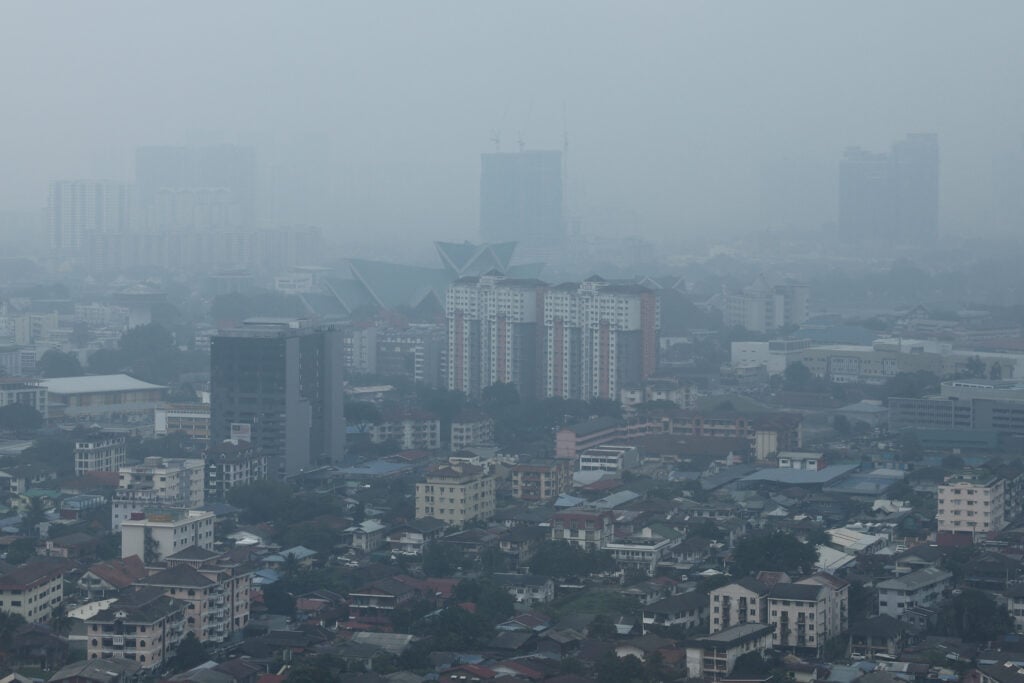
A view of the city covered in haze due to Indonesian wildfires, in Kuala Lumpur, Malaysia on 6 October, 2026.
Image via Jakub Porzycki/NurPhoto/AFP