


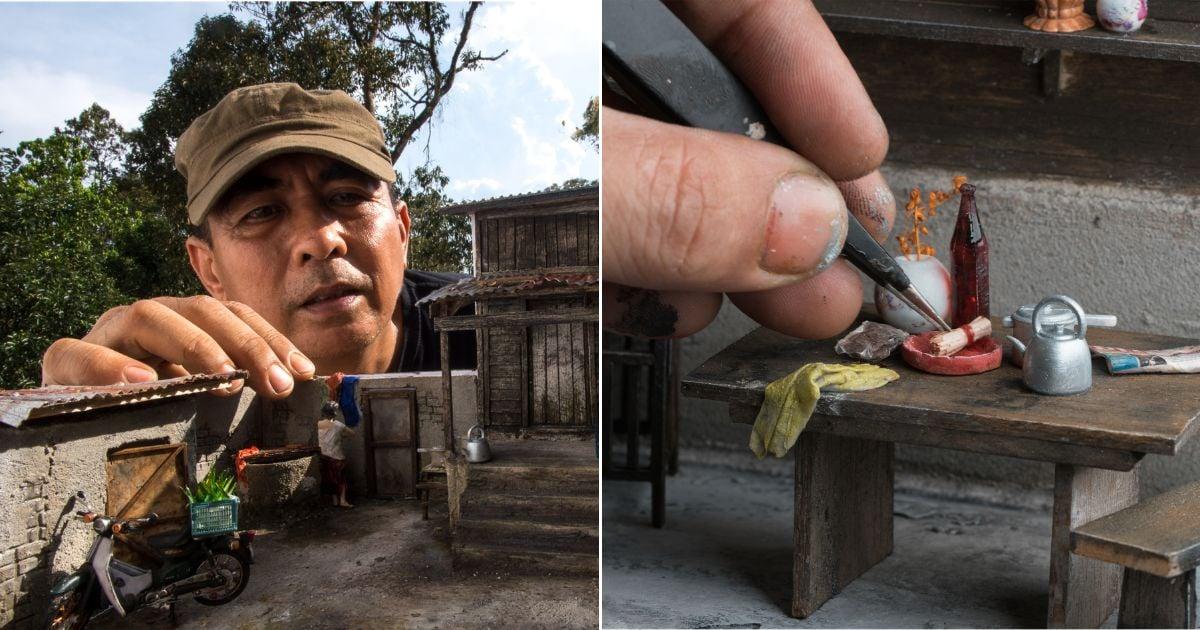
 Cover image via Apple Malaysia / Eddie Putera
Follow us on Instagram, TikTok, and WhatsApp for the latest stories and breaking news.
Tech Tarik is a SAYS Tech original series where we sit down with the movers, shakers, and glass-breakers of Malaysia's digital scene. Just like your favourite mamak drink, we're "pulling" the best insights, spilling the tea on industry trends, and serving up the innovations that are shaping our country's future — one conversation at a time.
For self-taught Malaysian artist Eddie Putera, preserving a fleeting memory requires more than just nostalgia; it demands the precision of modern technology and the tactile patience of traditional craftsmanship
Known for his moving, hyper-realistic dioramas that immortalise personal histories and familiar Southeast Asian streets, Eddie has spent years turning abstract recollections into tangible worlds.
Yet, in an era when traditional artistry often clashes with digital advancement, he has chosen a different path: leaning into artificial intelligence to elevate, rather than replace, the human touch.
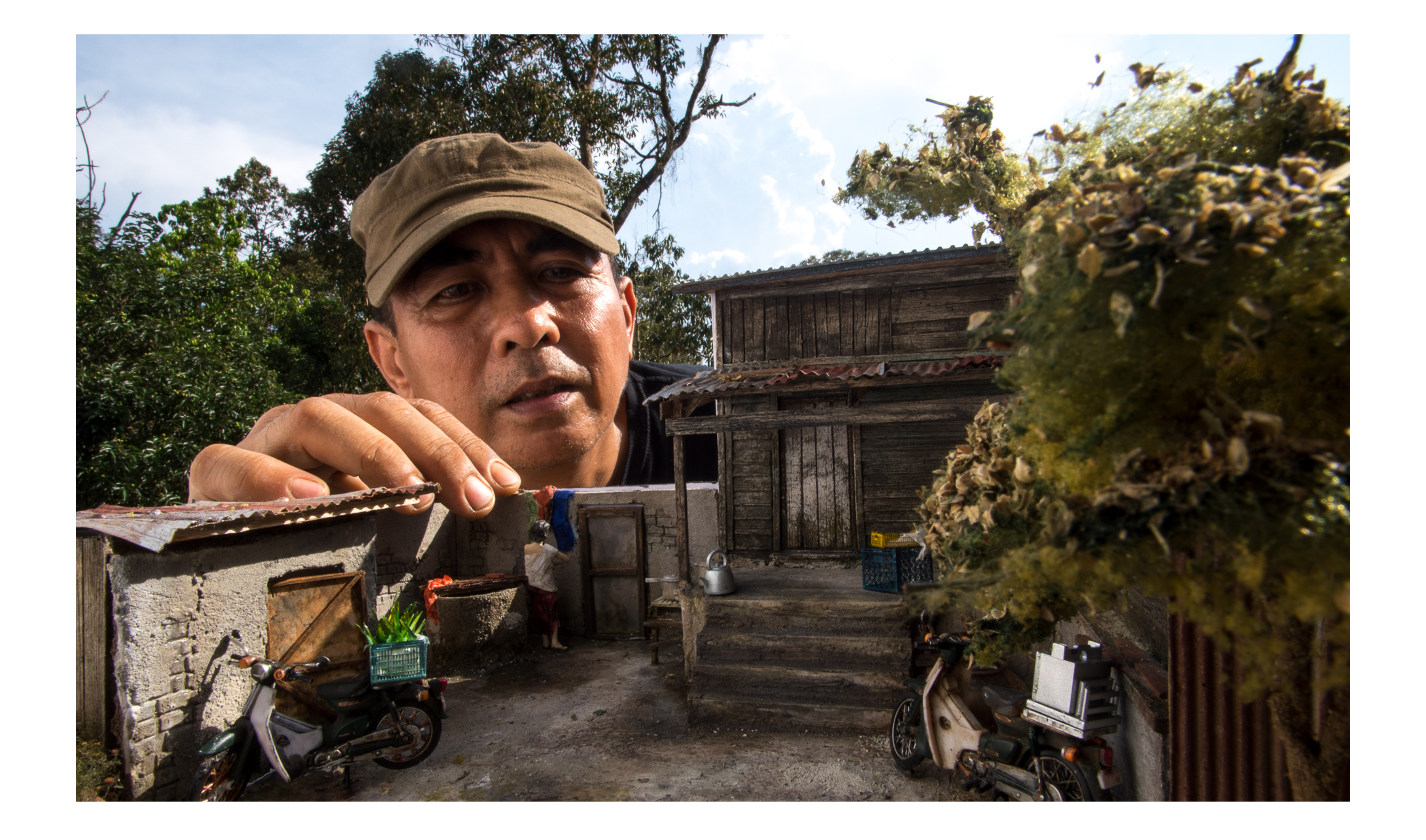
While his final pieces are painstakingly sculpted, painted, and weathered by hand, the journey to get there is decidedly digital. Eddie leverages AI alongside a seamless ecosystem of Apple devices to bridge the communication gap between an image in his mind and his clients' expectations.
By using these innovative apps as creative partners, he can test lighting, atmosphere, and composition instantly, ensuring the emotional weight of a memory is captured perfectly before a single physical material is cut.
Featured in this year's "Here's to the Dreamers" campaign, Eddie proves that the greatest advantage in a rapidly evolving creative landscape is relentless curiosity.
His work stands as a powerful testament to Southeast Asian storytelling, blending local heritage with cutting-edge tools. SAYS Tech spoke with Eddie about overcoming the intimidation of new software, his deeply personal workflow, and what it truly takes to turn a dream into reality.
SAYS Tech: Your dioramas are incredibly moving; they often preserve precious personal and family histories. As a self-taught artist, what first sparked your curiosity to bring artificial intelligence into your traditional craft? Also, what has been your proudest achievement since you began visualising these hyper-realistic miniature worlds with AI?
Eddie: Curiosity has always been a major part of how I work. I am a self-taught artist, so almost everything I know, from photography and model-making to digital design and artificial intelligence, began with me wondering, "What would happen if I tried this?"
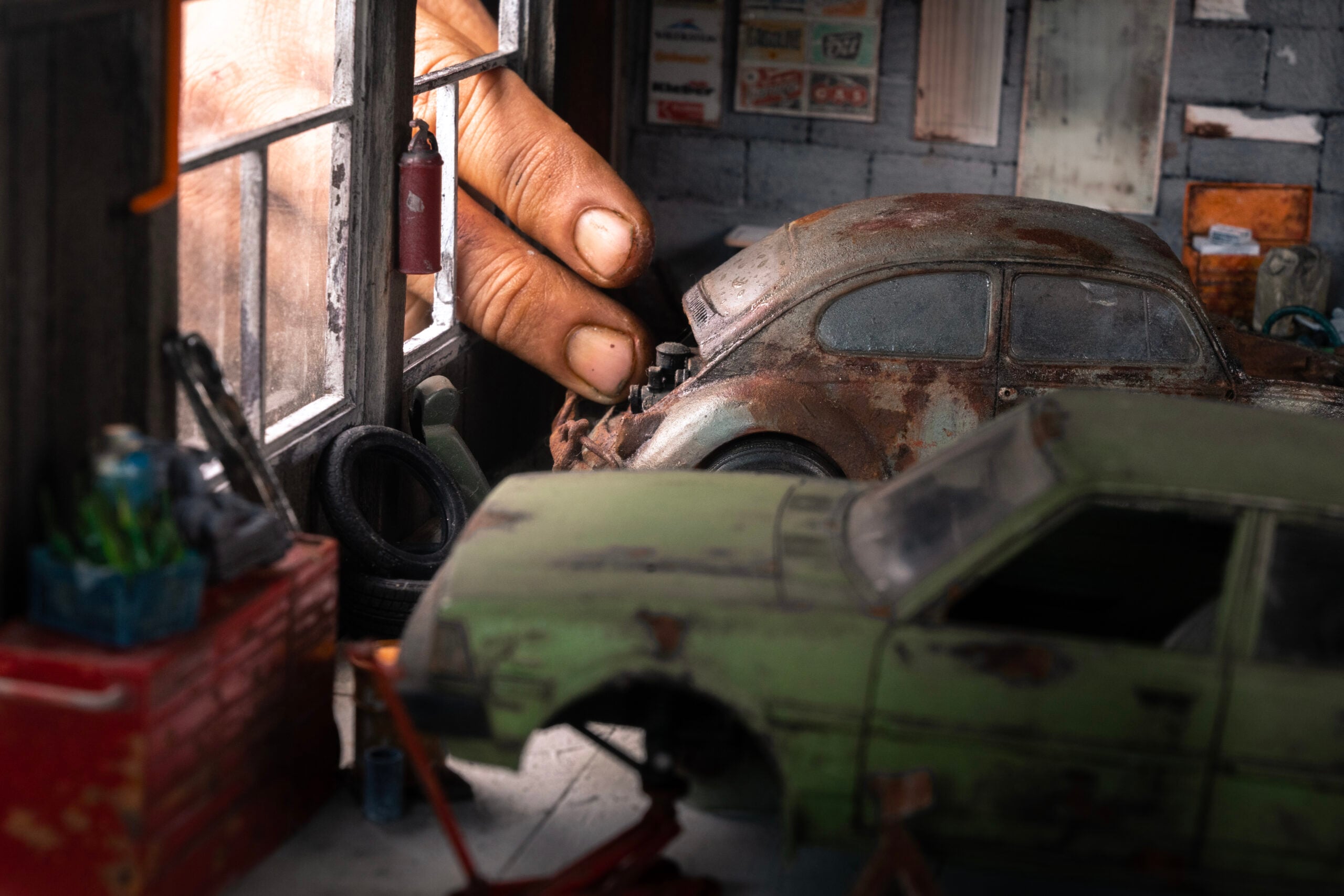
A diorama begins as an image inside my head. In the past, one of my greatest challenges was communicating that image before physically building it. I could describe the mood, sketch the layout, or show reference photographs, but my client might still struggle to see what I was seeing. AI helped me close that gap and allowed me to explore environments, lighting, atmosphere, and storytelling possibilities before committing to the physical construction.
My proudest achievement is not one particular AI-generated image. It is learning how to translate imagination into something that can eventually be held in your hands. An idea may begin as a prompt or a digital visualisation, but I still have to interpret it, redesign it, and build every physical detail. Being selected for Apple's "Here's to the Dreamers" campaign was especially meaningful because it recognised that relationship between traditional craftsmanship and modern technology.
AI did not replace my craft. It helped me communicate the dream behind it.
SAYS Tech: The "Here's to the Dreamers" campaign celebrates accelerating ideas into action. Could you walk us through your creative workflow? We'd love to know how you tackle the challenge of blending tactile model-making with innovative apps and AI, and how your Apple devices seamlessly support you from the initial concept to the final, physical piece.
Eddie: Every project begins with a story. It may be someone's childhood home, an old family business, a familiar Malaysian street, or a place connected to an important memory. Before thinking about materials or measurements, I try to understand what made that place meaningful.
However, I do not simply reproduce whatever the technology gives me. I select, combine, correct, and reinterpret the ideas based on my own experience and artistic judgement. Apple devices support me with the entire process, helping me to move everything seamlessly.
From my iPhone, which is always with me for capturing references, textures and everyday Malaysian details, to my iPad that helps give a more direct and intuitive way to sketch, annotate and develop visual ideas. And my MacBook Pro, the main workspace for organising references, refining concepts, editing images and preparing presentations for clients. Being able to move files, photographs and ideas between the devices keeps me focused on creating rather than managing the technology.
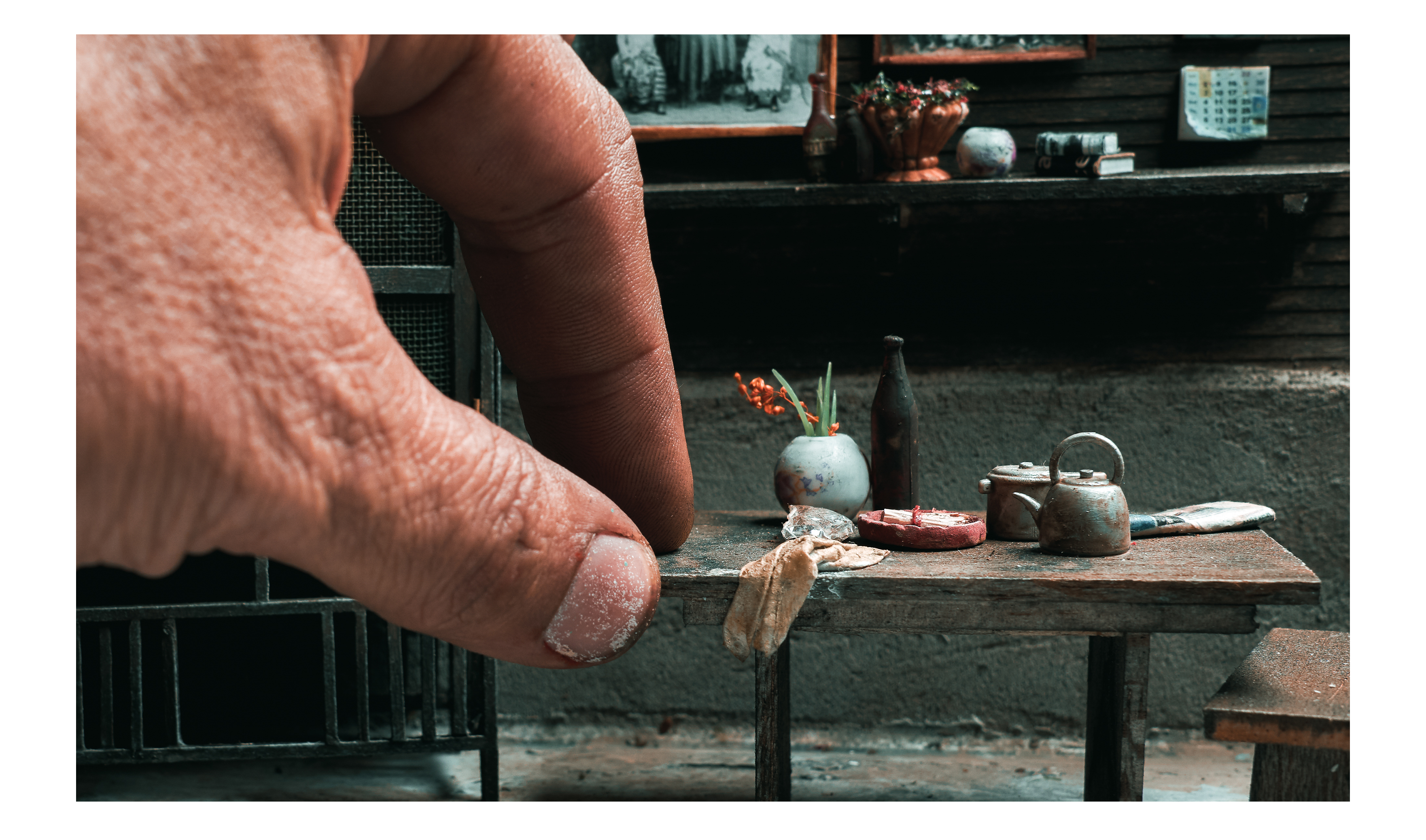
Once the concept feels right, I return to the physical world — measuring, cutting, sculpting, painting, weathering, and arranging each element by hand. Digital technology gives me clarity and precision, but the final piece still carries the marks of the human hand. I often describe it this way: "I do not chase perfection. I chase meaning. Technology gives my imperfections precision."
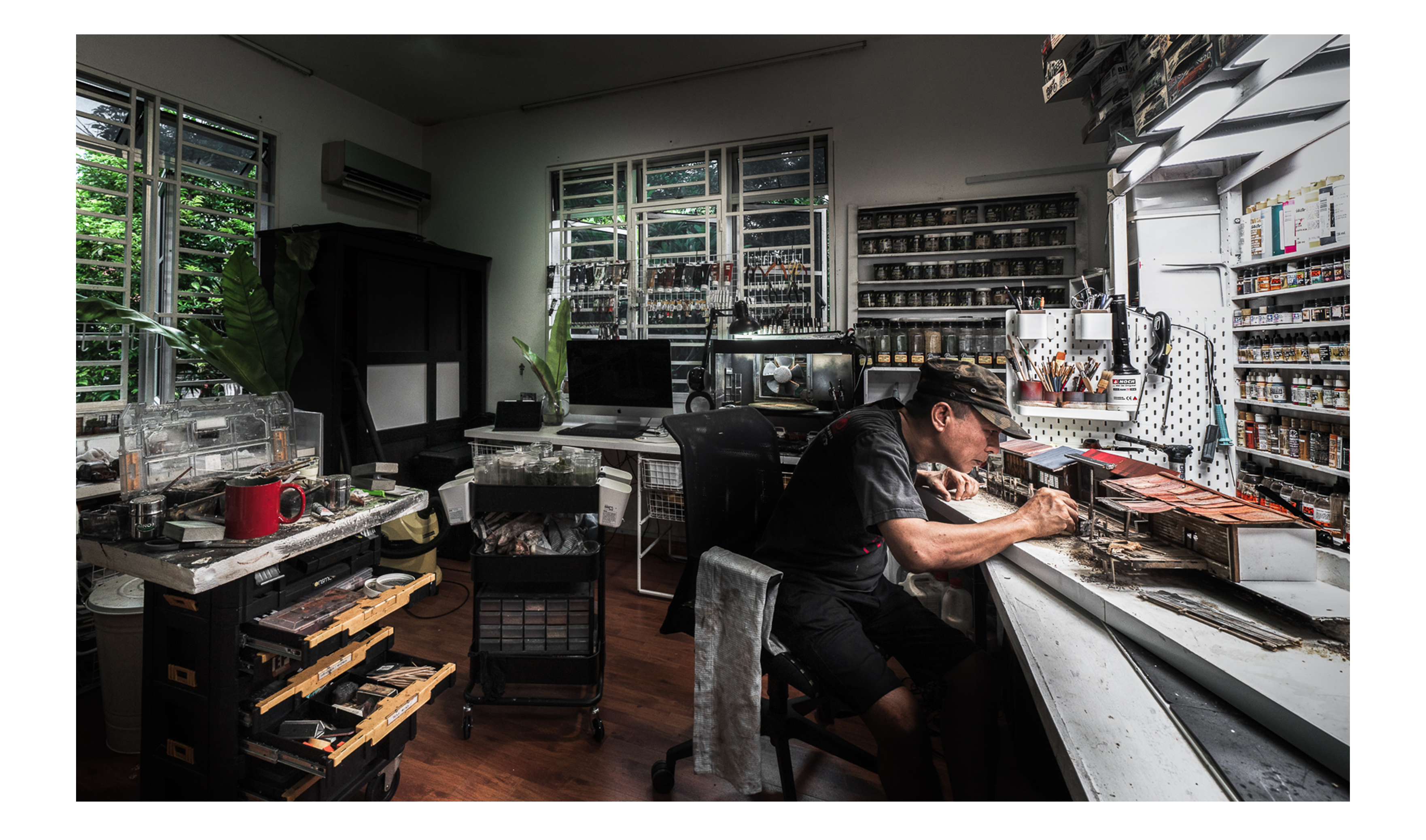
SAYS Tech: You are living proof that when it comes to how AI is reshaping creativity, curiosity is a far greater advantage than age or prior technical expertise. How do you push past the fear of the unknown when learning a new tool, and how has AI acted as a true "creative partner" for you rather than just a piece of software?
I do not think we ever completely eliminate the fear of the unknown. We simply become more curious than we are afraid. When I encounter a new tool, I do not begin by trying to master everything. I start with one small question: "Can this help me solve a problem in my work?" That makes the technology feel less intimidating. I experiment, make mistakes, and slowly discover where it belongs in my creative process.
Age should never be used as a reason to stop learning. I may not have grown up with artificial intelligence, but I grew up being curious. Curiosity is not limited by age, qualifications, or technical background.
AI has become a creative partner because it allows me to have a visual conversation with my own ideas. Sometimes it shows me possibilities I had not considered. Sometimes it misunderstands me completely — and even that can be useful because it forces me to clarify what I actually want.
But I remain the storyteller and decision-maker. AI does not understand why a particular old chair, cracked wall or faded sign matters to someone. That meaning comes from human memory and emotion. The technology may suggest possibilities, but the artist must decide what deserves to exist.

SAYS Tech: Many traditional artists and makers might feel intimidated by the rapid advancement of artificial intelligence. What practical tips, tricks, or starting points would you share with fellow creators who want to explore new technologies and integrate helpful apps into their own creative workflows?
Eddie: My first advice would be: do not begin with the technology. Begin with your own creative problem. Ask yourself what part of your process is difficult, slow, or hard to communicate. Maybe you need help visualising a composition, experimenting with colour, organising references or presenting an idea to a client. Then explore one tool that may help with that specific task.
Most importantly, maintain your own judgement. AI can produce many answers very quickly, but speed is not the same as meaning. Always ask yourself: Does this still feel like my work? Does it serve the story? Is it helping me express something, or am I merely accepting what it gives me?
Use technology to extend what is already unique about you. Your memories, cultural background, life experience, and point of view are things no app can manufacture.
SAYS Tech: This year's campaign spotlights creatives who lead with vision and turn impossibilities into realities. Based on your own extraordinary journey, how do you personally define a "Dreamer", and what is the ultimate message you hope to inspire in other Southeast Asian creatives who are looking to follow in your footsteps?
To me, a Dreamer is not simply someone who has big ideas. A Dreamer is someone willing to take the first small step towards making those ideas real. Dreaming sounds romantic, but turning a dream into reality involves uncertainty, mistakes, repetition, and sometimes failure. The important thing is to continue — not because you are certain of success, but because the dream means enough for you to try.
Southeast Asia is filled with extraordinary stories, cultures, memories, and creative traditions. We should not feel that we need to imitate someone else's world for our work to matter. The streets we grew up on, the food stalls we remember, the homes of our grandparents and the everyday lives of our communities are worthy of being preserved and celebrated. Technology now gives us new ways to tell those stories and share them with the world. But technology is only the bridge. The heart of the work must still come from us.
My message to other Southeast Asian creatives is simple: you do not need to wait until you feel fully prepared. You do not need perfect circumstances, expensive equipment, or permission from anyone. Start with what you have, remain curious, and allow yourself to learn along the way. You are never too old, too late, or too inexperienced to begin. Sometimes the dream only becomes visible after you take the first step.
